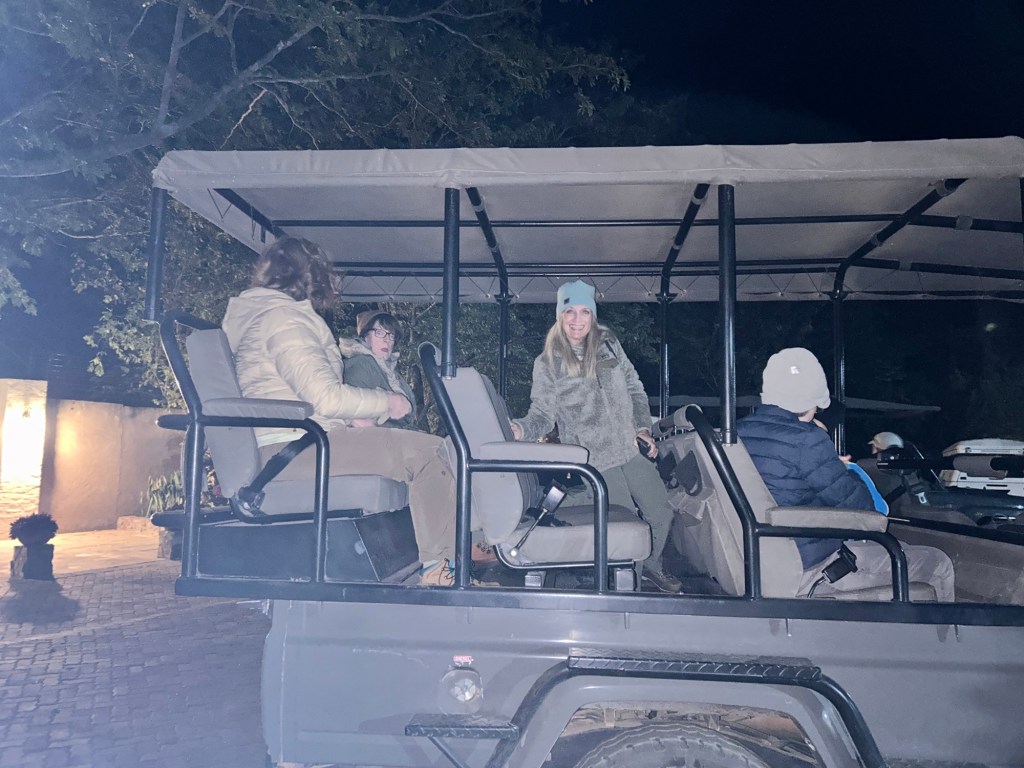
I am writing this a day late but we have been busy! On the afternoon of July 7th we did our second game drive in Chobe National Park. FYI- each drive has lasted 3-3.5 hours. While the morning game drives start out very cold (gloves, fleece, jackets, gators), they finish warm. The afternoon drives start warm (shorts, t-shirt), and they finish chilly!
This afternoon we saw lots more elephants, birds, impala (which they call McDonald’s for the M on their rear, and also because they’re on every corner), and at the end…we caught sight of a leopard, which rounds out The Big 5.
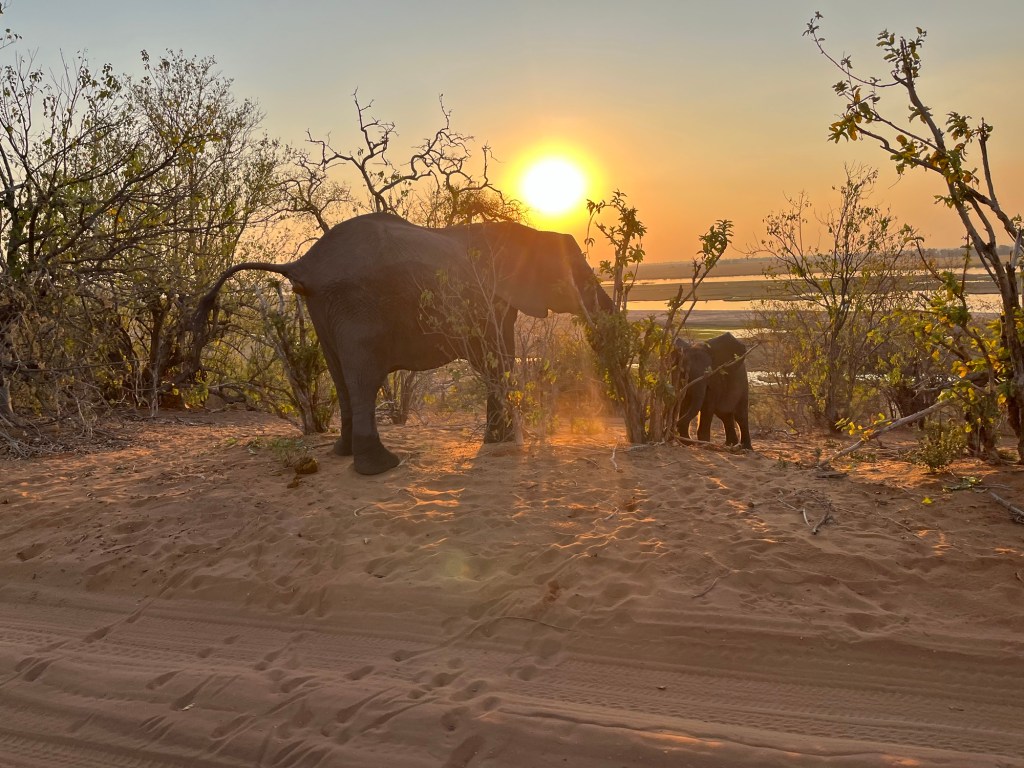
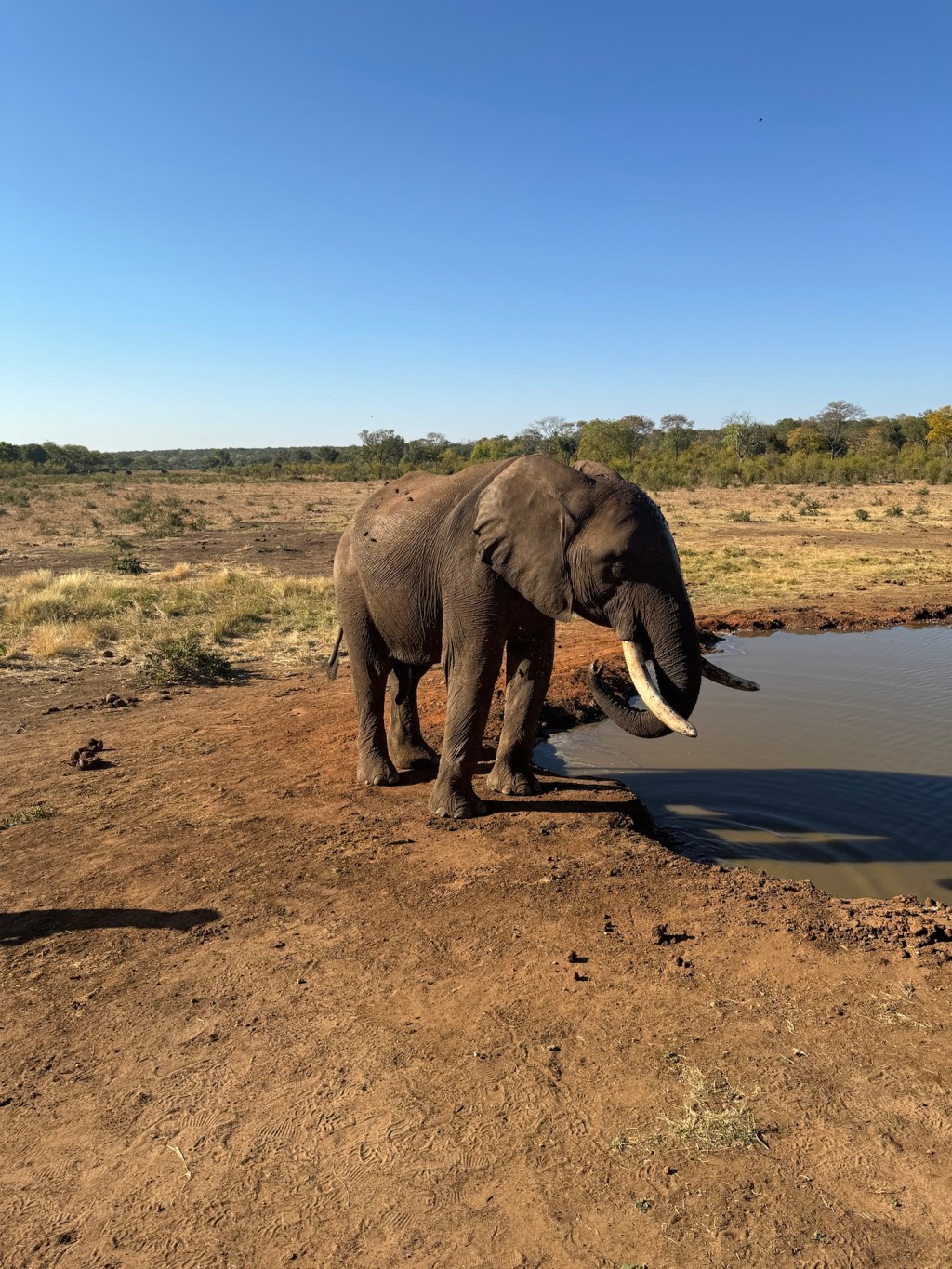
First a word about the elephants—the elephants are Kalahari elephants, the largest kind, and there are estimated to be 120,000 of them in Chobe. After seeing all the elephants around every corner, at the river, crossing the road, in the bush…I don’t doubt it! they are magnificent.
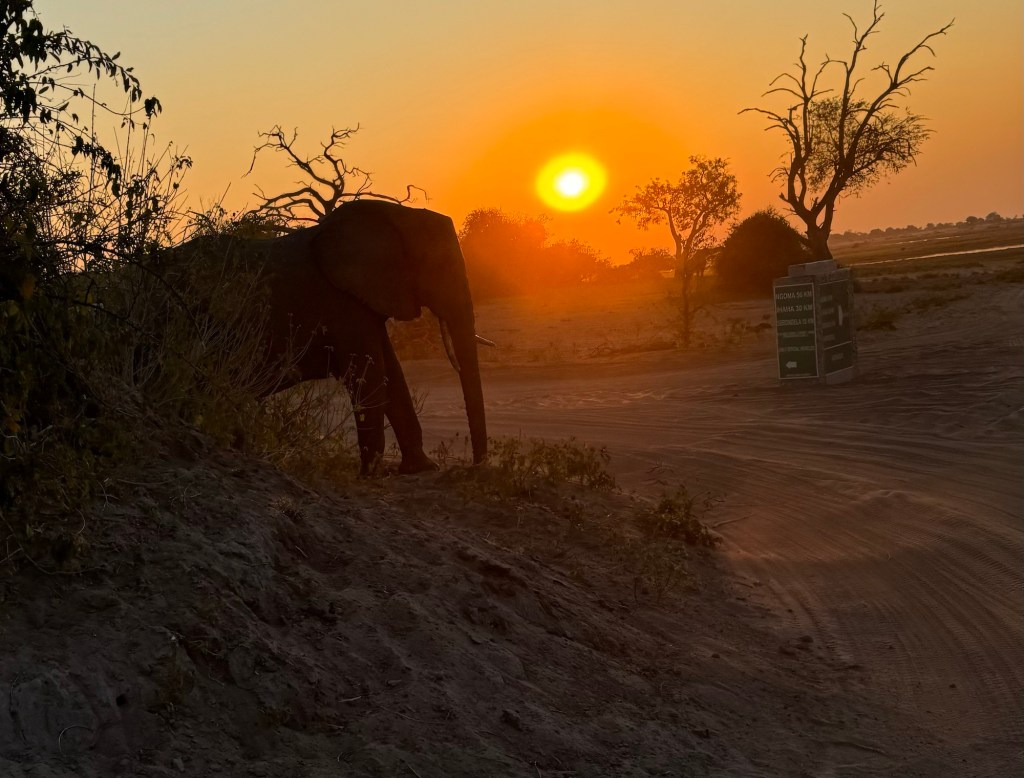
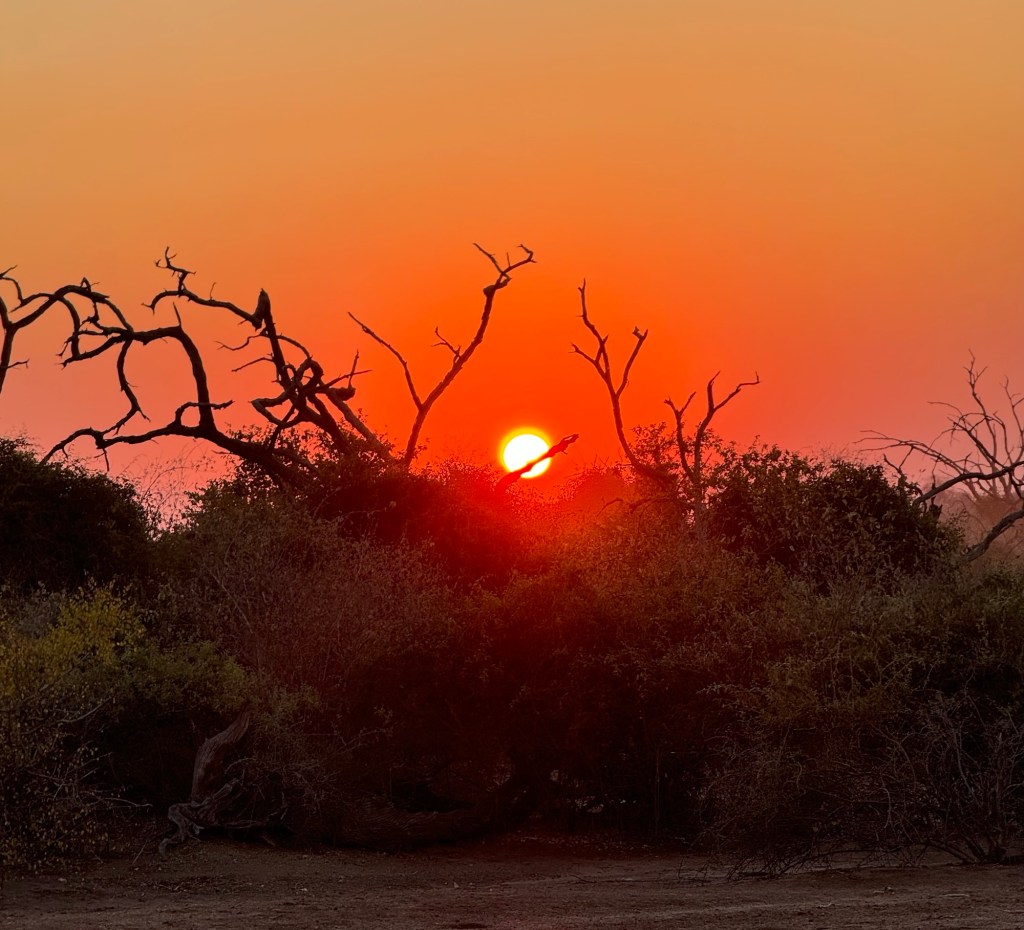
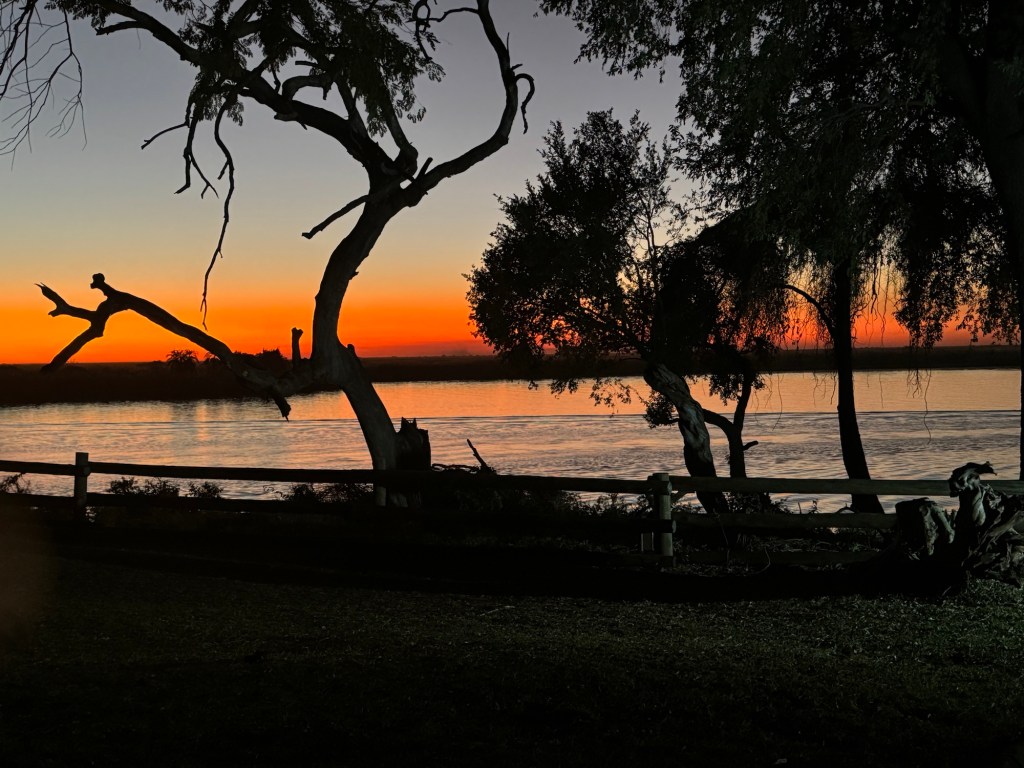
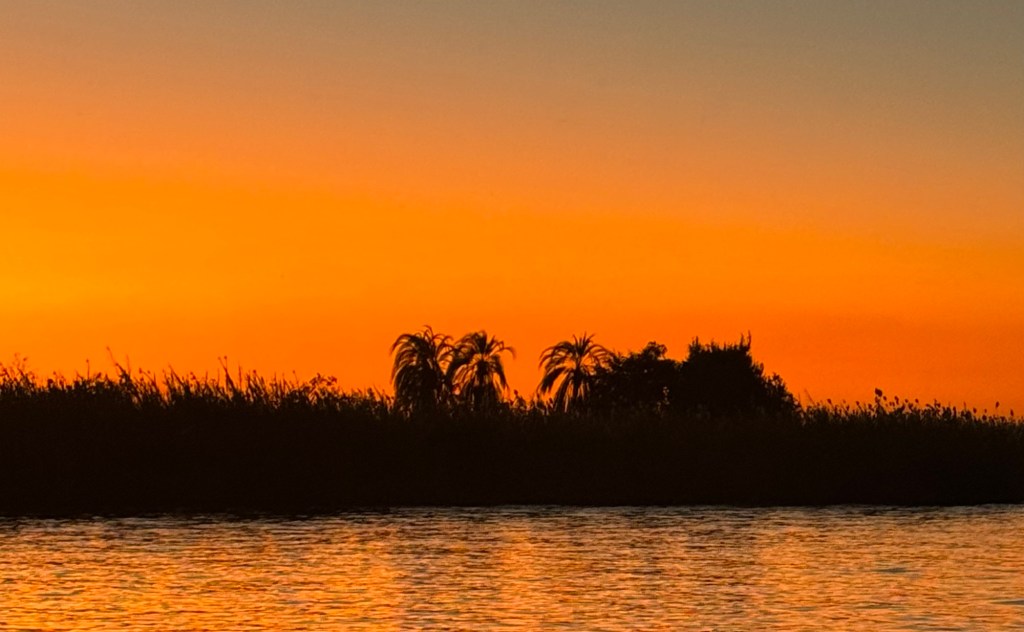
Also, I cannot get over the sunsets here. The colors in the sky last forever. The oranges and reds—this would never get old!
Between the game drives, we had a phenomenal conversation today from our Smithsonian expert, Robyn Keene-Young. She talked about the upcoming documentary they made for PBS on three big cats living together—lions, cheetah, and leopards. The documentary will come out this fall.
That evening we had a BBQ dinner at Chobe Marina Lodge (more about the lodge later) and I fell asleep before my head hit the pillow!
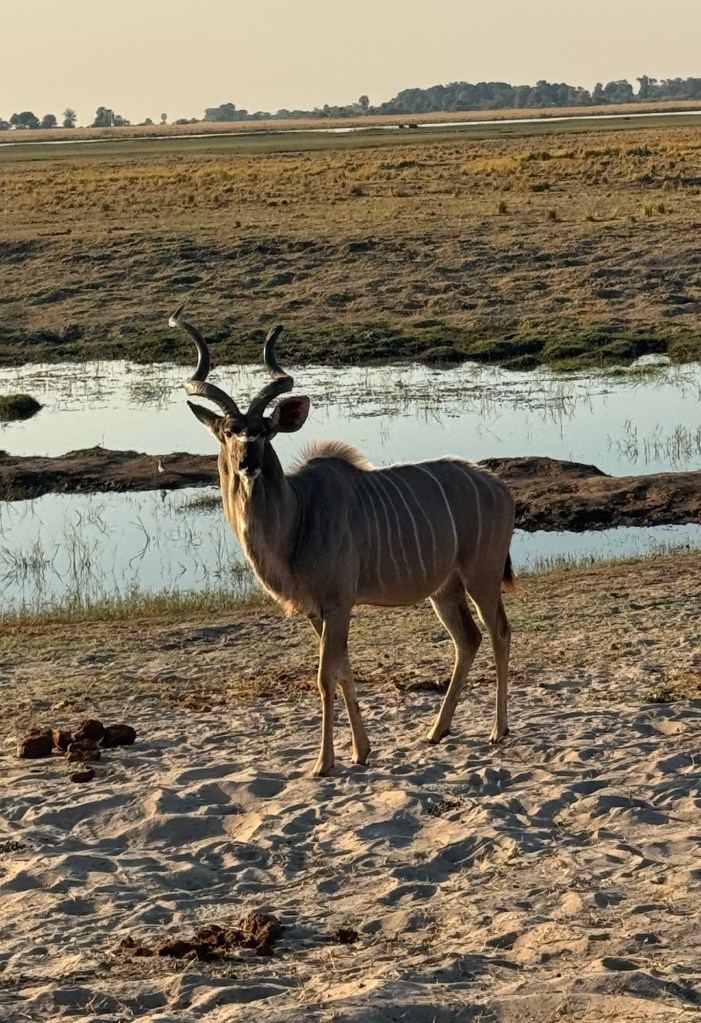
The stately male kudu
The exquisite (and very dangerous) African Buffalo. The older males are particularly grumpy and can be very violent. There’s no diffusing their anger.
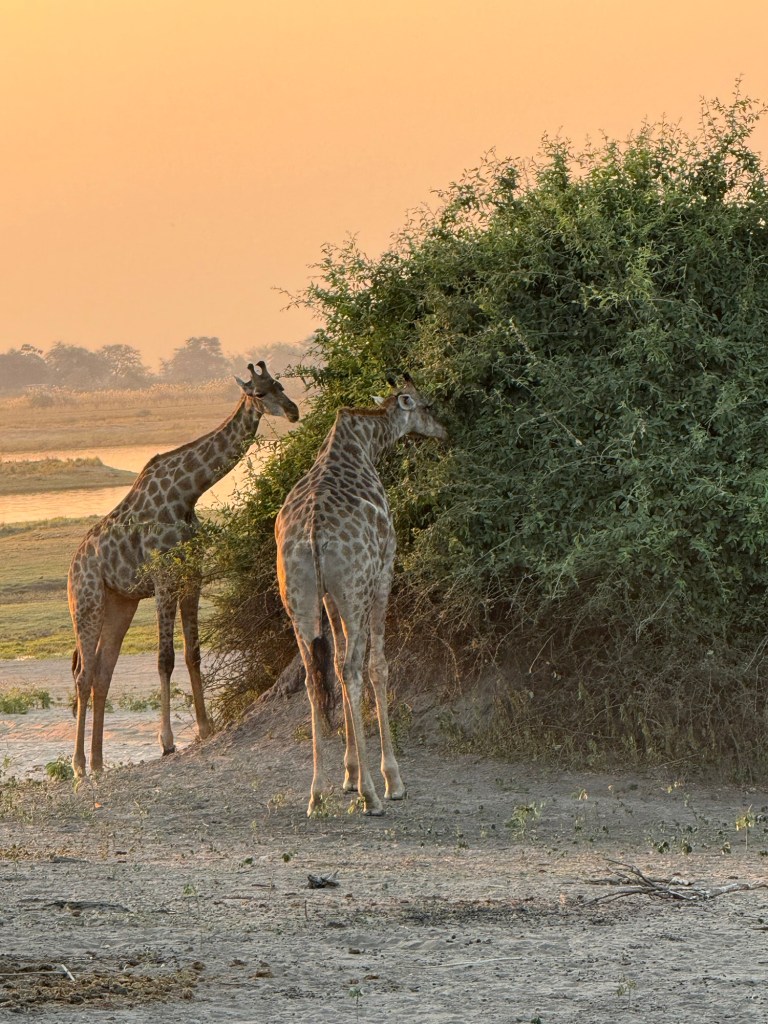
Leopard! This rounds out the Big 5 for usDinner time for the giraffes 🦒 Sunset in Chobe Momma and baby at sunset Sigh…kind of takes your breath away!No editing, no filters Cheers to a day that will stay with us forever 🦁🐘🦛🦒🐆
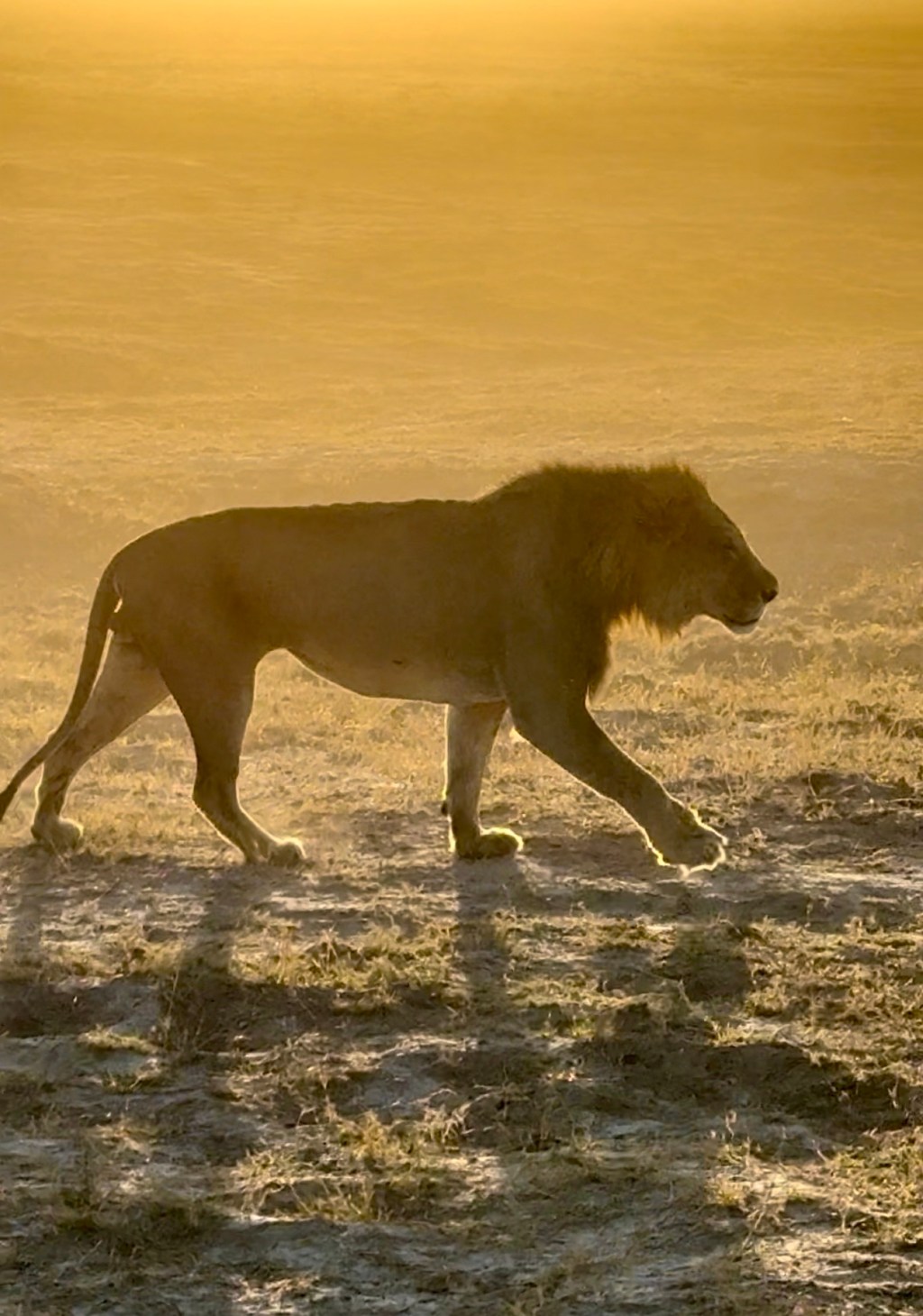
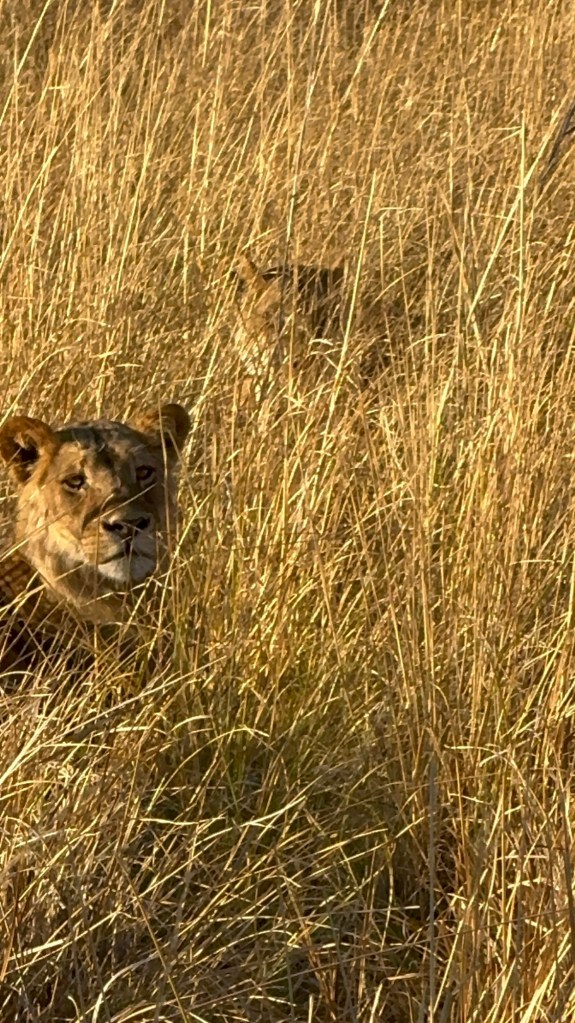
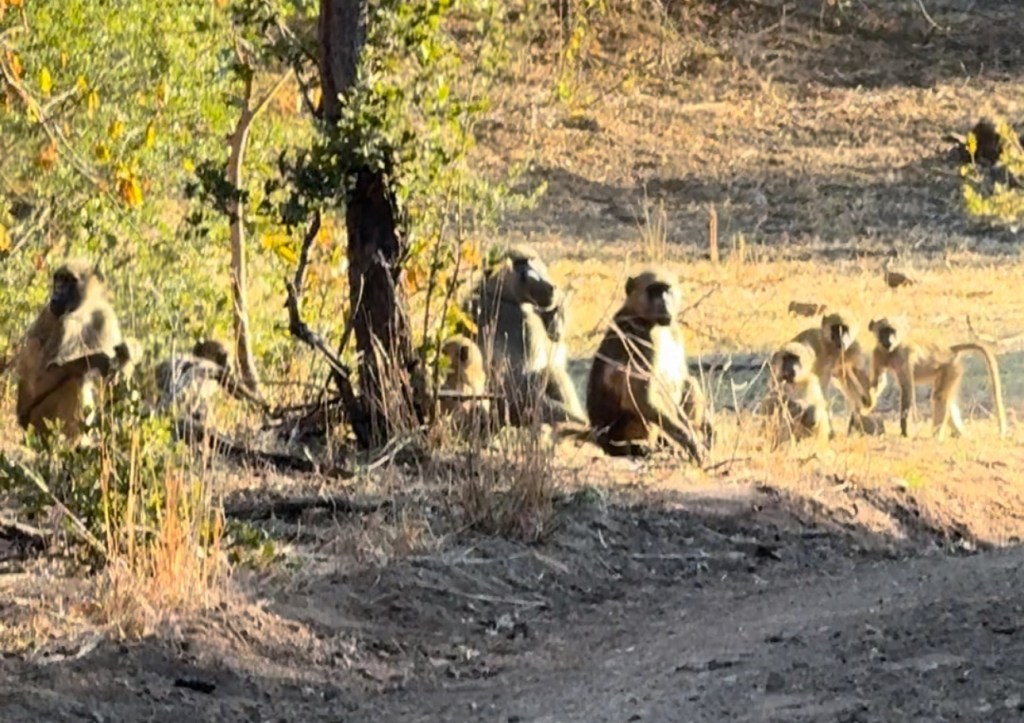
This morning was special – an experience I will always remember when two lions walked in front of our jeep. The first video captures one of those lions. In addition, we saw lionesses and their cubs, impala, kudu, elephants, baboons (a baby hitching a ride), jackals, warthogs, and more birds.
This lion took my breath away! Another one walked right behind him.
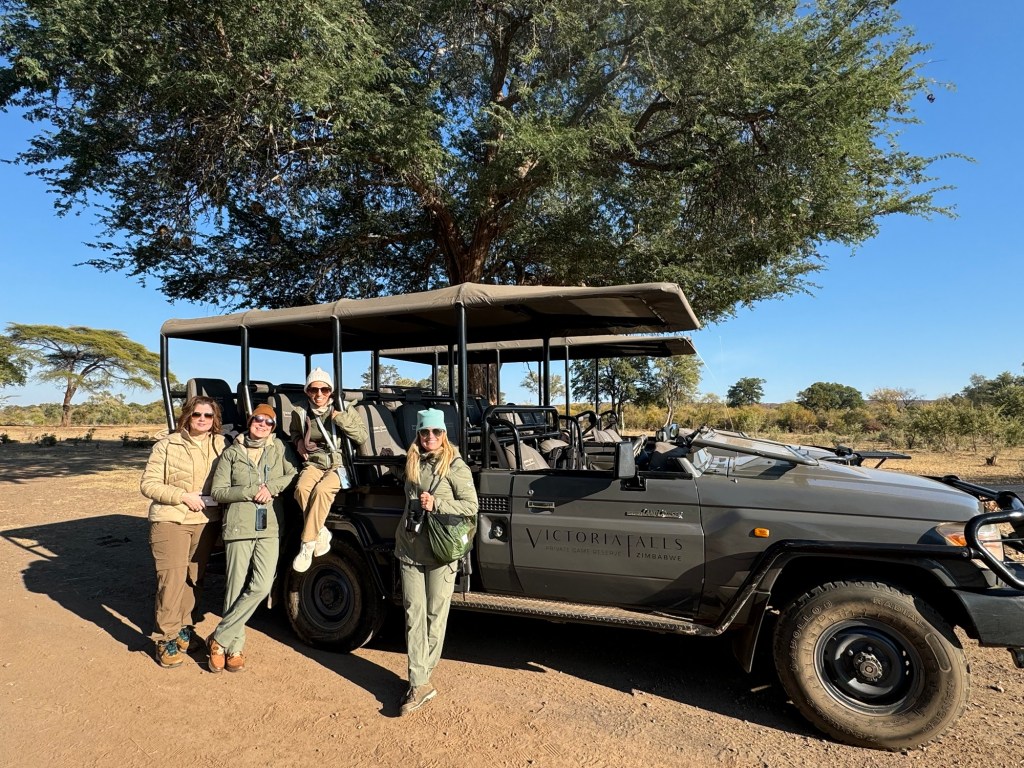
Hitching a ride!Our jeep gang this morning – including our tour guide, Eric, and our local guide, Hero.Lioness blending in—there’s another one to the right and their cubs were lying lowSunRISE in Chobe National Park
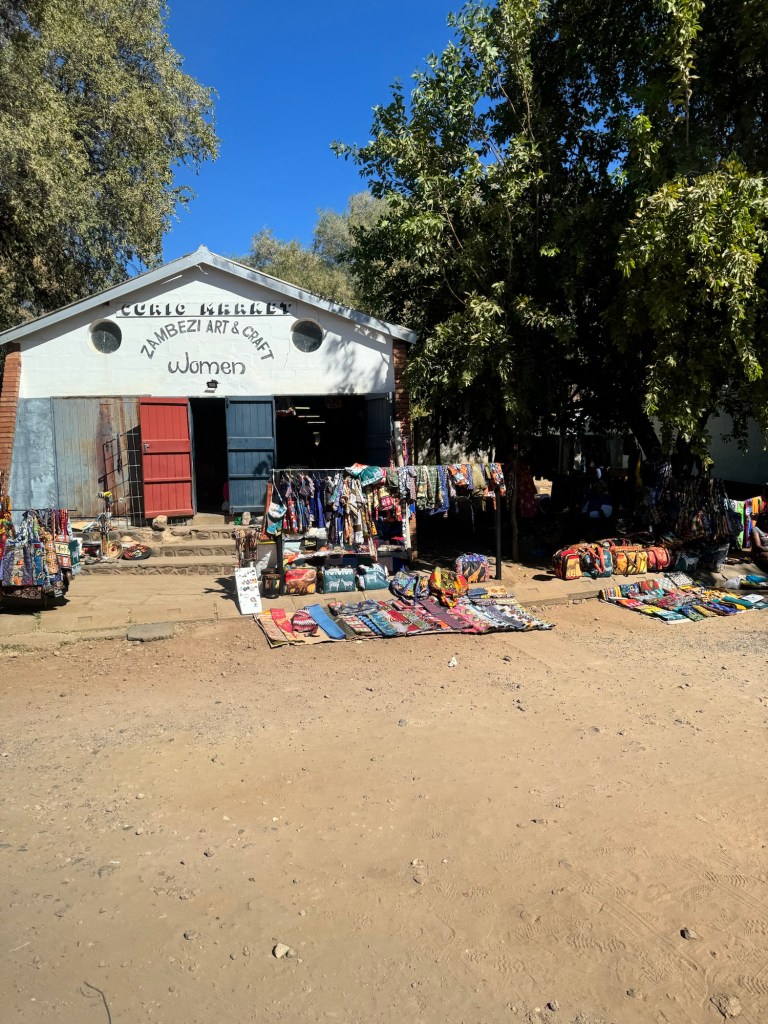
Zimbabwe is a country of 16 million people of which 65% live in rural areas. I consider myself so fortunate to have visited this country that filled my cup with such amazing memories. To finish our time here, we went to The Big Open Craft Market and I bought some curios (souvenirs) made from teak, olive and springstone. I also bartered for a mbira (a mini hand-held piano) and some “monkey ball” shakers. Negotiation is a must and expected! Teak trees are common in Zimbabwe and you will find a lot of curios and carvings made from wood of this tree. Also, popular curios are the woven plates that you can hang on a wall and soapstone animal figures. There is a women’s and a men’s market of vendors.
Once we were all shopped out, we headed, via bus, for the 1 hour drive to The Republic of Botswana to the town of Kasare on the Chobe River. While we entered through immigrations, I had to dip my shoes to confirm no foot-and-mouth disease—they are very serious about their beef industry here.
Some facts from our bus driver:
• We are close to the intersection of Botswana, Namibia, Zimbabwe and Zambia – only place in the world where 4 countries come together.
• Marriage – In rural Zimbabwe when you marry, the grooms family must pay the dowry in cows. The greater the number of cows = the more educated/skilled the woman. There are still polygamy in some tribes but it’s slowly fading due to Christianity.
Botswana:
Facts-
• Monetary unit – Pula
• Main exports – diamonds, cattle and tourism. Also, copper, nickel, coal, and iron ore.
• Home to 2.3M people
• Capital – Gaborone
• One of Africa’s most stable countries and the continent’s longest continuous multi-party democracy with a good human rights record.
I look forward to seeing the baobob and acacia (umbrella and camel) trees in Botswana. Also, the sand dunes of the Kalahari cover most of Botswana
Hello Greeting:
*Du mela, mma (to greet a female)
*Du mela, rra (to greet a male)
Botswana is made of sand of the Kalahari and is home to over 130,000 elephants! In fact, there is a dispute going on right now regarding reducing the number of elephants in Botswana.
WE ARRIVED!
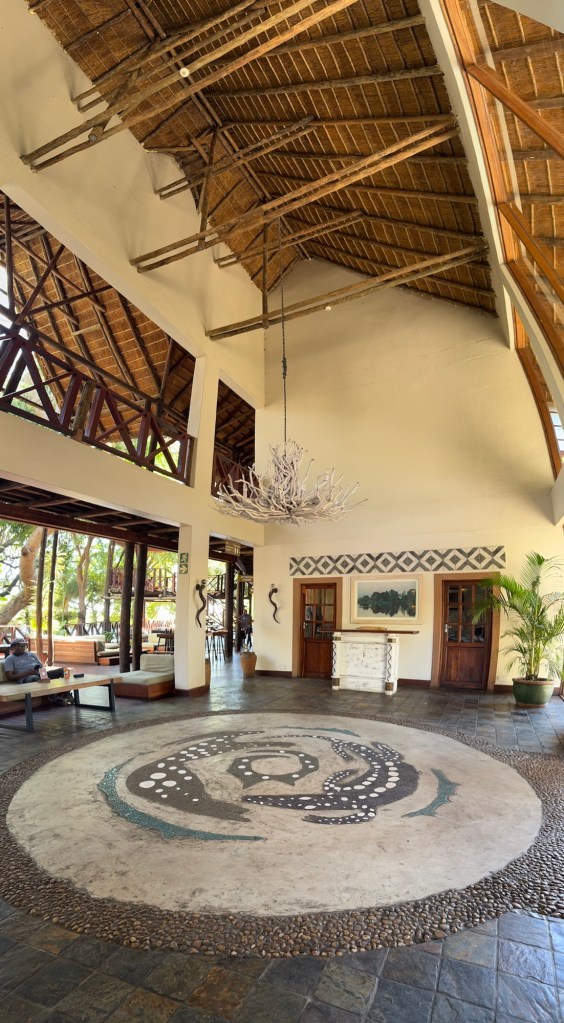
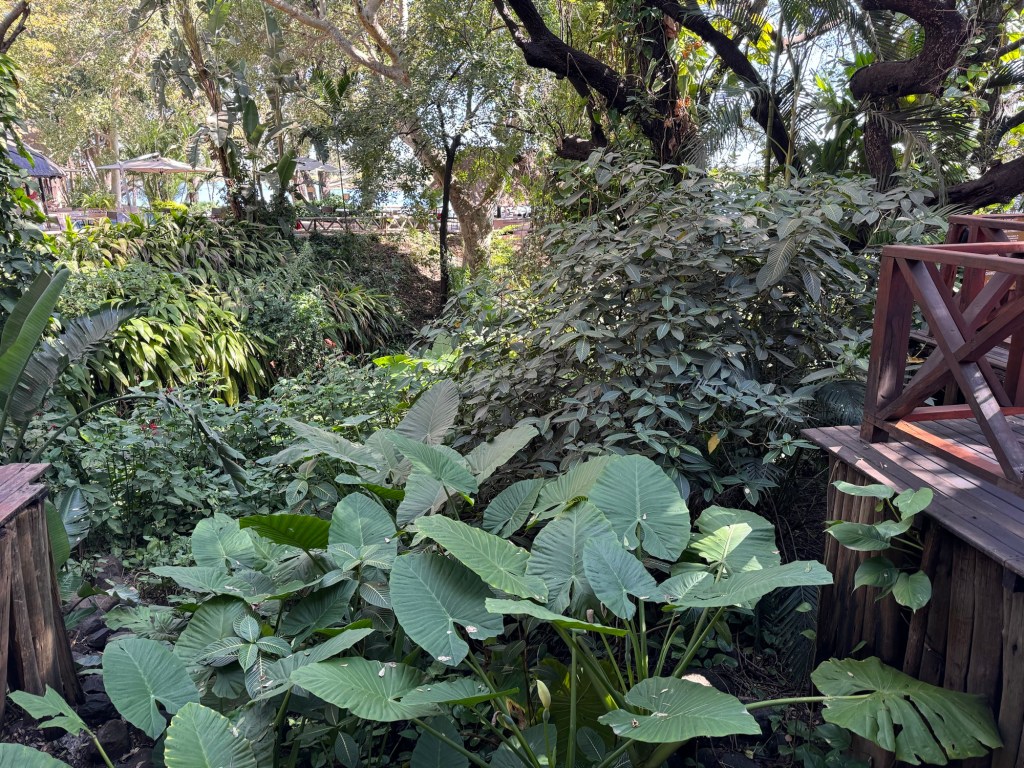
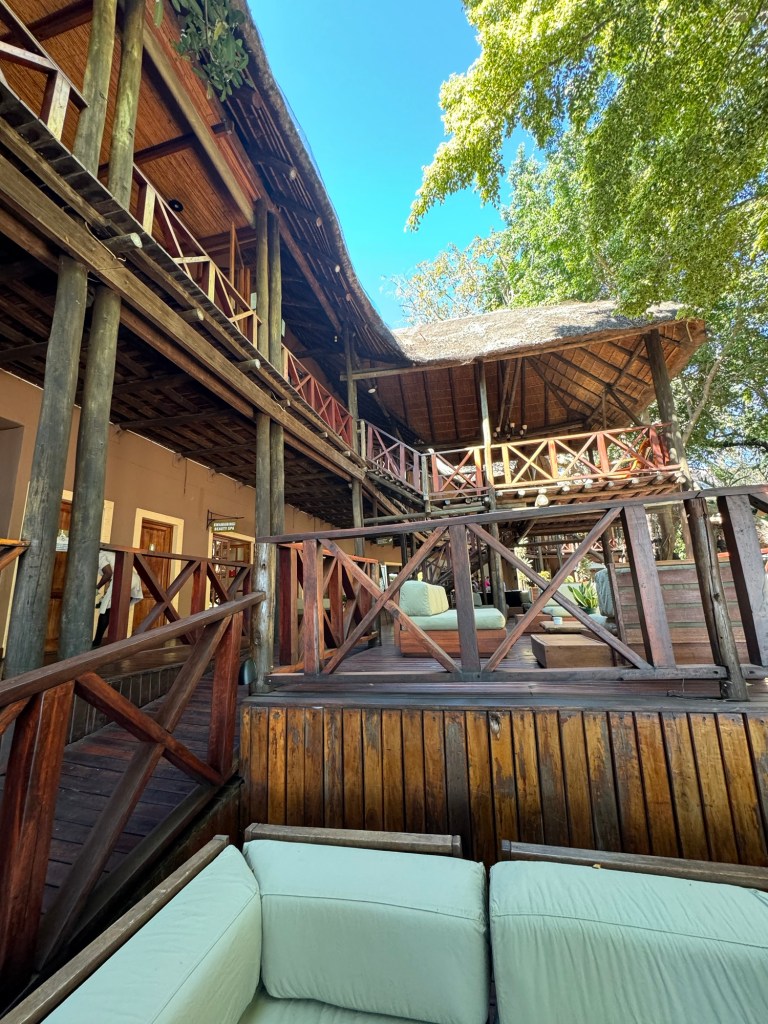
We arrived at the Chobe Marina Lodge, situated on the Chobe River, by lunch. I am blown away—this place is like a giant treehouse! We had barely checked into our room when Vervet moneys were doing handstands and a warthog was grazing the grounds outside the balcony!
The warthogs
Once we dropped our bags off, we had a buffet lunch and went on a Boat Excursion at 3:00. Long, hot afternoon which took us along the Chobe River into the Chobe National Park. Another breathtaking sunset while we cruised along the river, taking in so many animals and birds—elephants, (big) crocs, hippos, baboons, antelope (aquatic and waterbuck), impala, African fish eagle, AND another one of the big 5–the African buffalo! and then the icing on the cake was the sunset. I didn’t think a sunset would ever top the other night, but gosh was I wrong!
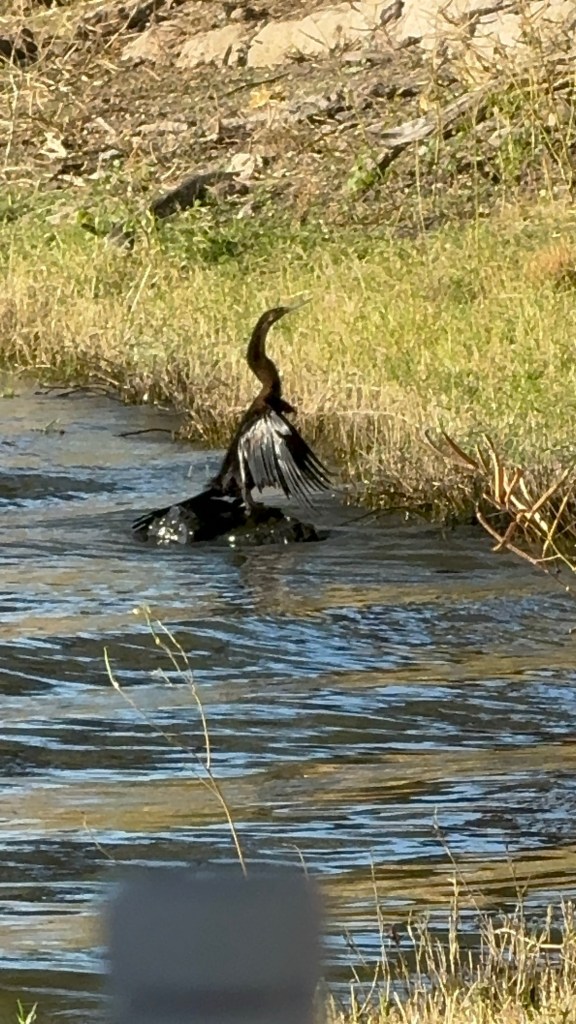
Washing his food before eating (with an Africa buffalo in the background)Drying off his wings before he can fly again
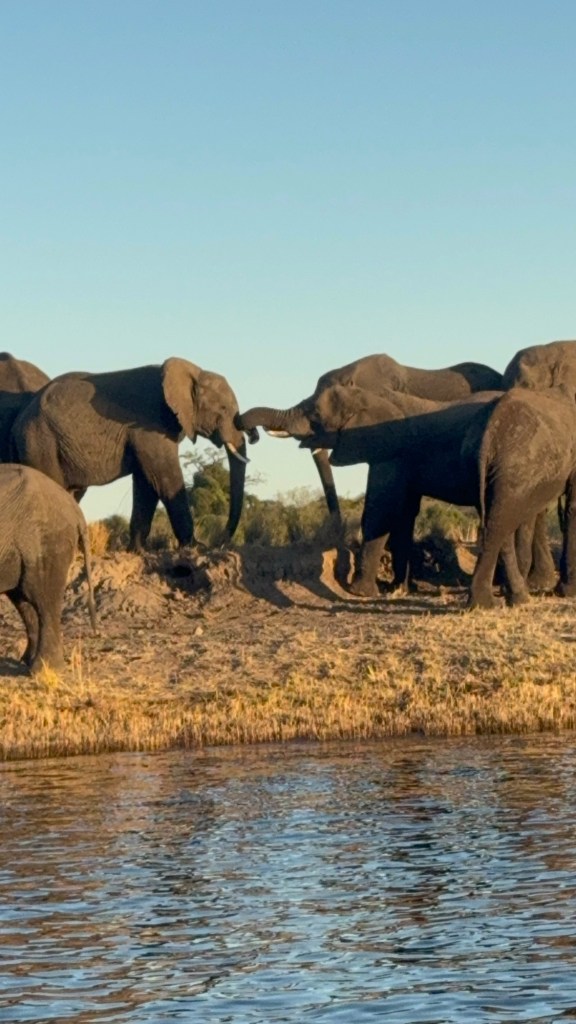
Tip toeing around any crocs!A little trunk-to-trunk touch
So many pods of hippos today on the banks of the Chobe River
African Buffalo… We have now seen 3 of the Big 5. Lions and Leopards to go!
Don’t want to run into this crocodile!
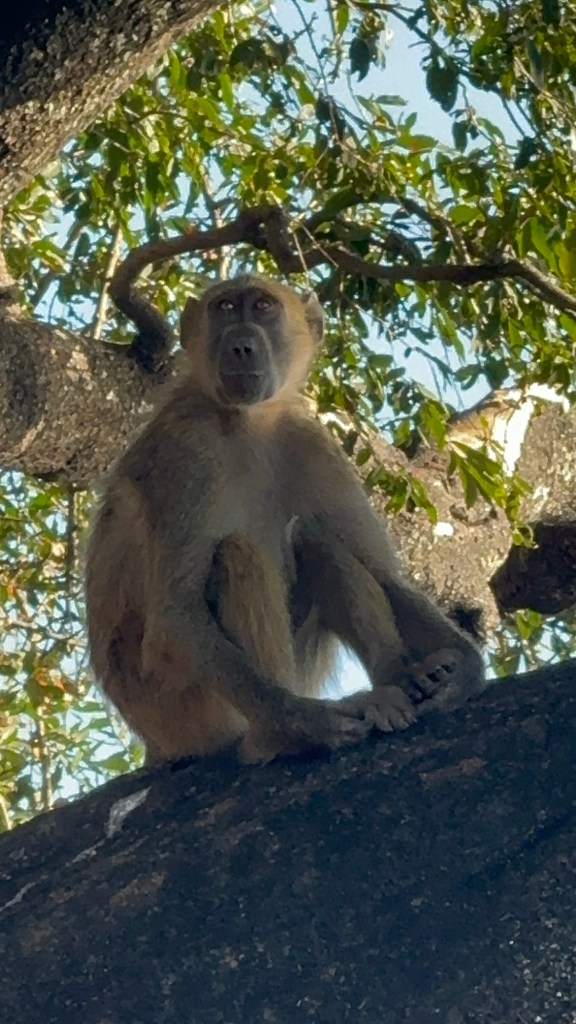
Lots of baboons in the trees! We had fun watching them climb to the tallest branches —babies too!
Fish Eagle
The impalas came down to the river the same time the baboons did. They have a “friendship”.
And we got to watch as the elephants played in the water!This is unedited. The sunset on the Chobe River – 1000x better in person!
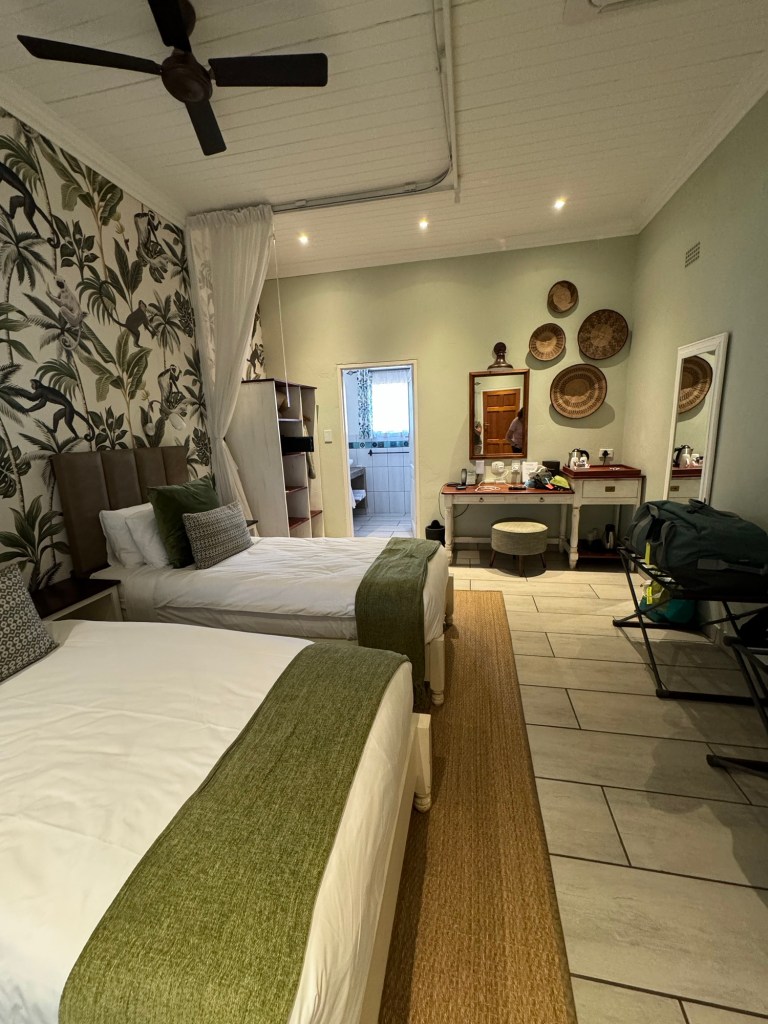
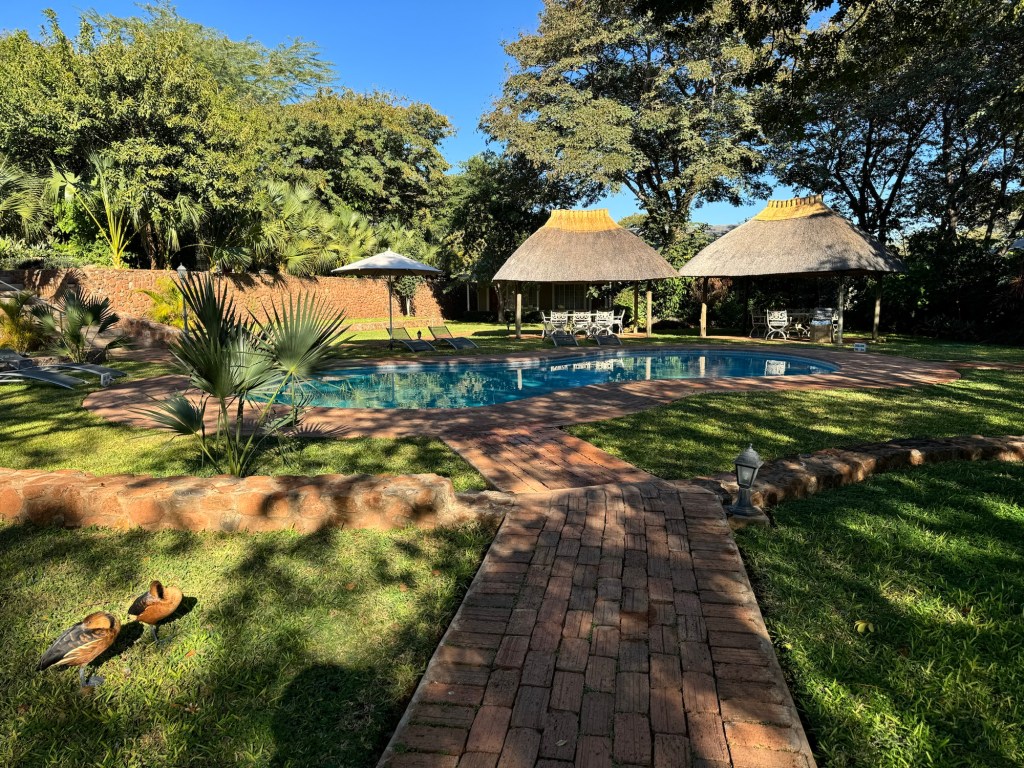
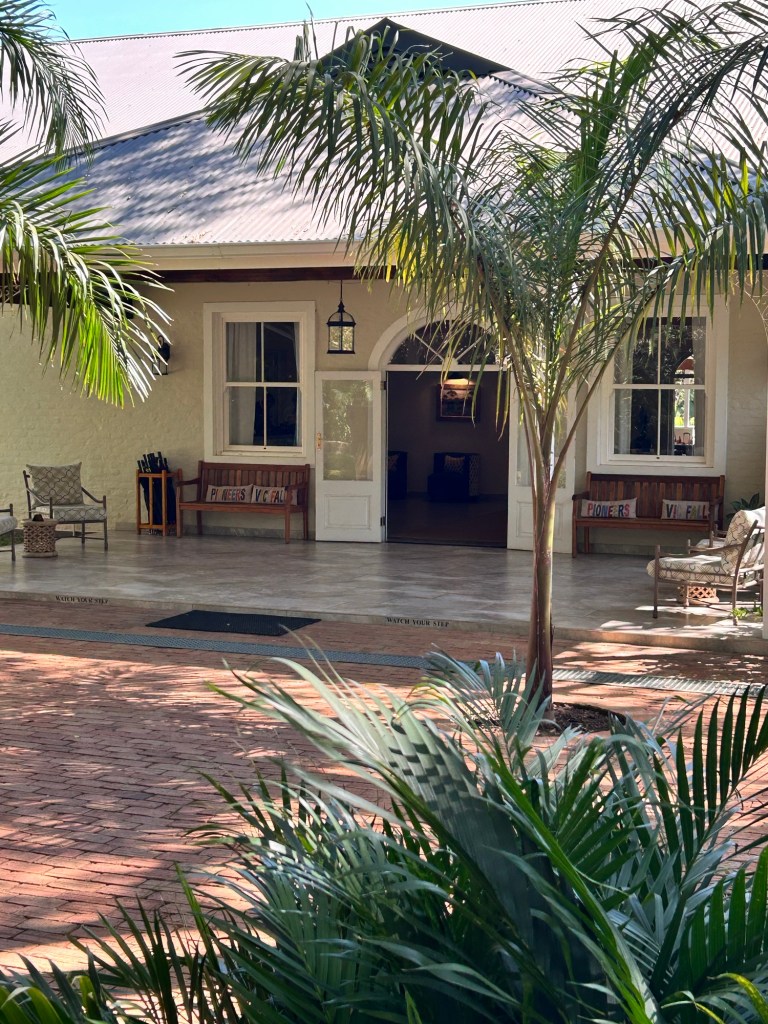
This is a fairly new hotel (since Covid) and it feels like I have stepped back in time. The gardens are beautiful (with two pools), the service is impeccable, and the rooms are comfortable! I highly recommend for your next Victoria Falls excursion.
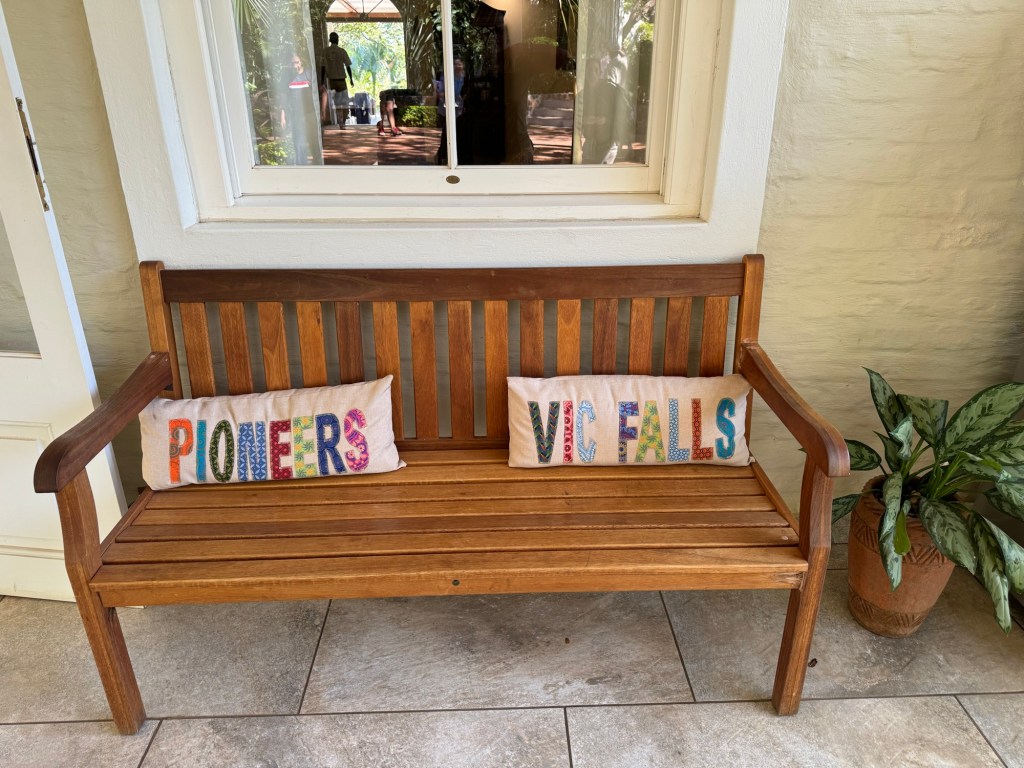
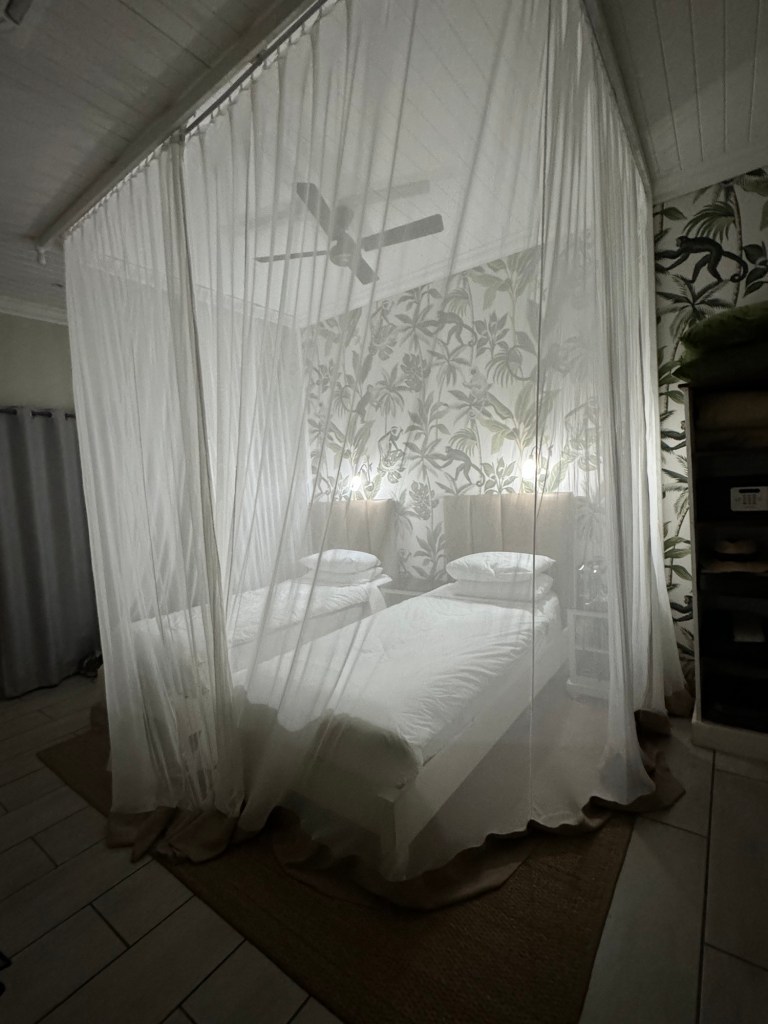
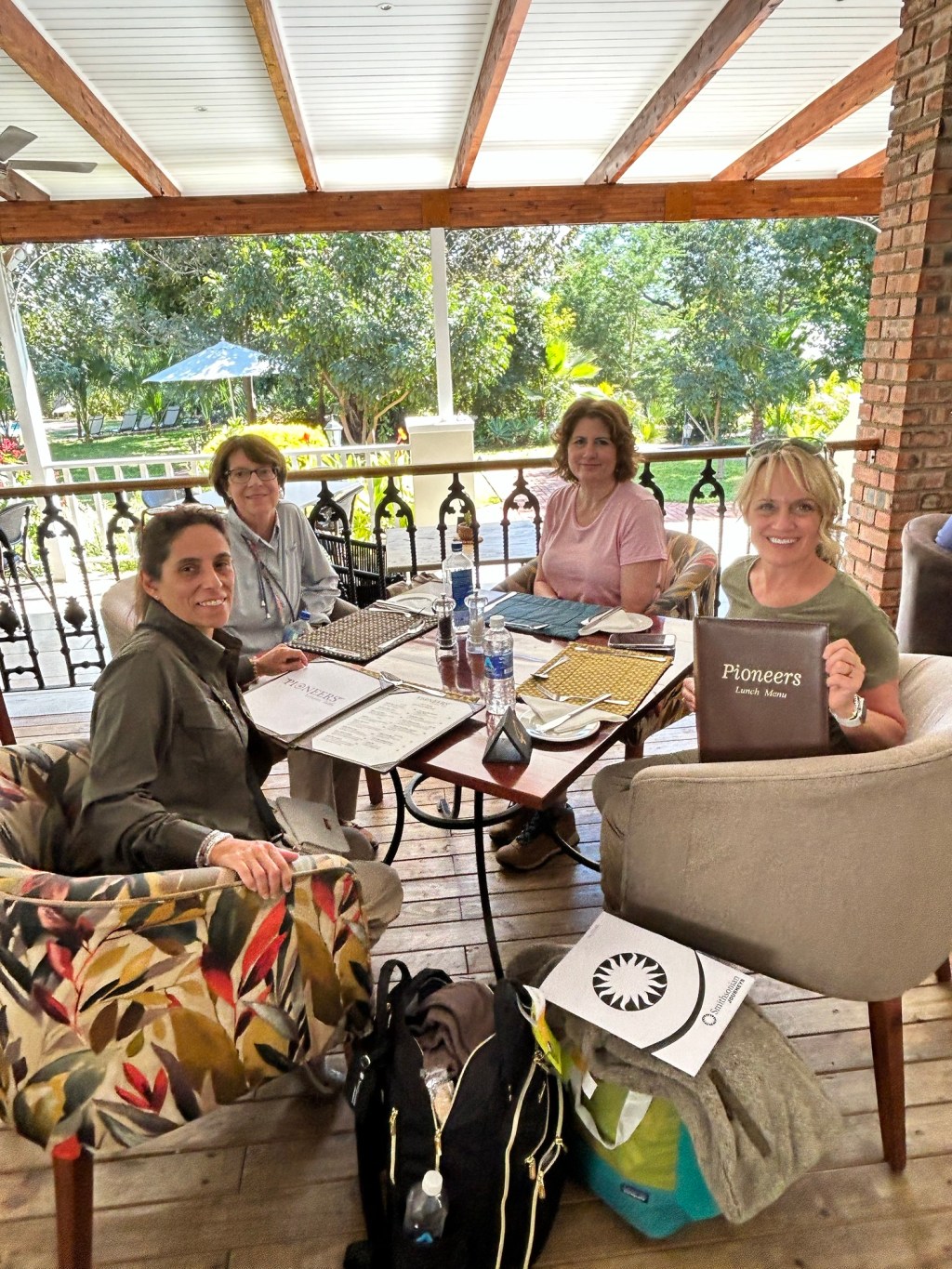
Welcome to Pioneers LodgeOur roomReady to sleep! I didn’t see a single mosquito in Victoria Falls but it is winter time (July)
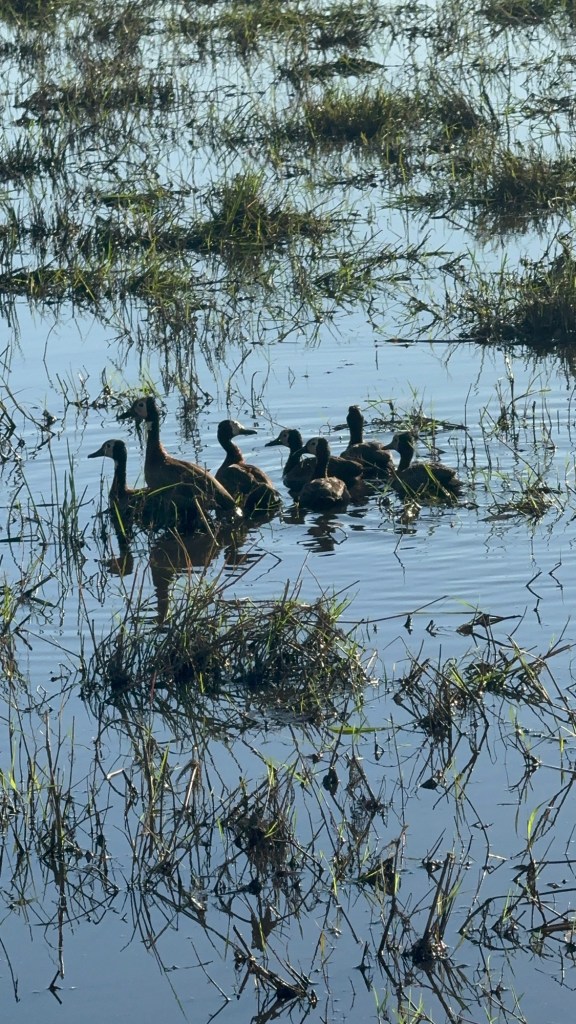
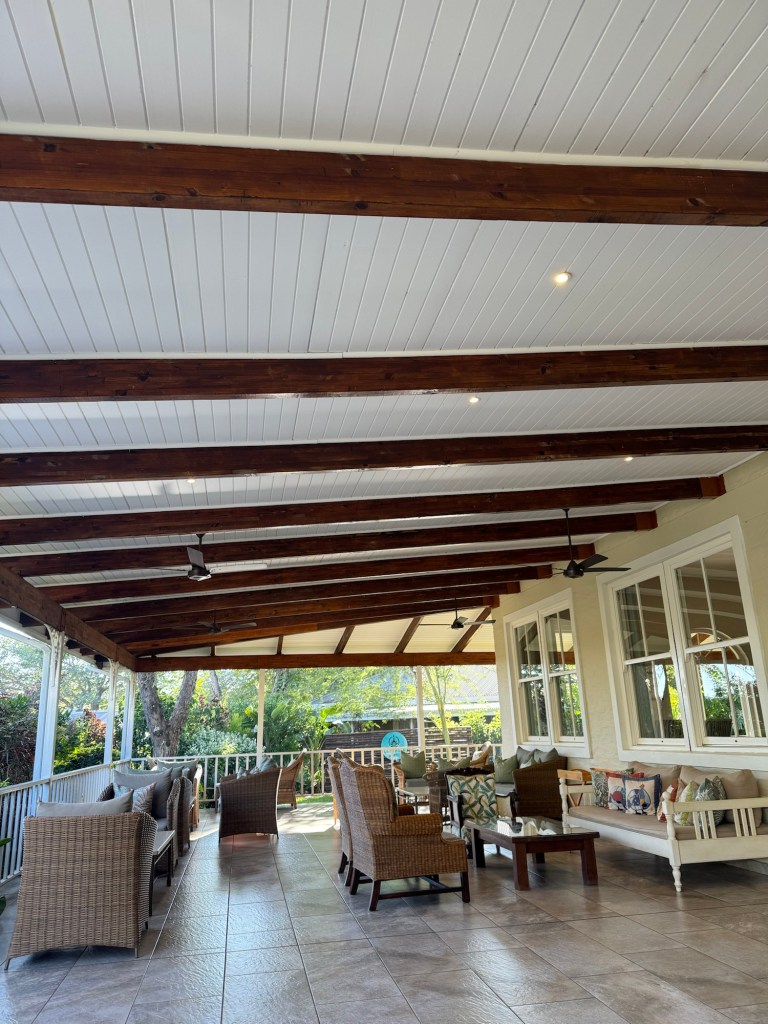
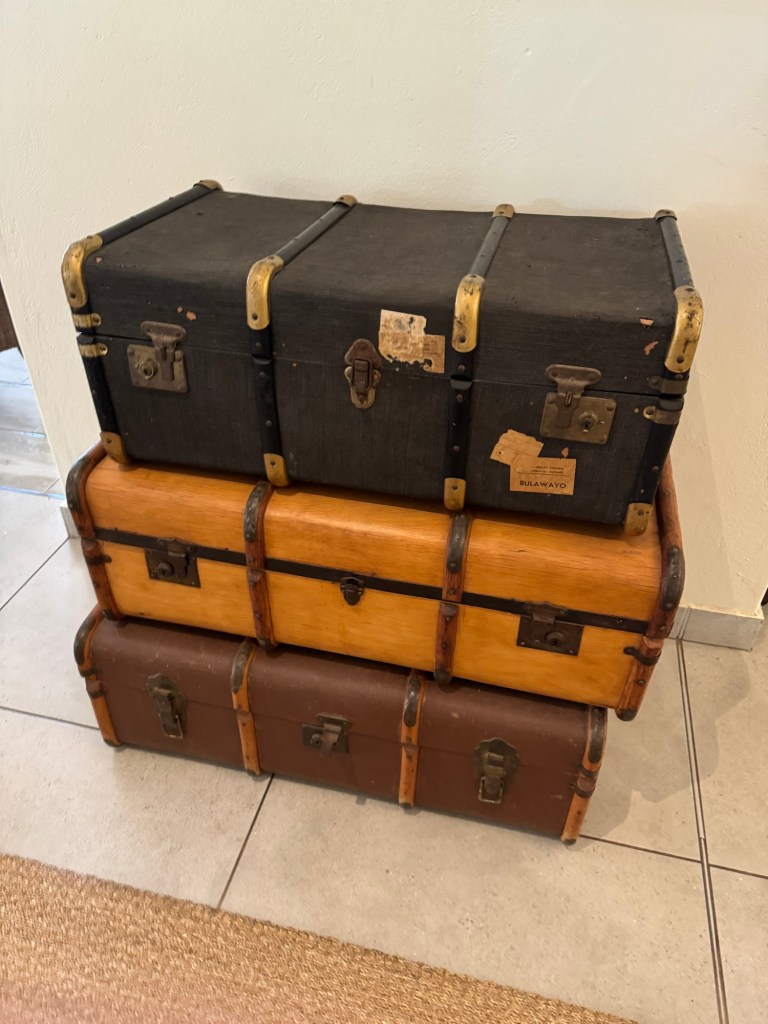
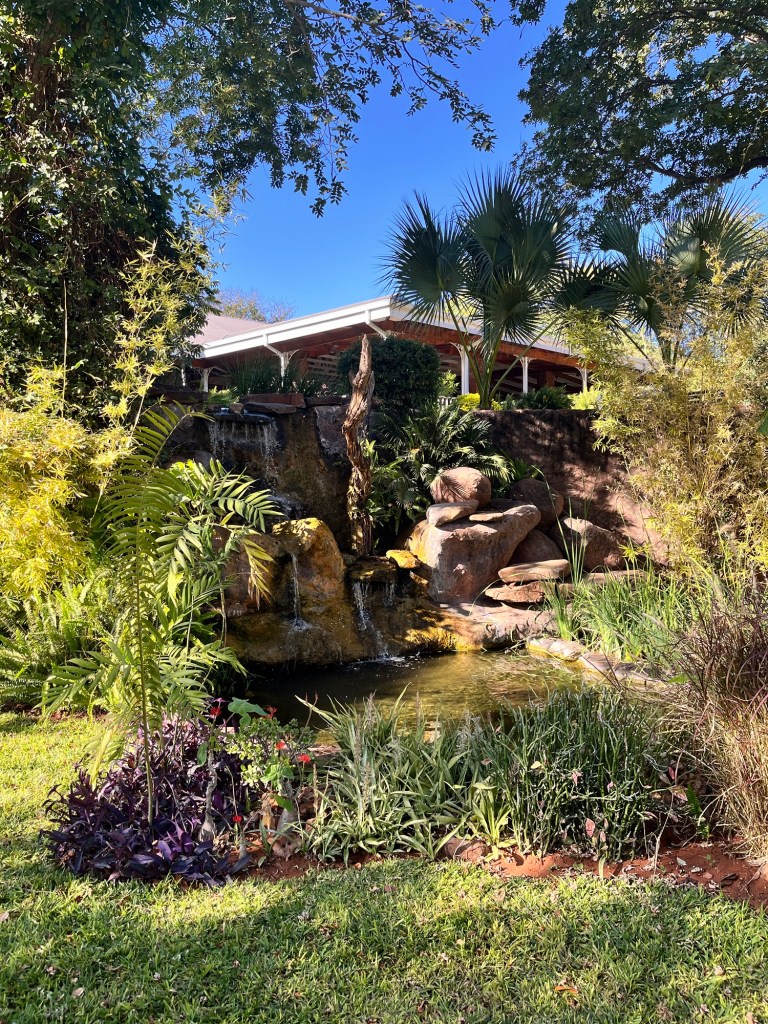
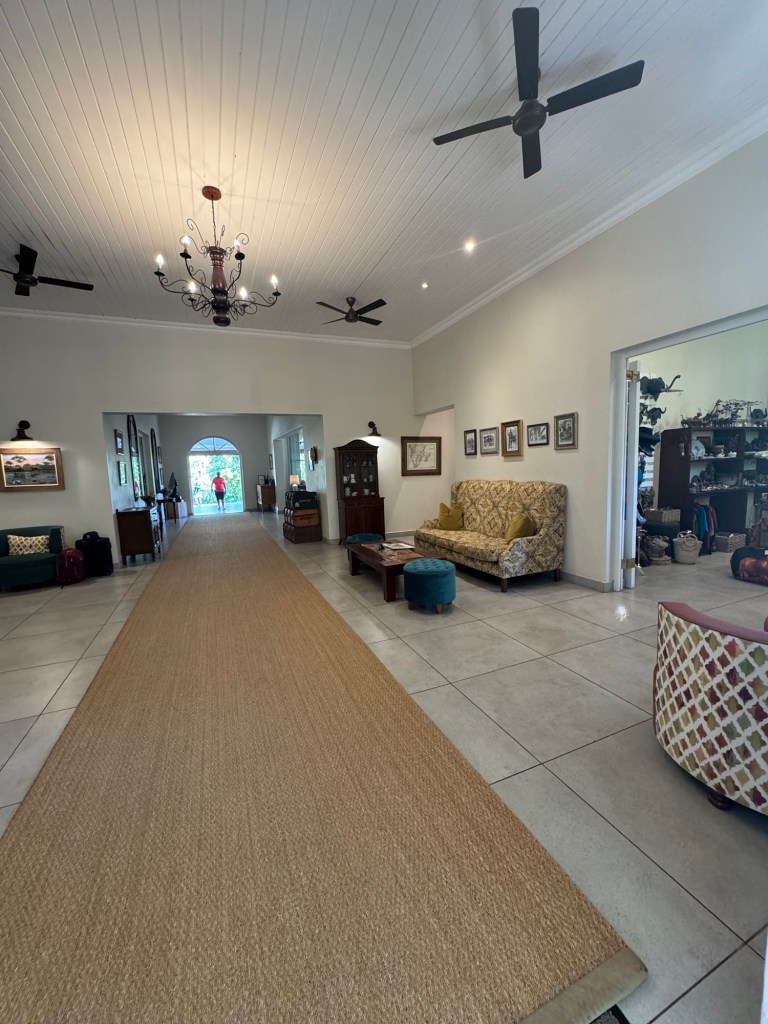
The grounds looking up to the veranda This picture captures a section of the huge veranda where we ate our breakfasts and dinnersAnother section of the open-aired veranda with the bar3 suitcases in the lobby The exquisite gardens with a waterfall More gardens and a peaceful place to read about the life of famous explorer, David Livingstone Lighted pathways lead you around the garden. This is the larger of the two pools The smaller pool area and the ducks in the lower left are Fulvous Whistling Ducks The lobby with a curio shop, decorated in the classic style.
There are only two countries that start with the letter “Z” and I went to both today. Before I tell the story, let me share some tidbits from my time here-
1. Zimbabwe got its name from the Shona tribe — dzinba dzemabwe—which means houses of stone or stone buildings. They were masons who built with stones and didn’t use mortar.
2. Zimbabwe used to be called Southern Rhodesia until their independence in 1980. Zambia was called Northern Rhodesia until 1964.
3. Victoria Falls is a safe tourist destination. Tourism is their livelihood and the penalties are steep if someone would try something shady.
4. Last night there was such a cacophony of dogs barking—the elephants were walking down the street!
Back to today…
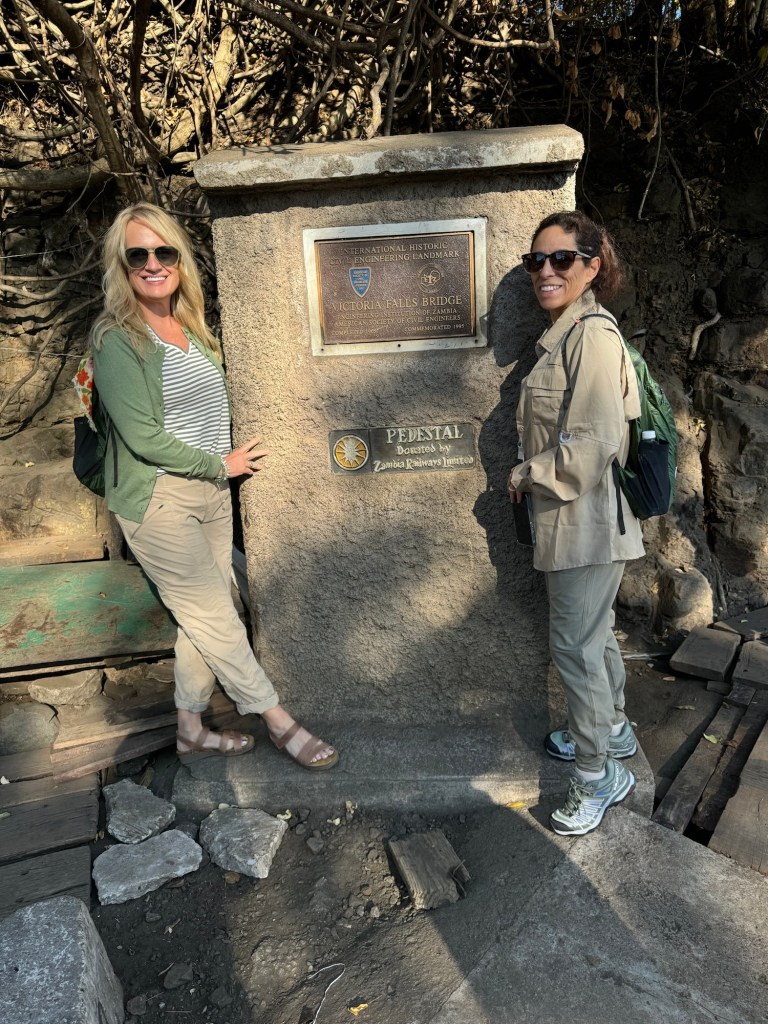
After sleeping in (7:00 am) we started the day by touring the Victoria Falls Bridge, which connects the two “Z” countries—Zimbabwe and Zambia.
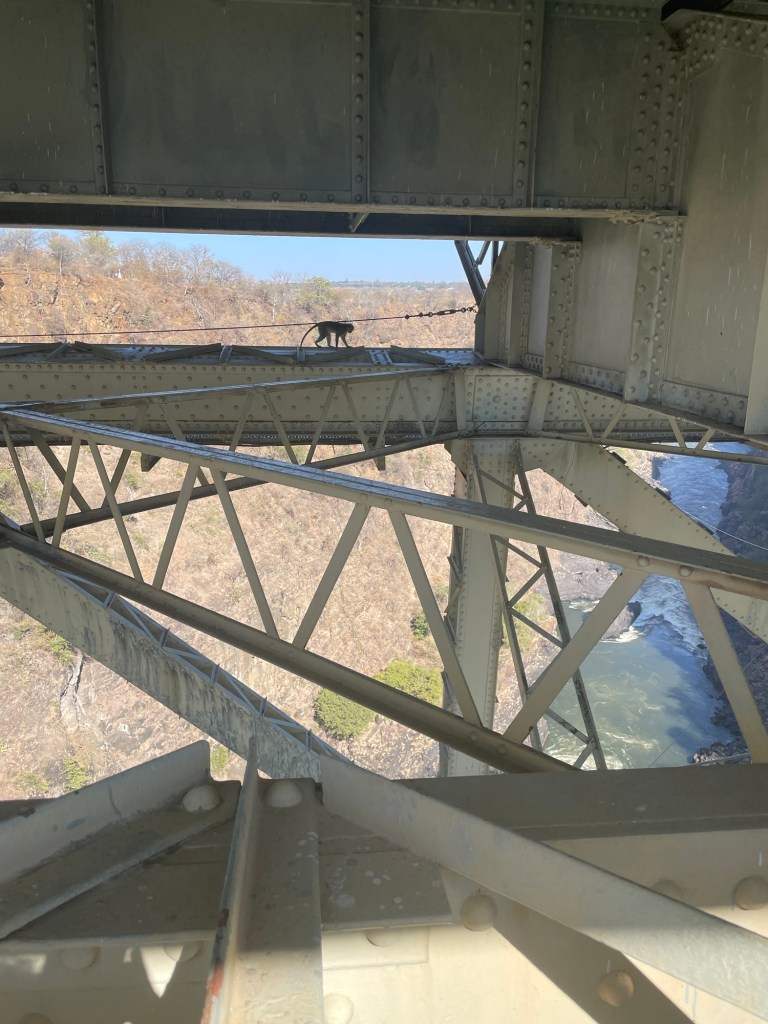
We took a bus to the Zambia side of the bridge, listened to an interesting overview on how the bridge was built, strapped in with carabiners, and walked across the cat walk with the Vervet monkeys in tow. And on the way we had the best view of Victoria Falls! Here are some fun facts about the Victoria Falls bridge:
1. The bridge was built and assembled in London to make sure it was structurally sound and would work. Then they broke it down and brought it to Rhodesia.
2. Built in 1905 and standing 128 meters high, it was an engineering feat at the time. There was/is no central support in the middle and it was built at the same time on each side so that they eventually met in the middle (fyi-similar to how the St Louis Arch was built). The gap was less than 1 1/2 inches. But the next day it was perfect due to thermal dynamics.
3. Workers’ tools had to be kept in a bucket of water given the hot weather.
4. It takes 6 years to (re)paint the bridge —all done by hand (including scrapping the paint off to prepare for the fresh coat).
5. On the Zambia side, the bridge was built in the basalt rock; and on the Zimbabwe side they dug down 15 meters to get to that same rock.
6. The vervet monkeys live on and in the bridge—automatic playground!
7. The cat walk was the original bridge and walk way. They built it 5 feet higher in 1930 when cars were introduced into the area.
8. You can Bungee jump off the bridge…two people in our party did!
9. Blondin- this was the name of the zip line that allowed the workers to carry supplies from one side to the next.
The Victoria Falls BridgeShadow from the bridge The view of The Falls from the bridgeCrossing on the cat walk A vervet monkey’s playgroundAnother vervet monkey just hanging out!
One of our party taking the plunge
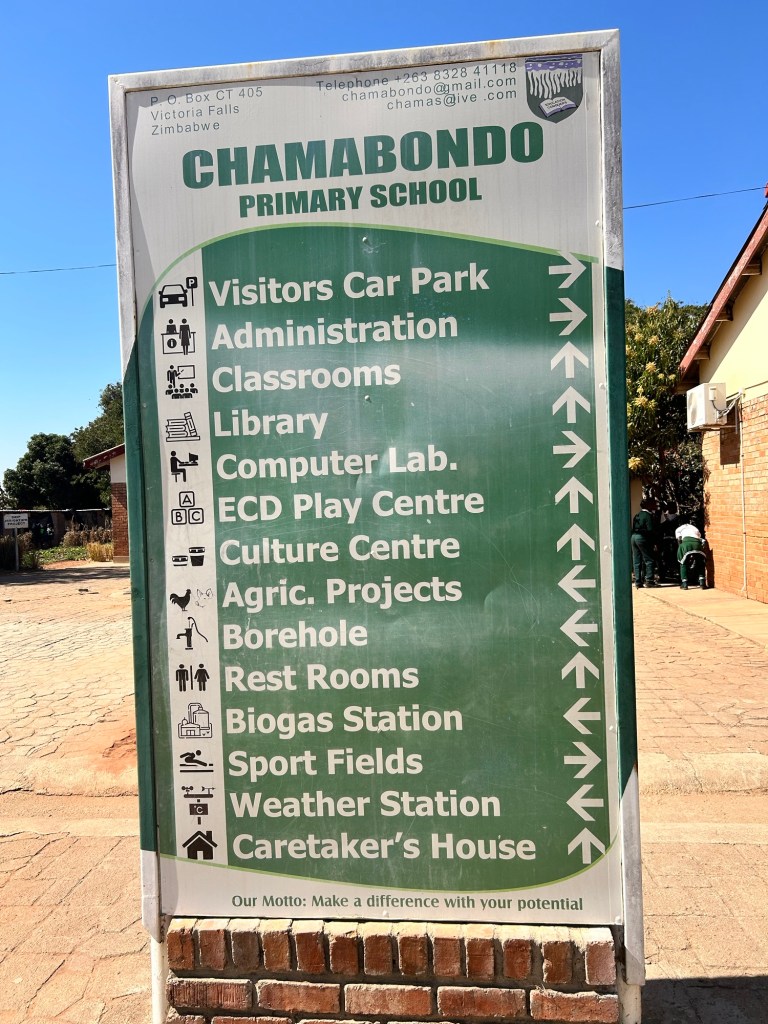
Next, we visited a primary school where we donated school supplies, took a tour, and enjoyed some entertainment from the students. This is a public school and the children wear uniforms. It cost a family $180 a year (3 terms per school year) to send their child to school. If the family is unable to find the tuition, they rely on funding from the government and private support.
We went to a couple of classrooms and had the opportunity to ask the students and teachers questions (and be asked questions).
When asked what their favorite class is, many of the kids replied agriculture. It’s no wonder as they have many responsibilities to grow produce and care for chickens, bunnies, and pigs.
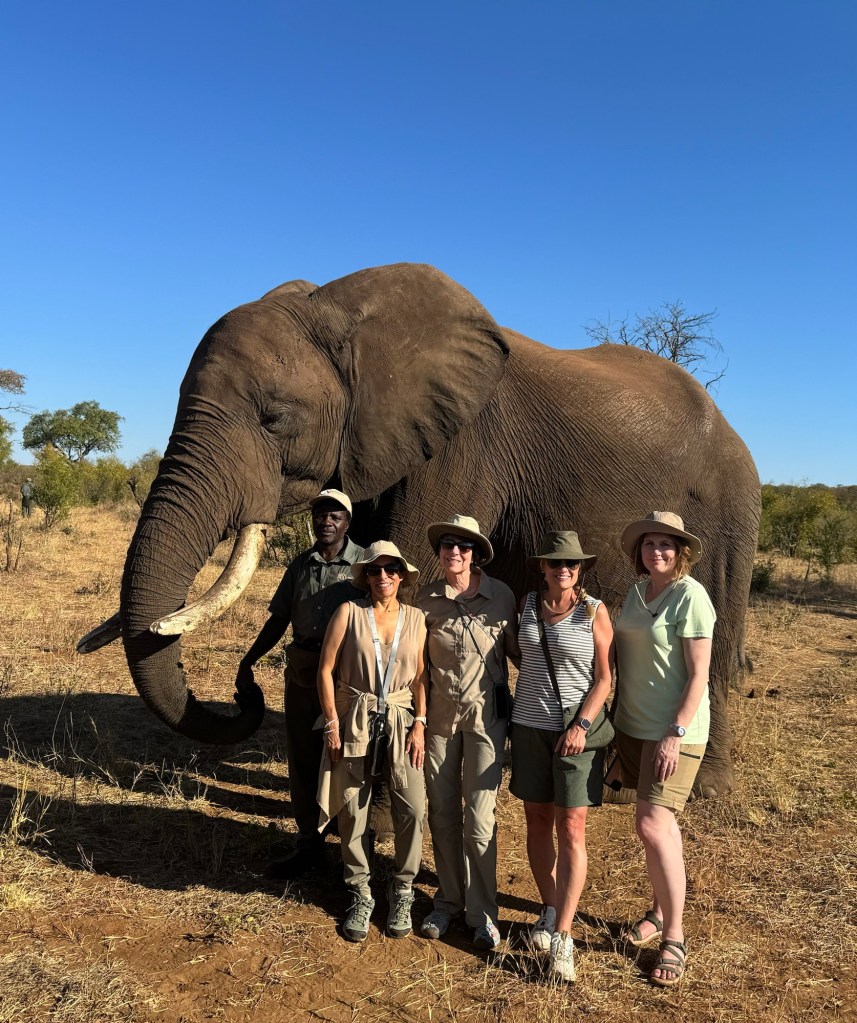
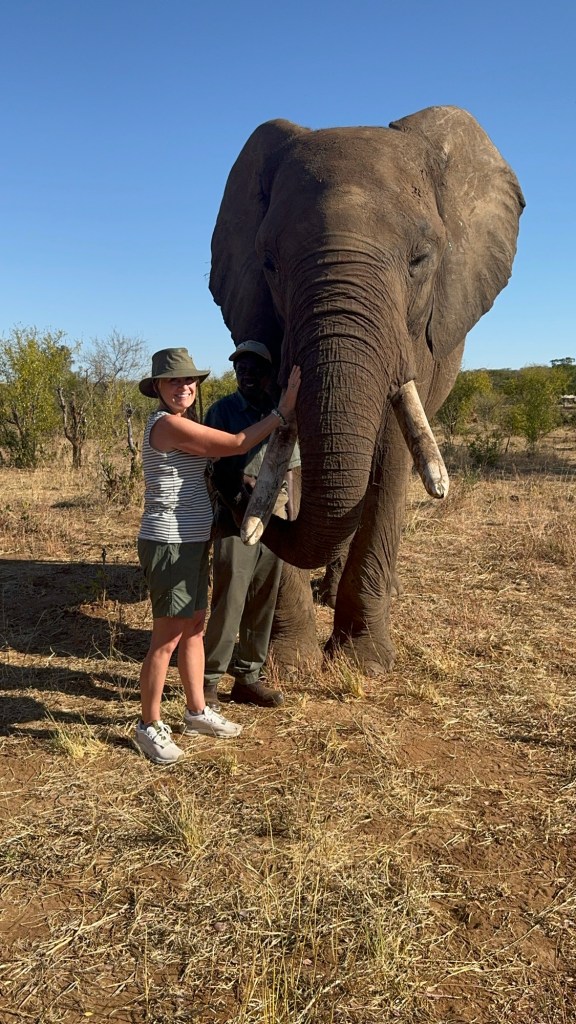
This afternoon we went to an elephant sanctuary called Jafuta, a nonprofit that protects elephants who were injured or abandoned and can no longer live in the wild. All of the elephants are rescues who were orphaned or injured and cannot return to the wild. They are now conservation and education animal ambassadors and have a safe home where they are cared for and allowed to freely roam the reserve. That’s where I met Doma—a 45 year old male who has lived in protection most of his life after he was rescued from being culled. In addition to feeding them, we walked with the elephants in the bush. It was a very calming experience!
Doma, Benjamin (his caregiver for 40 years), and us. We learned that elephants live for 65-70 years. They have 6 sets of teeth—when they lose their 6th set, they can no longer eat and therefore, starve.
Feeding Domo. Elephants control their body temperature (and swat away the flies) by flapping their ears.
In addition to the elephants, we also saw a baboon, Yellow Billed Stork, and Gray Heron.
It’s a baboon
We finished our day with a talk from retired safari guide, Chris Warden. He is passionate about Dr. David Livingstone and shared more about David’s extraordinary life, explorations, and his fight to end the East Africa slave trade.
When I didn’t think the day could get any better in Zimbabwe, it did!
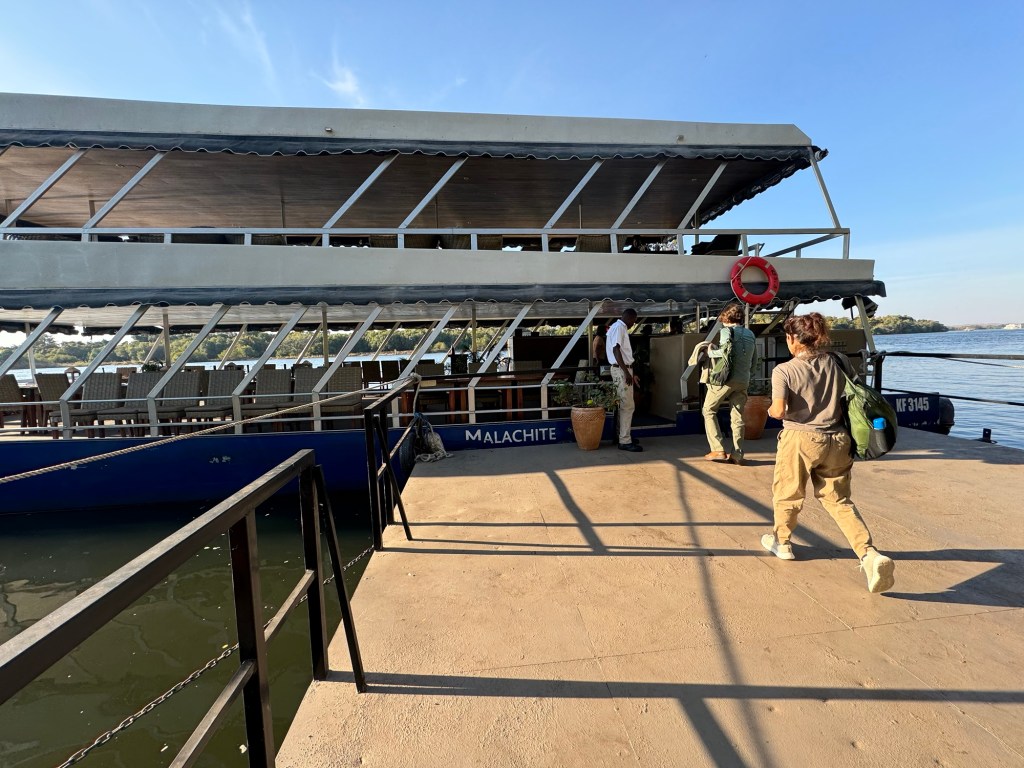
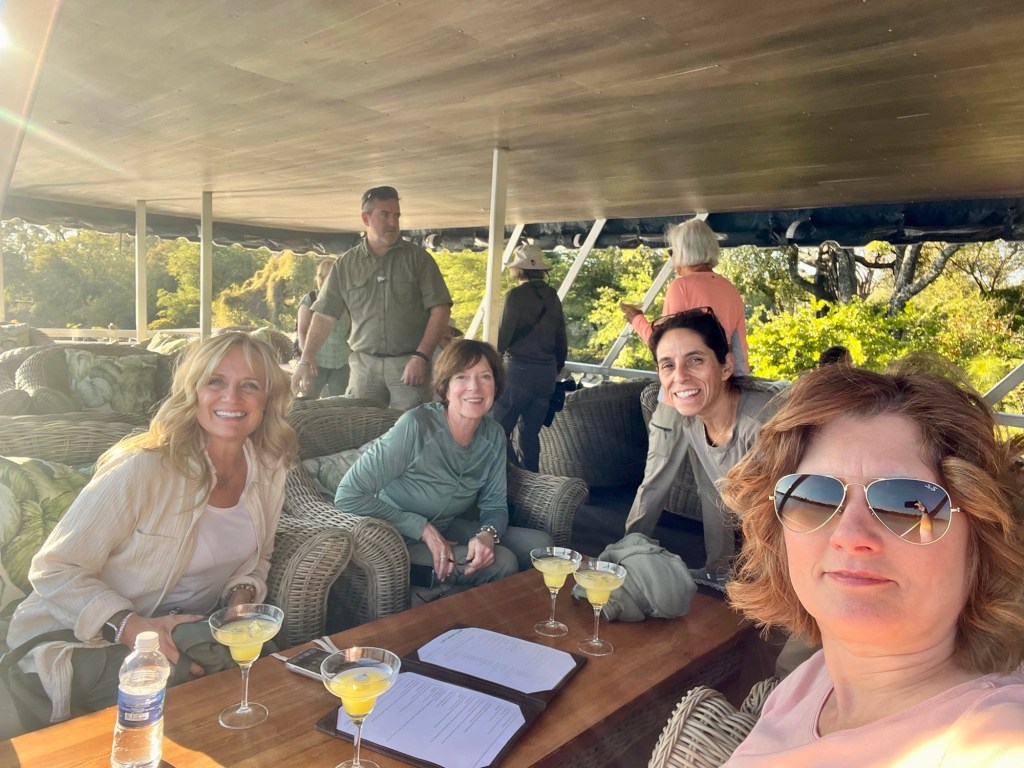
Our night cap and July 4th celebration was a Dinner Cruise on the Zambezi River.
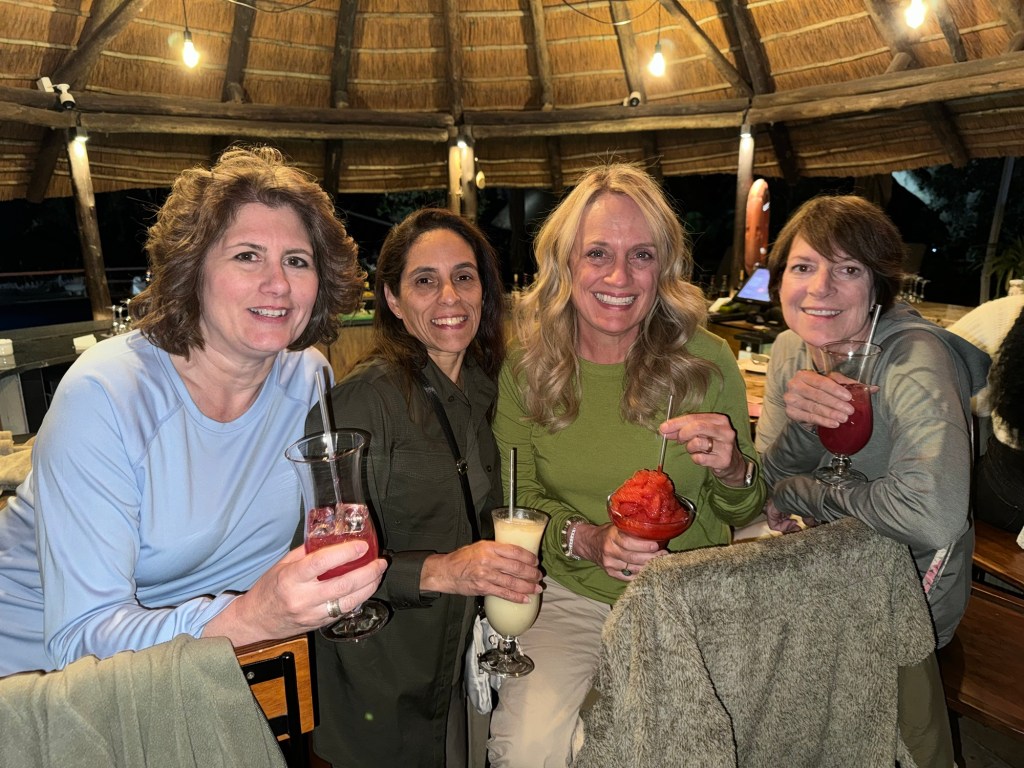
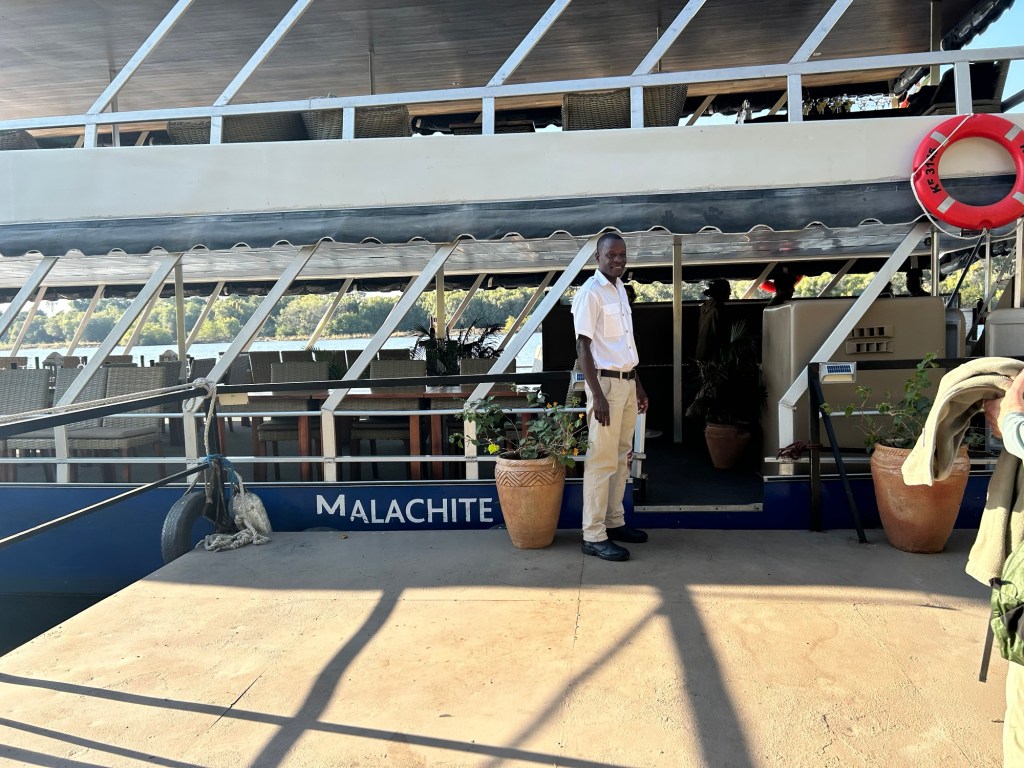
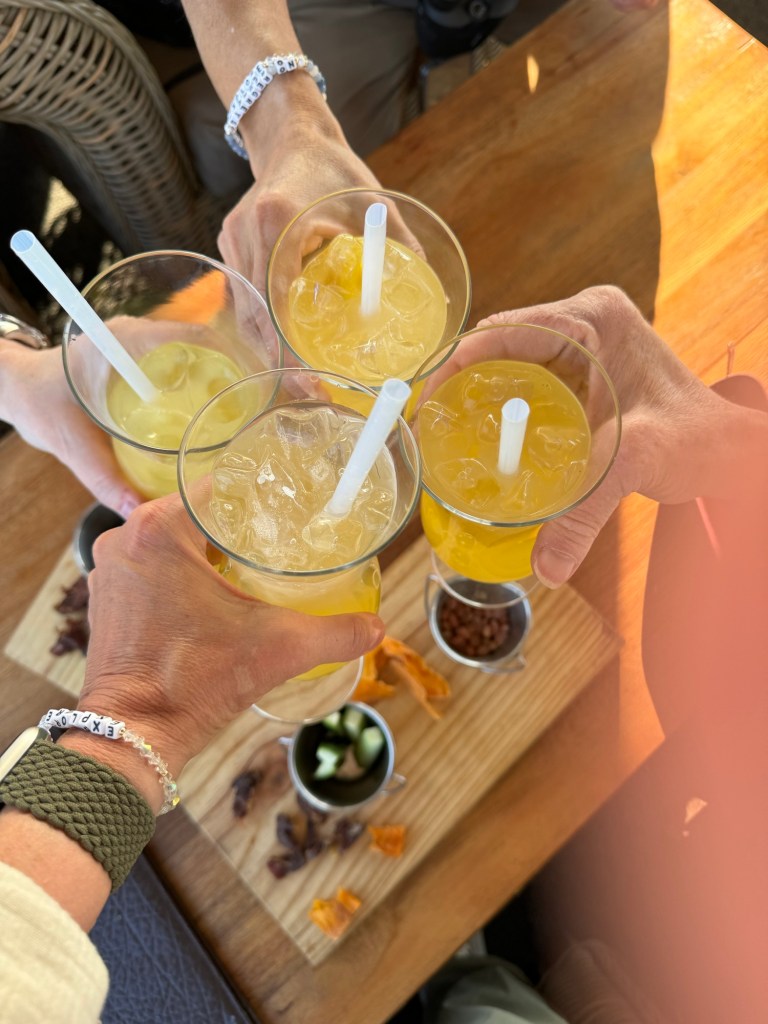
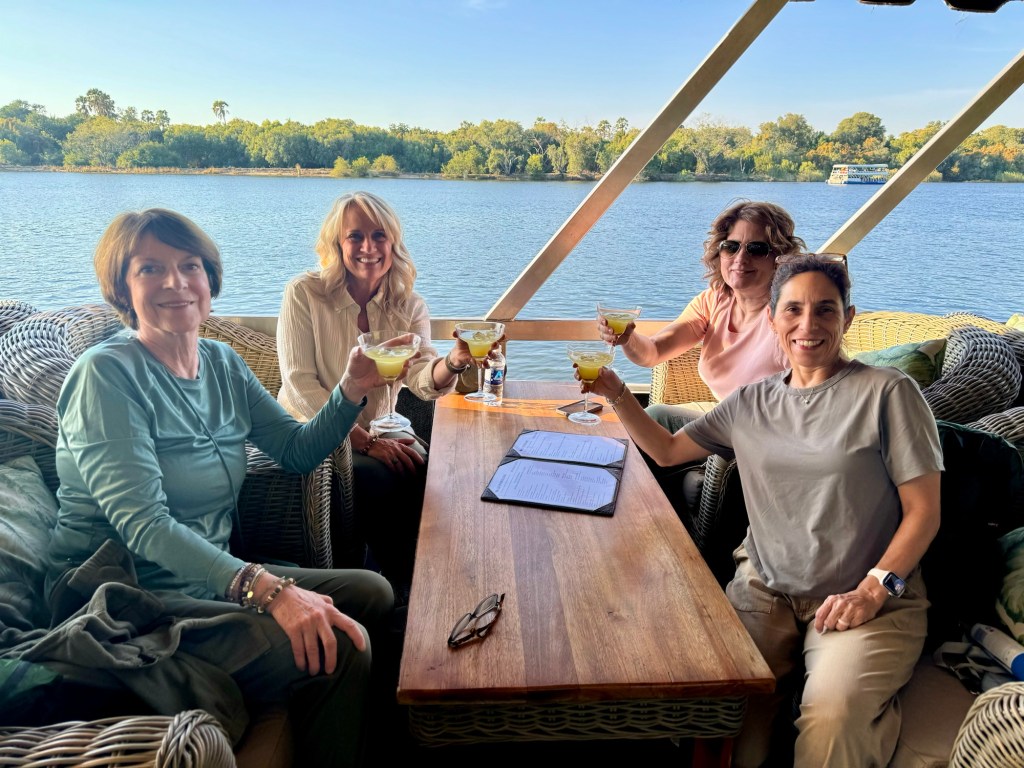
All aboard the Malachite!Getting ready to cruise down the Zambezi River! 🦛 🐊 🌅 Cheers to July 4th and friendship! These Zambezi specials were made from Ginger Beer, Lemonade and Orange Mazoe. Some of us may have had vodka added 😉
After drinks, appetizers, and great conversation about our unbelievable day, we saw some animals! The Egyptian goose, a couple of crocodiles, and this little fellow who just wanted to sleep. He had some scars so the theory is he’s been battling his way into a bloat of hippos or trying to stay in his bloat.
On the banks of the ZambeziLocation, location, location!
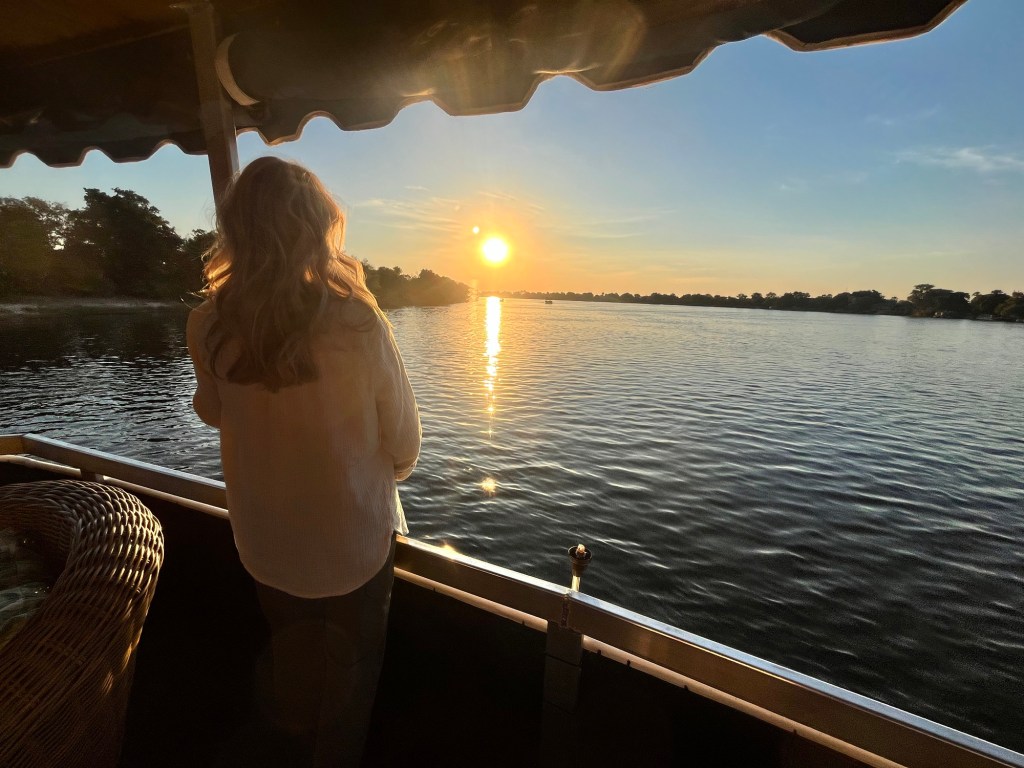
There weren’t any fireworks, but just like the day started with a gorgeous sunrise, we finished with a jaw dropping sunset!
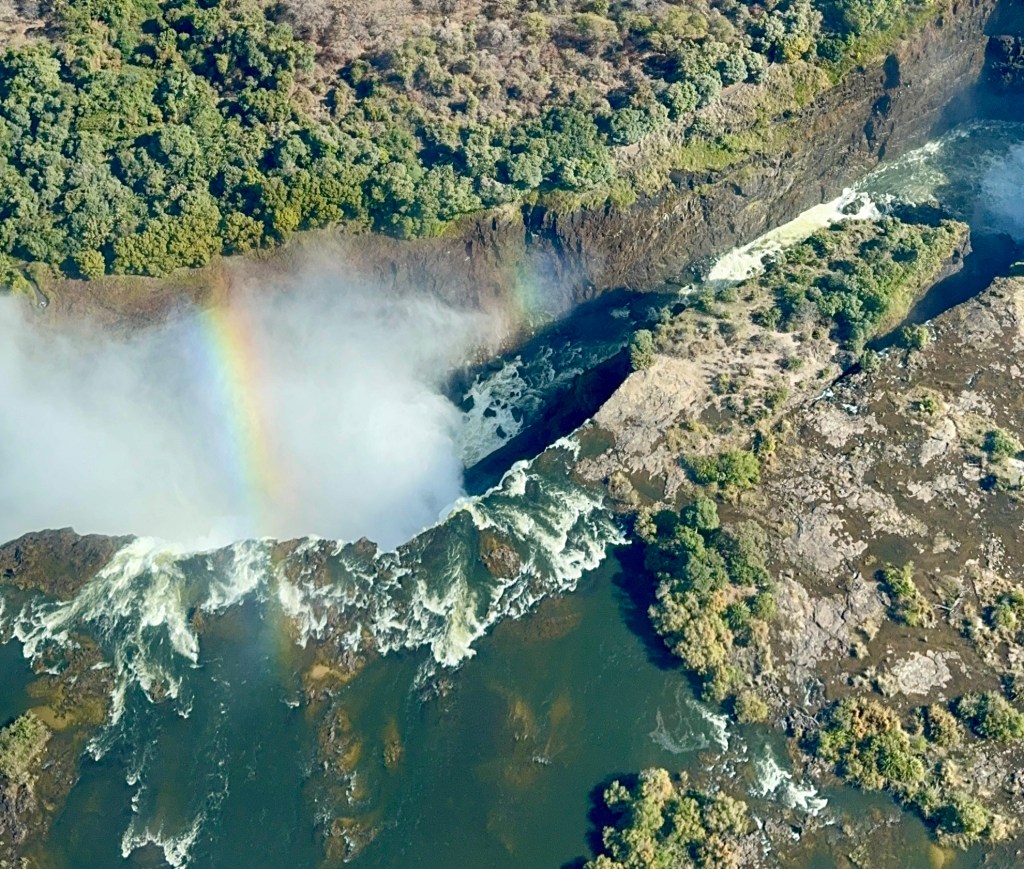
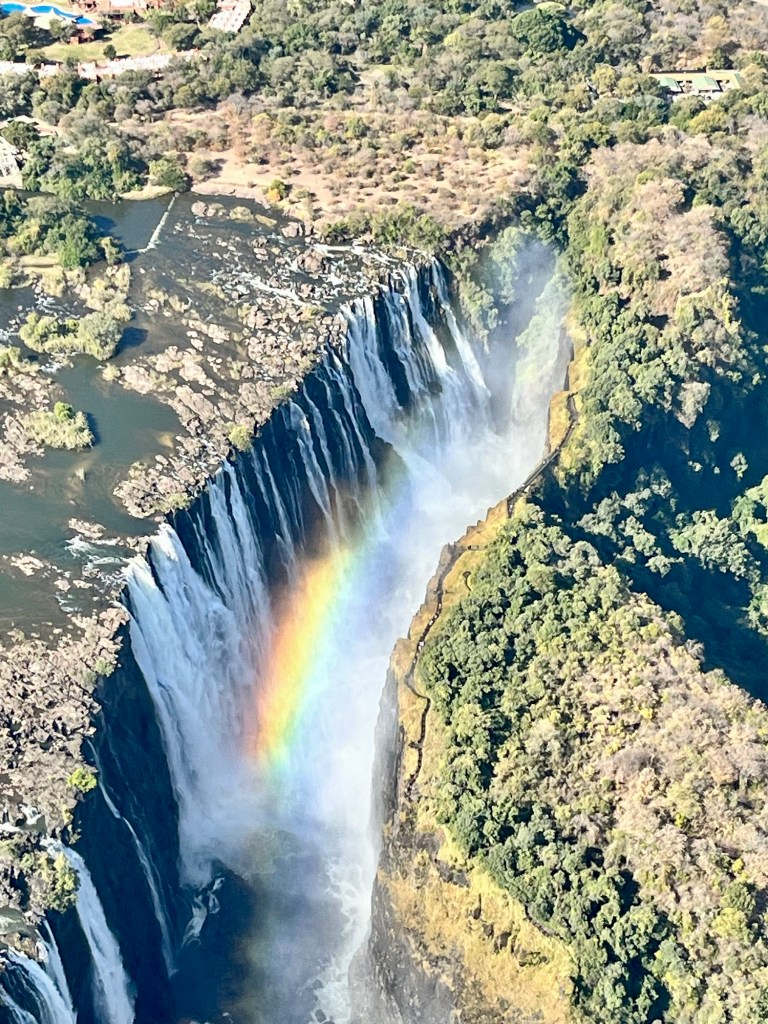
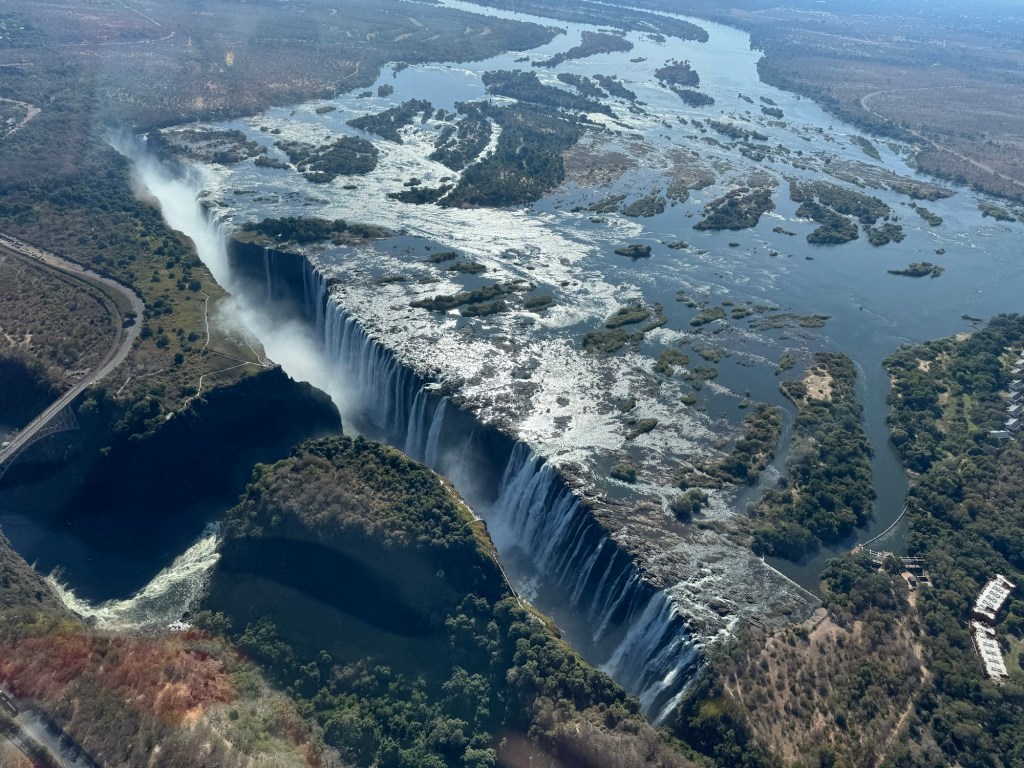
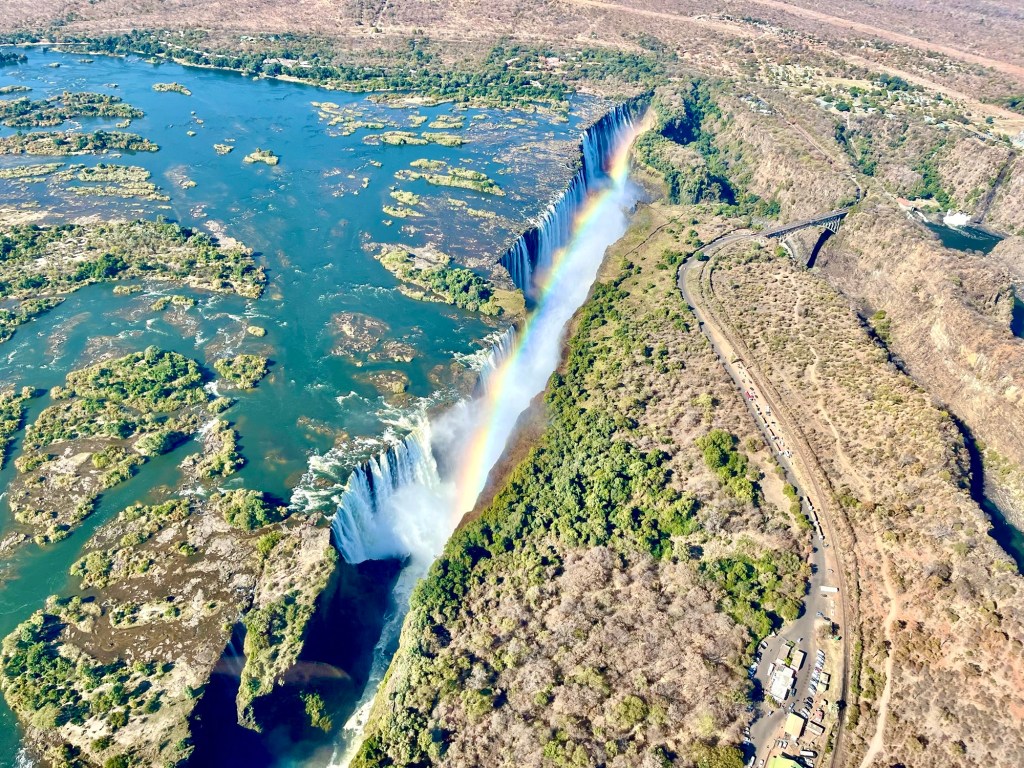
After our game drive we did the helicopter tour over Victoria Falls. It was incredible to get the “by air” perspective since we visited the Falls yesterday by foot. Highly recommend!! 🚁
Look at the rainbow that appears!🌈🌈🌈
A herd of elephants below!
🚁 Video by Bonisair 🚁
After we arrived back to the hotel, we took a little excursion to tue corner market and bought some treats – M&Ms!
Have you ever had one of those days that just is perfect from start to finish? That was today for me in Zimbabwe.
Because it was so perfect, I’m going to split this post into three parts from the three distinct events that we did today.
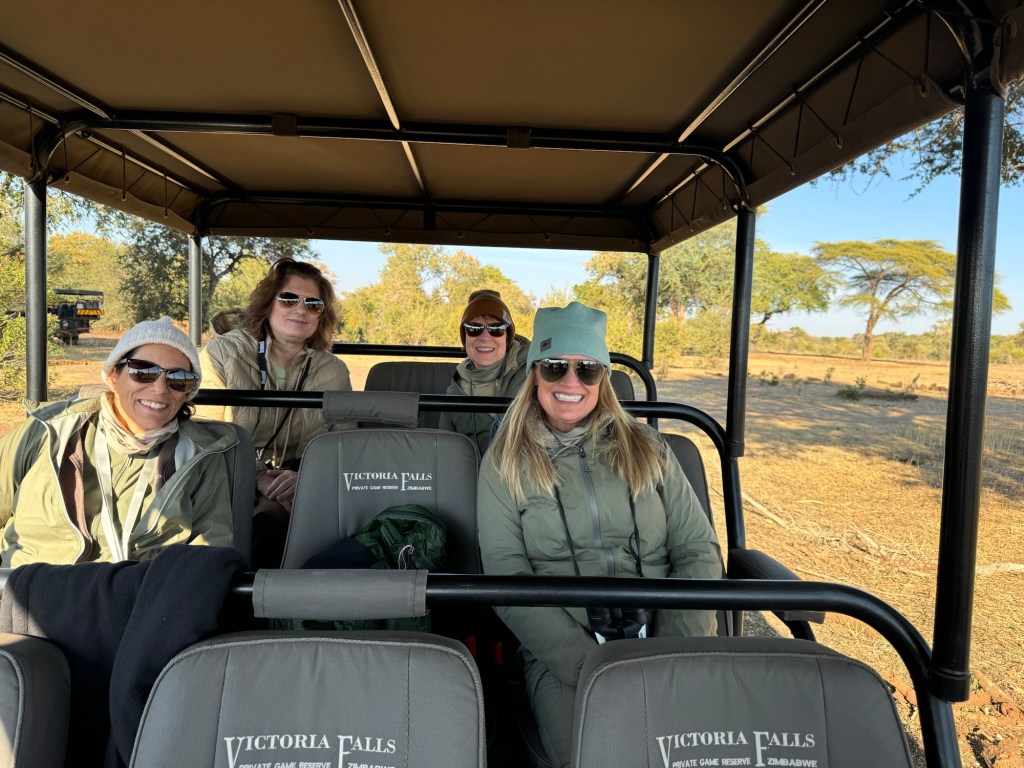
Let’s start with private game drive to The Stanley and Livingstone Private Game Reserve, on 4,000 hectares of land and home to the big 5, including the critically endangered black rhinoceros. These animals are poached for their horns, which have been used in Chinese medicine for years to cure a number of ailments. According to our guide there only around 5,000 left. Today, their horns are removed so the animals are not poached/killed, and grow back within two years.
Our wake up call at 5:00 am. We were out in the jeep, bundled up, and ready to go by 5:30 am. It was a chilly start to the day but on our drive to the private game reserve we saw three shooting stars and knew it would be a memorable morning.
First game drive of the trip
Upon entering the reserve, we saw the most beautiful sunrise
Sunrise on July 4, 2024 in Zimbabwe
While on our way to find the rhinos, we ran into a small herd of elephants. It was quite the encounter. The guide stopped the Jeep and we stood motionless as the bulls crossed the road. A mother shook her head at us as a warning to stay back as she crossed with her baby. Then a teenager had a stare down with us before we proceeded on our way. Incredible experience where my heart skipped a few beats. It’s always the goal to stay a distance from the animals; however, in this case, they were right there!
We then found the black rhinoceros. In fact, we found two of them! What a sight to see as they snapped the branches from the trees and ate the leaves along with it. They are quite noisy eaters! The black rhinos can also lift heir heads quite high, unlike the white rhinos who are ground grazers.
Two Black Rhinos having their breakfast
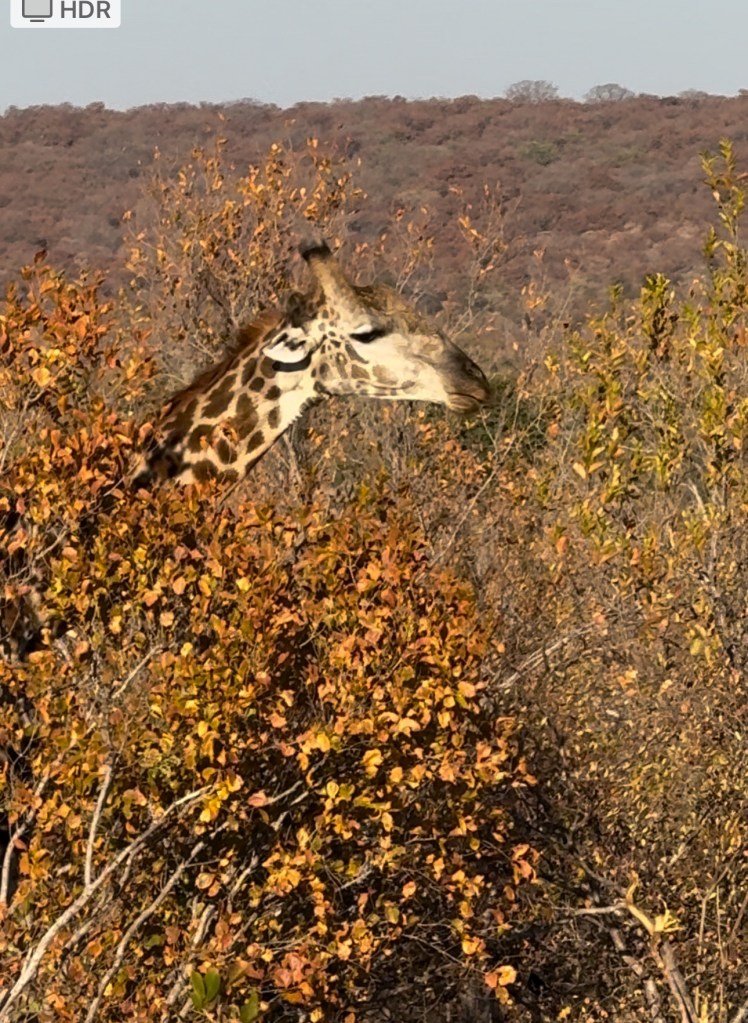
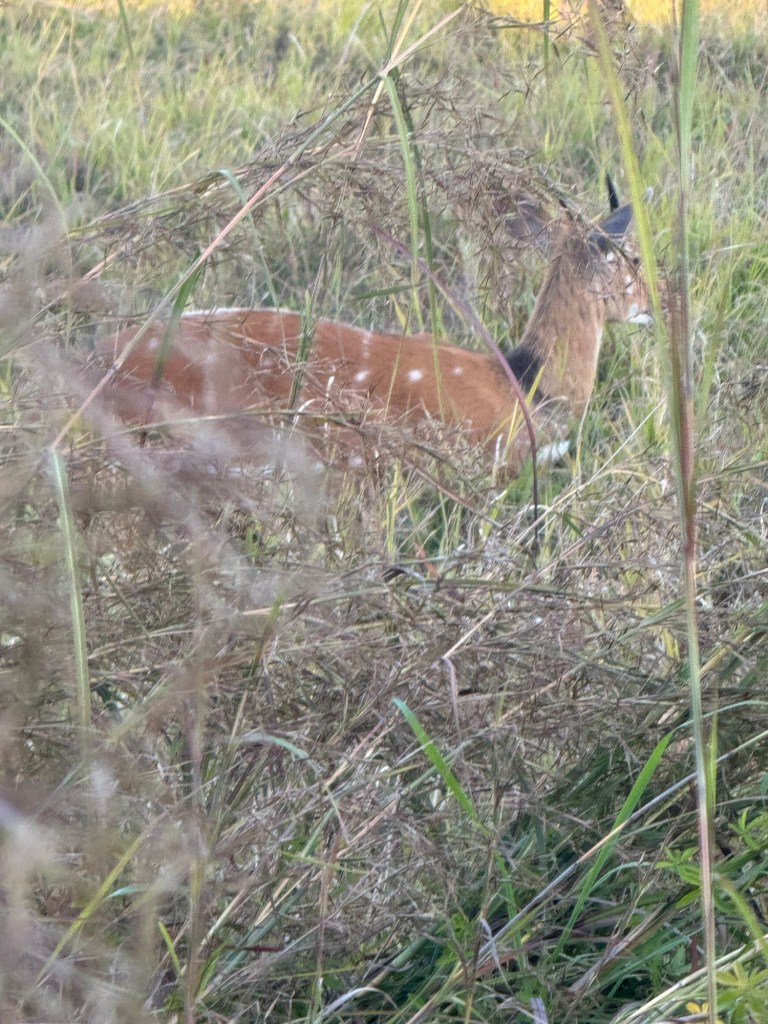
The morning continued with sightings of: giraffes, warthogs, the elusive Roan Antelope (our one guide said she may see one every 2-3 years!), zebras, kudus, impalas, and baboons. Here are a few pics/videos.
The Roan AntelopePeek-a-boo Giraffe 🦒 Such regal animals
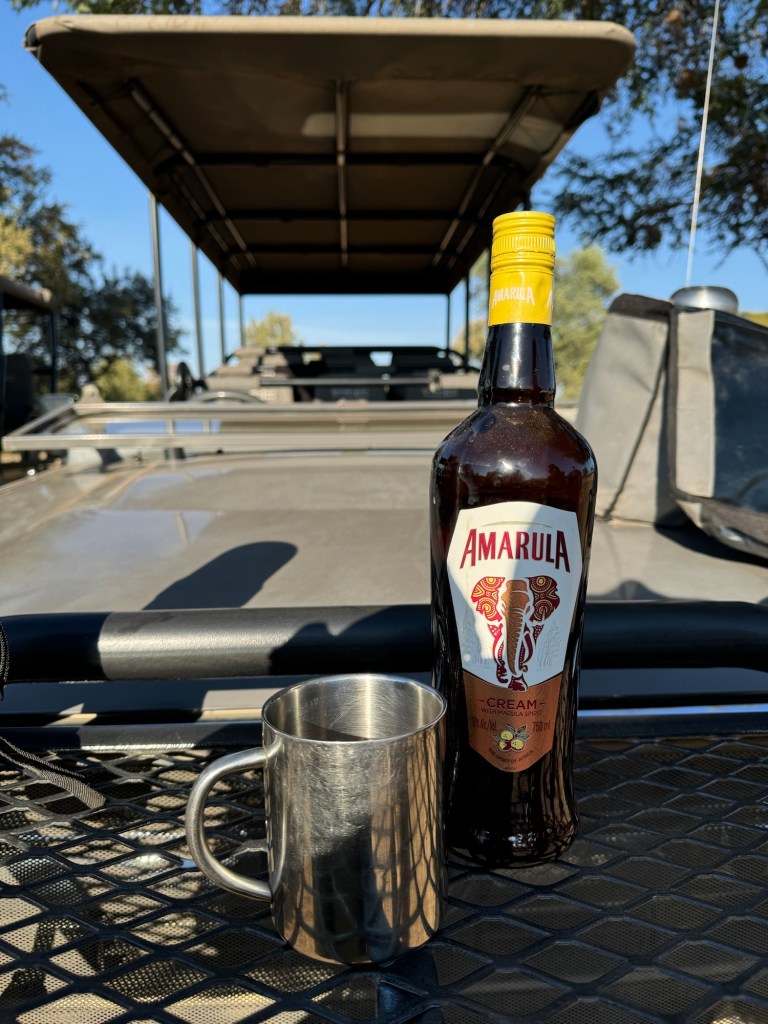
Baby warthog crossing The baboons! Once we were back at the lodge, our Smithsonian expert talked about the 8 months she and her husband lived with the baboons for a National Geographic documentary.Cheers to a fantastic morning! (This is like a fruity Baileys and quite delicious!)Time to head back for our next adventure!
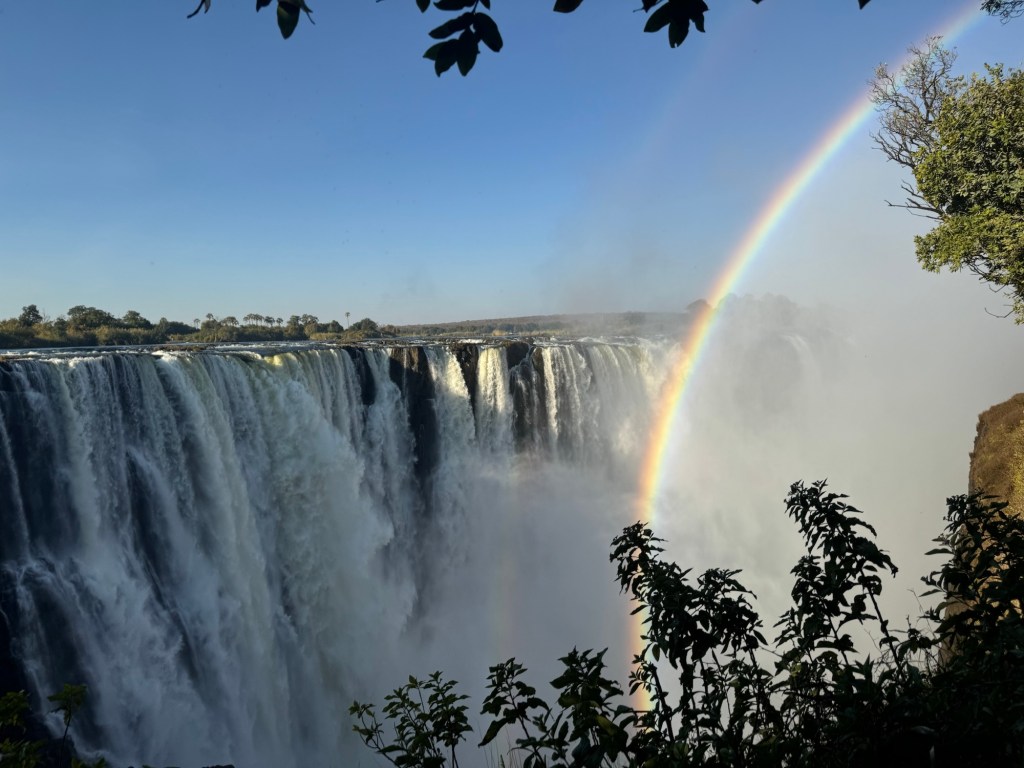
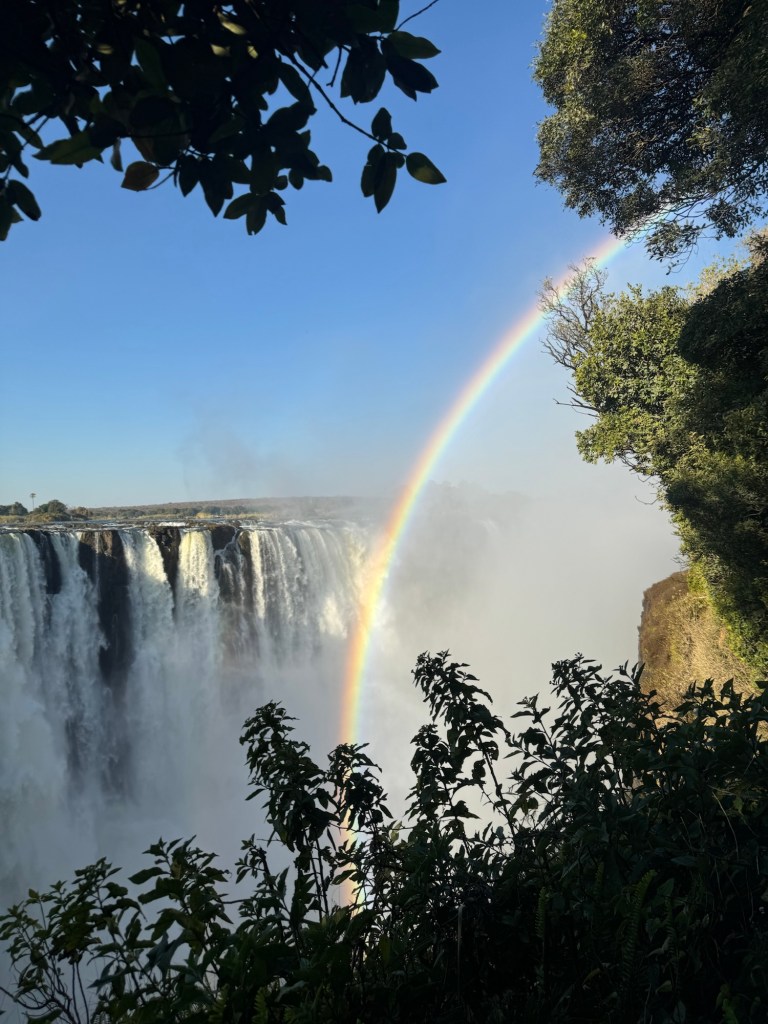
Victoria Falls, also knownasMosi–oa–Tunya (the smoke that thunders), has it all—
1. It’s the largest waterfall in the world because of combined width (5.604 feet) and height (355 feet).
2. It is actually 5 falls straddling two countries —4 in Zimbabwe and 1 in Zambia.
3. It’s part of the Zambezi River and located within two National Parks
4. It’s one of the 7 Natural Wonders of the World
5. Make sure you bring water shoes because you will get wet!
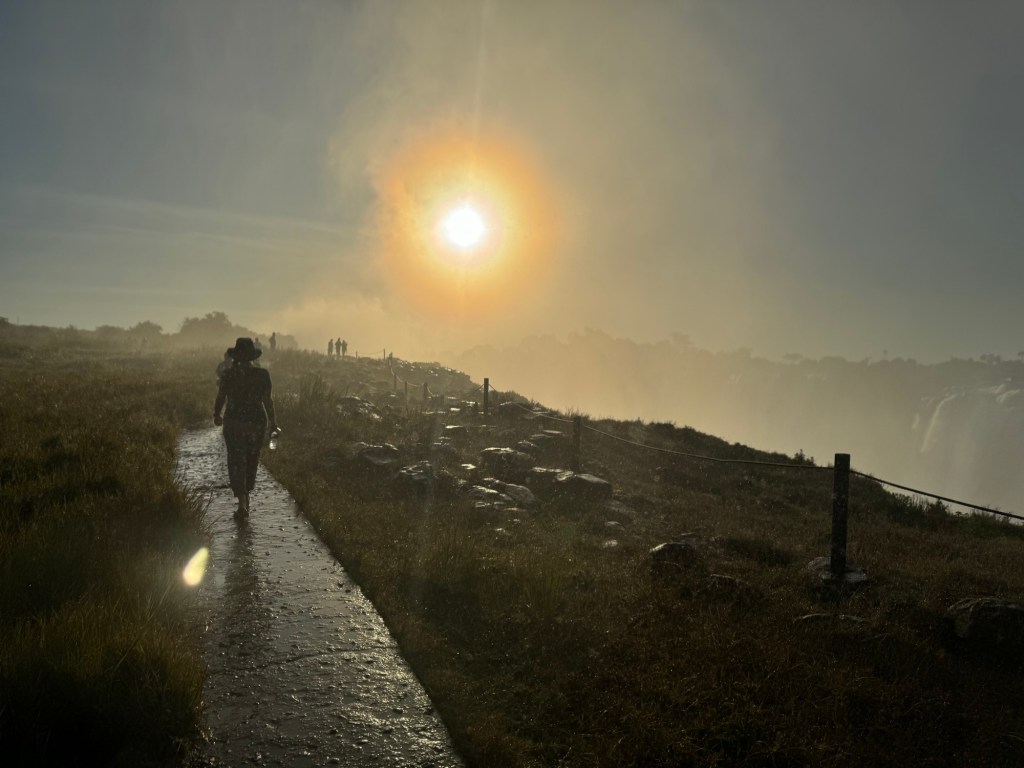
We walked along the rim overlooking the Falls, stopping at various points along the way to breathe it in, listen to the massive falls, and say “look, another fabulous rainbow!)🌈
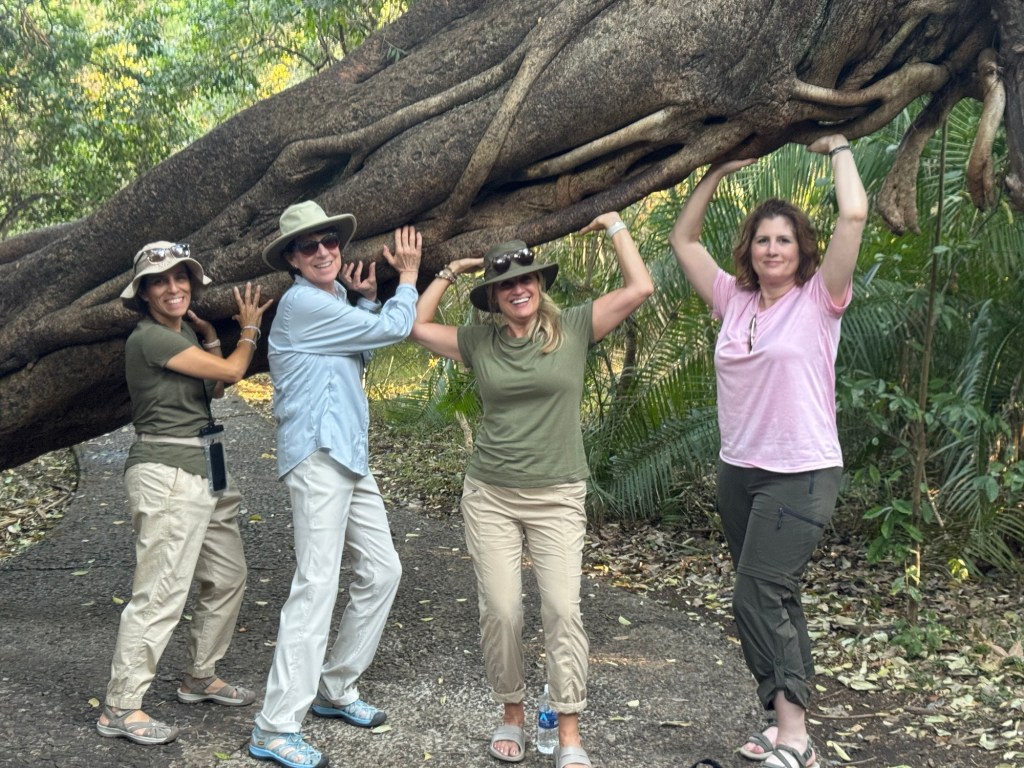
Holding up a fig tree!Rainbows galore
The Falls come crashing over the rainbow 🌈 BushbuckAfrican Sunset Off to bed with our mosquito net!
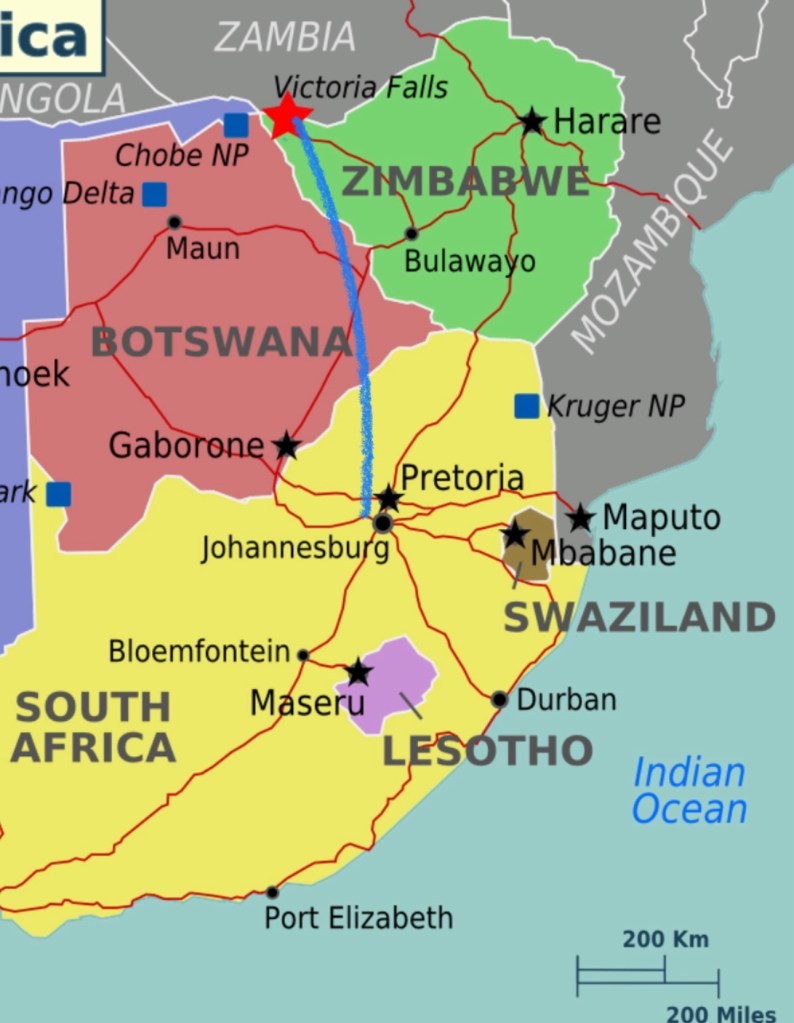
We boarded our Fastjet Embraer 145 LR this morning from Johannesburg and headed to Victoria Falls, Zimbabwe. After the flight attendant sprayed an insecticide to make sure there are no pests traveling aboard from one country to the next, we settled in for our 1 hour 40 minute flight north. We’re expecting a warm 80 degree Fahrenheit day as we explore one of the world’s largest waterfalls located on the boarder between Zimbabwe 🇿🇼 and Zambia 🇿🇲. Located on the Zambezi River, Victoria Falls has a width of 1,708 m (5,604 ft) and was named for Queen Victoria of England by Scottish explorer, David Livingstone after he identified the falls in 1855.
Our home for the next few days! Pioneers Lodge in Victoria Falls, Zimbabwe 🇿🇼
Today was…indescribable. I am trying to find the right words for our step back in time as we learned more about the South African history of apartheid from 1948-1994. I will do my best to summarize.
First, our local guide, Chezlin, took us on a tour of Soweto, a symbol of the struggle against apartheid. Its original name means South Western Townships and was formed under the Native (Urban Areas) Act of 1923. Black and Colored South Africans were forcibly moved here during apartheid and were further segregated into ethnic groups. The houses were “match box” homes with very little room. There was no electricity and no indoor plumbing. Today Soweto is home to 2 million people and is made up of 37 suburbs. There remain shanty towns (squatter camps), which have many health and safety concerns.
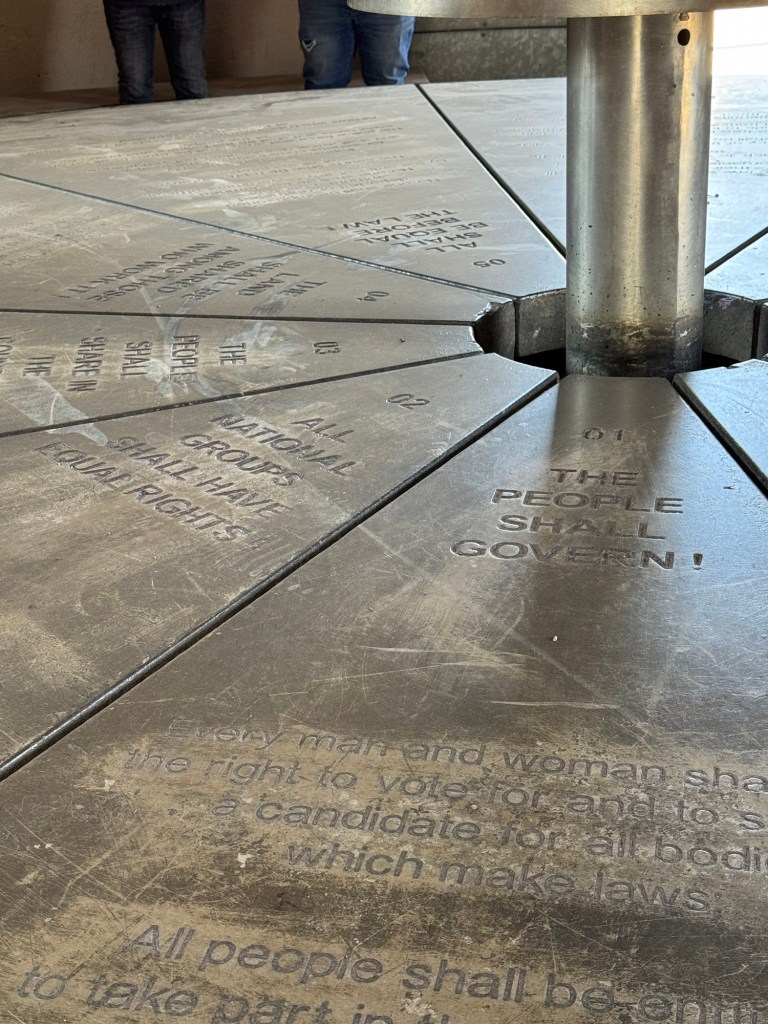
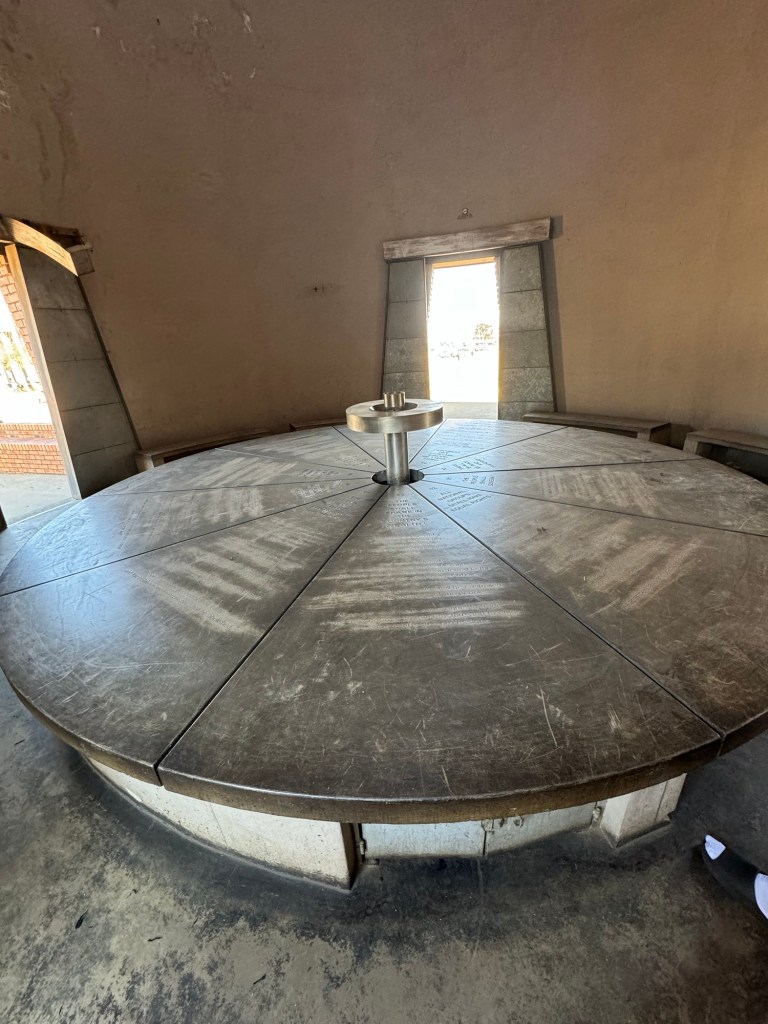
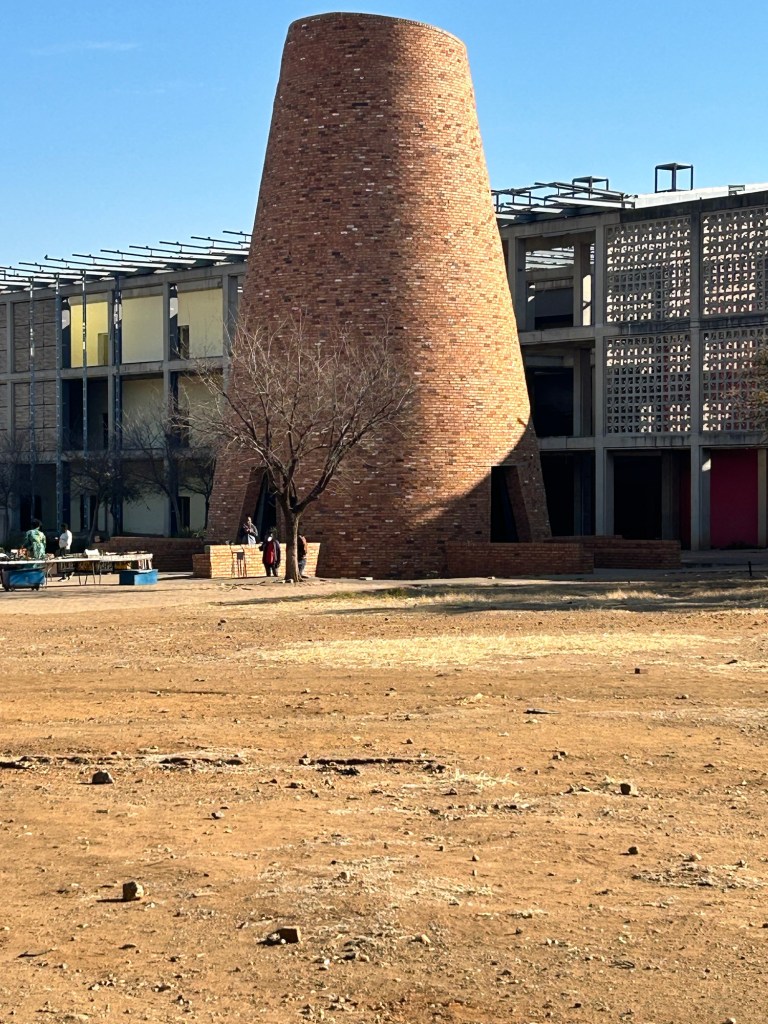
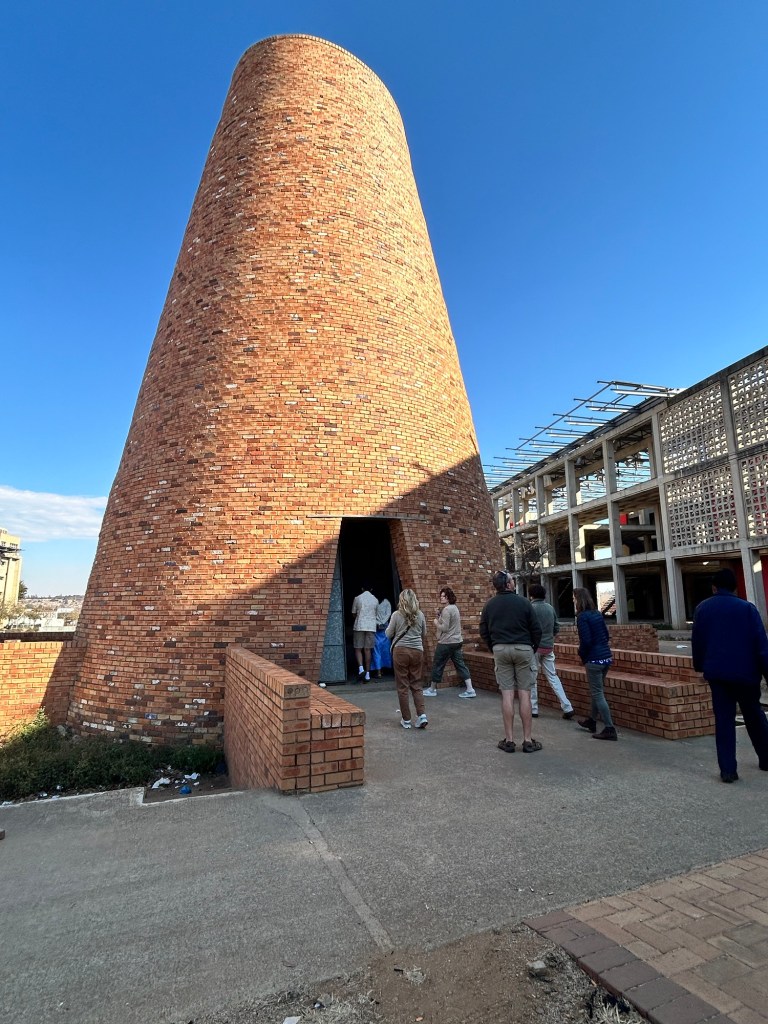
First stop – Freedom Square, or the Walter Sisulu Square in the oldest suburb, Kliptown. It was here that 3,000 people met to work on The Freedom charter – a unified vision for the future of all South Africans. This charter consisted of 10 principles that were adopted at the Congress of the People in 1955 and remains the cornerstone of African National Congress (ANC) policy and the foundation of South Africa’s 1996 constitution. It begins with “The People Shall Govern!”
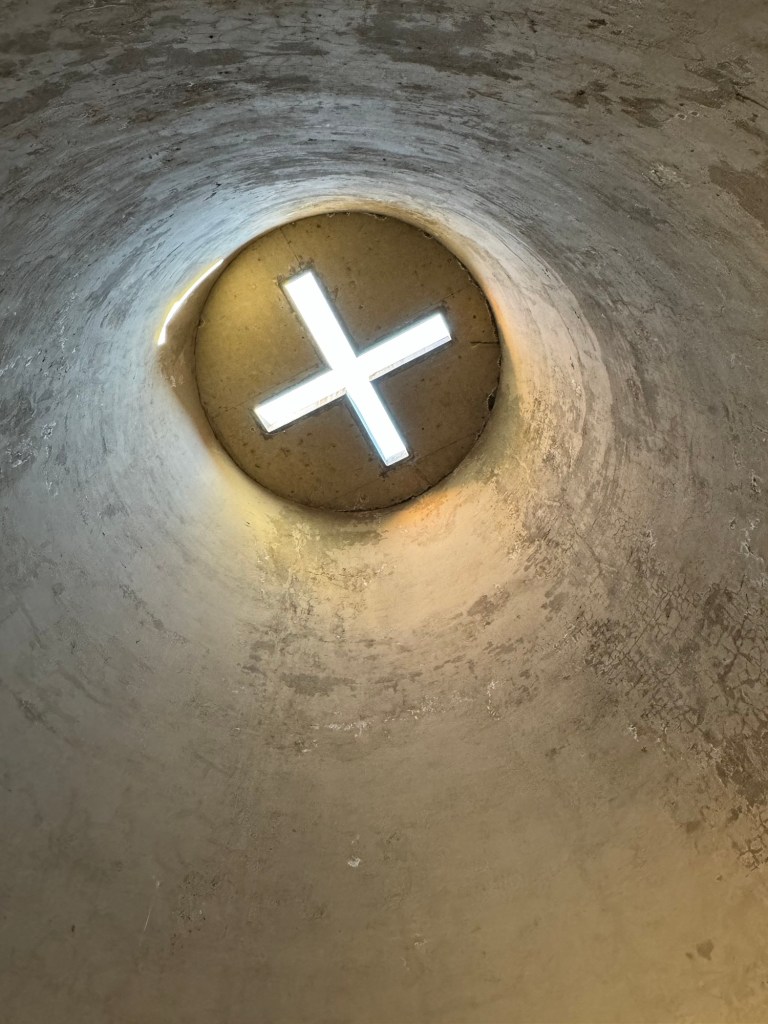
X marks the spot on the ceiling and is how South Africans mark their choices when voting.The square is now a national heritage site and the brick tower contains the full 10 principles of the Charter, engraved in bronze. Notice the fence—it’s also has X Marks.
This is the South African National Anthem 🇿🇦
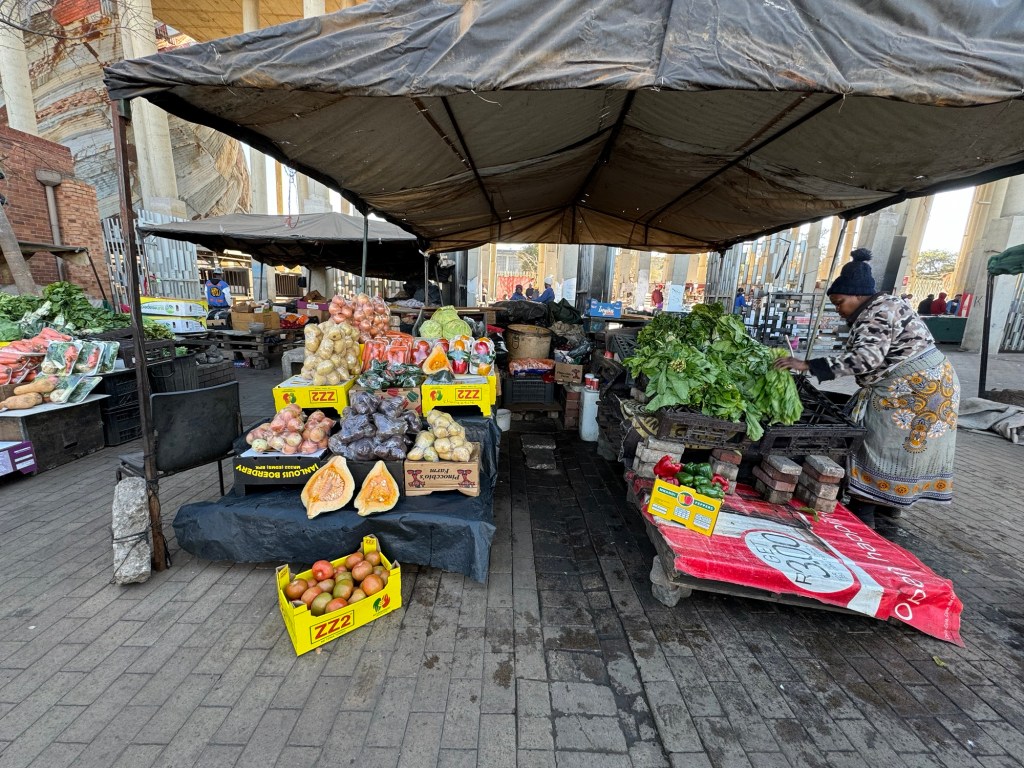
We visited a market right next to Freedom square and learned more about the food and the culture
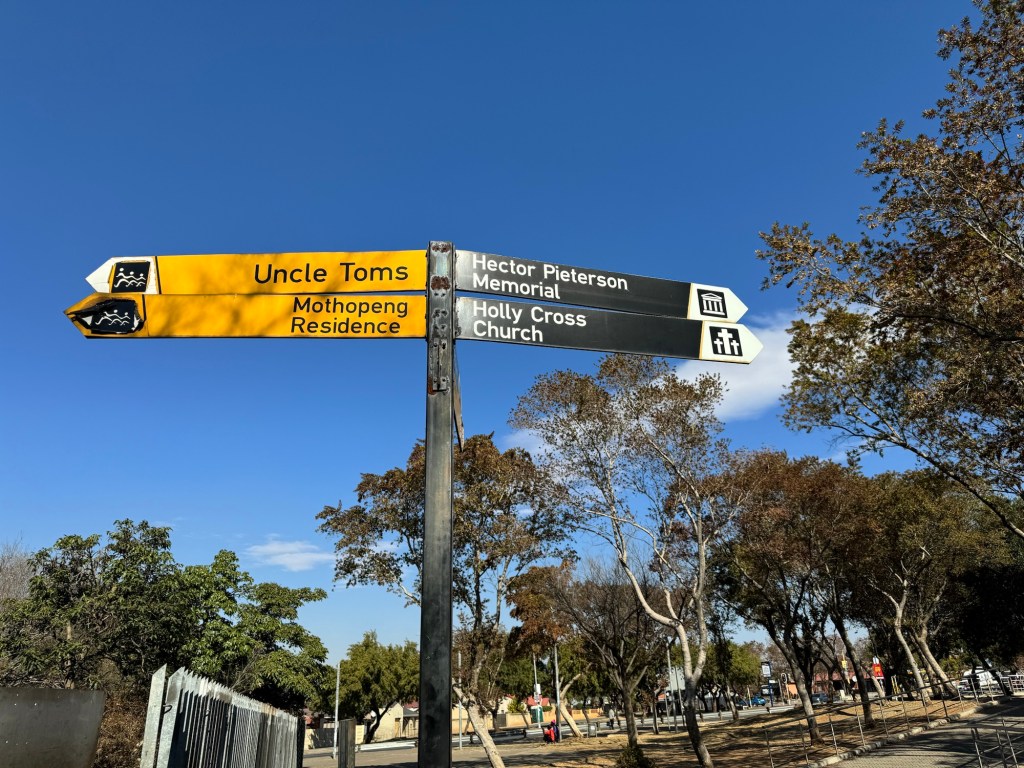
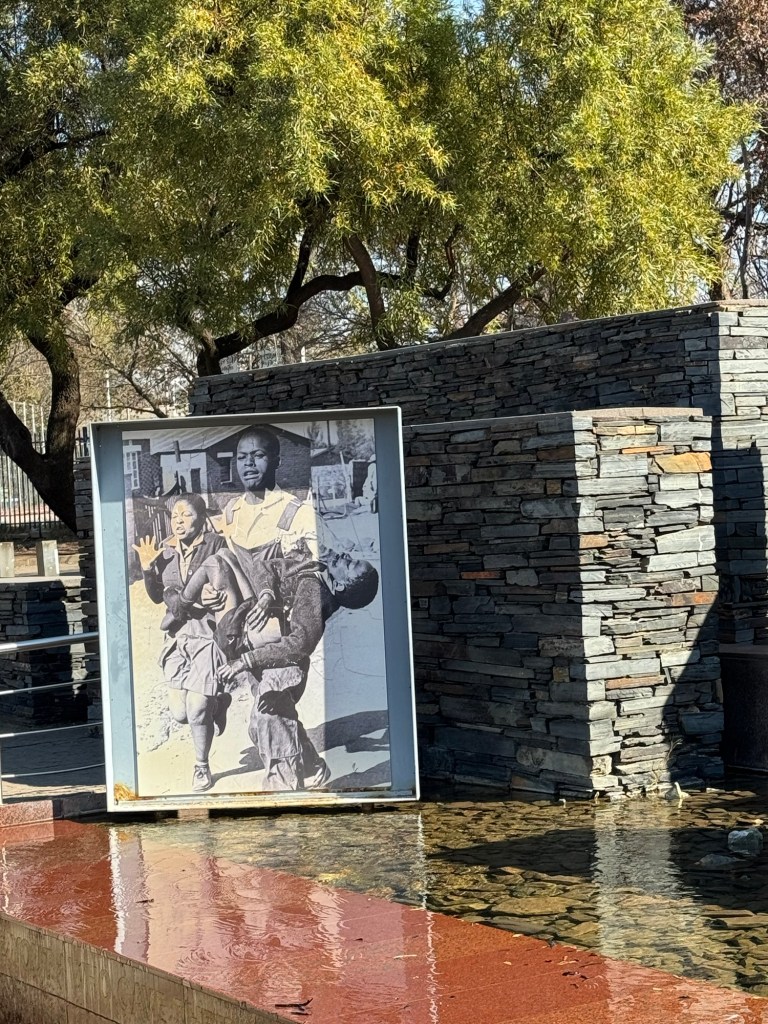
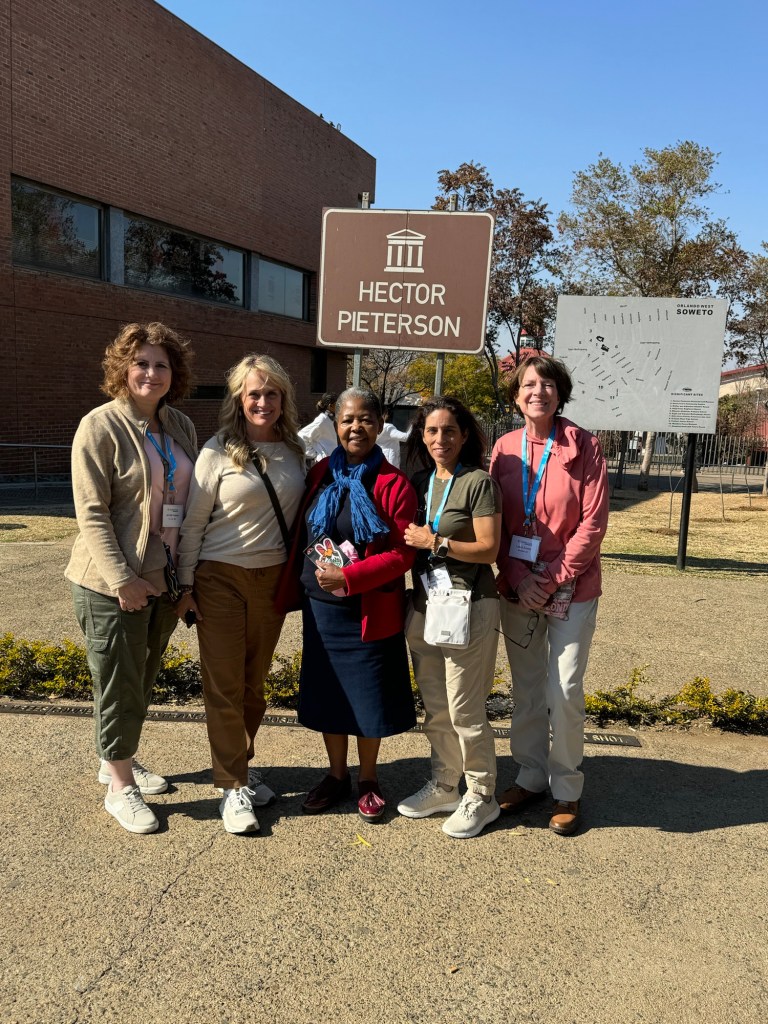
Next stop – The Hector Pieterson Memorial. It is believed that the Soweto Uprising was the beginning of the end of apartheid. This event showed the world the atrocities happening in apartheid South Africa.
June 19, 1976 – this picture was taken by journalist, Sam Nzima. 12 year old Hector Pieterson was mortally wounded and carried by another student as Hector’s 16 year-old sister ran next to him. When the photo was published, it caused outcries from across the globe.
What was The Soweto uprising?
The police open fired using real bullets on more than 20,000 black students as they were marching in their school uniforms. They were peacefully protesting the enforcement of teaching in Afrikaans and English for all school subjects. Students could no longer learn in their native languages, like Xhosa and Zulu.
Where, when, and how it turned violent, nobody knows for certain. We listened to the first hand account of what happened that day in 1976. The story was told to us by Antoinette Sithole, seen here in the picture. Antoinette is Hector’s sister and the girl running beside Hector in the famous picture. Antoinette concluded her story with “forgiveness heals”.
The Soweto Uprising is remembered today in the museum, which had artifacts /and other first hand accounts from people that were there. The anniversary of Hector’s death is designated Youth Day in South Africa.
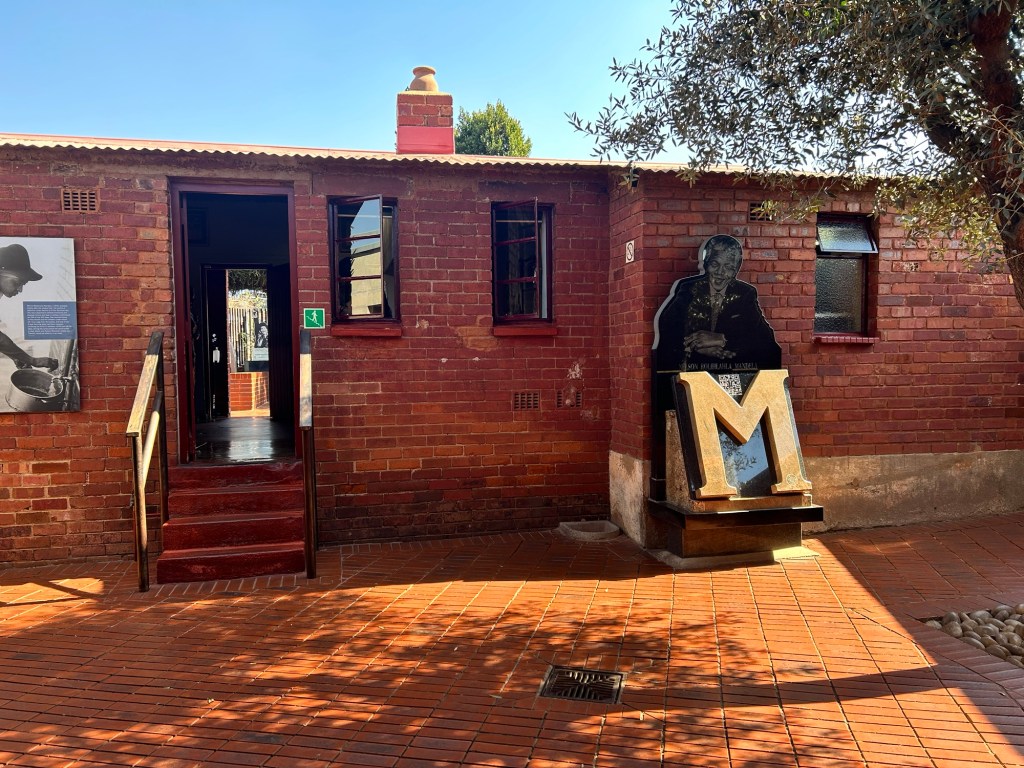
Nelson Mandela’s Home at 8115 Vilakazi Steet in Orlando West from 1945-1961, which is right down the road from Desmond Tutu’s home. I took lots and lots of pictures of all the awards, artifacts and furniture. We saw the tree where they buried their grandchildren’s umbilical cords per African tradition.
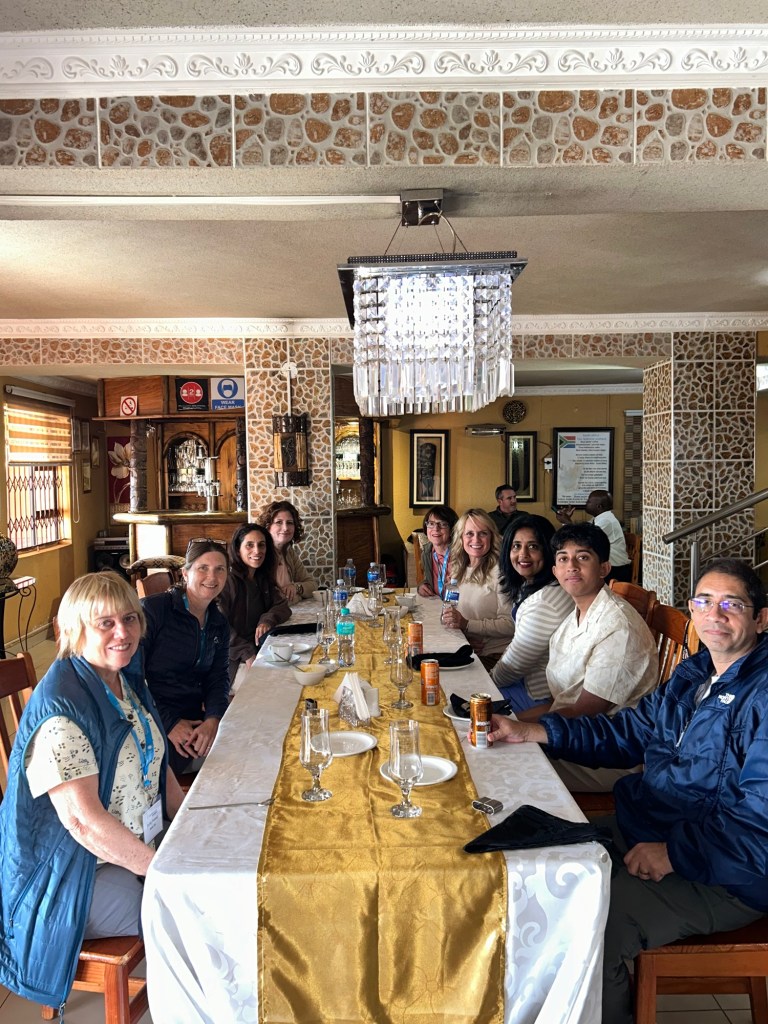
Last stop – we had traditional African food for lunch at a family- run hotel in the suburb of Orlando in Soweto. FYI—Orlando is the home of Trevor Noah.
Football stadium for the Orlando Pirates.
We finished the day’s tour with an informational session from our guides and had a welcome dinner. Tomorrow we head north by plane!
Notes –
*South Africans drive on the opposite side of the road than we do in the U.S. I keep wanting to enter the bus on the side I am used to!
*The important mini-bus taxi system is the main way South Africans get around in busy cities. It’s a bit complicated for visitors and requires hand signals! Don’t sit in the front row unless you want to be in charge of the fees for the 16 other passengers.
*We started taking our malaria pills today.
*The South African unemployment rate is 33% – essentially 1/3rd of the 62M population are unemployed.
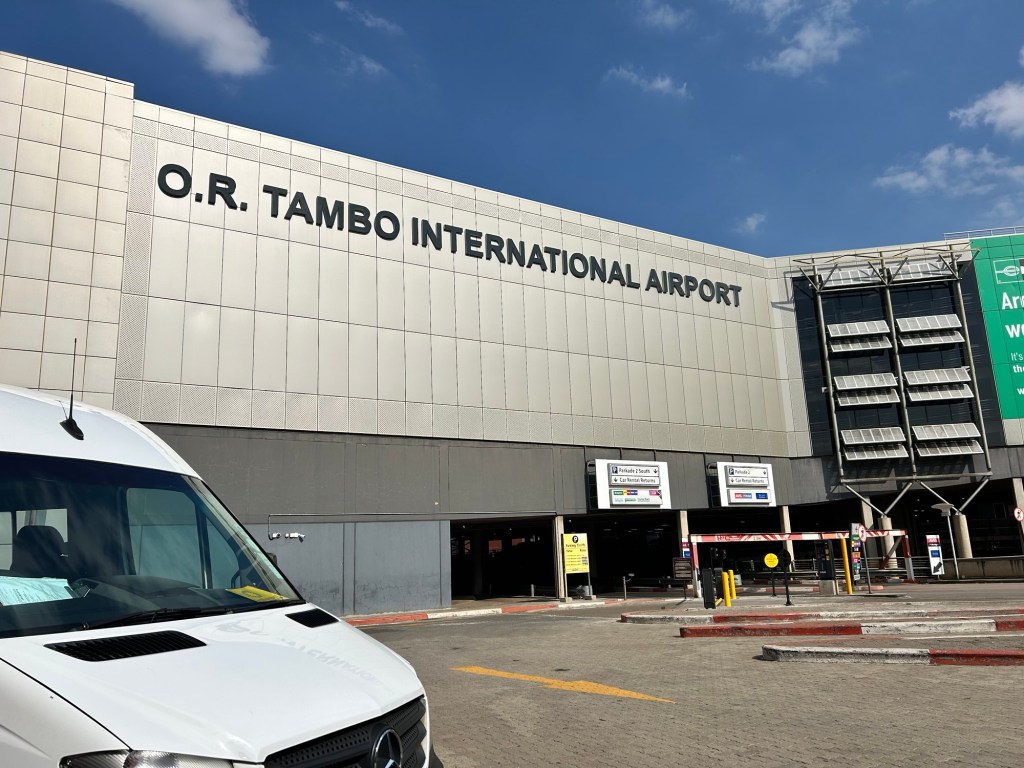
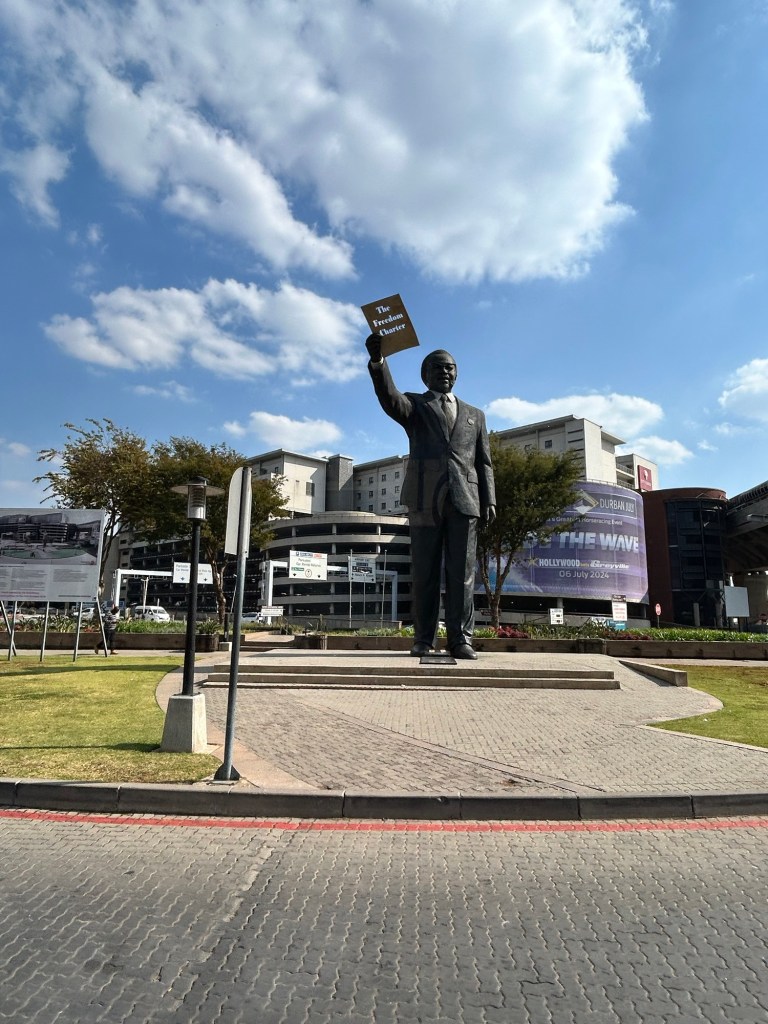
We arrived at the O. R. Tambo International Airport in Johannesburg late morning. Exiting the airport we were greeted by the 9 meter tall bronze statue of Oliver Reginald (O. R.) Tambo—an anti apartheid activist who served as the president of the African National Congress (ANC) from 1967-1991. He was succeeded by Nelson Mandela. Along with Mandela and Arthur Sisulu, he also founded the ANC’s Youth League in 1944.
We were also greeted by our tour guide, Eric, and our travel expert, Robyn, with Smithsonian Journeys. After a much needed nap (over 30 hours of travels across two nights), we ate dinner at a local place where we’re staying in Rosebank. Rosebank is north of central Johannesburg.
And now it’s time for a proper night’s sleep and then off to explore Johannesburg—the largest city in South Africa with over 60 million people, 11 official languages, and a culture that has captivated me. I vividly remember when the U.S. Congress enacted the Comprehensive Anti-Apartheid Act of 1986. This act imposed sanctions against South Africa until 5 conditions were met which would end apartheid. I was in high school at the time and went to a conference where they educated us on the anti-apartheid struggle. Tomorrow we have the opportunity to visit Nelson Mandela’s house, the Hector Pieterson Memorial, and then talk with a resident who will share their personal story about the Soweto uprising.
It’s so strange when you take off in the dark, fly 14 hours, and land at sunset! That’s exactly what we did today (yesterday). Round of applause for Emirates – what an uneventful flight filled with lots of movies, food, and very little sleep as it was difficult to get comfy on a full flight. But even the economy seats (where we sat) were ergonomically built—reclining seats, adjustable headrest, and a great entertainment center. The entire business class had seats that allow you to lay down (sigh). The first class had private rooms (double sigh) and I didn’t get to see those. Esthetically, it was a beautiful plane with a fantastic crew—30 in all, speaking 11 different languages.
We had a cabin full of stars! Not really, but look at the mini lights on top. What a calming ambiance!
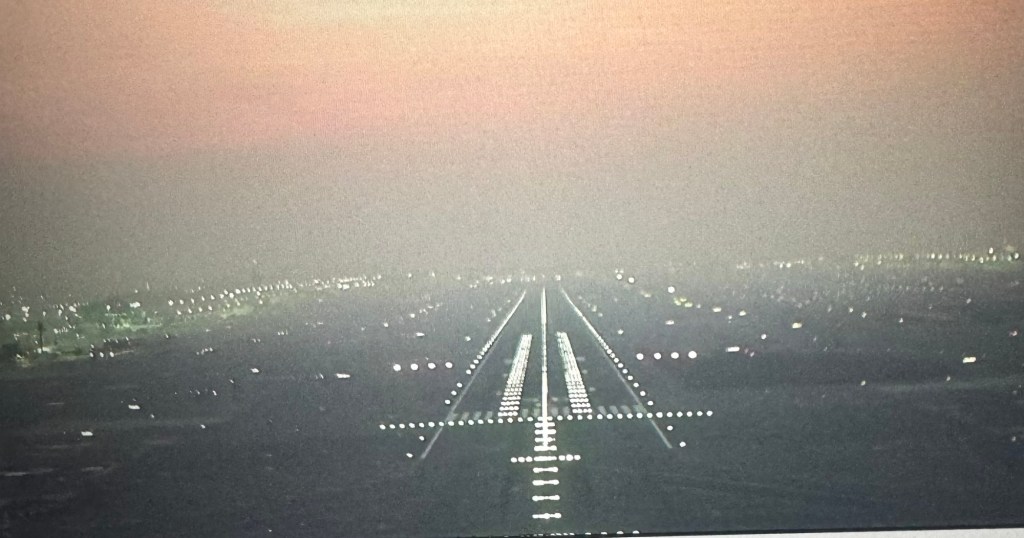
I especially loved the ability to view below and in front of the plane via cameras from my seat monitor —take a look at this landing shot!
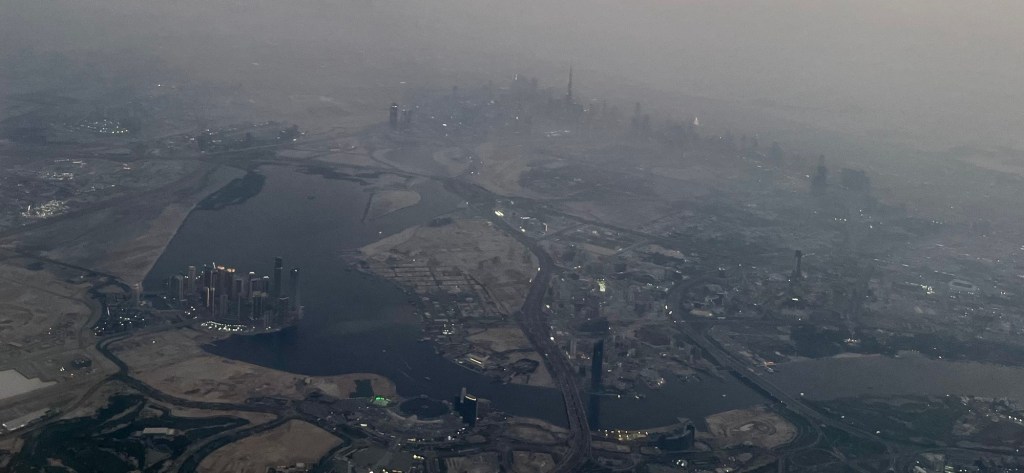
Dubai International AirportHere’s a picture my friend, Jen, took from her seat. A hazy view of the city with the Burj Khalifa in the far back. It’s the world’s tallest structure standing at 2,722 ft, or just over half a mile.
Now it’s off to sleep for two hours at the Hotel Emirates arranged for us before we leave on the next leg of the trip—South Africa!
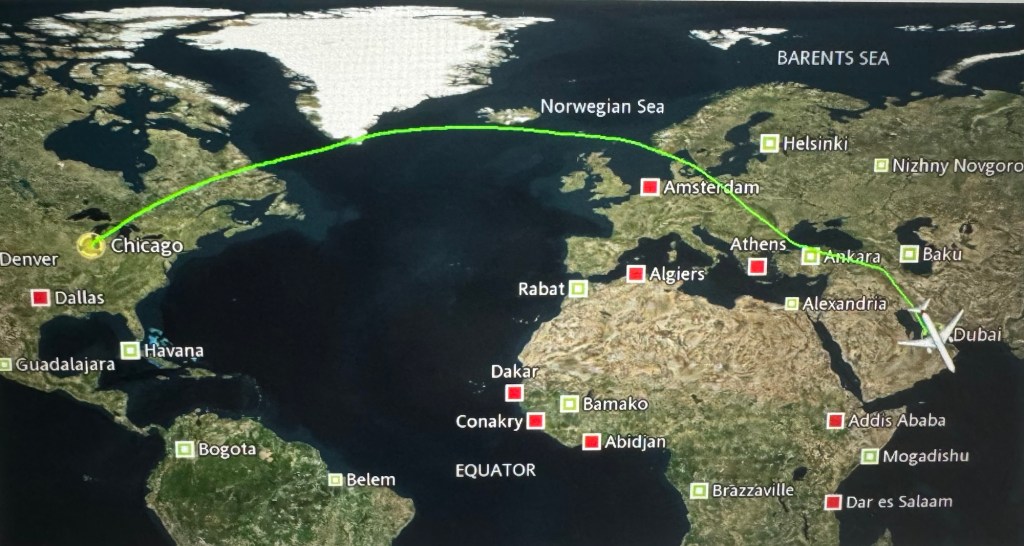
Yesterday we traveled from STL (St. Louis) to ORD (Chicago) and spent the night—it’s nice to have a buffer so we don’t have to worry about missing a flight! Today we leave for an amazing adventure 🐘🦒🦓 that will take us 22 hours of flying time.
STL—>ORD 🇺🇸 45 minutes
ORD—>DXB🇦🇪 14 hours
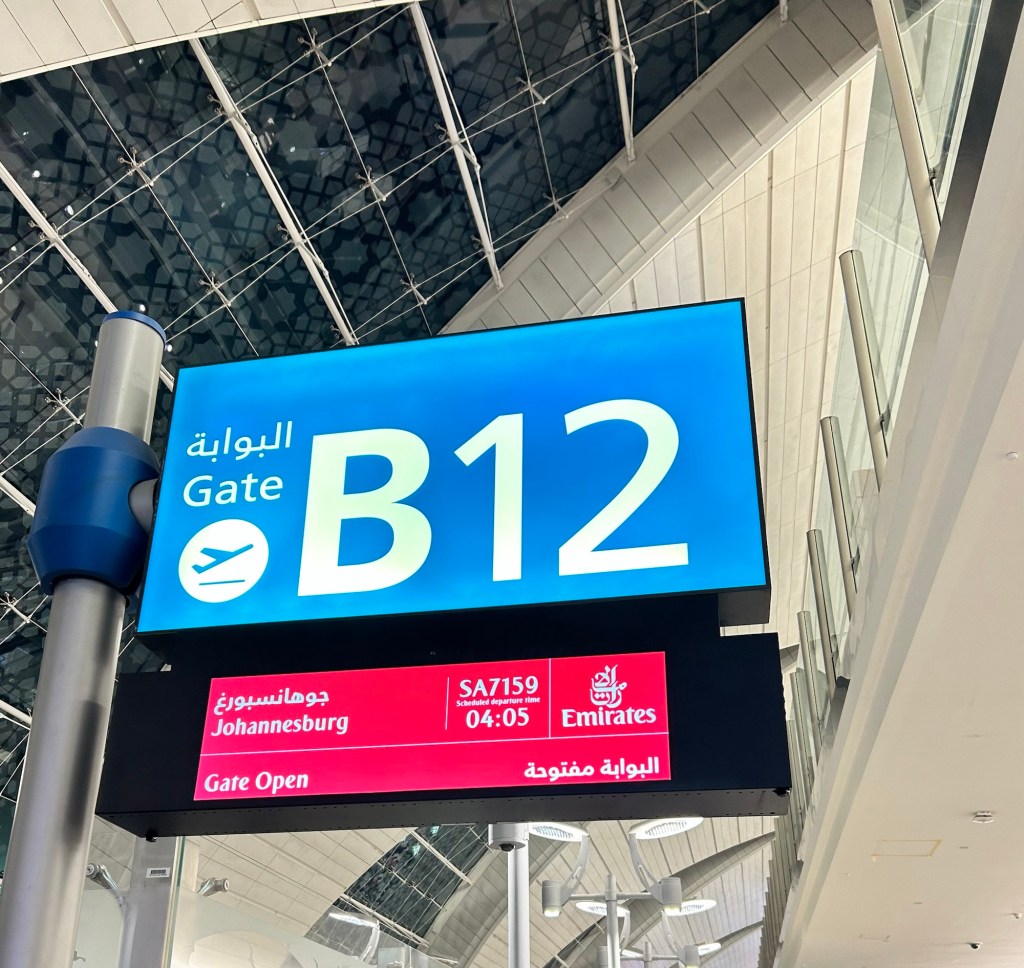
DXB—>JNB 🇿🇦 8 hours
We overnight in Dubai before flying to South Africa!
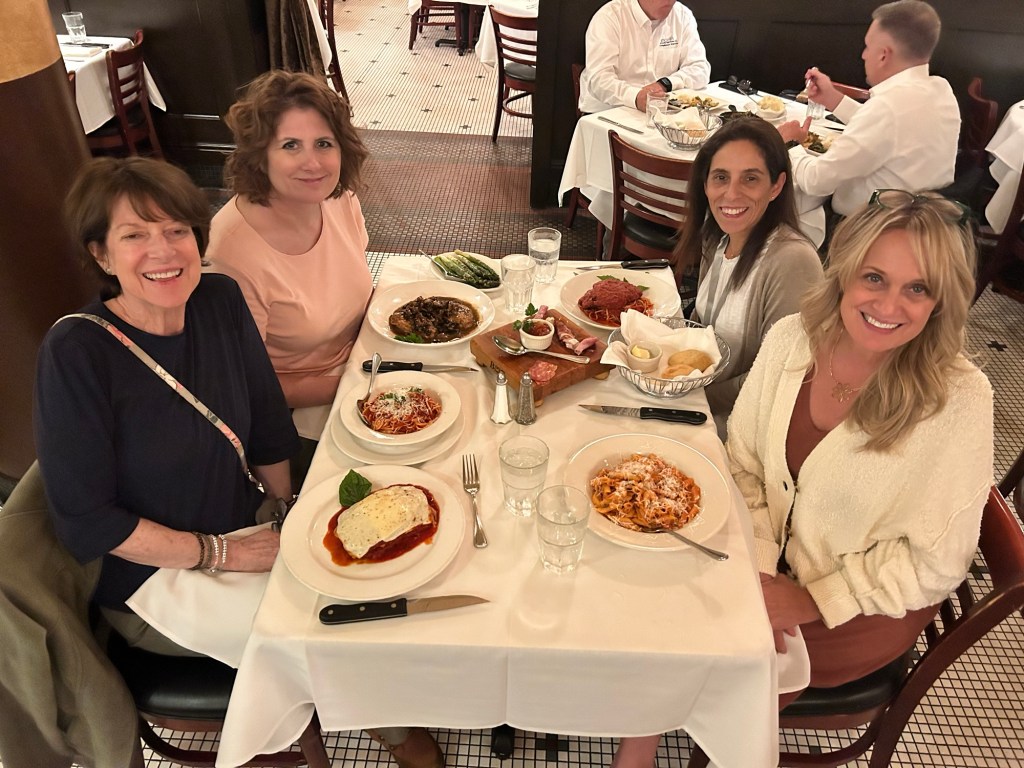
Enjoying some delicious Italian from Harry Carey’s in Chi Town!
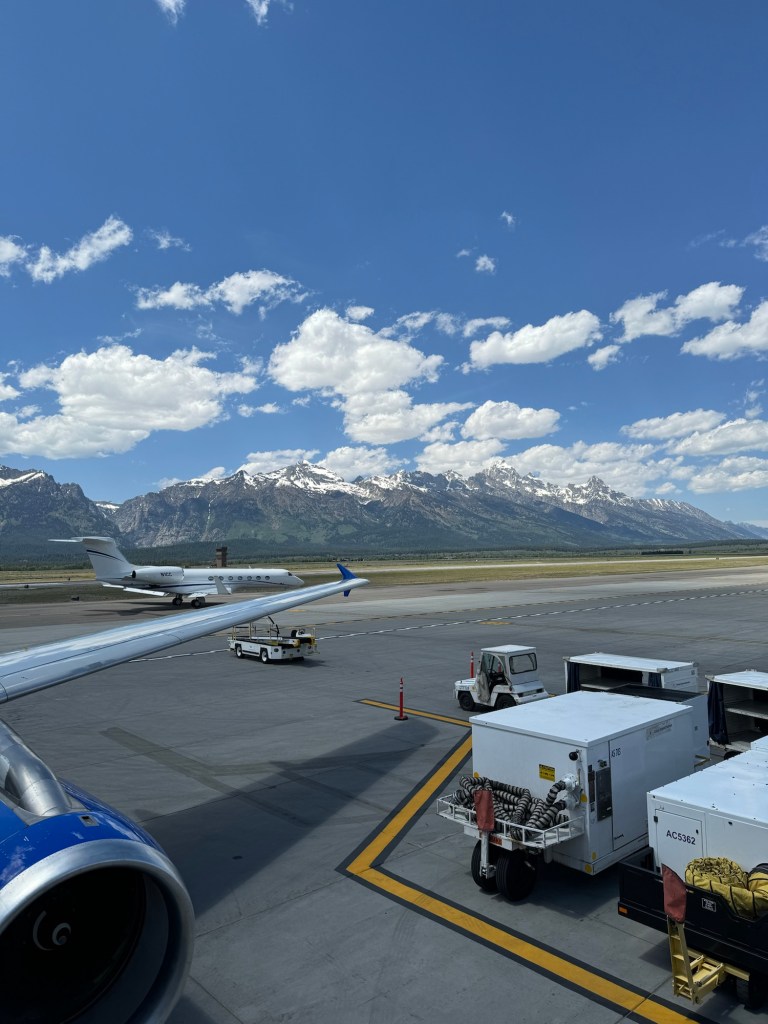
After landing on the only runway at the only commercial airport located within a US National Park, we were greeted by the snow capped peaks of the Teton mountain range. Exiting the airplane on an outdoor jetway and being greeted by the Grand Teton standing majestically at 13,775 feet took our breath away (and it wasn’t just because we were at 6,451’ elevation).
Jackson Hole is actually the name of the valley in Wyoming. We stayed in the town of Jackson and enjoyed 5 days in the wilderness playground of the Grand Teton National Park. Yellowstone National Park is only a two hour drive away but since we have been there before, we choose to stay around Jackson Hole.
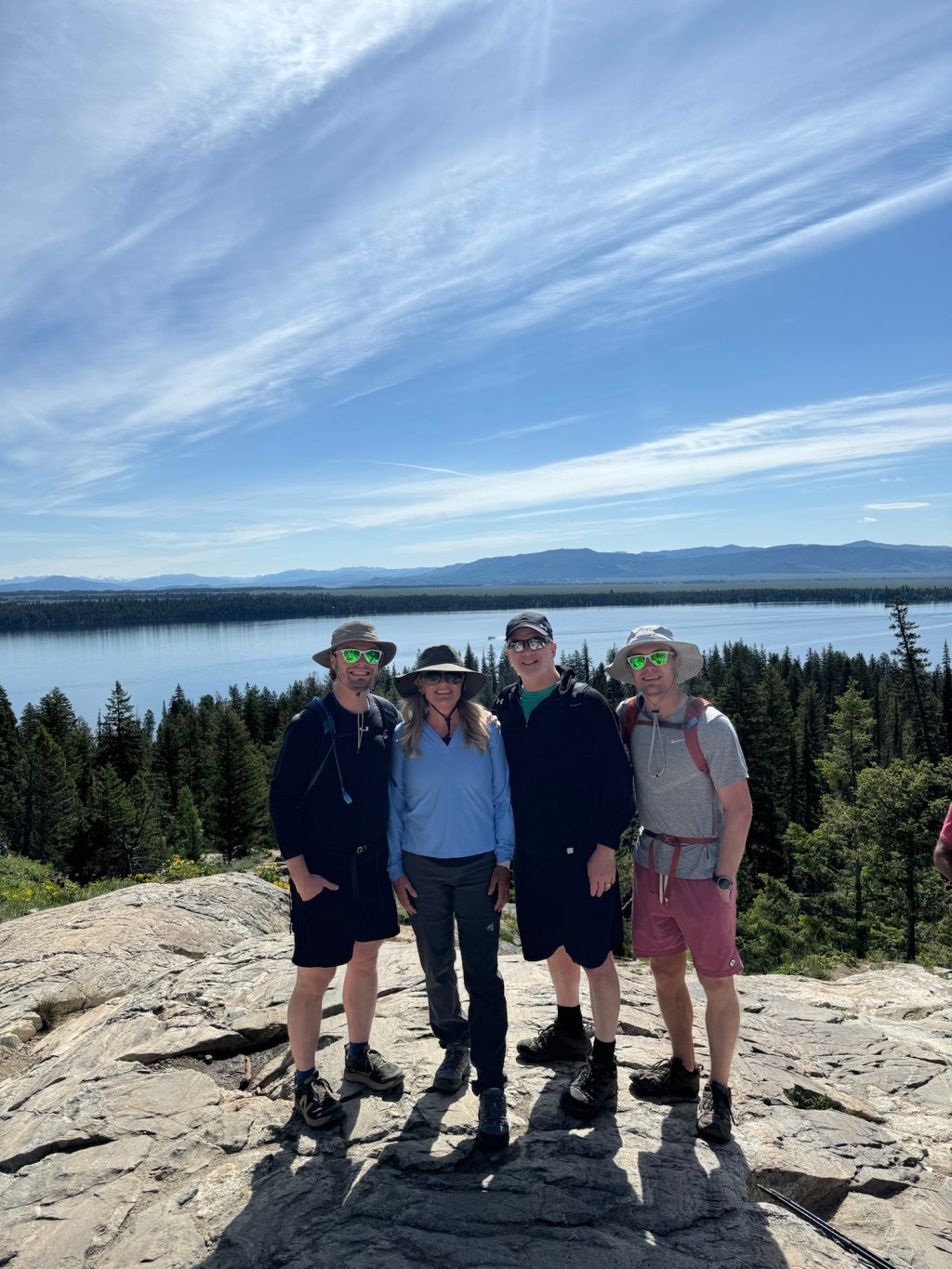
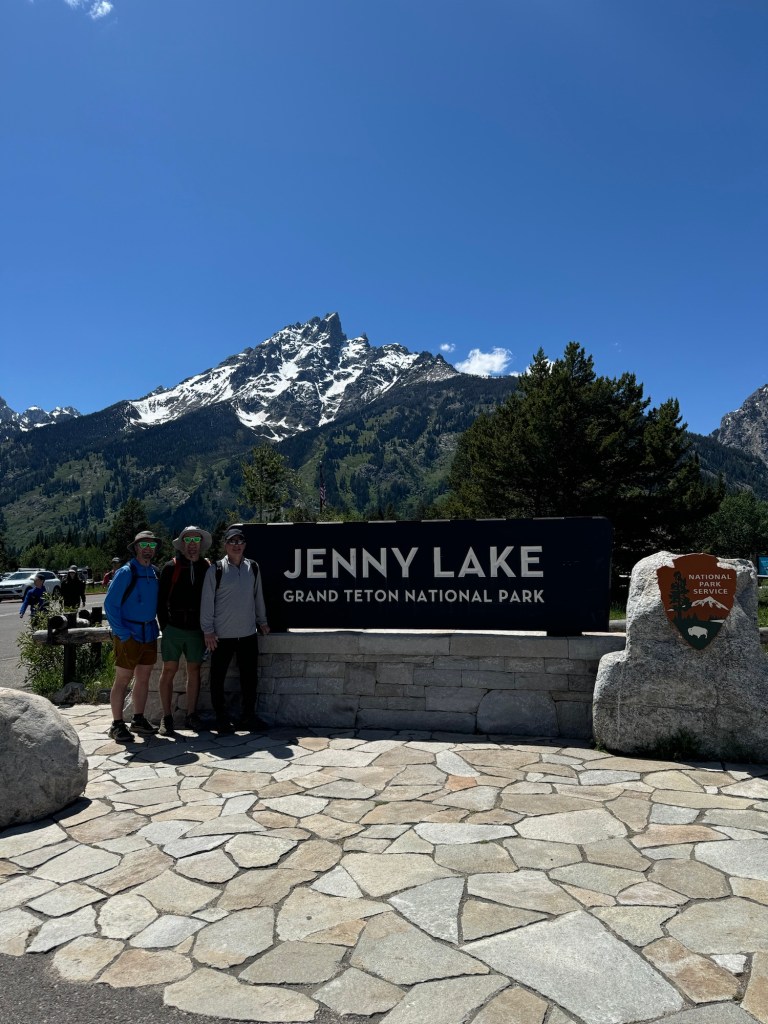
Jackson Hole Airport – JACWhitewater rafting on the Snake River. Thank goodness for the wetsuits – that water was a chilly mid-40 degrees Fahrenheit!Downtown Jackson They have the cutest shops, some restaurants, and the legendary Million Dollar Cowboy Bar which was established in 1937. We visited this historic watering hole and enjoyed listening to live music! There is also a Kemo Sabe store if you want to customize your own western hat or buy a pair of boots.Oh Grand Teton National Park – how we love thee! Established as a National Park in 1929, today you’ll find 310,000 acres of protected land and 40 miles of mountains.We love getting pictures by all the National Park signs! Jenny Lake is 12,000 years old and 250+ feet deep. It’s one of the highlights of the park. We hiked about 1/2 way around and then back. The next day we took a ferry across the lake and back.
Hidden Falls – about a 100 foot drop on the end of Cascade Canyon in the Cascade Creek.
The munching moose! We also saw deer, elk, an eagle, and a marmot.
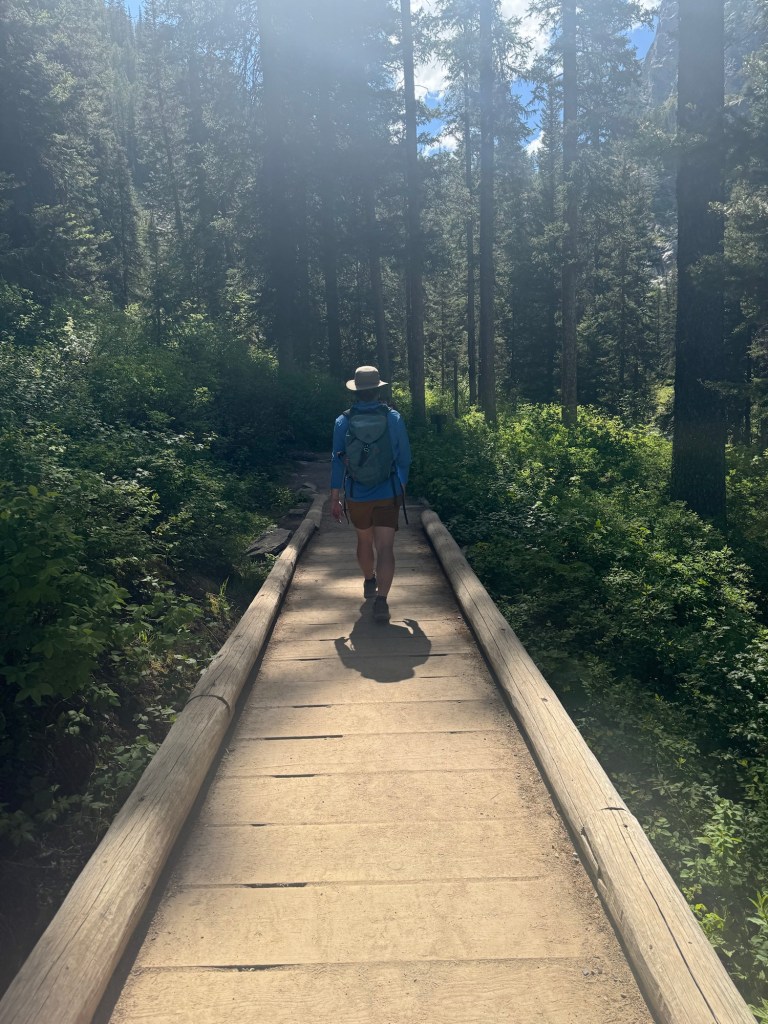
The Jenny Lake Trail is worth the hike. If you go beyond Inspiration Point, you will be in Cascade Canyon – another really memorable hike! we had an incredible vacation. Not just because of the amazing nature, but also because my husband and I got to spend some quality time with our two sons (including trying to keep up with them during hikes!).
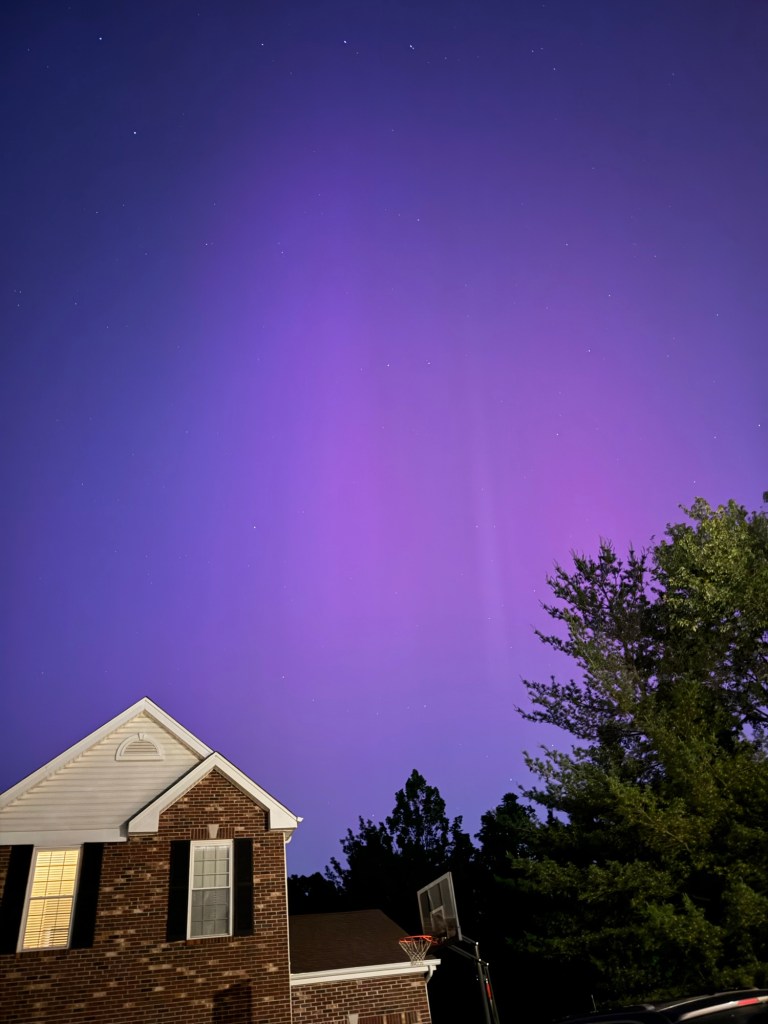
Taken with an iPhone 15 Pro MaxFrom the front yardFiery Red from the back yard A little green Aurora as it was fading away
The most powerful geomagnetic storm in 20 years delivered the most amazing auroras across the globe last night. It was an extremely rare G-5 level event that followed a series of strong solar flares and coronal mass ejections (CME for short) from mid-week.
Experiencing the aurora was a bucket list night for me and a lot of other people. The pictures on social media from Europe, Canada, China, and the US (as far south as Florida!) are insanely breathtaking. Never did I ever imagine that I would see an aurora in my home state of Missouri. And, I will never forget it.
People go in search of auroras. The aurora hunters and enthusiasts travel thousands of miles at the perfect time of the year, to the areas of the world that are known for their gorgeous display of green, pink, purple, and blue, only to be let down because the lights fail to make their appearance on demand. I know, I spent three nights trying to track the aurora in Iceland last year. It’s disappointing.
Little did I know that I’d be able to see them right from my front and back yard before 10 pm on May 10, 2024. As you can see from the pictures, they were pink, red, and a little green. The red is a result of the intense storm (and being further south). And while our northern hemisphere gives us the aurora borealis or northern lights, the aurora australis brings about the southern lights in places like Antarctica, Tasmania,and even Australia.
I’m exceptionally lucky. Last night was my fourth viewing of the aurora. My first was in 2018 on an airplane to Alaska, somewhere over Canada. They were vivid green and I watched them move throughout the sky at 39,000 feet at the end of August. It was such a peaceful moment because most everyone on the plane was asleep. I woke my boys to take a peek, but I felt like the lights were dancing just for me.
The next time was on a plane to Iceland in April 2023. Unfortunately, I wasn’t sitting by the window so I had to awkwardly crane my neck over the gentleman who had the prime seat. The third time was two days later in Reykjavík. Even with the city lights, they were visible to the naked eye. I have posted pictures in a prior blog post if you’d like to take a look. It was a perfect day—we had just returned from an incredible excursion in the southern part of Iceland. I ran out from my hotel room, in my robe, to the rooftop to catch a glimpse. Last night I was also in my robe. Therefore, I think I either need to be on an airplane or in my robe to see the aurora!
There’s a chance the northern lights will make a return over the next couple days. Please come back to Missouri, Aurora!
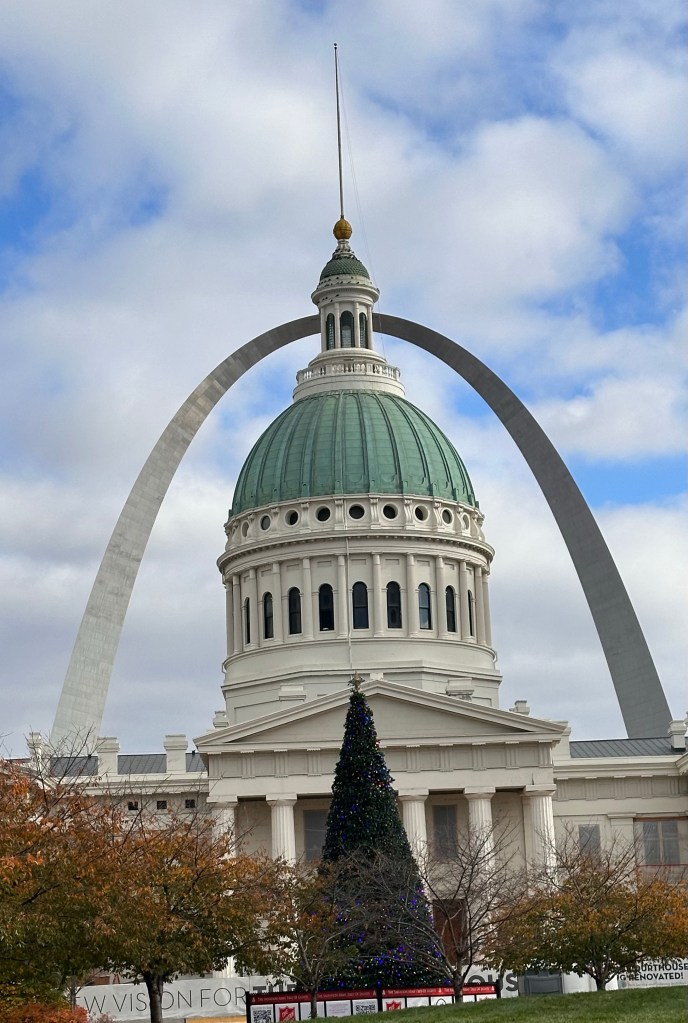
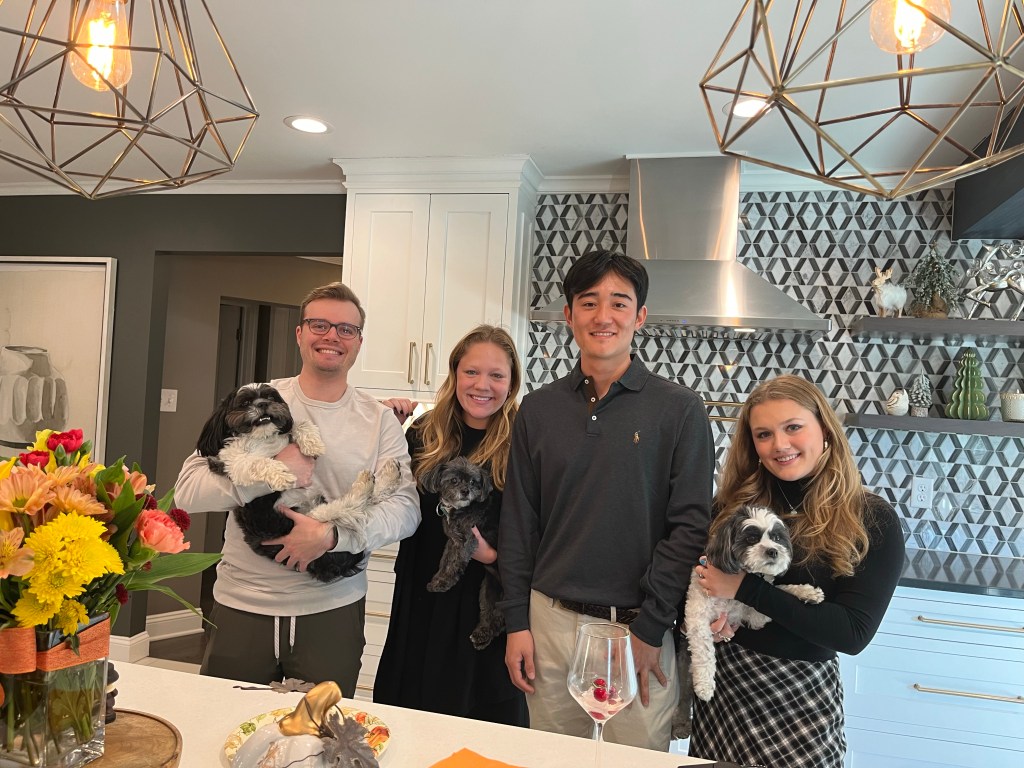
-My home town- The Old Courthouse with the Gateway Arch in the backgroundWe had the pleasure of hosting Suke and sharing our Thanksgiving traditions. Suke is the son of our Japanese friends and lives in Tokyo. Right now he’s studying at a California university and we had the honor of having him in our home this holiday weekend!



































 Christina’s Journey Journal