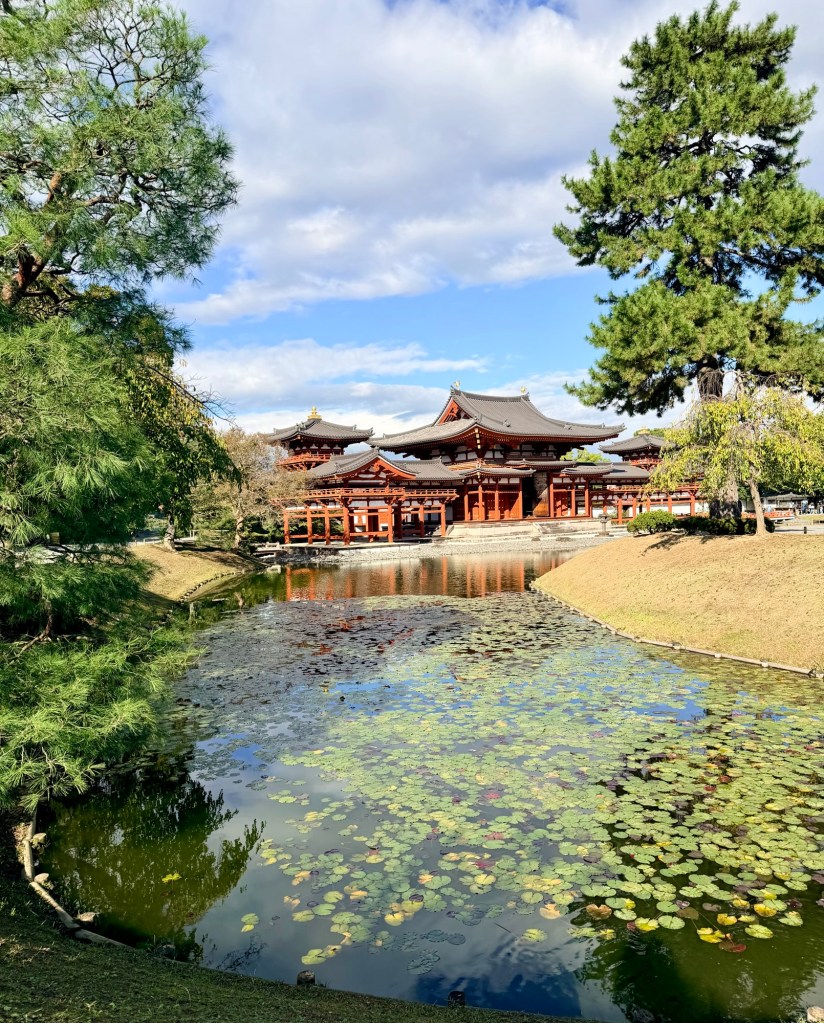
Just a short train 🚄 ride from Kyoto, then a 10 minute peaceful stroll through a neighborhood, and voila—you will find Byōdō-in, a Buddhist temple built in the late Heian period. It’s another UNESCO World Heritage Site, originally built in 998 as a temple for the powerful Fujiwara clan.
This!!!🧡
The stunning Phoenix Hall (Hoo-do) was constructed later in 1053 to serve as a mausoleum for Fujiwara no Yorimichi. It’s considered a National Treasure and adorned with exquisite carvings and gold leaf accents. This hall is shaped like a phoenix, symbolizing rebirth and eternity. We admired the hall from across the pond and could see the Amida Buddha statue, which stands over 3 meters tall (close to 10 feet). Although we were too early to go inside, they say it is surrounded by beautiful murals.
To say this is an architectural marvel is an understatement. The design, the intricate artwork, the serene gardens…it all works together and the result is stunning. Over the centuries, Byōdō-in has survived fires and disasters. It is so important, it can be found on the 10 yen coin.
Don’t miss Byōdō-in if you go to Kyoto…you will never regret your visit.
Also, on the short walk back to the train station, grab a drink at the most serene Starbucks I have ever been to!
The gardens at the Uji Starbucks
Note—here is where we stayed in Kyoto: Via Inn – Loved all facial products they set out for their guests to use!
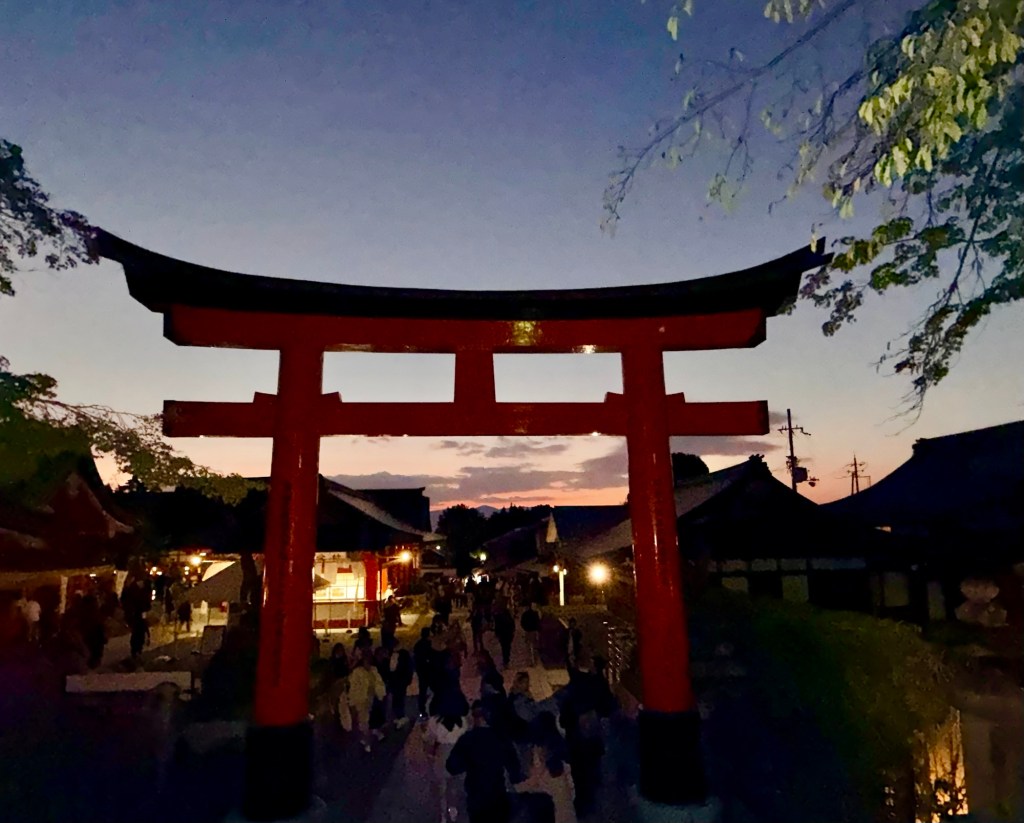
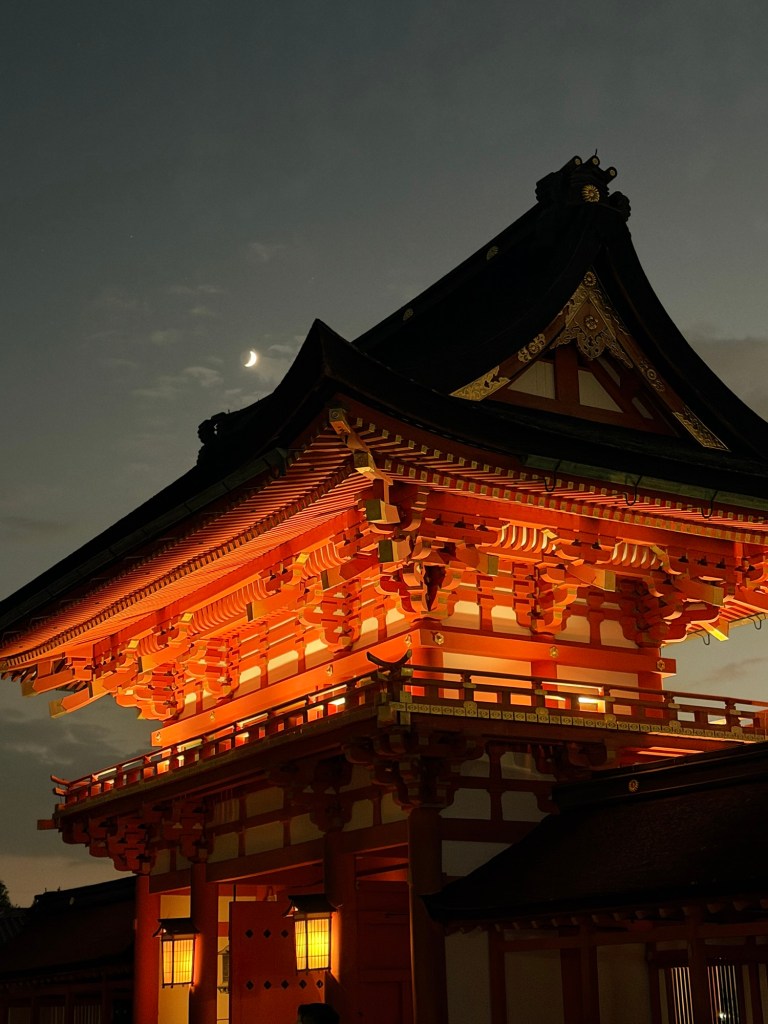
We visited Fushimi Inari Taisha early evening and we stayed for the sun set, adding a mystical element to our visit.
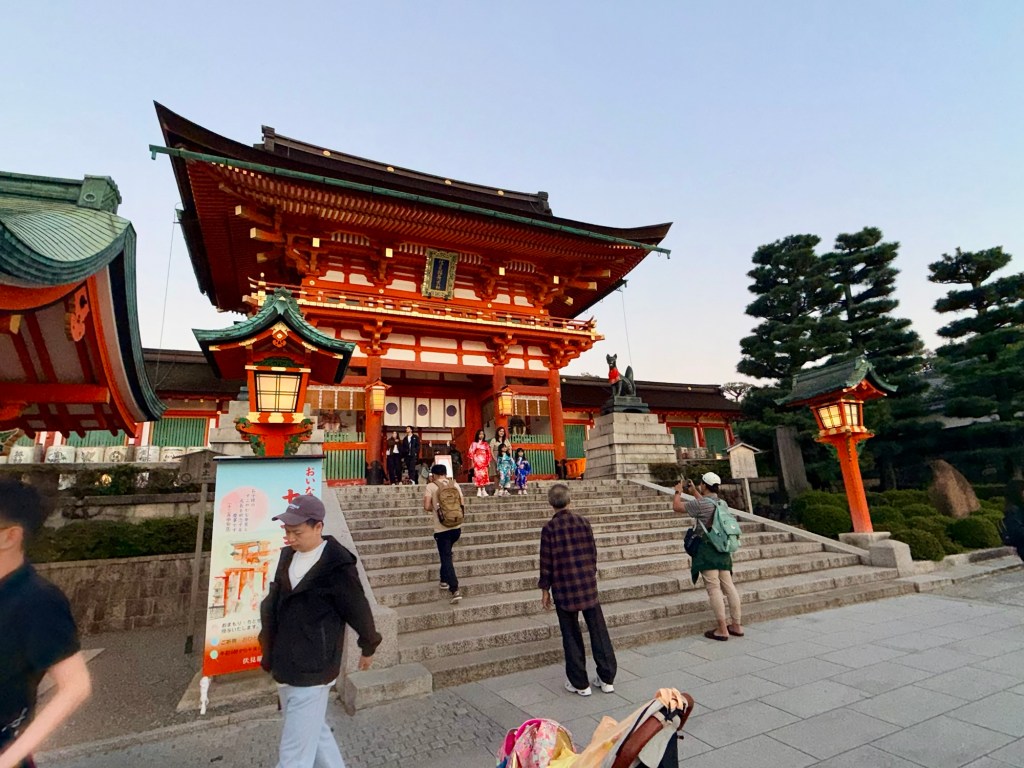
At the base of Mount Inari in Kyoto, Fushimi Inari Taisha is a visually striking Shinto shrine with thousands of vermilion torii gates donated by individuals and businesses seeking blessings for wealth and success. The shrine is dedicated to Inari, the Shinto god of rice, agriculture, and prosperity and dates back to 711 AD.
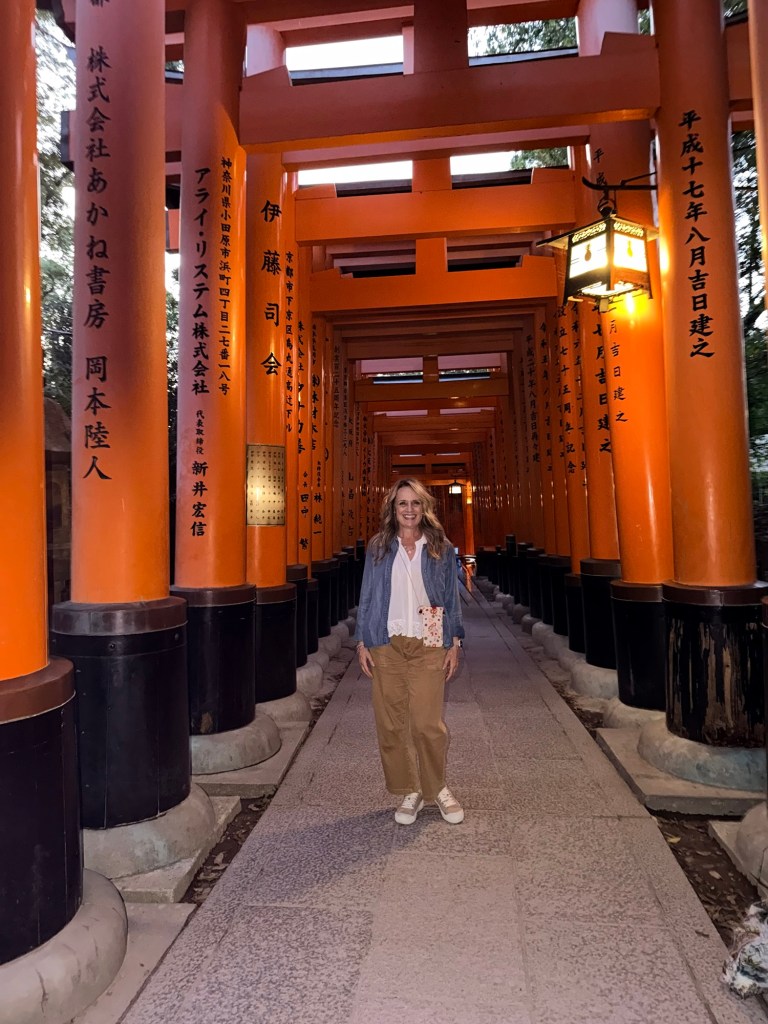
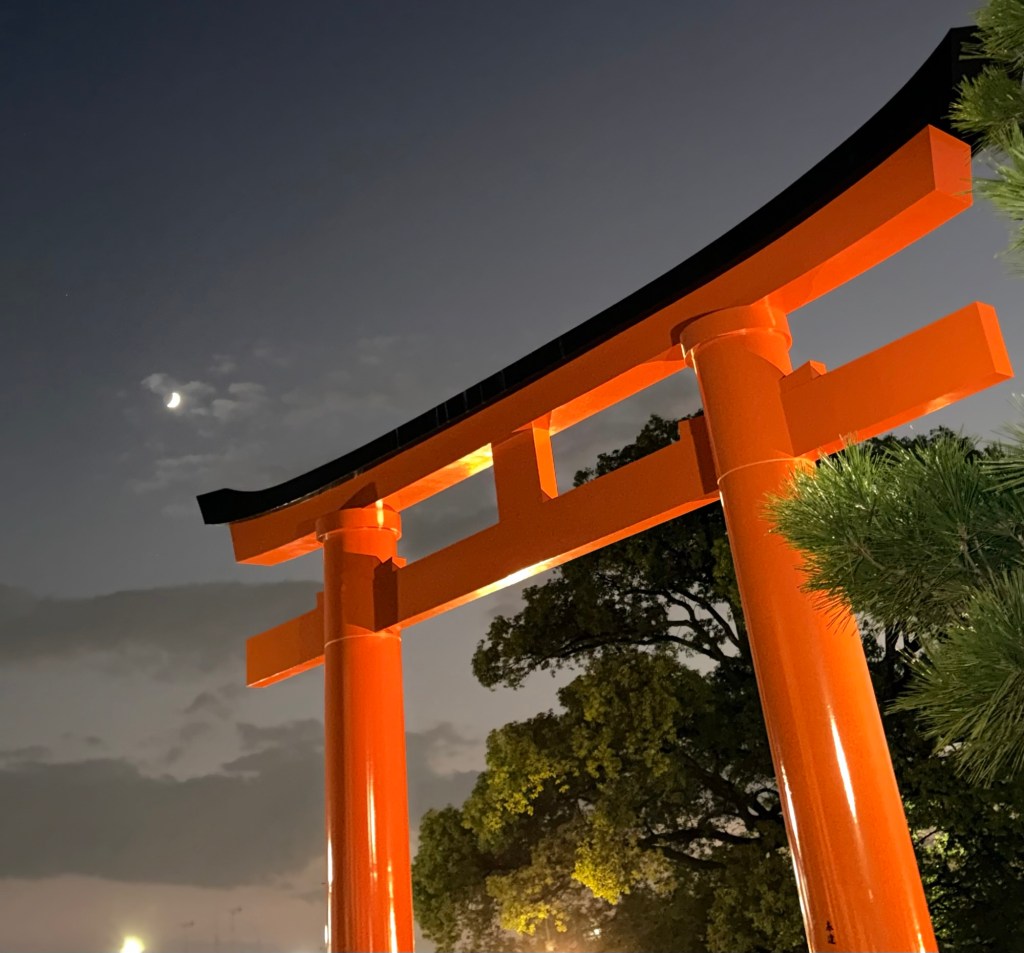
We didn’t have time to walk the entire 2 hour path up the mountain, although it’s open 24/7 (Kayoko said there are bears) but we did journey through a tunnel of hundreds of the vibrant orange torii gates, each inscribed with the name of the donor and the date of the donation. Next time we will explore more of the trails through the forest.
The complex is expansive and we encountered various smaller shrines, stone fox statues (messengers of Inari), and breathtaking views of Kyoto as the sun went down, a finger nail moon came out, and soft golden light illuminated the torii gates and surrounding trees.
There is a deep cultural significance to Fushimi Inari Taisha and we were able to observe the rituals performed by worshippers, such as ringing the shrine bell or making a wish at the main altar (toss a coin in the box, bow 2 times, clap 2 times, pray, and bow). FYI photography is not allowed at the main alter in any of the shrines.
Fushimi Inari Taisha is visually and spiritually unforgettable. I may have walked around for an hour with my jaw dropped in wonder.
Also, make sure to check out the food vendors outside of the shrine—I had a fresh strawberry wrapped in chocolate mochi with a chocolate cream inside the mochi! 🍓🍫
We spent two days in Kyoto, a city that makes me feel like I stepped back in time…way back in time to its founding as the imperial capital in 794. Thanks to the Japanese Shichifukujin (Seven Lucky Gods), much of the city was spared from bombing during WWII.
Sitting in a basin surrounded by mountains on 3 sides, Kyoto is literally bursting with shrines, temples, gardens, 17 UNESCO World Heritage Sites, and historic neighborhood like the geisha district of Gion. It’s a special place that continues to steal my heart 🧡.
Sigh…where to begin? So much has been written about each of the places we visited. Pictures don’t do them justice. Nor can I post the hundreds of pictures I took (yes, hundreds). Therefore, I’ll share a bit about what I found special about 4 of these breathtaking attractions, two per post.
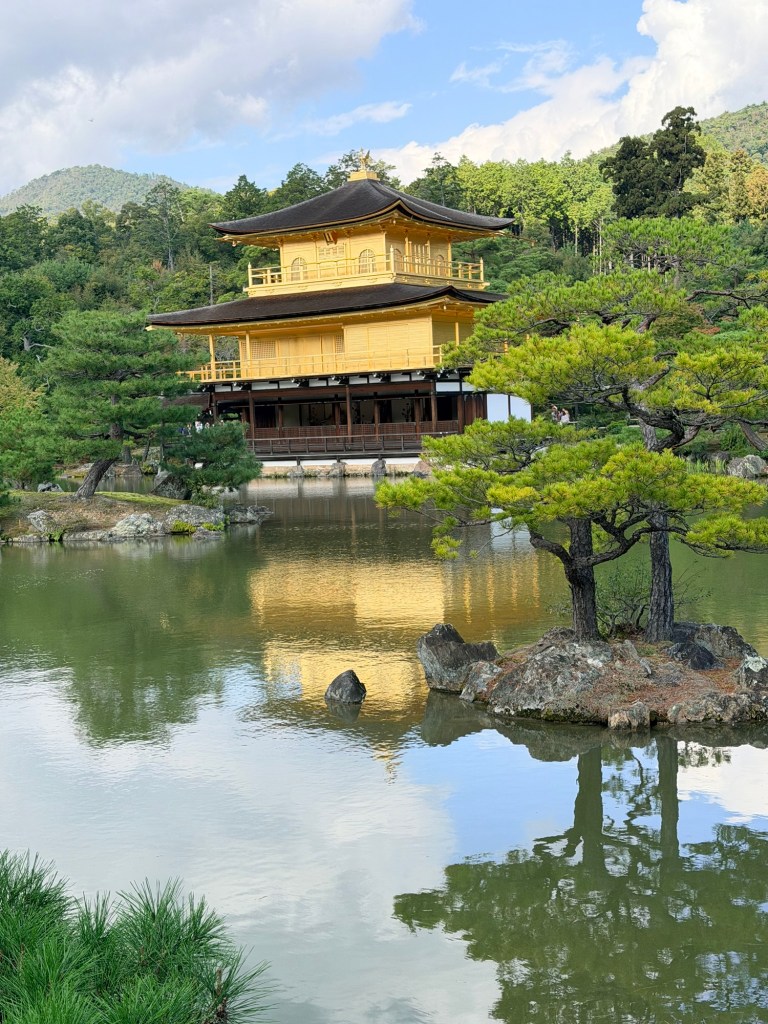
Kinkaku-ji, the Zen Buddhist temple known as ‘The Temple of the Golden Pavilion’. The top 2 floors are coated in gold leaf. 🍁
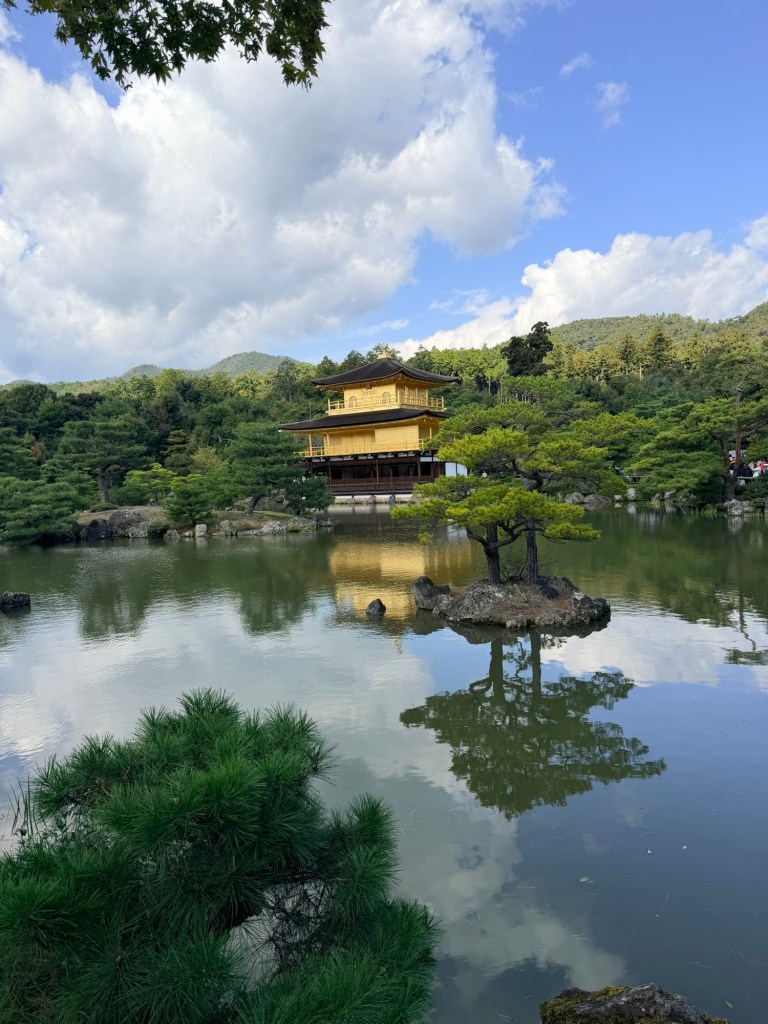
Let’s start at Kinkaku-ji. This was my second time awing this unbelievable temple officially called Rokuon-ji. I could see it 1,000 more times and it wouldn’t change the way I feel about it. And it’s not just me that thinks that way—it is designated as a UNESCO World Heritage Site, a National Special Historic Site, a National Special Landscape, and one of the 17 Historic Monuments of Ancient Kyoto. The original Golden Pavilion is thought to have been built in 1399, with the gold designed to stamp out any negative feelings toward death. When the sunlight hits the temple, the shadows on the water produce a mesmerizing mirror effect.
The pavilion you see today was rebuilt in 1955 to closely resemble the original. It stands three stories high and 40 feet tall.Sorry, not sorry, for posting so many pictures of this little slice of Heaven!
Next stop—Kiyomizu-dera, a Buddhist temple founded in 778 CE by Enchin Shonin, with the present buildings constructed in 1633 by order of Shogun Tokugawa Iemitsu. Pure Water Temple”, as it is translated to English, nestled at the basin of Mt, Otowa in Eastern Kyoto.
With over 1200 years of history, it belongs to the Kita-Hosso sect of Japanese Buddhism. We took the train and then walked 20 minutes, uphill on narrow roads, passing by souvenir shops, to the entrance of this masterpiece.
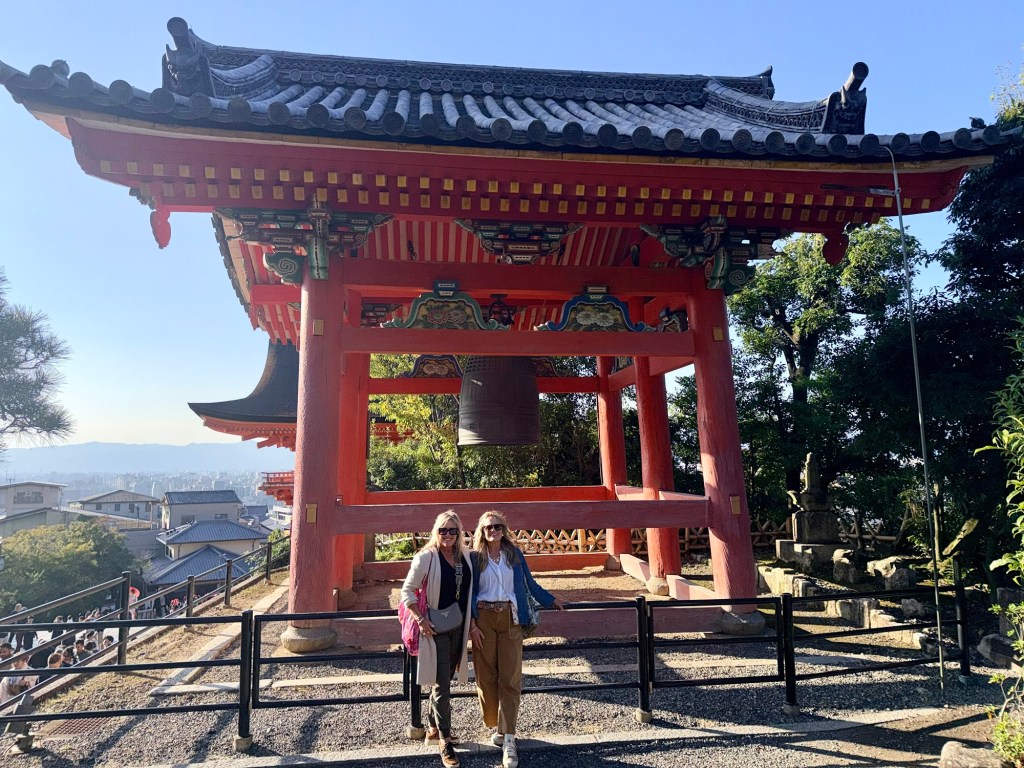
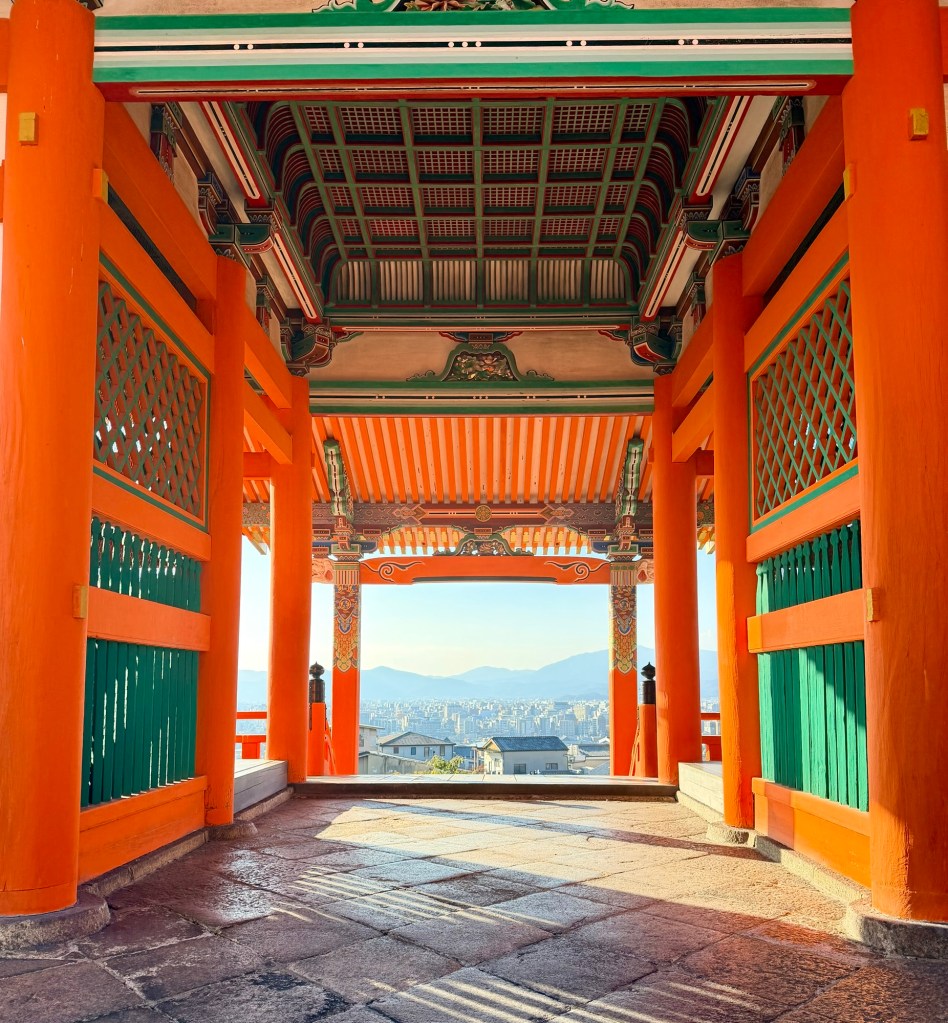
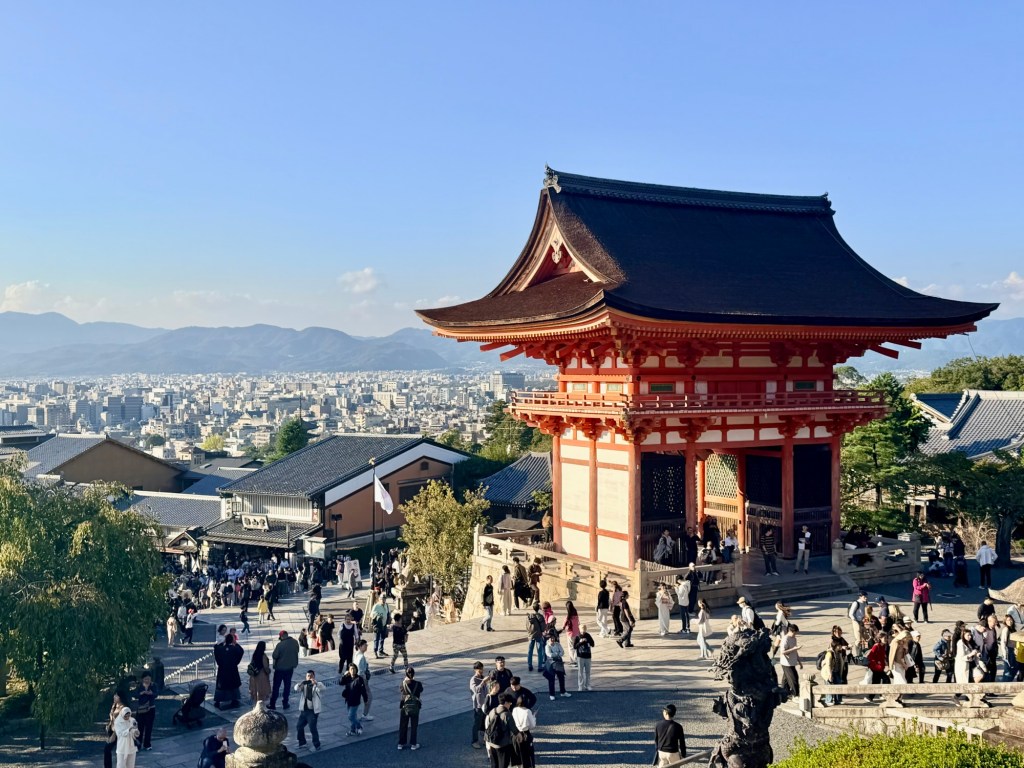
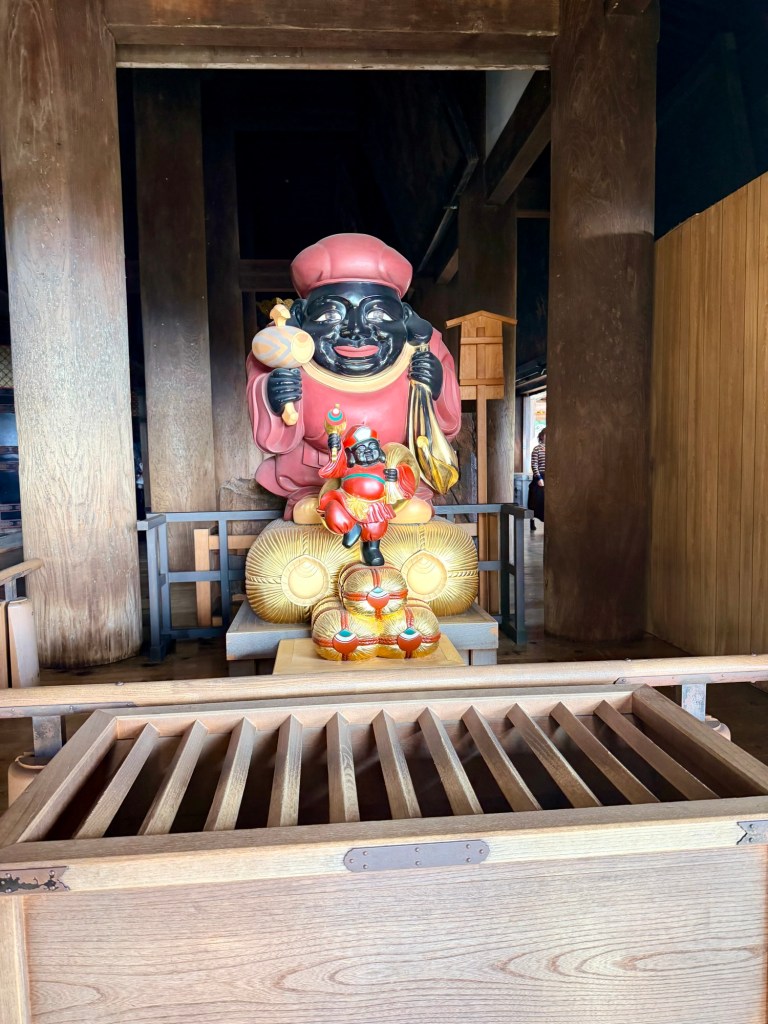
With over 30 buildings at Kiyomizu-dera, this is the entrance called Niōmon GateThe Shōrō (Bell Tower) is famous for the ritual known as ‘joya no kane’. Per Buddhist ritual, the bell is rung 108 times just before midnight on New Year’s Eve, representing the cleansing of the 108 earthly desires that cause pain. It cleanses the soul and creates enlightenment with the 108th ring, ushering in the New Year free from those sufferings. The three-storied pagoda is called Koyasu Pagoda, and is dedicated to safe childbirth.Talk about a view…World, meet Kyoto!The Otowa Waterfall has three streams and each grants a different benefit — longevity, success in school, or a fortunate love lifeDaikokuten – one of the Seven Lucky Gods of Japan. He is the god of wealth, commerce, and prosperity.A view of the Main Hall (Hondo), the most famous structure built on a steep cliff with a large wooden stage overhanging the hillside. The construction is a joinery method and no nails were used.The main hall’s wooden stage sits 13 meters high (again, no nails were used). No pictures are allowed inside the main hall where we were able to ring the bonshō (temple bell) with a mallet.












 Christina’s Journey Journal