Category: Tokyo

  • Shodo – our Japanese Calligraphy Experience 🖌️

    Shodo – our Japanese Calligraphy Experience 🖌️

    One encounter that resonated deeply with me during this trip was a lesson in the Japanese art of calligraphy, known as “shodo.” This practice is truly memorizing as it is more than just writing; it is an expression of artistry, philosophy, and spirituality that has evolved over centuries.

    Japanese calligraphy is rooted in the Chinese characters (kanji) and Japanese syllabaries (kana). Its roots are influenced from the 7th century cultural exchanges with China.

    Shodo emphasizes the beauty of brush strokes, the flow of ink, and the harmony between the artist and the paper. Each character conveys emotion through a meditative experience, promoting mindfulness and focus. And that’s exactly the way I felt as I was trying my hand at Shodo.

    First, we had to prepare for the lesson.The tools included:

    • Brushes (fude): I found that I do so much better using a smaller brush.
    • Ink (sumi): Ink is created by grinding an ink stick on an ink stone with a small amount of water. This process itself is an art form, as the quality of the ink affects the final piece. FYI-we tried our hand at creating the ink, but then we used prepared ink. 
    • Paper (washi): Japanese washi paper is prized for its texture and durability and allow ink to flow gracefully to enhance the visual quality of the calligraphy.
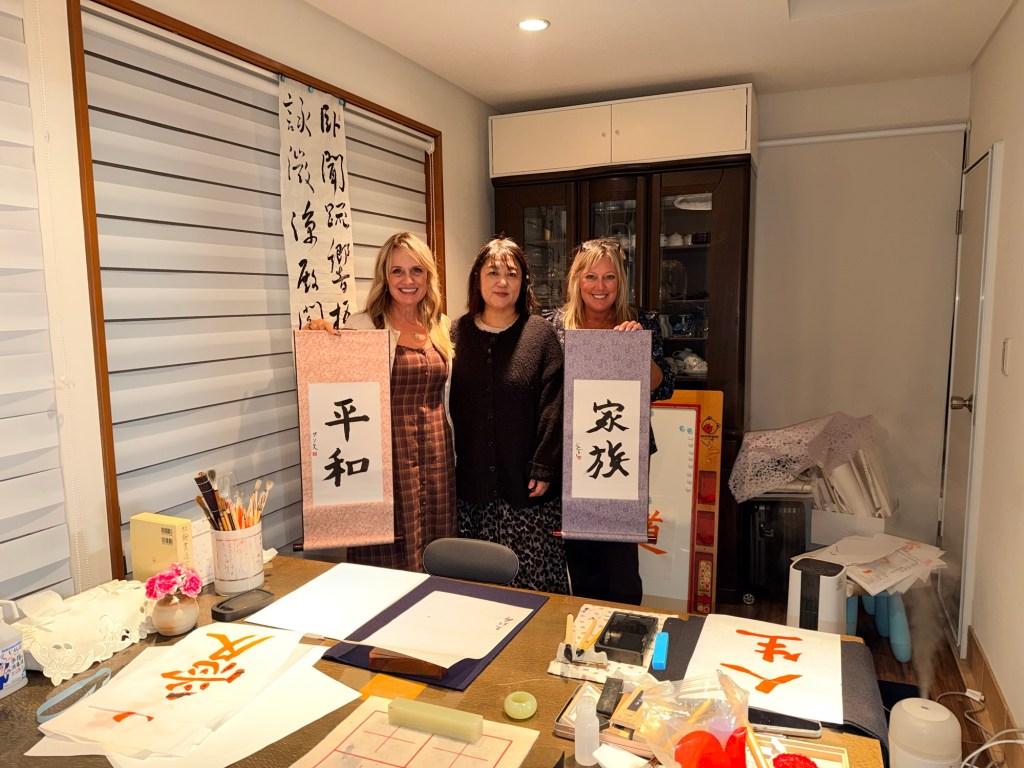
    • Seal (hanko): Calligraphers use a personal seal to stamp their work, adding a final touch to the art work. My sister and I each had our own seal! (and I brought it home so I can continue to stamp my calligraphy).

    We are so lucky that one of our Japanese friends is a shodo sensei (teacher). According to our friend, kanji characters are designed to be written with the right hand. I gave it my all as a left-hander, but it wasn’t easy.
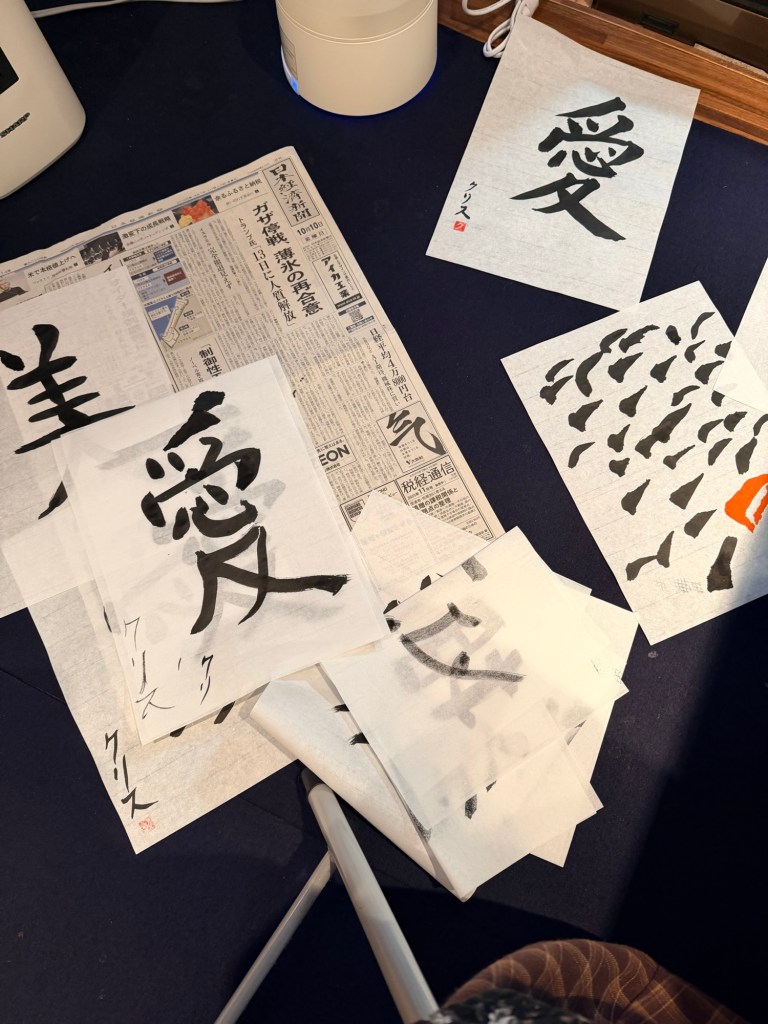
    Practice, practice, practice!

    Beyond its aesthetic appeal, Japanese calligraphy has a deep cultural significance. It accompanies poetry, spiritual writings, and meaningful life events. In addition, it is a common practice during New Year celebrations when people write phrases to invite good luck and prosperity for the coming year.

    Shodo also plays an important role in Zen Buddhism, where it’s seen as a form of meditation. The act of writing is intended to manifest the essence of one’s thoughts and beliefs, making it both a reflective and creative practice. And, I truly felt that way while I was practicing.
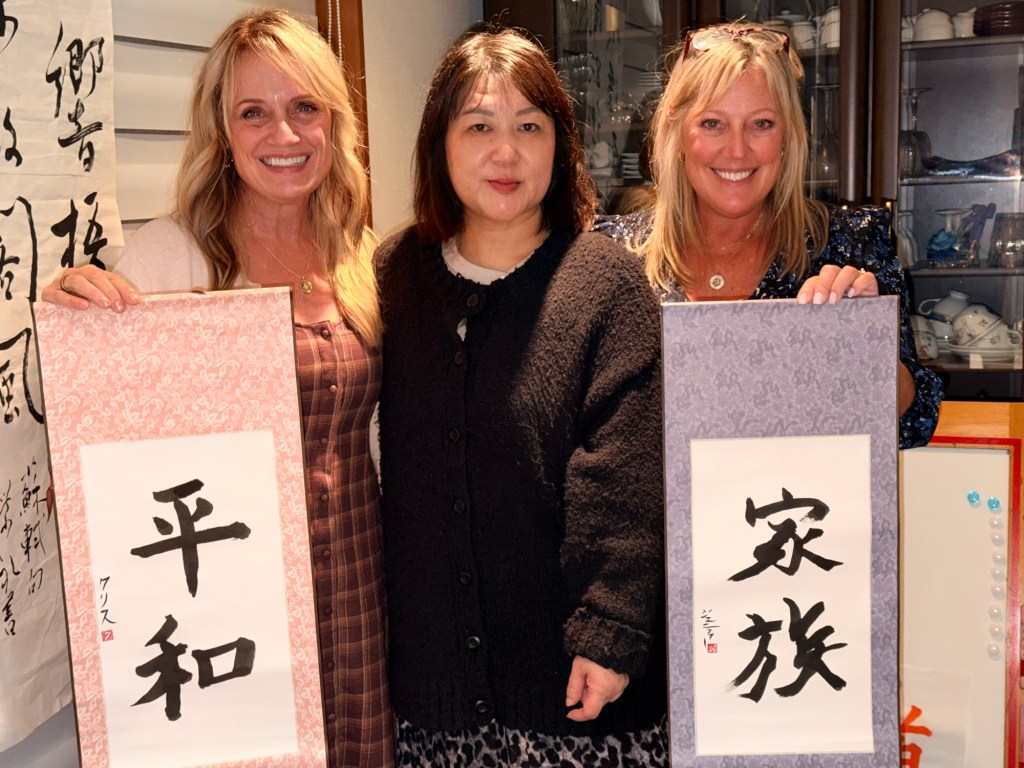
    The most meaningful souvenir I brought home is my calligraphy artwork—words like peace, love, and beauty—memorialized on paper…an opportunity to learn from a Japanese calligrapher. Kuniko gave me so much more than a souvenir; it was a gift…a rare chance to slow down, practice mindfulness, and be inspired by beautiful art.
  • Tokyo Panoramic Tour – Day 1 Finale

    Tokyo Panoramic Tour – Day 1 Finale

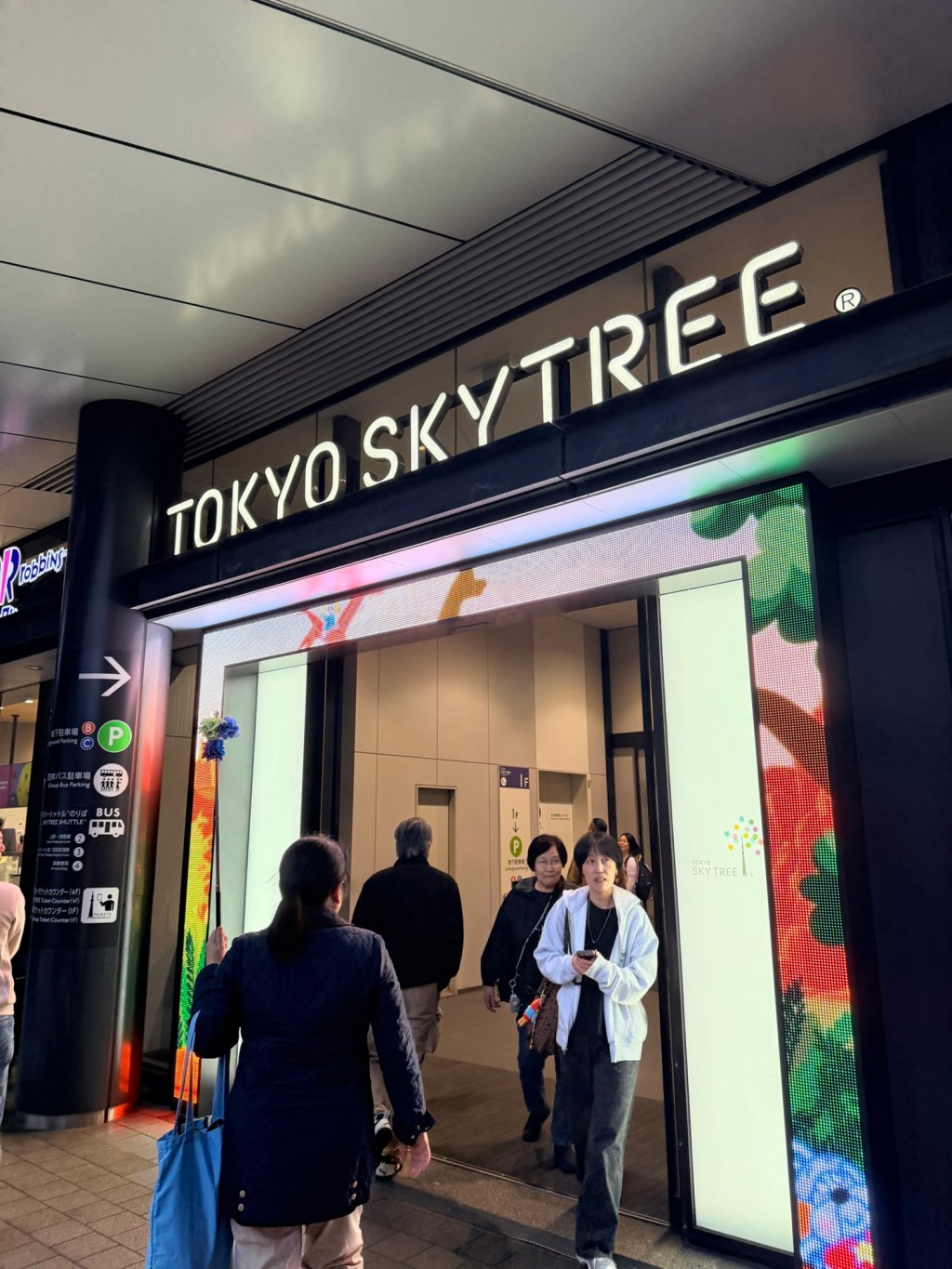
    After visiting Sensō-ji we went to the Tokyo Skytree—a 2,080 ft tower that opened in 2012. It’s the tallest structure in Japan and serves both as a broadcasting and observation tower in Sumida, Tokyo (fyi Sumida is the name of the river running through the city). Fun fact—it’s also the 3rd tallest structure in the world after Merdeka 118 and the Burj Khalifa.

    The tower is illuminated at night using LED lights that change colors.
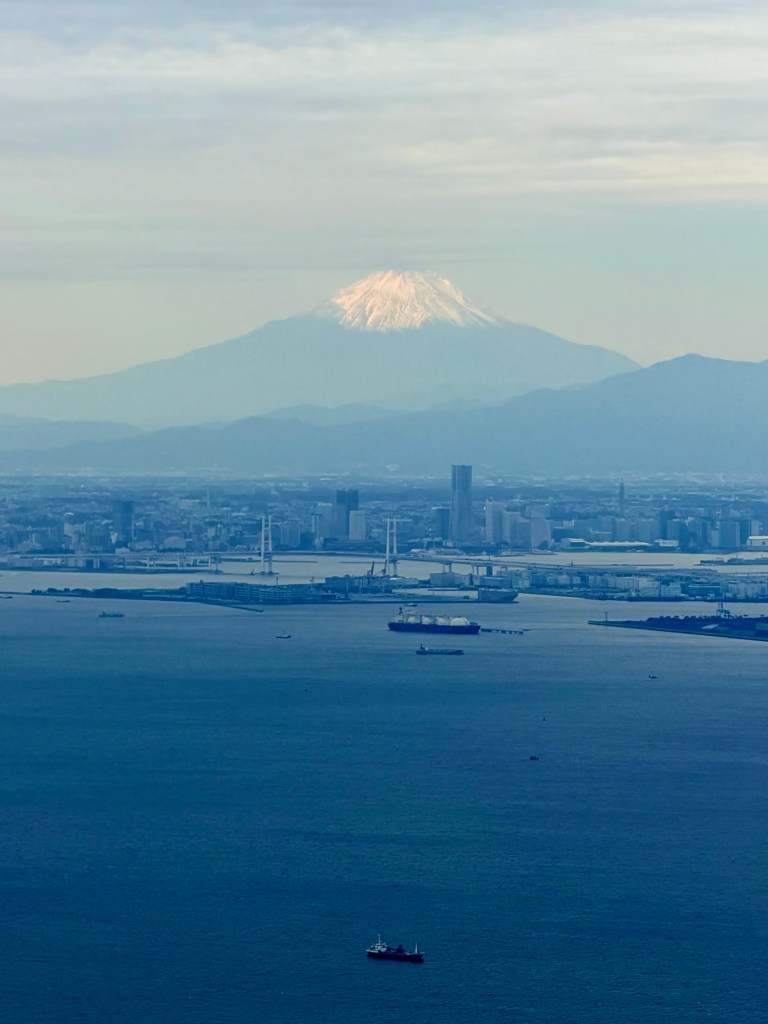
    A view of Tokyo and the Sumida River that runs through central Tokyo. On a clear day you can see Mt. Fuji but unfortunately, we did not have a clear day.

    We went back to Tokyo Station and shopped until our dinner reservations.

    The Tokyo Station opened in 1914 and some say was patterned after the Amsterdam Centraal Station with its red brick facade.
    A rainy evening at the train station.
    The Tokaido Shinkansen was the world’s first dedicated high speed rail system and opened service from the station to Osaka in 1964.
    Dinner has never tasted so good after a full day of sightseeing. We ate at the top of a department store by Tokyo Station.
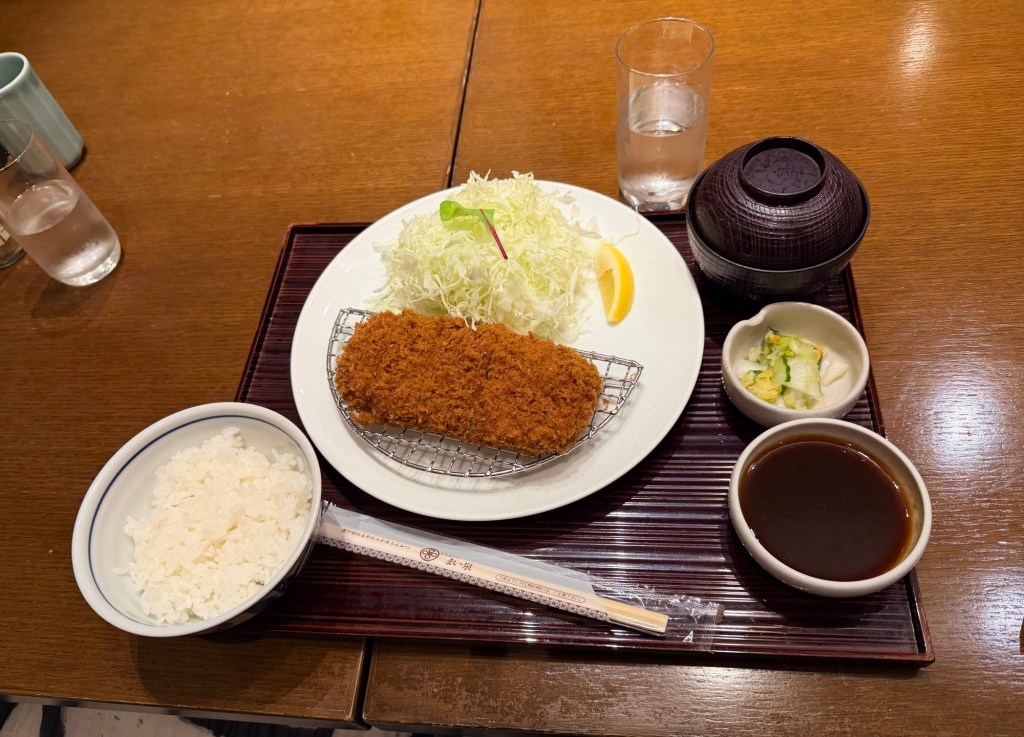
    In my opinion, the best pork in the world — Tonkatsu. It’s a Japanese cutlet made from pork loin or fillet, coasted with panko and then deep-fried in oil. It originated in the Meiji area and has its roots in French cuisine.
    Walking home with a view of the Tokyo Skytree from Kayoko’s home. What an amazing first full day in this beautiful city!🇯🇵
  • Tokyo touring continued

    Tokyo touring continued

    After Meiji Shine, we continued our tour and the day kept getting better and better, even as the rain fell…

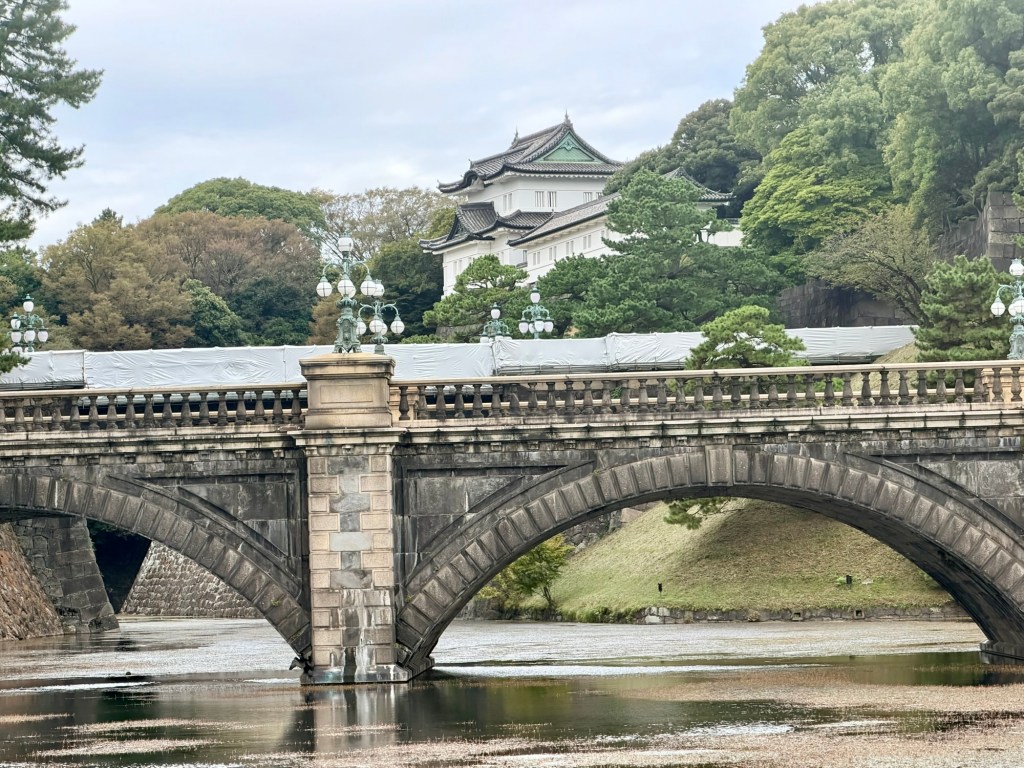
    The Imperial Palace is beyond this moat and the Nijunashi Bridge, which means “Double Bridge”. There are actually two bridges—the stone arch bridge in the front, which is called Meganebasgi (or Eyeglass Bridge in English), and a steel bridge behind it. The name comes from the original wooden bridge it replaced, which was two-levels.
    The emperor of Japan is symbolic, serving as the head of state and a symbol of the Japanese people. The imperial dynasty dates back to 660 BCE with the legendary emperor, Jimmu, descended from the sun goddess, Amaterasu.
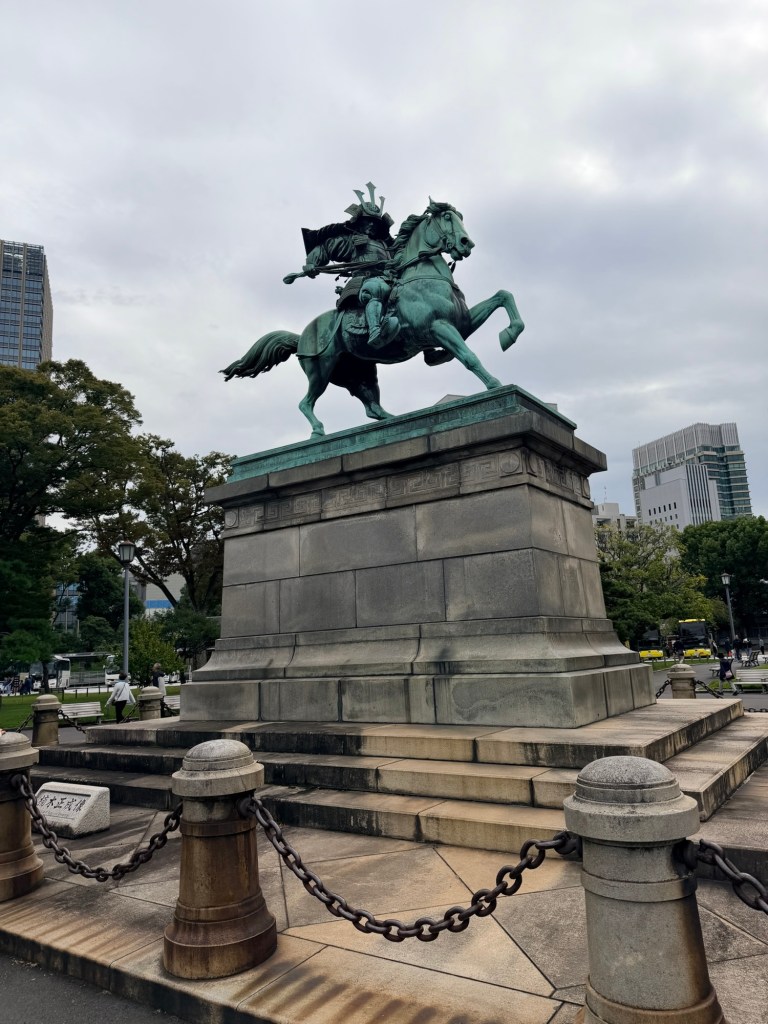
    The Kusunoki Masashige was a loyal samurai dedicated to Emperor Go-Daigo. He ultimately sacrificed his life in battle.
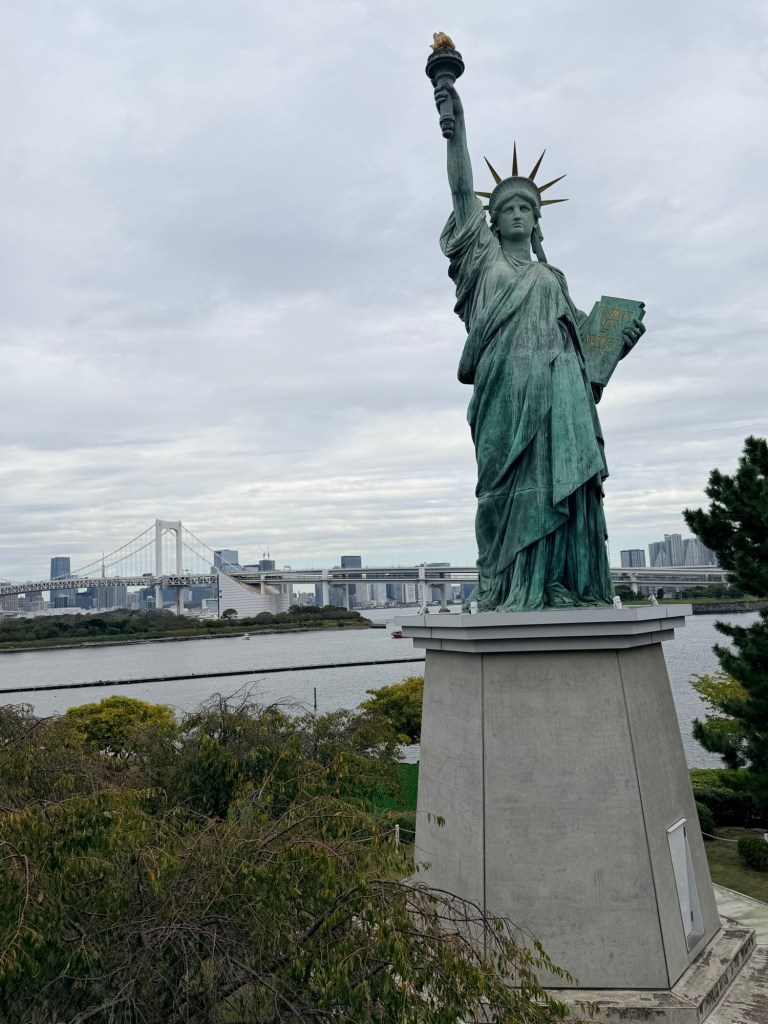
    Next stop was the man-made island of Odaiba in Tokyo Bay, across from the Rainbow Bridge. Originally built for defensive purposes in the 1850s, it’s now a major recreation area. There’s even a 40 foot Statute of Liberty in the Odaiba Marine Park, given by the French in 1998 as a sign of friendship between the two nations.

    After stops at the Imperial Palace and Odaiba, we ate a buffet lunch at a local hotel by the airport. Then we went to my one of favorite places in Asakusa, Tokyo—the Buddhist temple called Sensō-ji. Built in the 7th century, it is Tokyo’s oldest temple and draws some 30 million visitors each year. It is also known as the Asakusa Kannon.

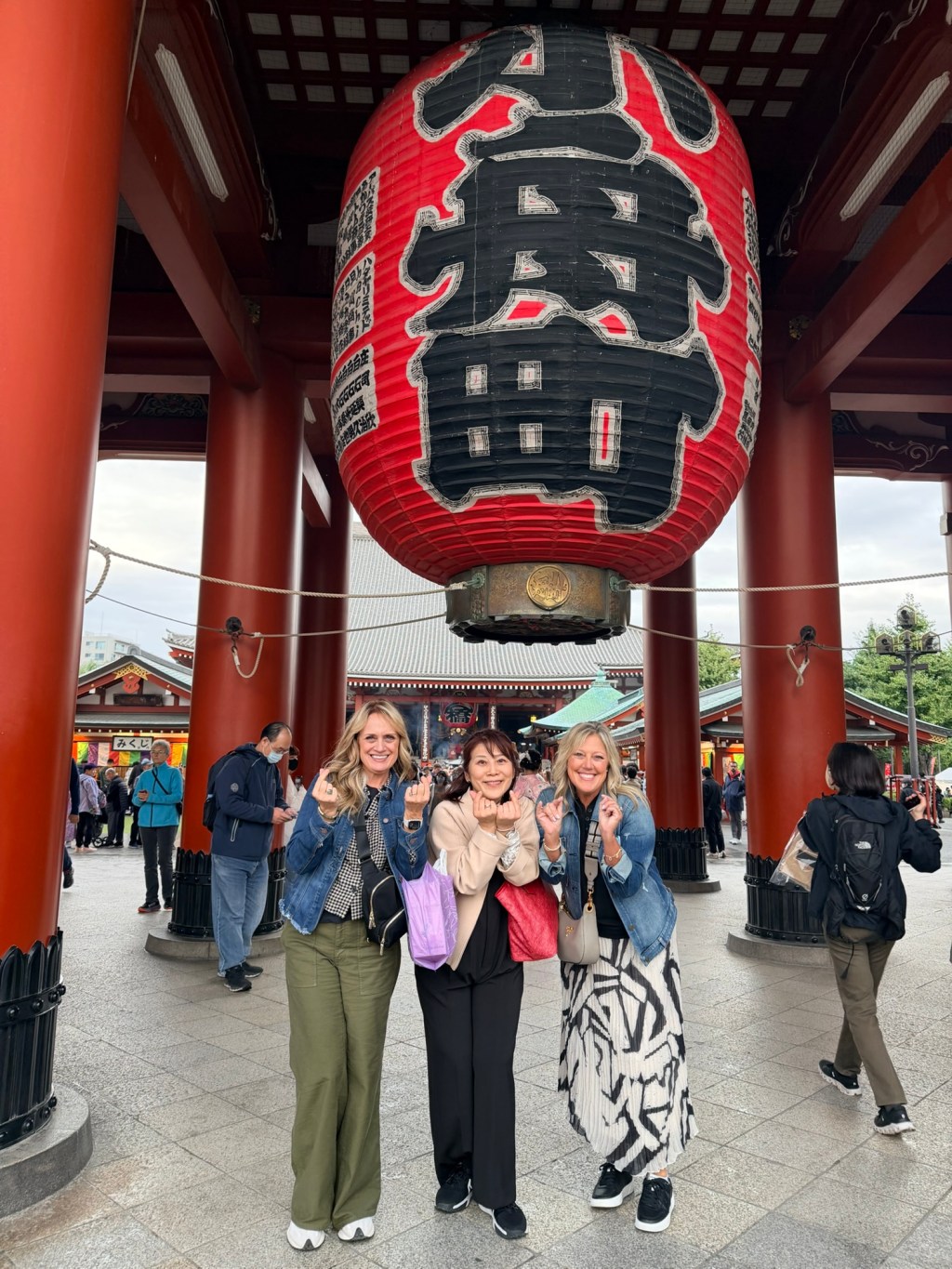
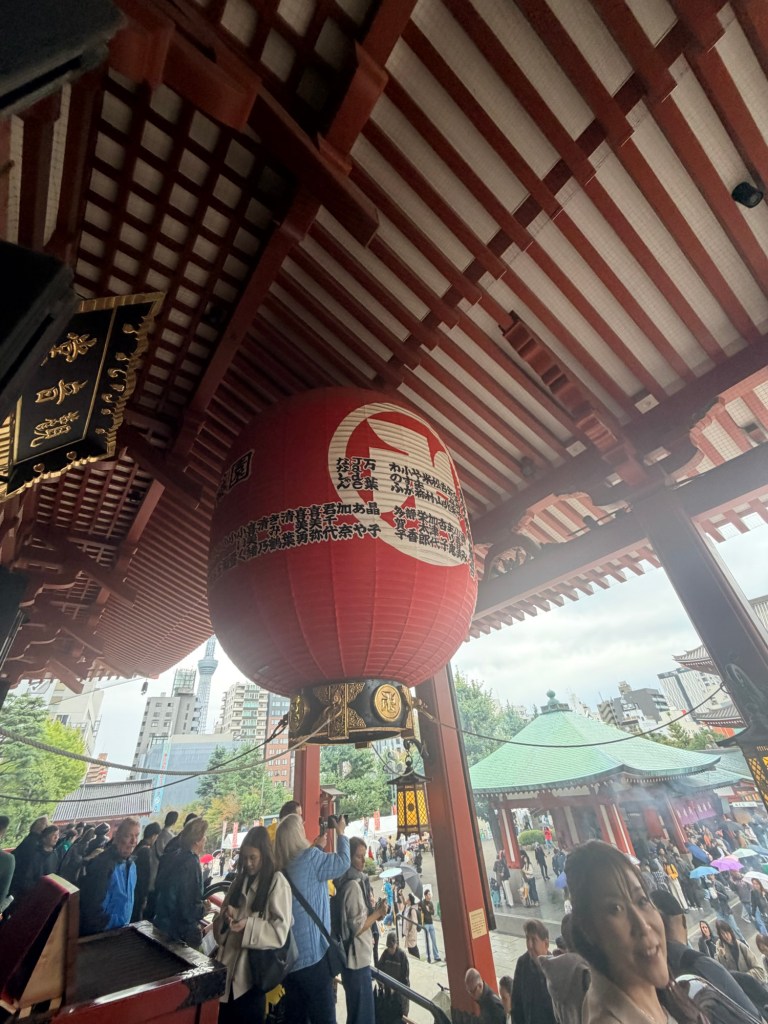
    The grounds are as colorful as they are stunning and it’s difficult to capture the beauty with my camera. The entrance is called the Kaminarimon or “Thunder Gate”, and showcases a massive paper lantern painted in red-and-black tones symbolizing thunderclouds and lightning.

    The beautiful koi pond on the grounds of the Senso-ji temple. The stone bridge, built in 1618, is considered the oldest stone bridge that remains in Tokyo.
    Hozomon Gate (Treasure House Gate) is the inner of two large entrance gates that lead to the Senso-ji. The outer is the Kaminarimon.

    The Kaminarimon, known as the Thunder Gate, marks the entrance to the historic Senso-ji Temple.
    Entering the Main Hall (Hondo)
    Inside the Main Hall (Hondo), which is the primary building where the statue of Kannon is enshrined. This statue is not visible to the public.

    Five-Story Pagoda is a prominent landmark on the grounds and stands 55 meters tall. It houses the relics of Buddha.

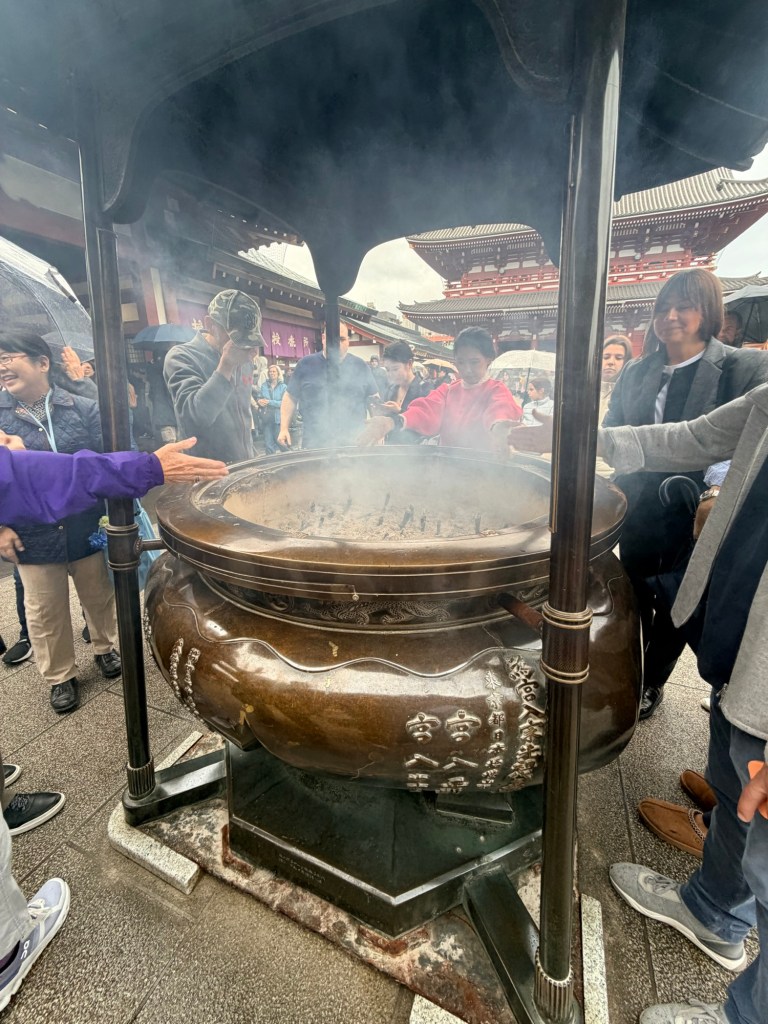
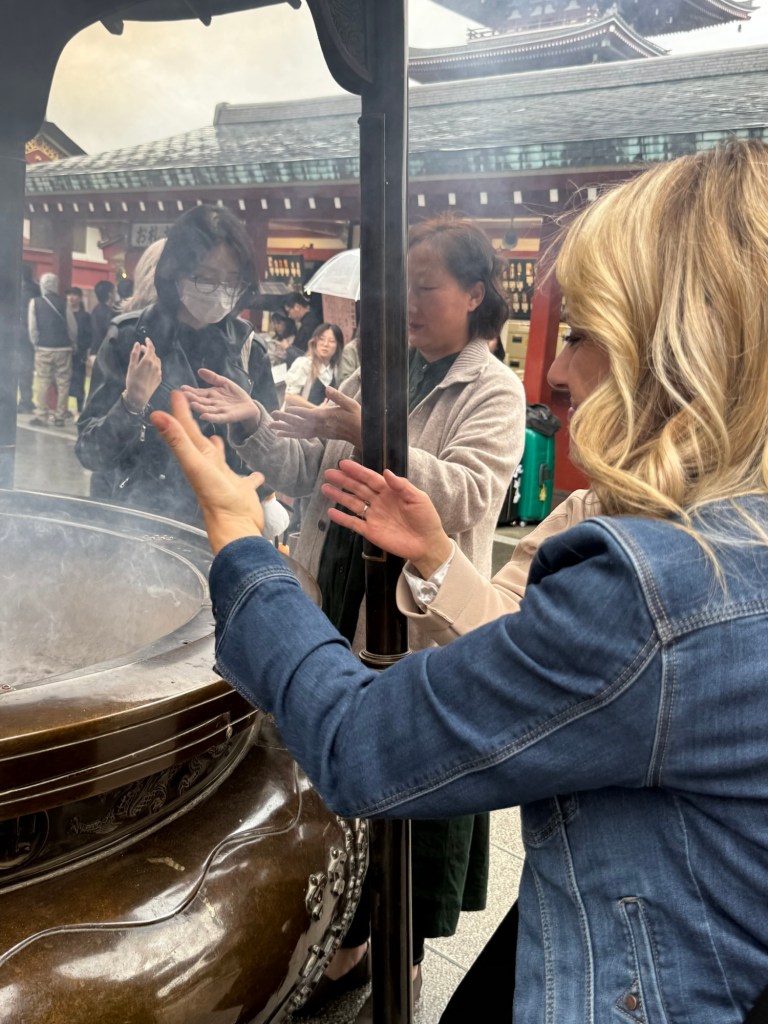
    Buddha’s Breath—The smoke from the incense burner (jokoro) at Senso-ji symbolizes purification and healing. We use it to cleanse the body and mind. You’re supposed to direct it toward a part of your body you wish to heal or toward the head to gain wisdom.
    Directly the smoke to gain wisdom.
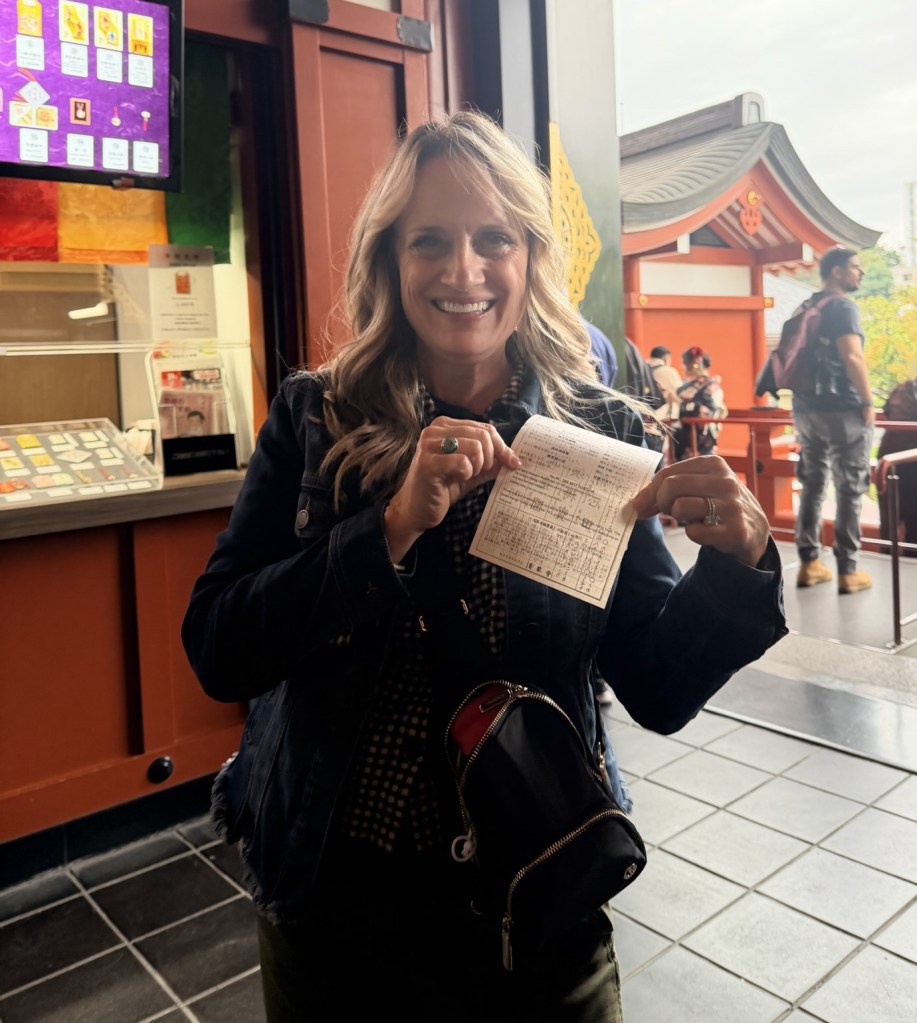
    Fortune time! You pay a small fee, shake the box, draw a stick with a number on it and then draw your fortune (omikuji) from that numbered box. My fortune was the best…yes, it said it was The Best Fortune. If you get a bad one, then you “kami wo misubu”—fold the paper and tie it to one of the designated racks to “leave behind” the bad luck.
    One of the Buddhas on the temple grounds
    The Nakamura-dori is the historic 250-meter-long shopping street that runs from Kaminarimon to the Hozomon Gate (Treasure House Gate) leading to the main hall. It is lined with shops selling souvenirs and traditional snacks —where I bought delicious senbei!

    What’s the difference between Shinto and Buddhism? It was explained to me while we were in high school by my friend, Kayoko, and I have referred back to this teenage explanation many times—Shinto is Japan’s native religion that focuses on this life while Buddhism centers on the afterlife and enlightenment.

    Interesting observations: When you travel to Japan, it’s best to bring your own hand towel in your bag. This towel can is used to wipe your hands after you wash them in public restrooms as many times there are no paper towels nor dryers. 

    Our day concludes on the next post…

  • Japan 3.0 (my 3rd visit)

    Japan 3.0 (my 3rd visit)

    We arrived on Thursday afternoon, October 23, 2025, feeling both exhausted and exhilarated. This is my third visit to this wonderful country, and it never ceases to amaze me. There’s a unique blend of ancient traditions and modern life at every turn. From the first glimpse of Mt. Fuji as we landed at Haneda Airport to the tranquility of the Japanese gardens, this remarkable destination truly takes my breath away.

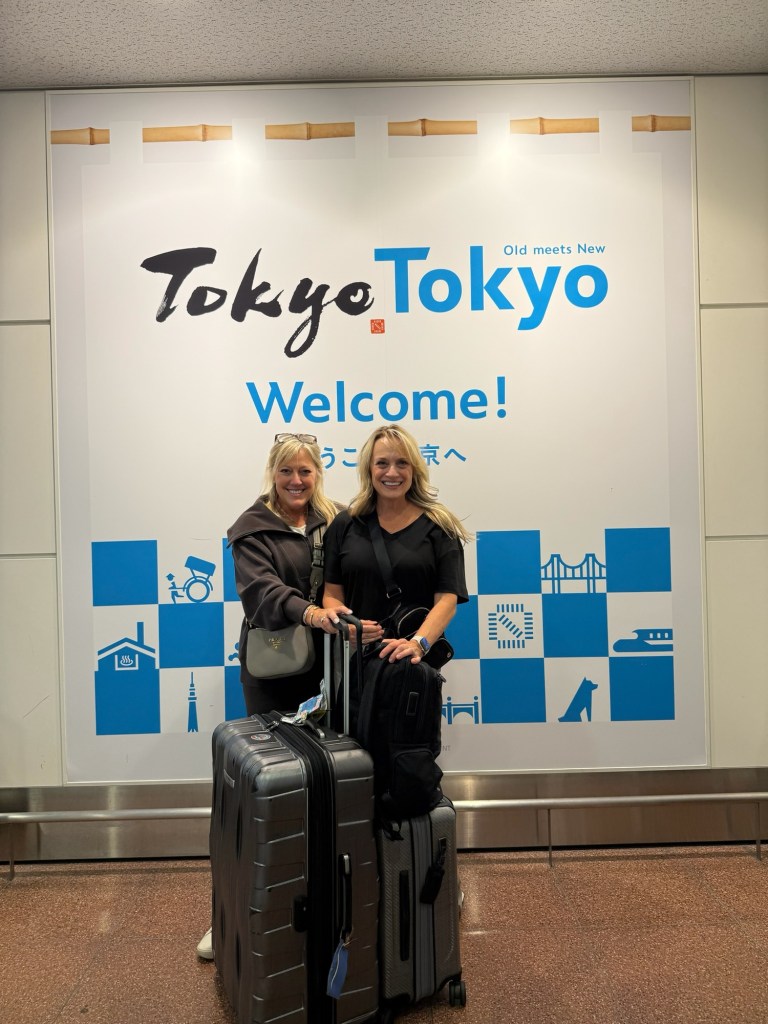
    My sister and I land in Tokyo.

    Without a doubt, the highlight of my experiences in Japan is the warmth and kindness of its people. Their emphasis on group harmony, politeness, respect, and cleanliness creates incredible interactions each time.

    I have the privilege of being friends now for 44 years with my childhood penpal, Kayoko, and her family. We are staying with her while in Tokyo this time. I am grateful to have this immersive cultural experience.

    After setting in, we went to a neighborhood yakitori grill, where we kicked off dinner with champagne (Kanpai!) and a 6 course meal of different part of the chicken on a skewer. Then it was off to bed after being up for over 24 hours.

    Friday was a very full day on our Tokyo Panoramic Tour, one of the best ways to start to understand a city. From first thing in the morning until dinner, we learned about the history and culture while visiting the Meiji Jingu (Shrine), the Imperial Palace, Odaiba, Sensō-ji Temple in Asakusa, Tokyo Skytree. We capped off the evening with a delicious tonkatsu dinner by the Tokyo station.

    Hey kitty kitty! Starting our bus tour watching this famous billboard.

    I will break up this day with a few posts, below are more details about the Meiji Shrine.

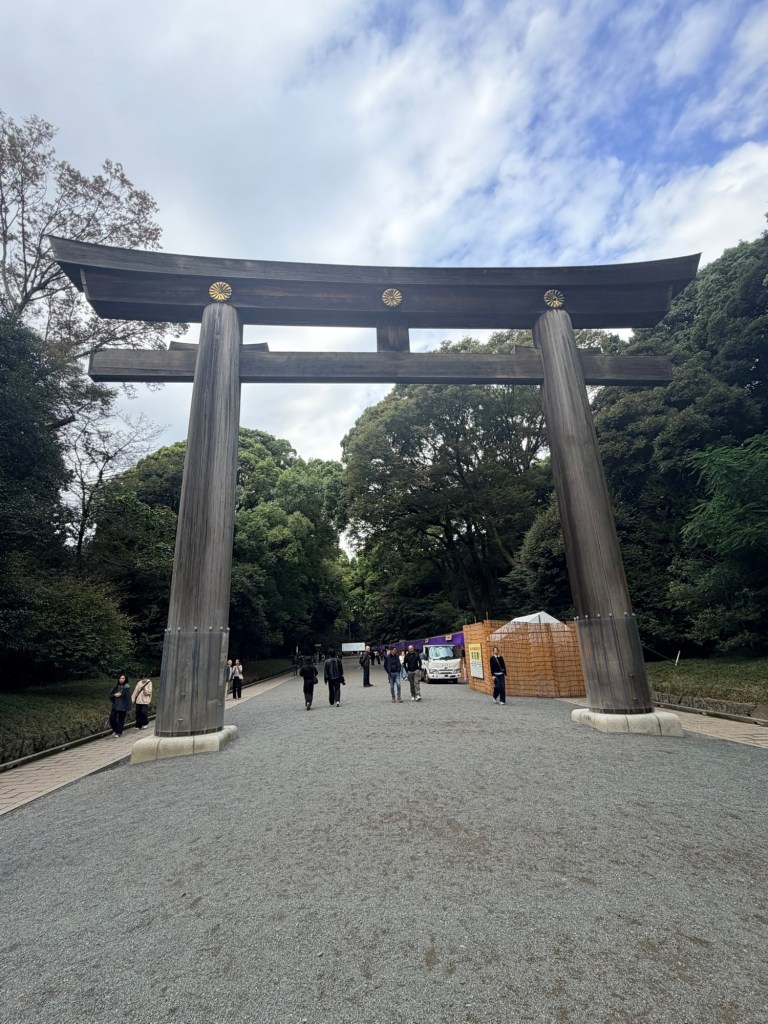
    The largest Torii gate in Japan serves as the entrance to the Meiji Shrine. The Shinto shrine in Shibuya, Tokyo sits on a 170 acre forest with
    120,000 trees of 365 different species. All of the trees were donated by the Japanese people. The shrine is dedicated to the deified spirits of the former Emperor Meiji and his wife, Empress Shoken. When you pass through the gate, it is customary to bow as you walk from the ordinary world to the sacred, and begin your path to the shrine. It was reconstructed in 1975.
    Barrels of Sake wrapped in straw that are offered each year to the memory of the emperor and his wife.
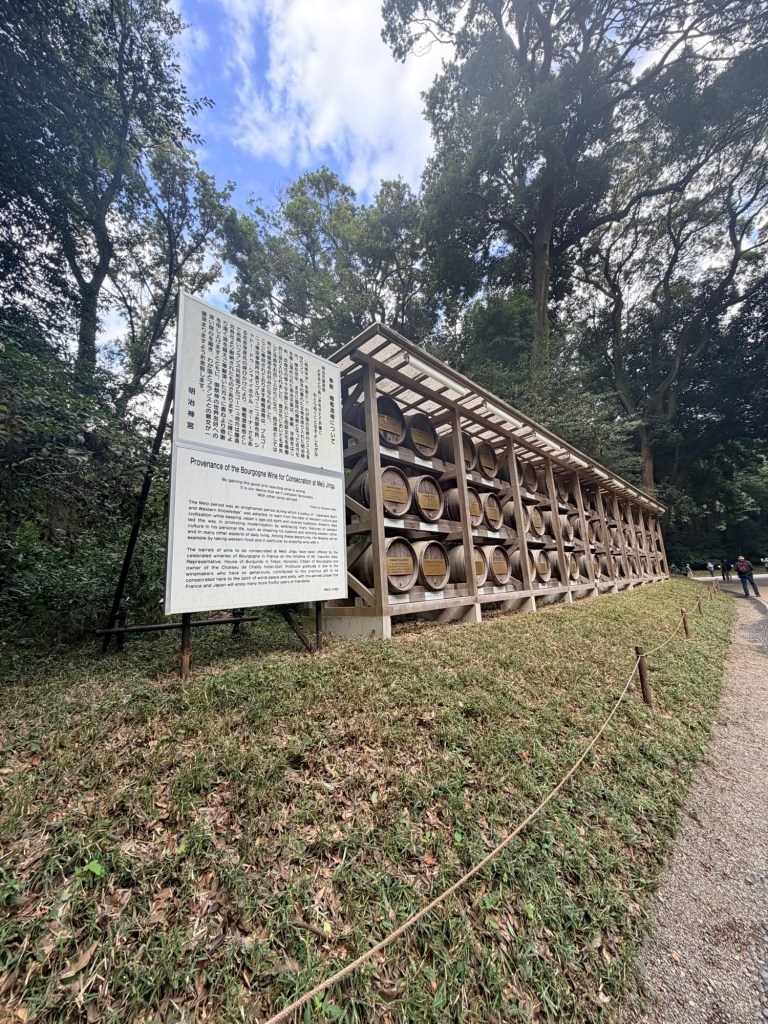
    And across from the sake barrels are wine barrels from the Burgundy region of Eastern France, offered as a remembrance of the emperor who brought Western culture and food to Japan, particularly wine.
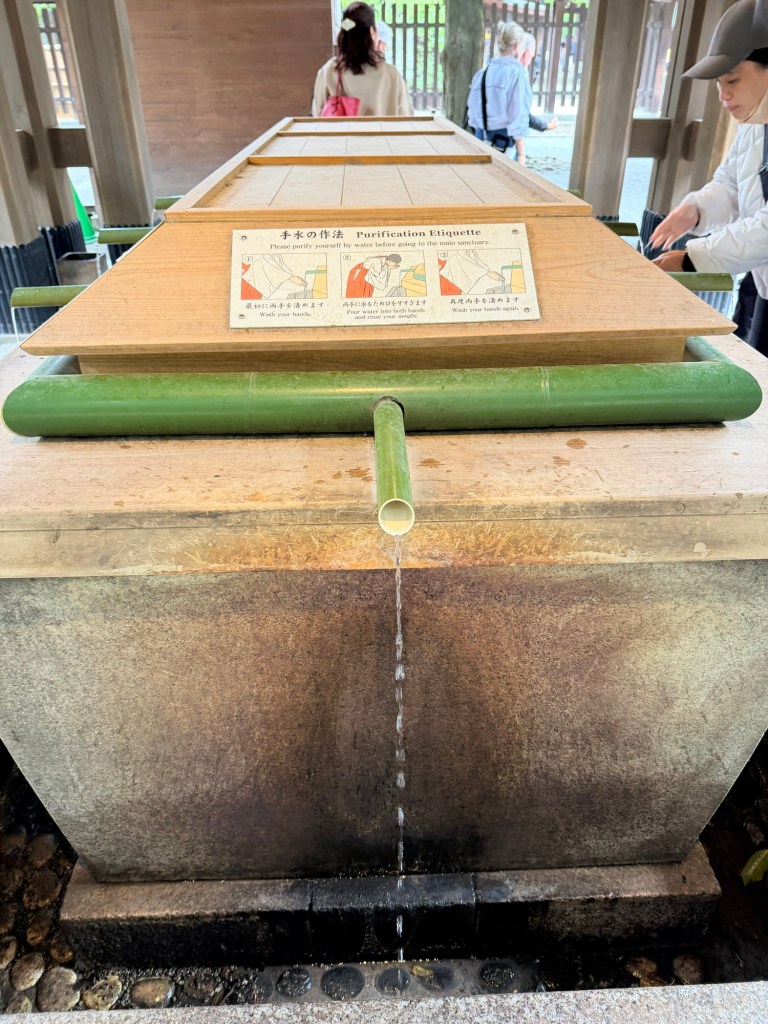
    Preparing our bodies to enter the shrine
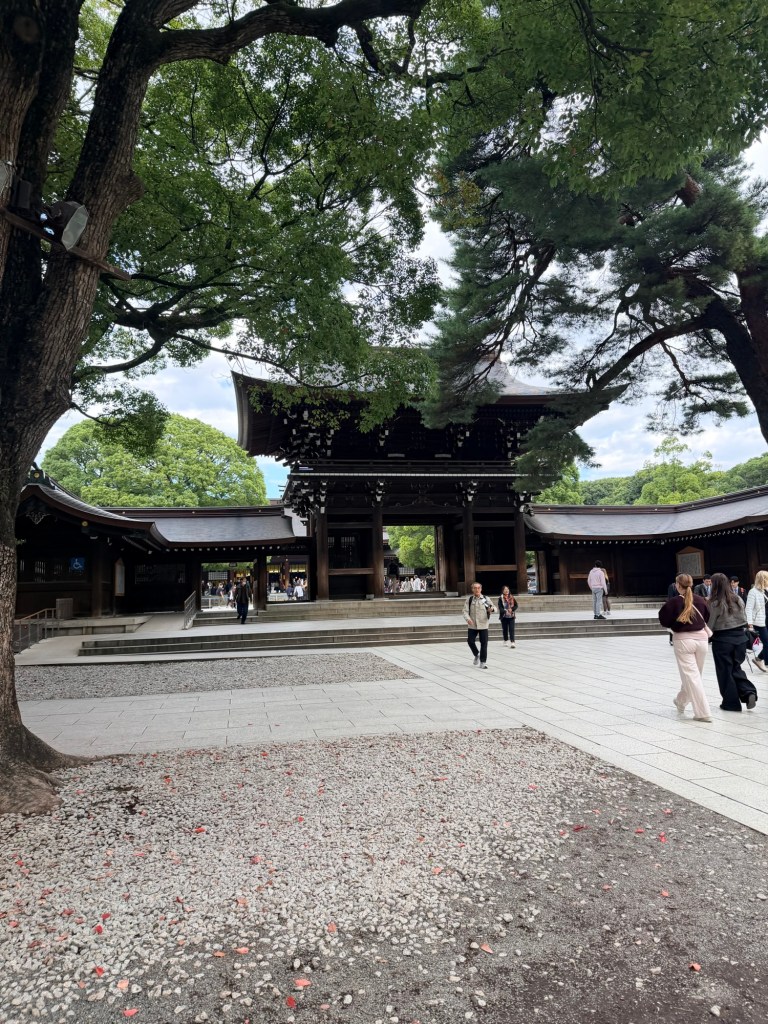
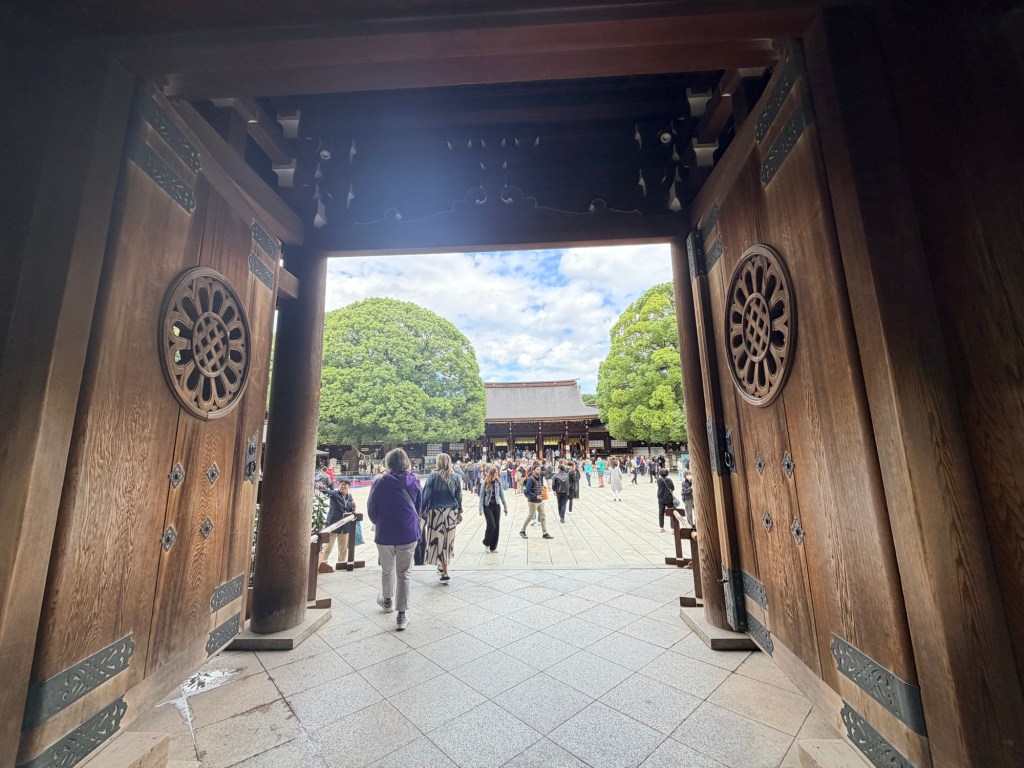
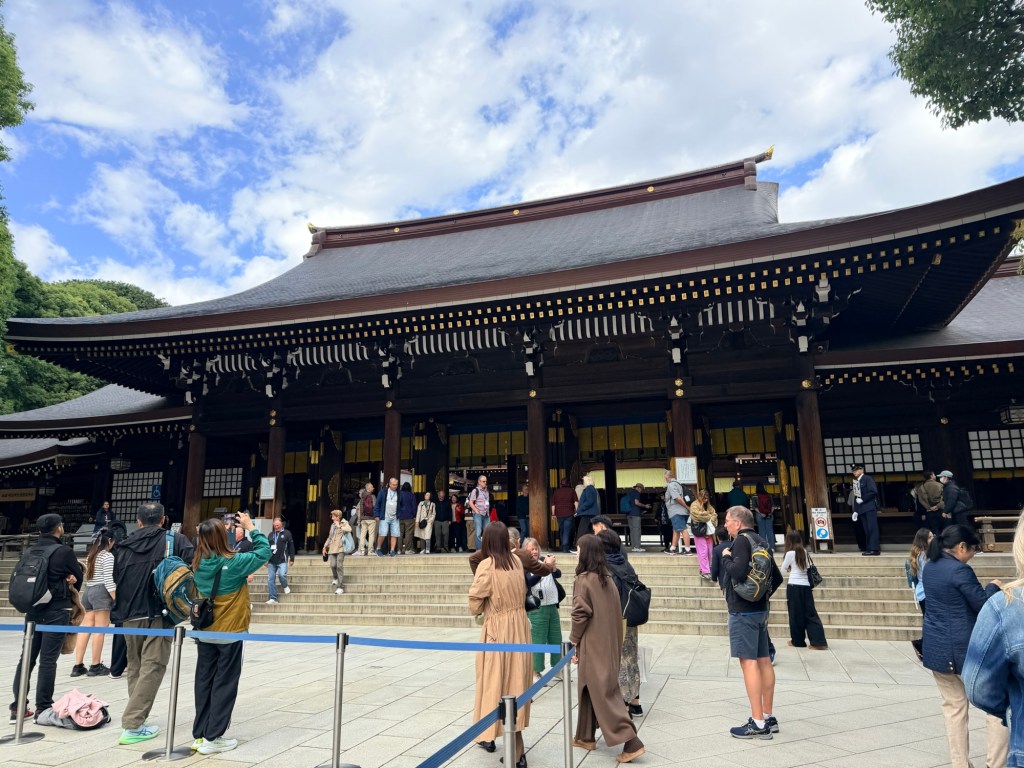
    Meiji Jingu – Construction began in 1915 using timbers from Kiso in Nagano and Alishan in Taiwan, once a Japanese territory. Materials were used from every Japanese prefecture (there are 47 today in Japan). It was dedicated in 1920, although the grounds were officially completed in 1926. The original building was destroyed during WWII and rebuilt in 1958.

    The cost of the construction was ¥5,219,00 in 1920 (which is roughly $26M today). This was actually about a quarter of the actual cost as much of the materials and labor were donated. Photography is not allowed once you ascend the stairs.