There are only two countries that start with the letter “Z” and I went to both today. Before I tell the story, let me share some tidbits from my time here-
1. Zimbabwe got its name from the Shona tribe — dzinba dzemabwe—which means houses of stone or stone buildings. They were masons who built with stones and didn’t use mortar.
2. Zimbabwe used to be called Southern Rhodesia until their independence in 1980. Zambia was called Northern Rhodesia until 1964.
3. Victoria Falls is a safe tourist destination. Tourism is their livelihood and the penalties are steep if someone would try something shady.
4. Last night there was such a cacophony of dogs barking—the elephants were walking down the street!
Back to today…
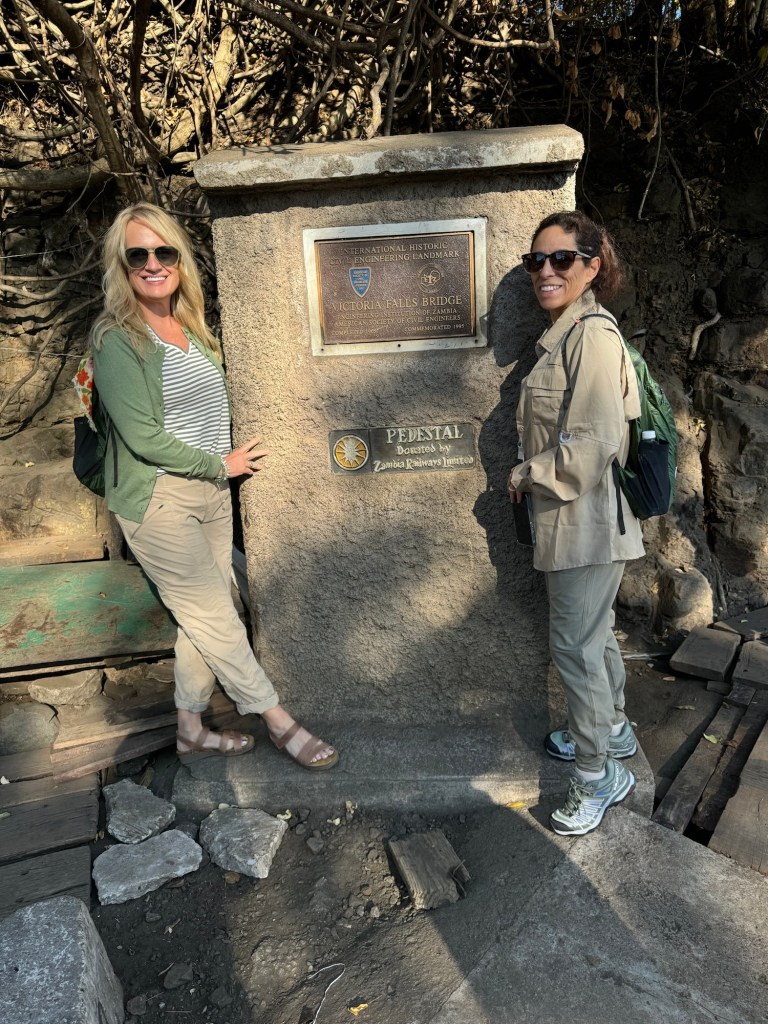
After sleeping in (7:00 am) we started the day by touring the Victoria Falls Bridge, which connects the two “Z” countries—Zimbabwe and Zambia.
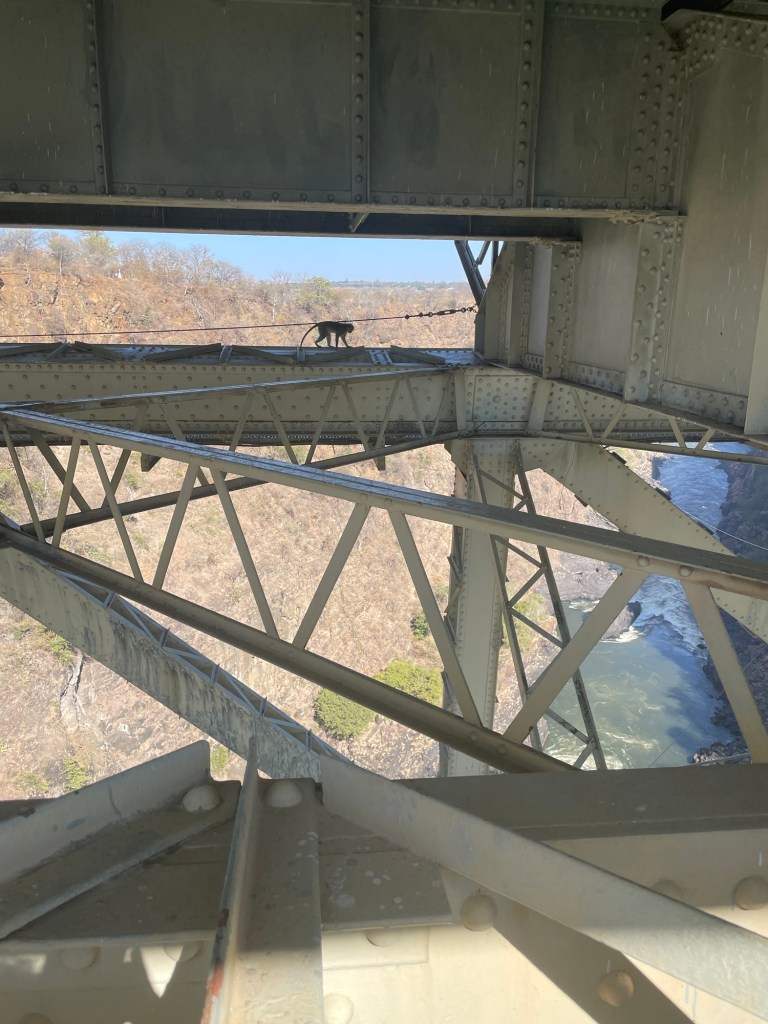
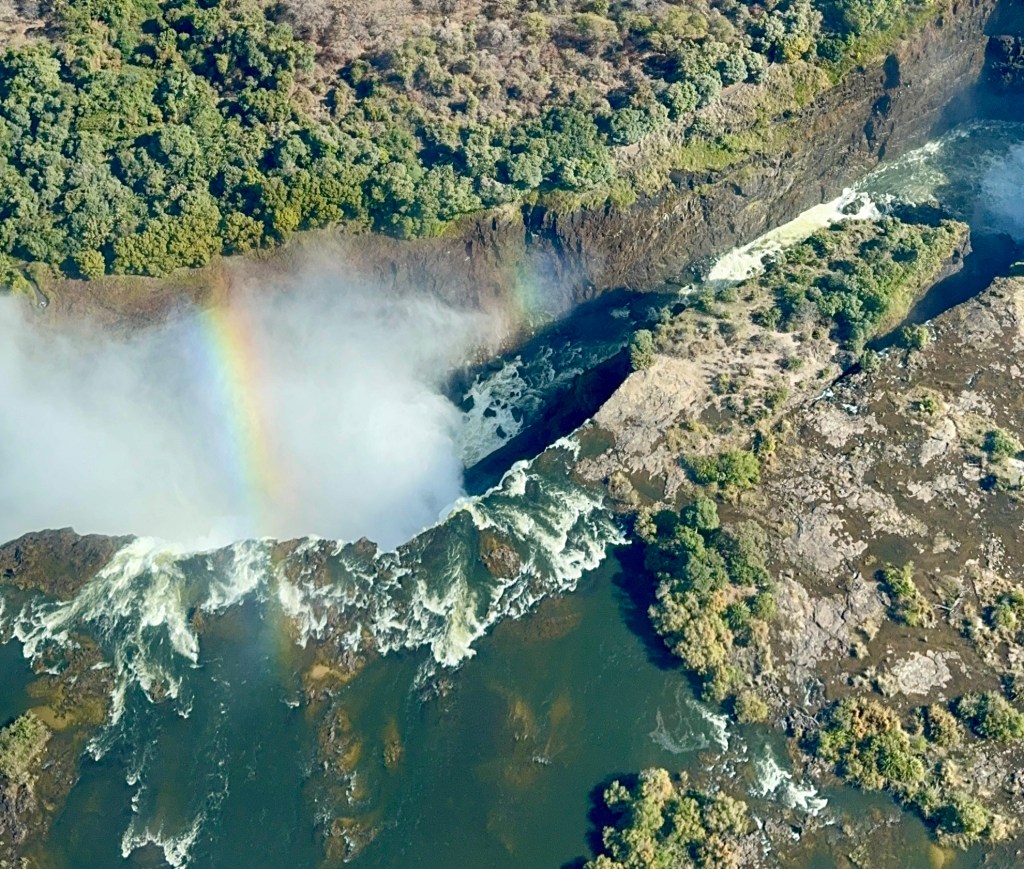
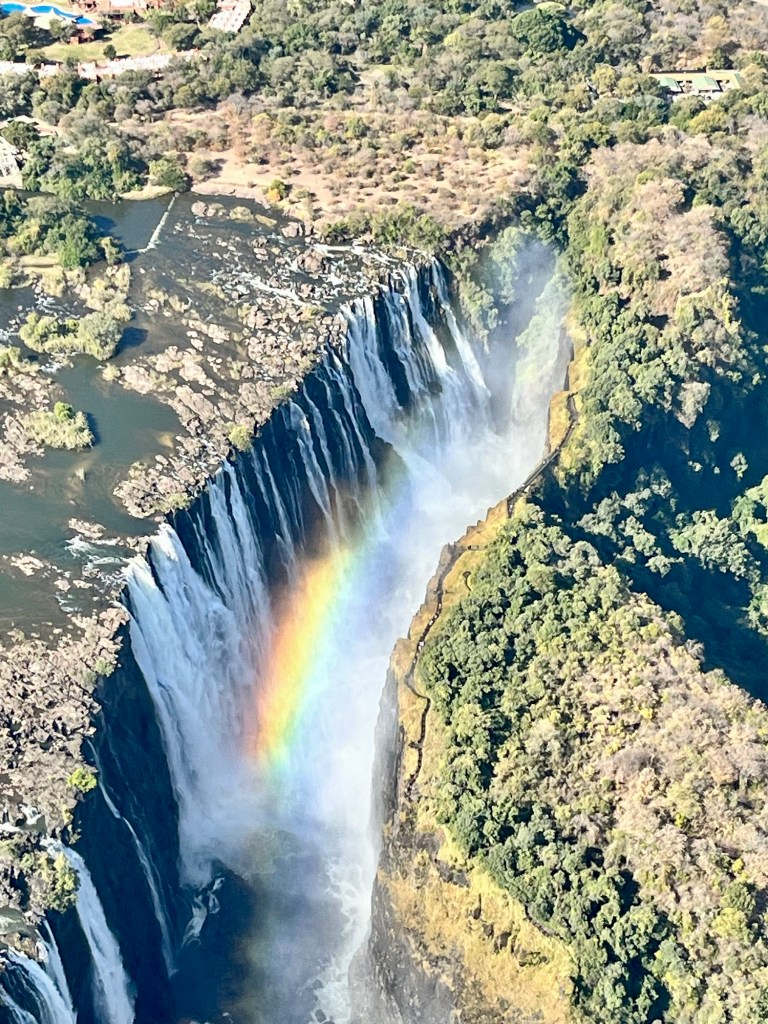
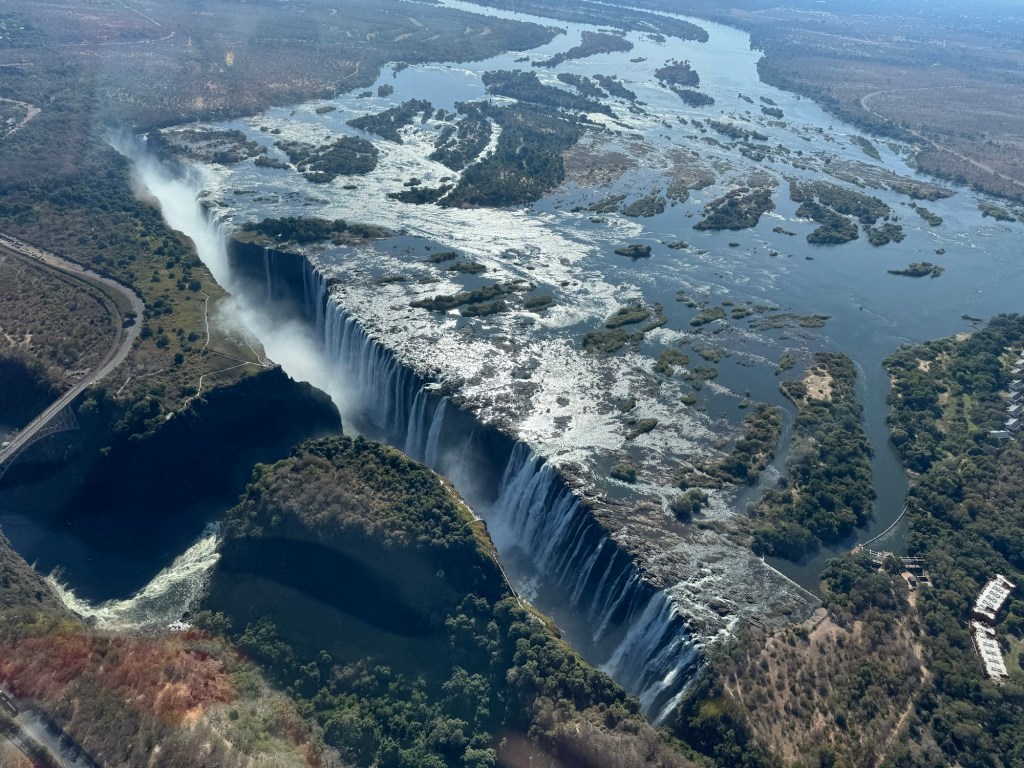
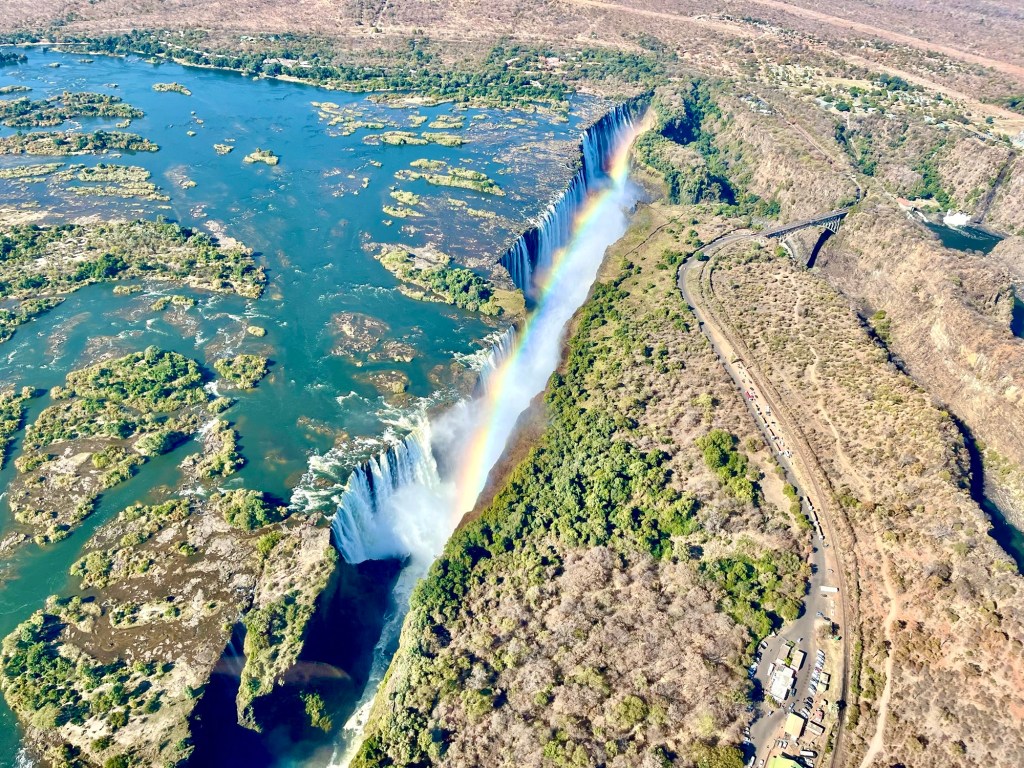
We took a bus to the Zambia side of the bridge, listened to an interesting overview on how the bridge was built, strapped in with carabiners, and walked across the cat walk with the Vervet monkeys in tow. And on the way we had the best view of Victoria Falls! Here are some fun facts about the Victoria Falls bridge:
1. The bridge was built and assembled in London to make sure it was structurally sound and would work. Then they broke it down and brought it to Rhodesia.
2. Built in 1905 and standing 128 meters high, it was an engineering feat at the time. There was/is no central support in the middle and it was built at the same time on each side so that they eventually met in the middle (fyi-similar to how the St Louis Arch was built). The gap was less than 1 1/2 inches. But the next day it was perfect due to thermal dynamics.
3. Workers’ tools had to be kept in a bucket of water given the hot weather.
4. It takes 6 years to (re)paint the bridge —all done by hand (including scrapping the paint off to prepare for the fresh coat).
5. On the Zambia side, the bridge was built in the basalt rock; and on the Zimbabwe side they dug down 15 meters to get to that same rock.
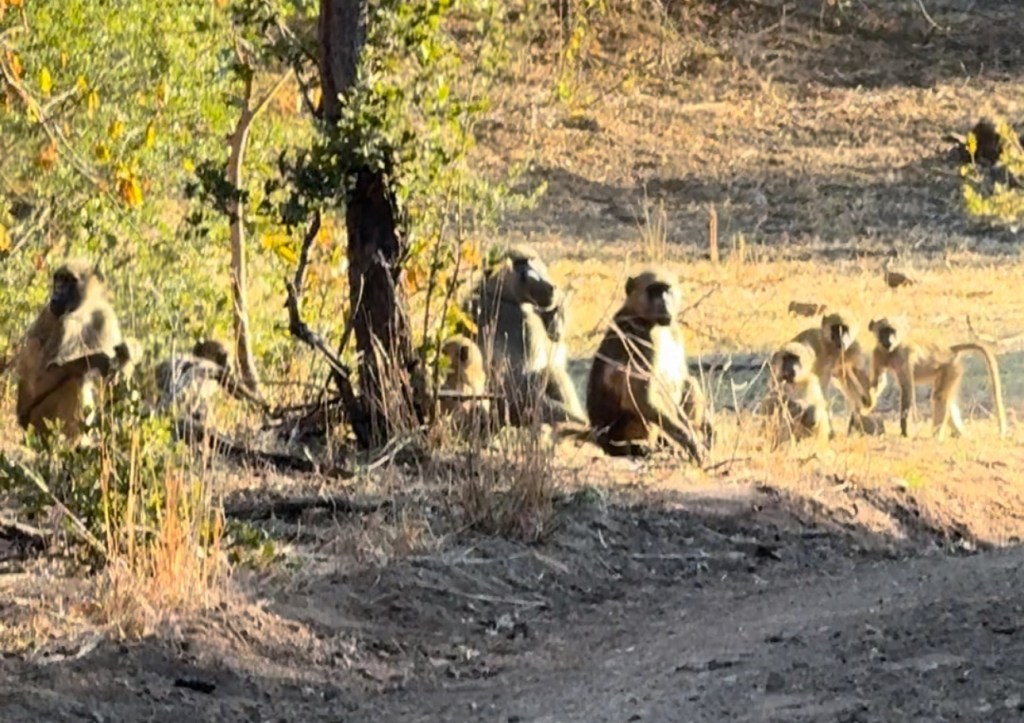
6. The vervet monkeys live on and in the bridge—automatic playground!
7. The cat walk was the original bridge and walk way. They built it 5 feet higher in 1930 when cars were introduced into the area.
8. You can Bungee jump off the bridge…two people in our party did!
9. Blondin- this was the name of the zip line that allowed the workers to carry supplies from one side to the next.



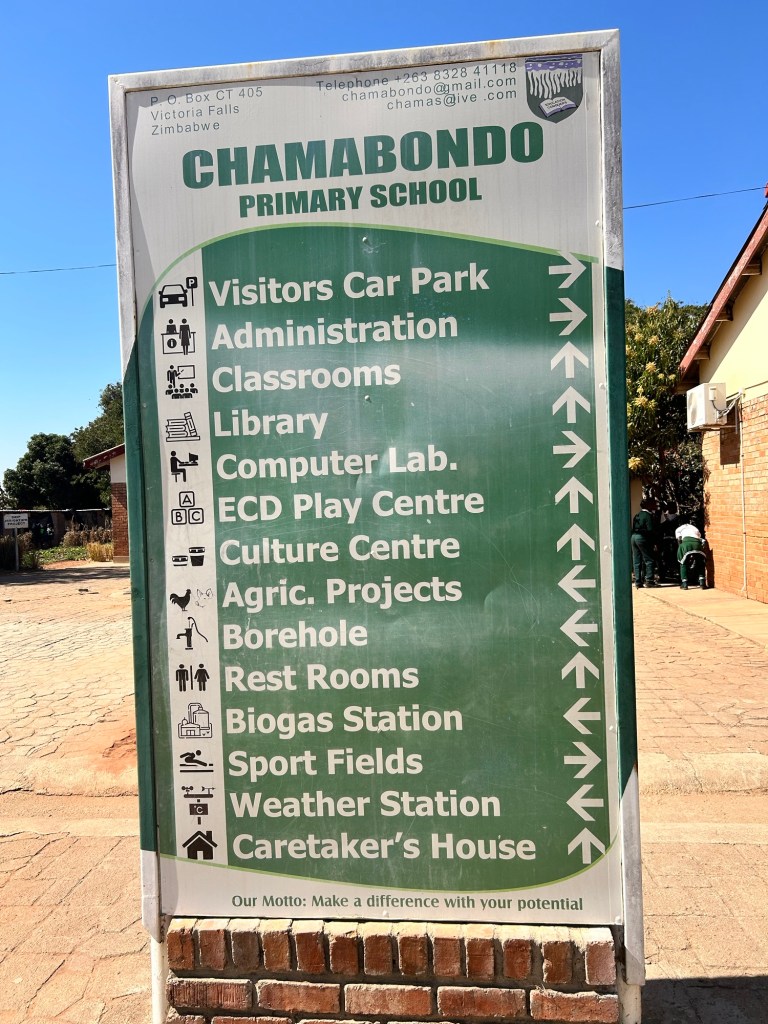
Next, we visited a primary school where we donated school supplies, took a tour, and enjoyed some entertainment from the students. This is a public school and the children wear uniforms. It cost a family $180 a year (3 terms per school year) to send their child to school. If the family is unable to find the tuition, they rely on funding from the government and private support.
We went to a couple of classrooms and had the opportunity to ask the students and teachers questions (and be asked questions).
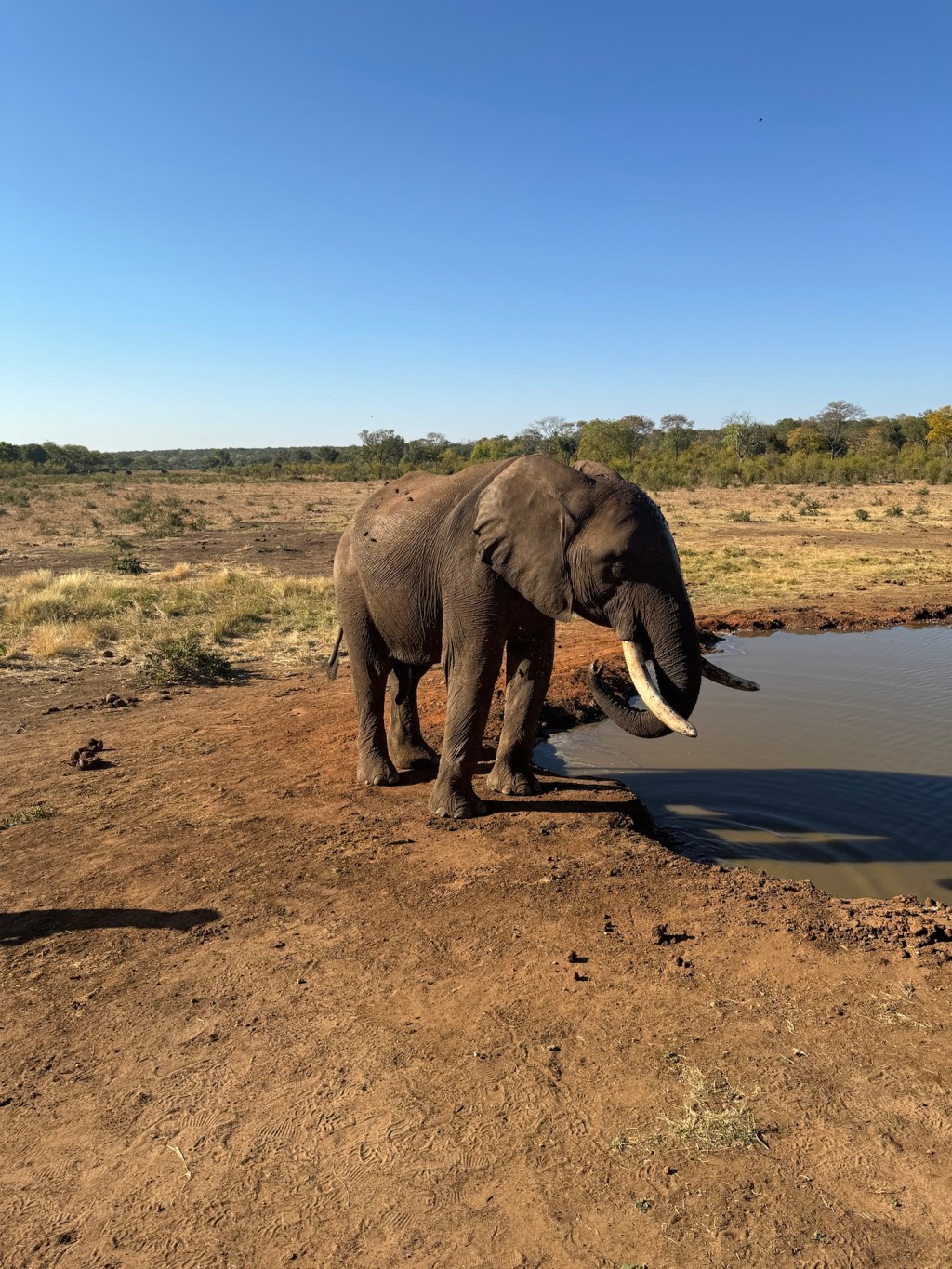
This afternoon we went to an elephant sanctuary called Jafuta, a nonprofit that protects elephants who were injured or abandoned and can no longer live in the wild. All of the elephants are rescues who were orphaned or injured and cannot return to the wild. They are now conservation and education animal ambassadors and have a safe home where they are cared for and allowed to freely roam the reserve. That’s where I met Doma—a 45 year old male who has lived in protection most of his life after he was rescued from being culled. In addition to feeding them, we walked with the elephants in the bush. It was a very calming experience!
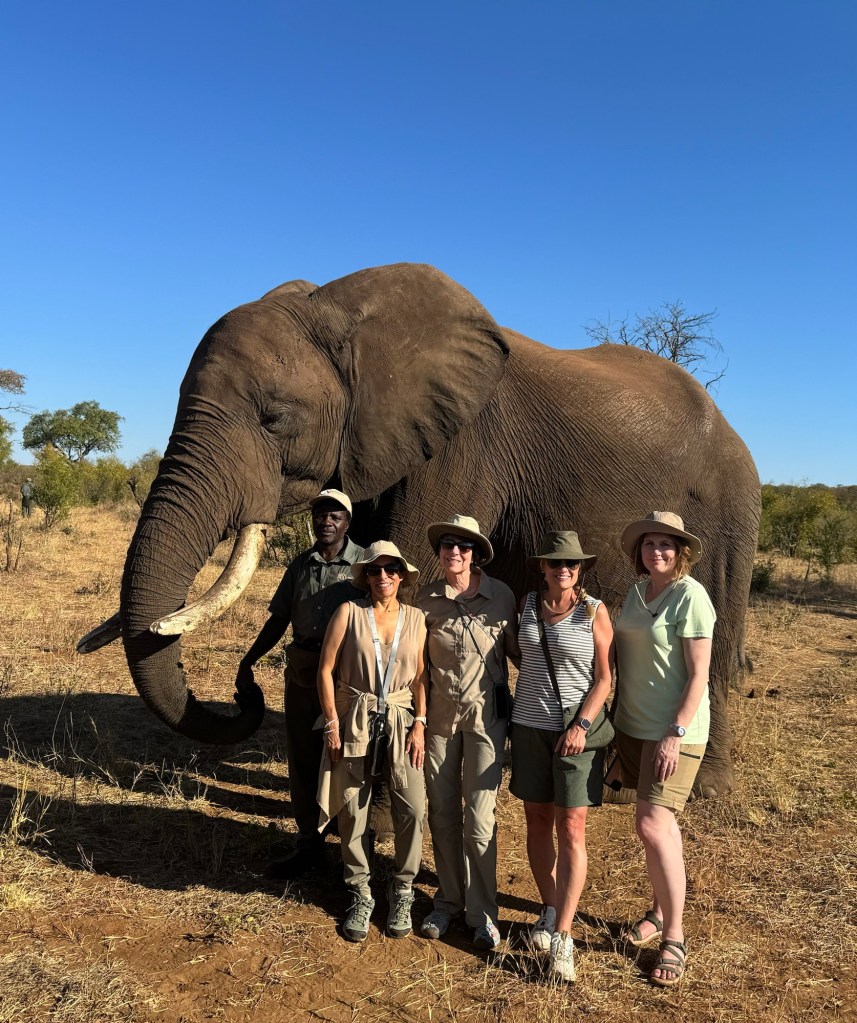
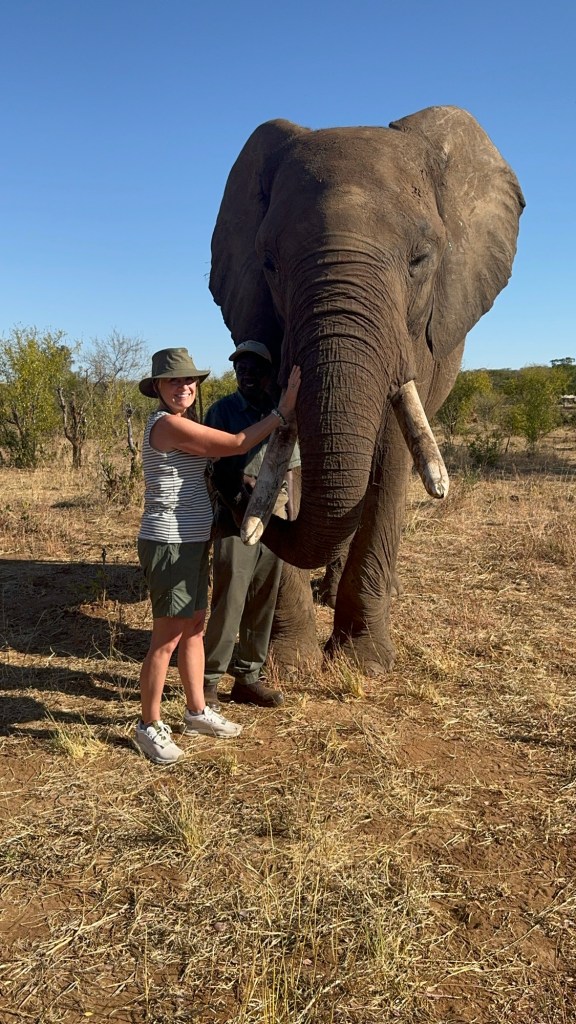
Elephants control their body temperature (and swat away the flies) by flapping their ears.
In addition to the elephants, we also saw a baboon, Yellow Billed Stork, and Gray Heron.
We finished our day with a talk from retired safari guide, Chris Warden. He is passionate about Dr. David Livingstone and shared more about David’s extraordinary life, explorations, and his fight to end the East Africa slave trade.



 Christina’s Journey Journal