When my friend asked me where I wanted to go in Japan, Hiroshima was at the top of the list. In my view, it’s essential to remember the past in order to learn from it and shape a better future.
After we returned from Miyajima Island, we headed for a special lunch. I am gluten-free plus I cannot eat seafood due to an allergy. It takes some work to avoid both in Japan but my friend had me covered. She found the one Okonomiyaki restaurant in Hiroshima that can make it gluten free! Ken-San, the chef, has a wheat allergy as well. He even wears a mask when cooking so he doesn’t breathe in all the wheat.


I love Okonomiyaki and miss it terribly since I went gluten free. Ken-San used a separate pan and rice flour instead of wheat flour. He even shared stories (translating via our phones) about his family. His mother is a A-Bomb survivor. She was 9 when the bomb was dropped but she was protected by the side of the mountain. However, she has an auto immune disease that makes moving very painful. Her disease was caused by the after effects of the radiation.
FYI- Okonomiyaki is a Japanese teppanyaki pancake-like dish consisting of wheat flour batter and other ingredients (cabbage, meat, seafood) mixed in and cooked on flat griddle. It’s served with a special sauce.
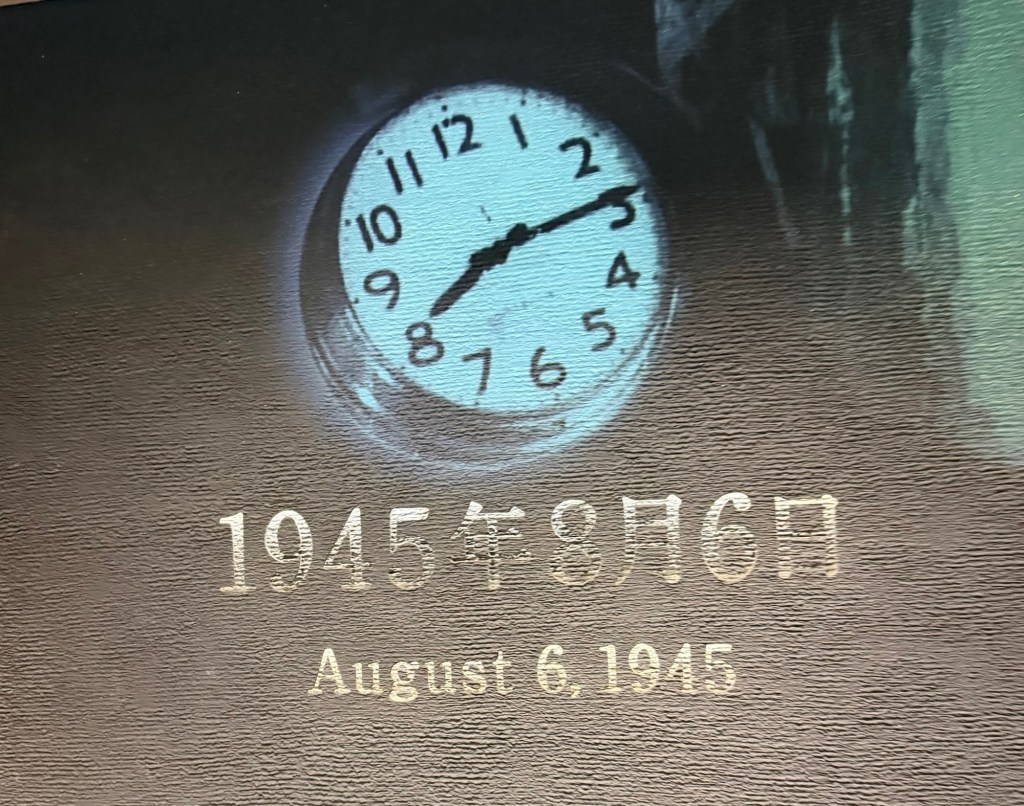
After lunch we visited the Hiroshima Peace Memorial Museum. If you visit Hiroshima, I can’t stress enough how important it is to experience this museum. Before entering, there is a sign for parents and teachers, encouraging them to prepare children for the exhibits. Adults—take that same advice and prepare yourselves. It is informative, moving, and, at times, very difficult to digest, but the museum is essential for understanding the full impact of the atomic bombing on August 6, 1945. Artifacts from the time (including children’s clothing), personal stories of survivors, and detailed historical accounts bring the past to life in a way that is both heartbreaking and eye-opening. When the bomb was dropped, 200,000+ people perished that day or after due to radiation exposure. Some died years later from diseases caused by the bomb. Ken-San recommended a Japanese documentary called Silent Fallout and talked about how we were all victims of the atomic bomb—including those in the USA. We know this first hand due to Cold Water Creek where I grew up in Florissant, Missouri.
Next we went to the Hiroshima Peace Memorial Park. This beautiful park is dedicated to the memory of the lives lost during the atomic bombing on August 6, 1945.

The Cenotaph for A-bomb victims contains the names of those who perished and symbolizes a resting place for their souls.


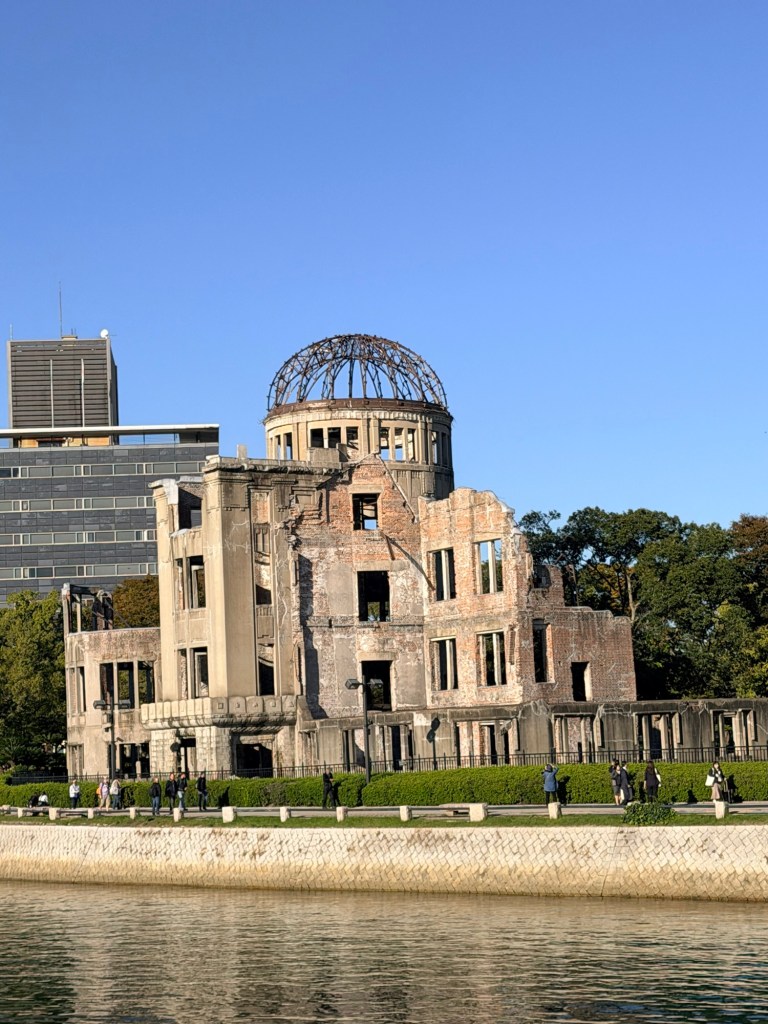
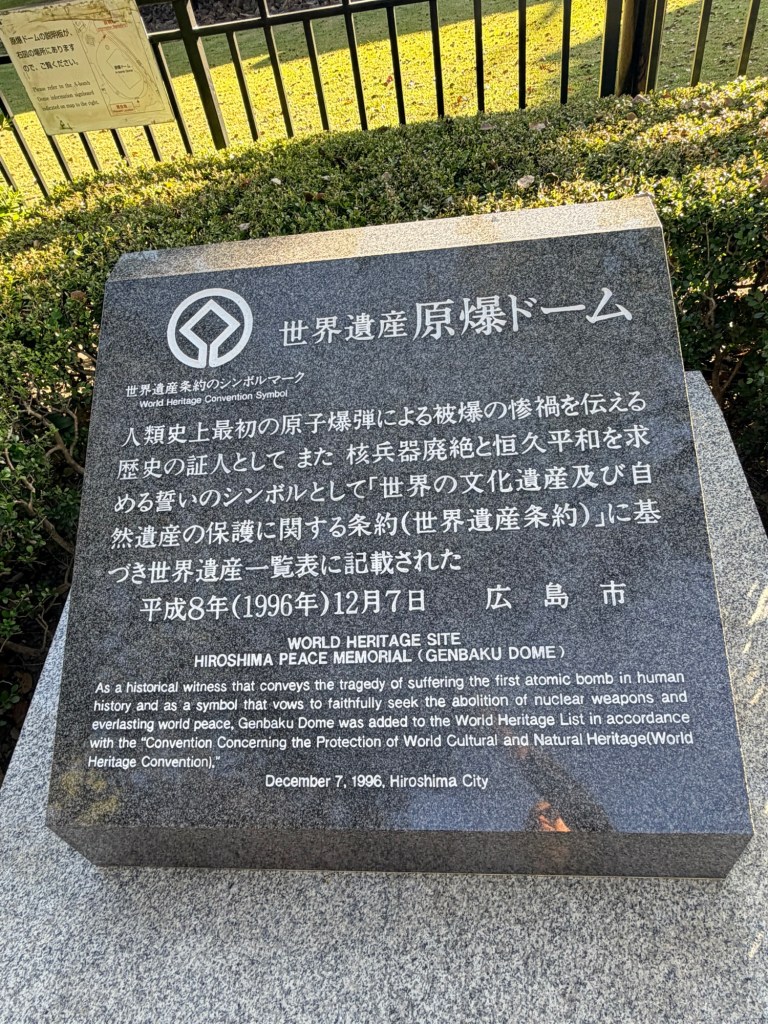
The focal point of the park is the Atomic Bomb Dome, which stands as a haunting reminder of the destruction the bomb brought to the people of Hiroshima. It is a UNESCO World Heritage Site and one of the few structures that partially survived the atomic bombing. Built in 1915 as the Hiroshima Prefectural Industrial Promotion Hall, it was a symbol of Hiroshima’s industrial and cultural life. On that fateful day, the bomb exploded approximately 600 meters (1,968 feet) above the dome, making it one of the few buildings close to the hypocenter that remained standing.
The Atomic Bomb Dome is a powerful symbol of remembrance and peace.

We all felt the weight of history pressing down as we moved through the memorials. While the people of Hiroshima continue to inspire hope, it’s up to all of us to advocate for a world without war.




 Christina’s Journey Journal