
We spent two days in Kyoto, a city that makes me feel like I stepped back in time…way back in time to its founding as the imperial capital in 794. Thanks to the Japanese Shichifukujin (Seven Lucky Gods), much of the city was spared from bombing during WWII.
Sitting in a basin surrounded by mountains on 3 sides, Kyoto is literally bursting with shrines, temples, gardens, 17 UNESCO World Heritage Sites, and historic neighborhood like the geisha district of Gion. It’s a special place that continues to steal my heart 🧡.
Sigh…where to begin? So much has been written about each of the places we visited. Pictures don’t do them justice. Nor can I post the hundreds of pictures I took (yes, hundreds). Therefore, I’ll share a bit about what I found special about 4 of these breathtaking attractions, two per post.
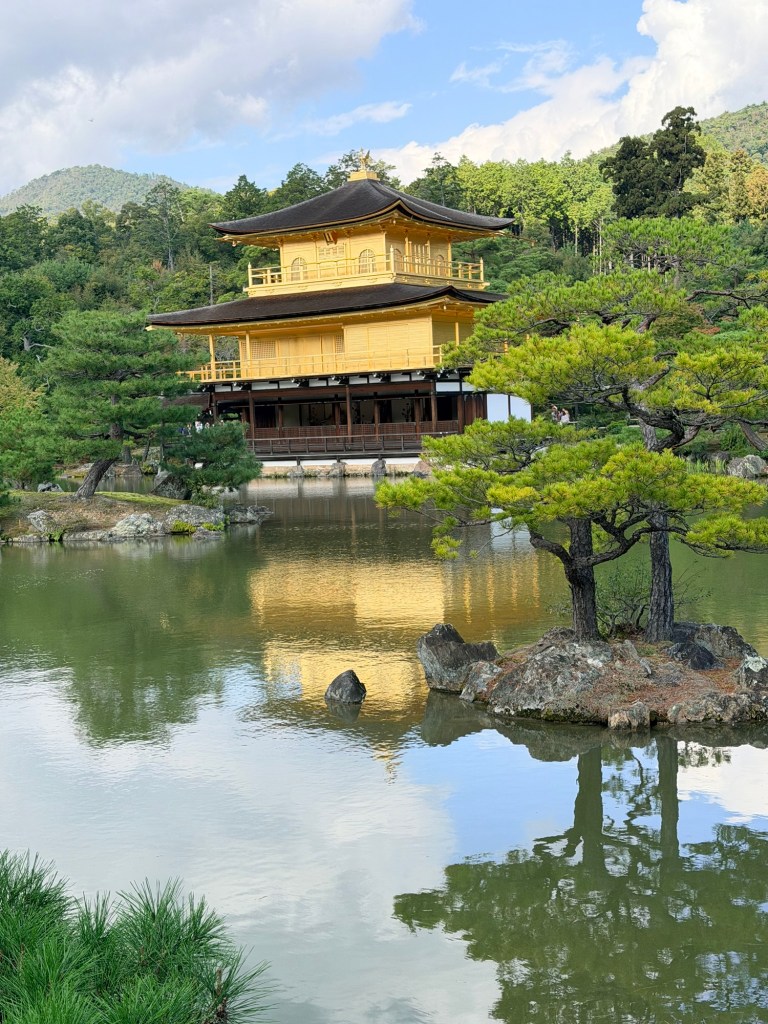
Kinkaku-ji, the Zen Buddhist temple known as ‘The Temple of the Golden Pavilion’. The top 2 floors are coated in gold leaf. 🍁
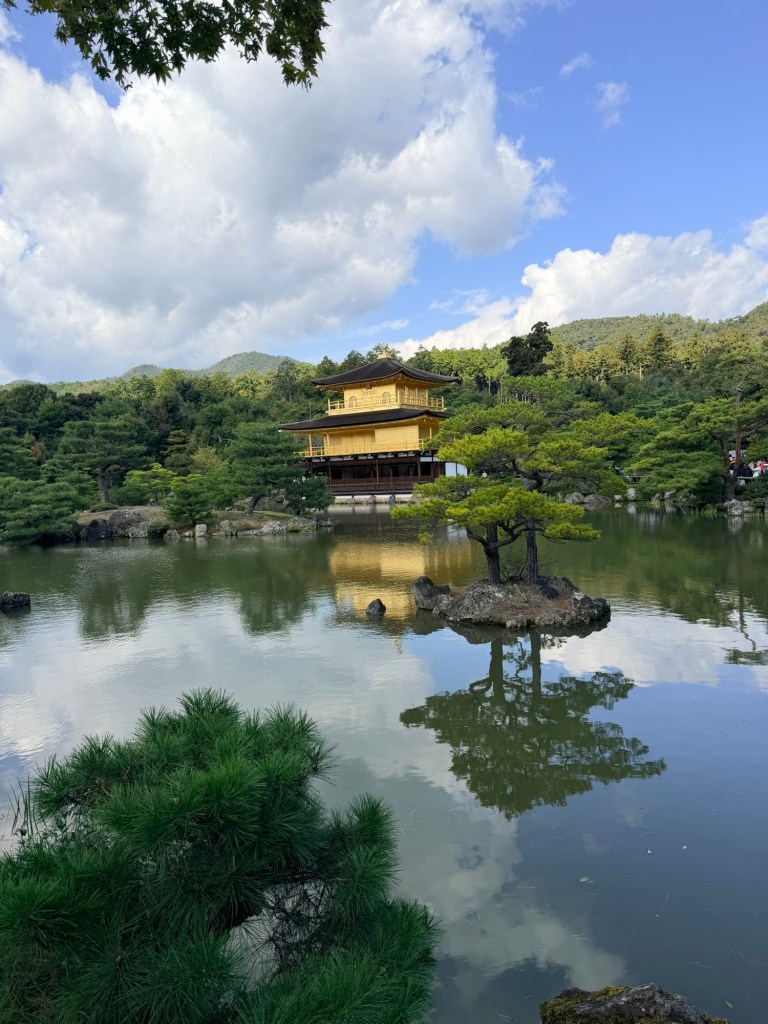
Let’s start at Kinkaku-ji. This was my second time awing this unbelievable temple officially called Rokuon-ji. I could see it 1,000 more times and it wouldn’t change the way I feel about it. And it’s not just me that thinks that way—it is designated as a UNESCO World Heritage Site, a National Special Historic Site, a National Special Landscape, and one of the 17 Historic Monuments of Ancient Kyoto. The original Golden Pavilion is thought to have been built in 1399, with the gold designed to stamp out any negative feelings toward death. When the sunlight hits the temple, the shadows on the water produce a mesmerizing mirror effect.

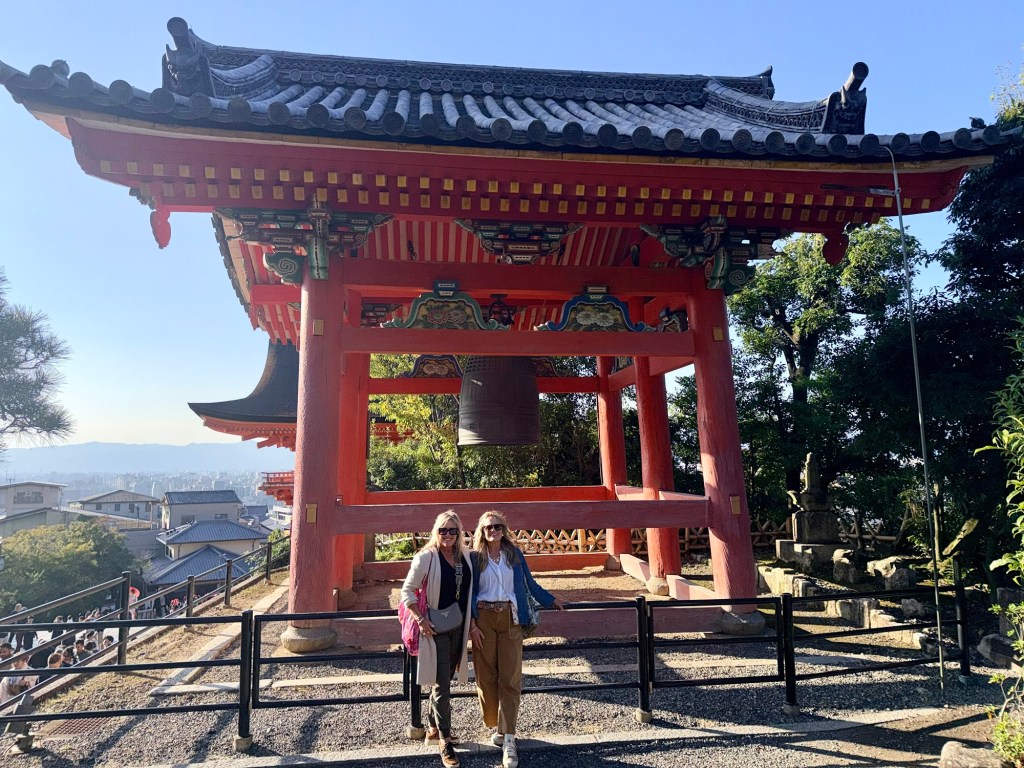
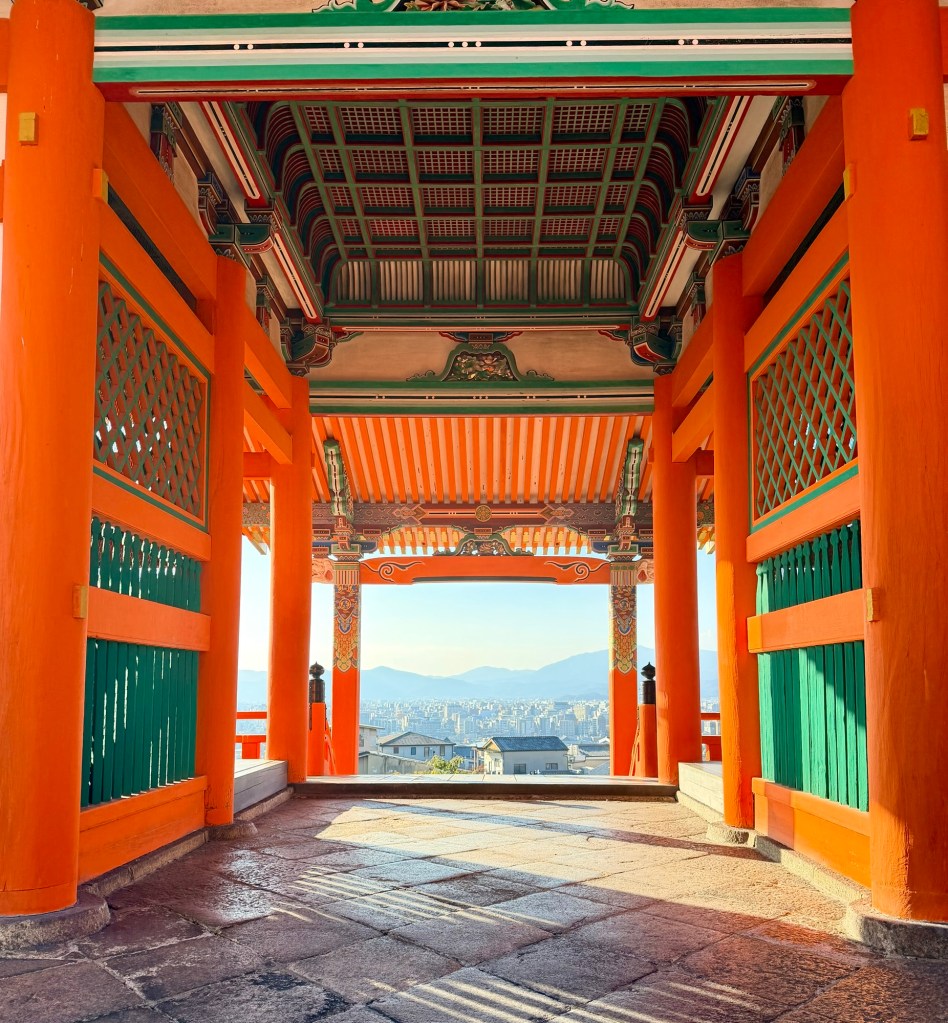
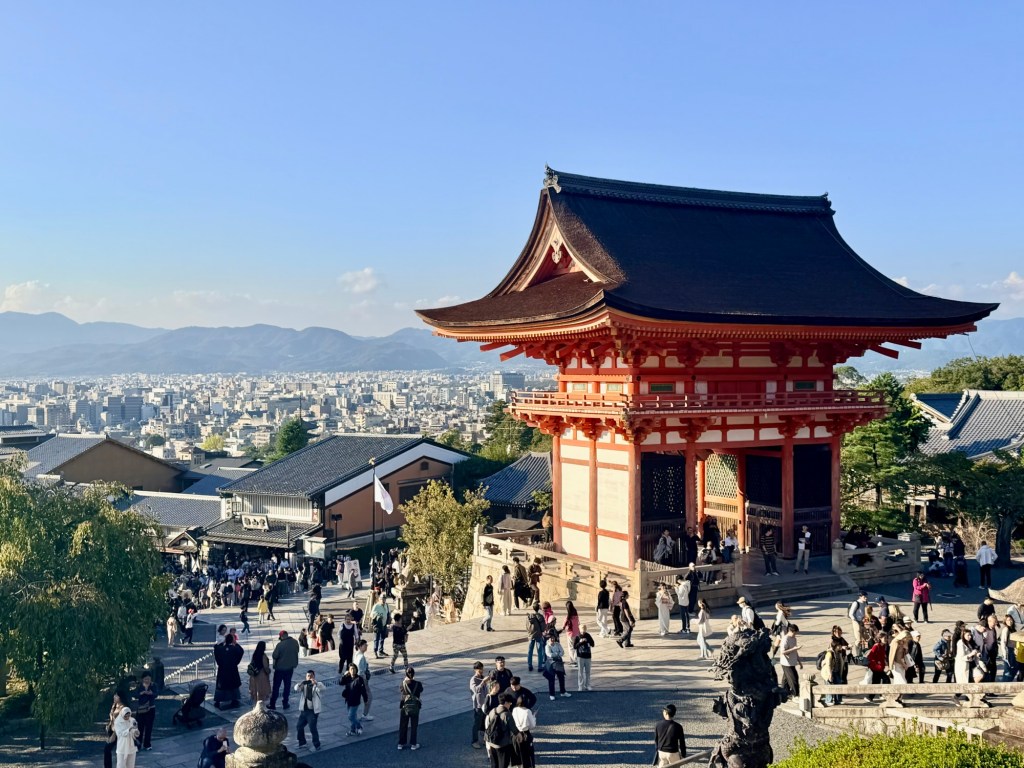
Next stop—Kiyomizu-dera, a Buddhist temple founded in 778 CE by Enchin Shonin, with the present buildings constructed in 1633 by order of Shogun Tokugawa Iemitsu. Pure Water Temple”, as it is translated to English, nestled at the basin of Mt, Otowa in Eastern Kyoto.
With over 1200 years of history, it belongs to the Kita-Hosso sect of Japanese Buddhism. We took the train and then walked 20 minutes, uphill on narrow roads, passing by souvenir shops, to the entrance of this masterpiece.

Niōmon Gate




 Christina’s Journey Journal