
Today was…indescribable. I am trying to find the right words for our step back in time as we learned more about the South African history of apartheid from 1948-1994. I will do my best to summarize.
First, our local guide, Chezlin, took us on a tour of Soweto, a symbol of the struggle against apartheid. Its original name means South Western Townships and was formed under the Native (Urban Areas) Act of 1923. Black and Colored South Africans were forcibly moved here during apartheid and were further segregated into ethnic groups. The houses were “match box” homes with very little room. There was no electricity and no indoor plumbing. Today Soweto is home to 2 million people and is made up of 37 suburbs. There remain shanty towns (squatter camps), which have many health and safety concerns.
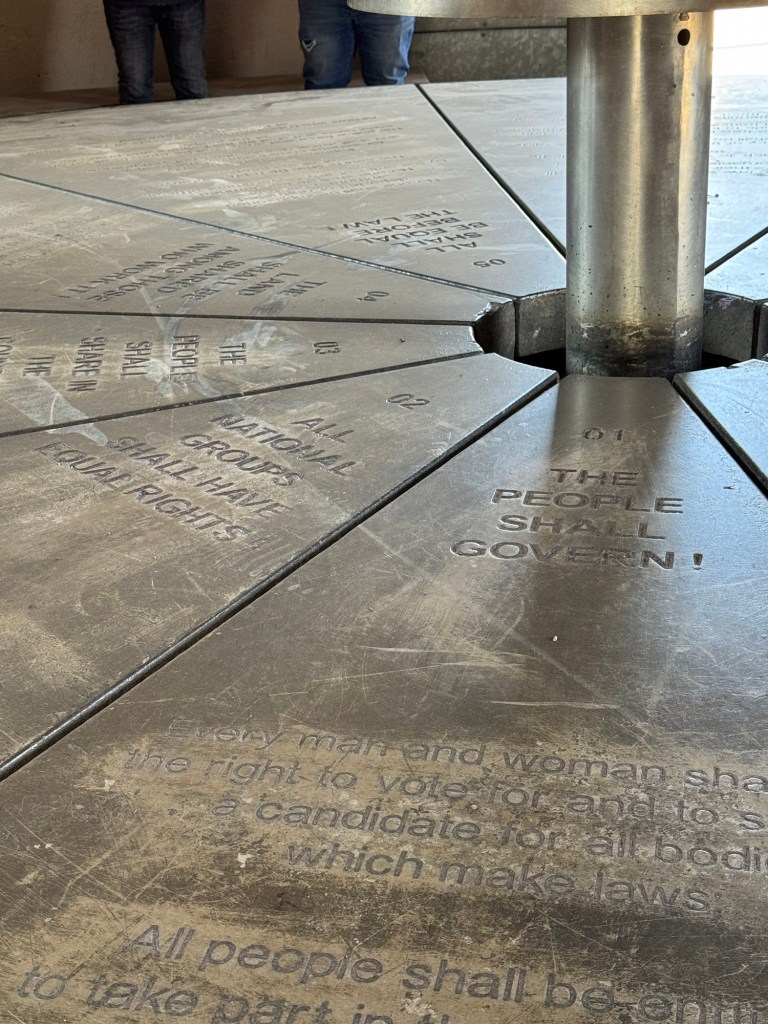
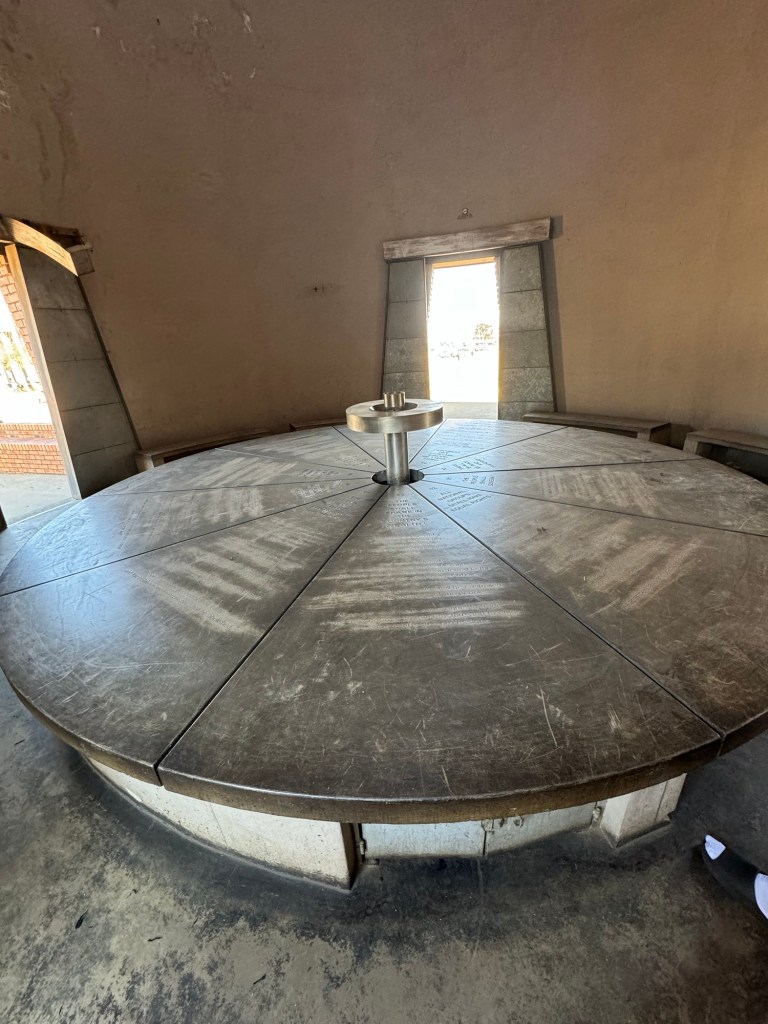
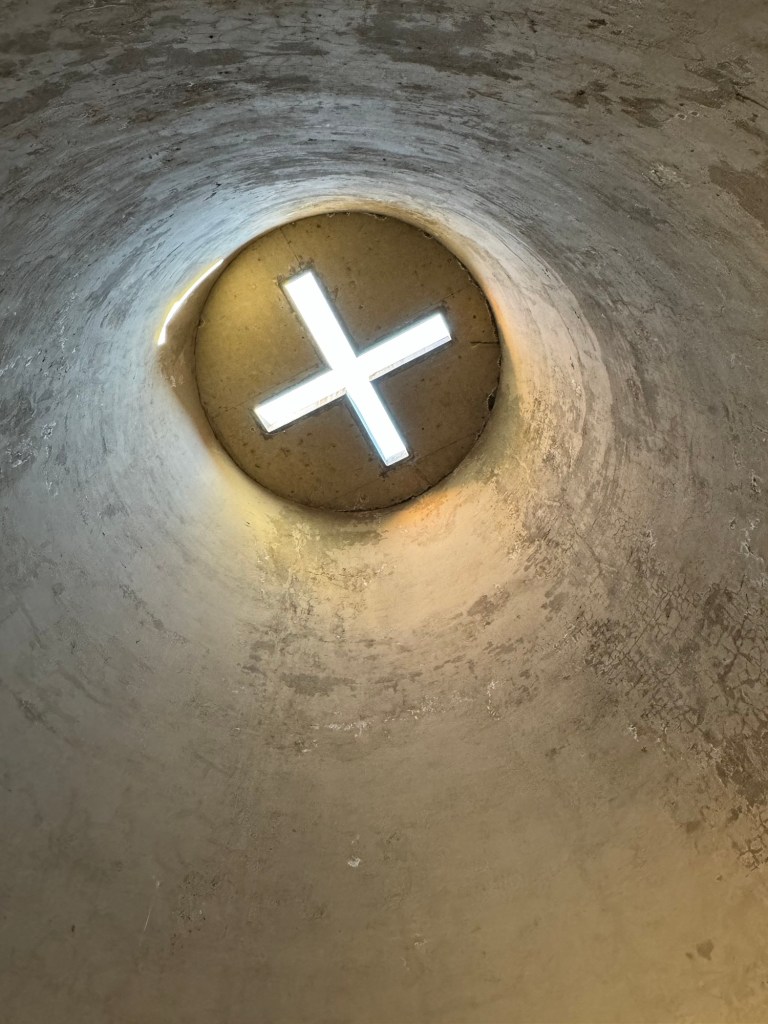
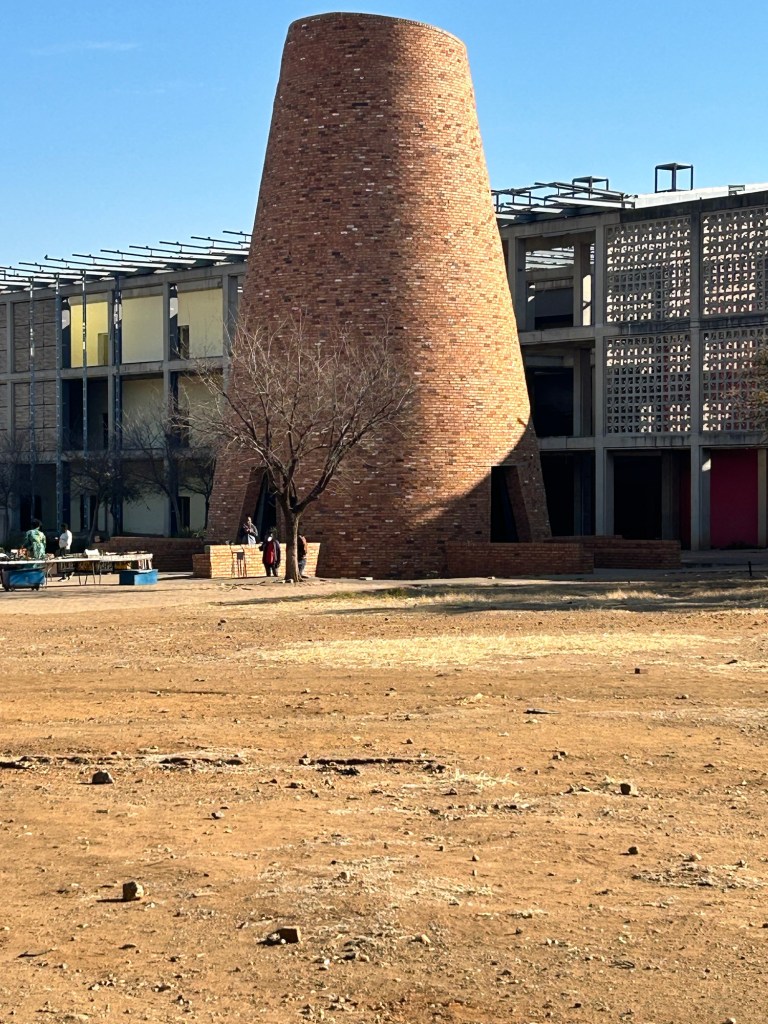
First stop – Freedom Square, or the Walter Sisulu Square in the oldest suburb, Kliptown. It was here that 3,000 people met to work on The Freedom charter – a unified vision for the future of all South Africans. This charter consisted of 10 principles that were adopted at the Congress of the People in 1955 and remains the cornerstone of African National Congress (ANC) policy and the foundation of South Africa’s 1996 constitution. It begins with “The People Shall Govern!”

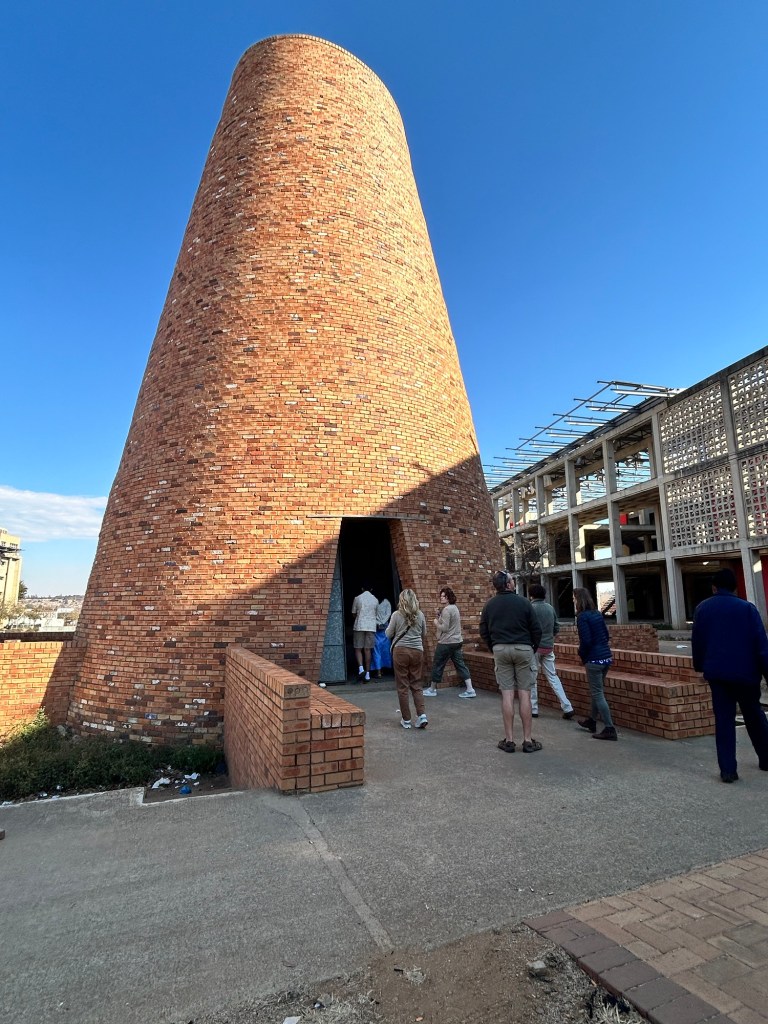
We visited a market right next to Freedom square and learned more about the food and the culture
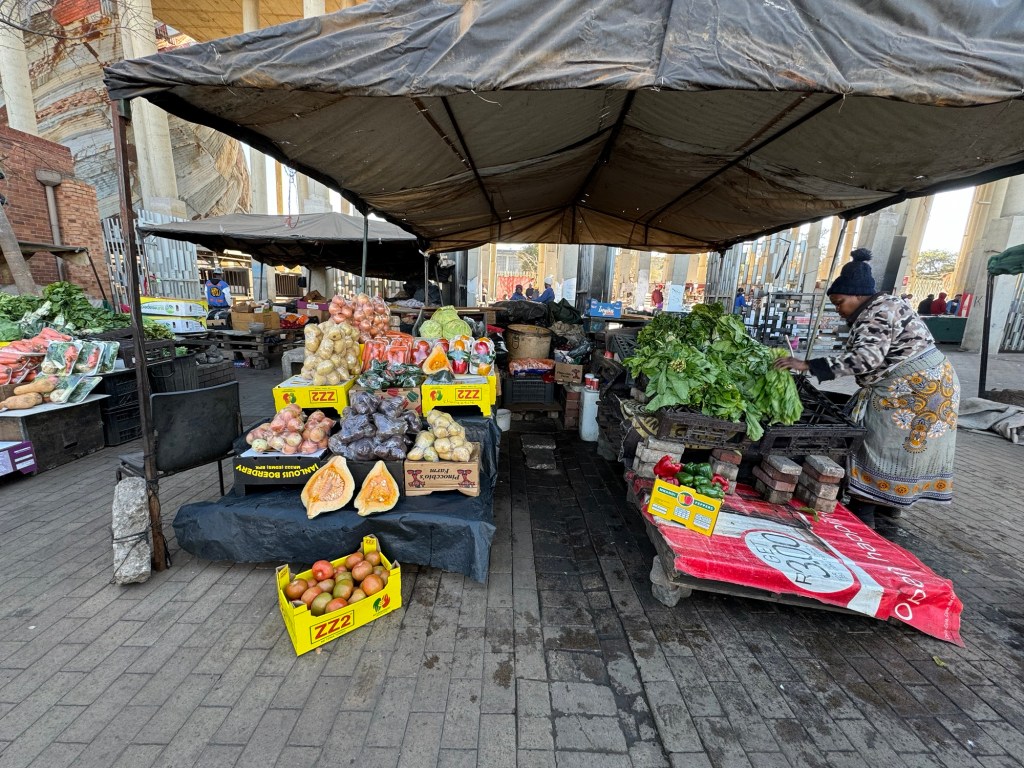
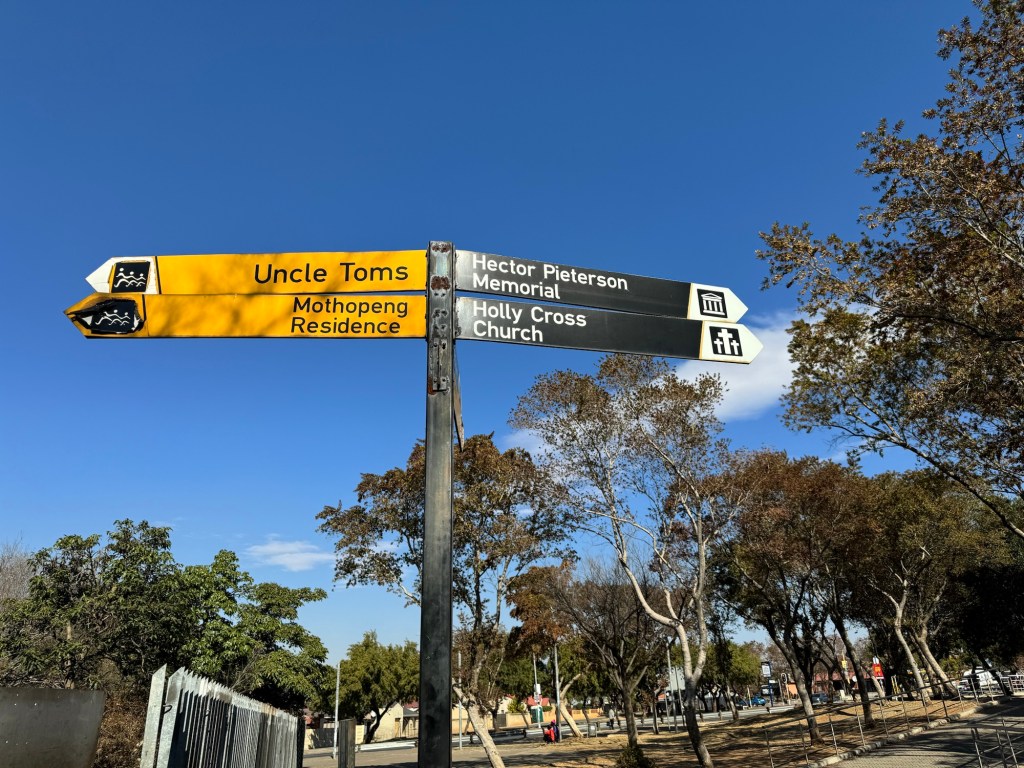
Next stop – The Hector Pieterson Memorial. It is believed that the Soweto Uprising was the beginning of the end of apartheid. This event showed the world the atrocities happening in apartheid South Africa.
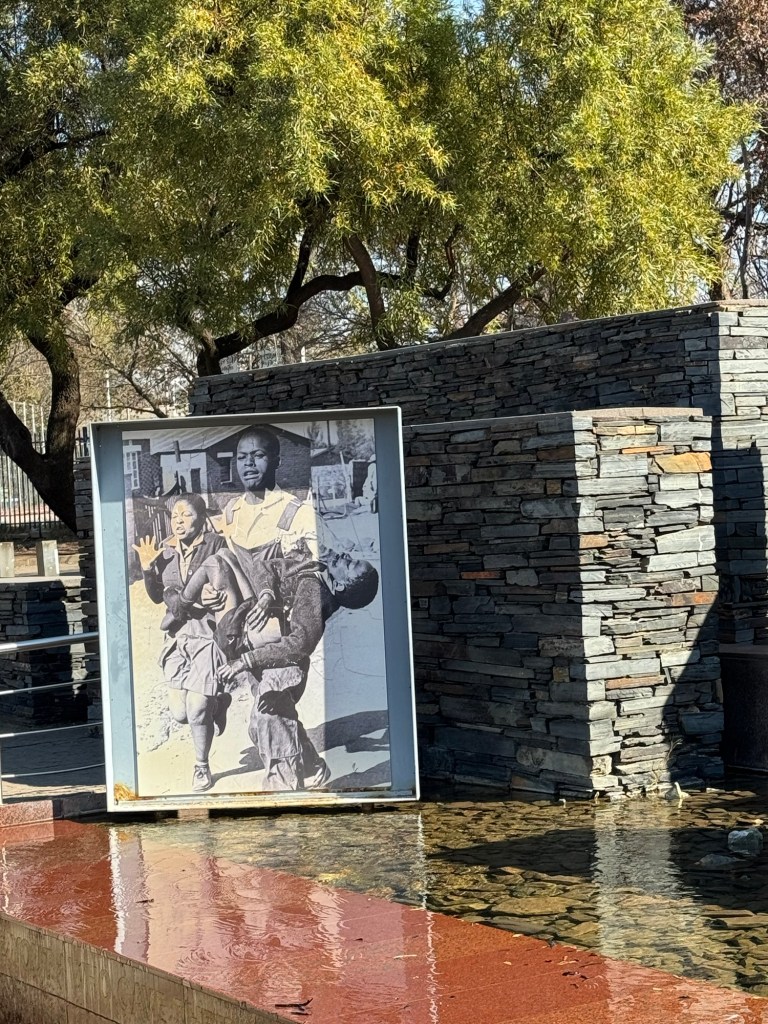
When the photo was published, it caused outcries from across the globe.
What was The Soweto uprising?
The police open fired using real bullets on more than 20,000 black students as they were marching in their school uniforms. They were peacefully protesting the enforcement of teaching in Afrikaans and English for all school subjects. Students could no longer learn in their native languages, like Xhosa and Zulu.
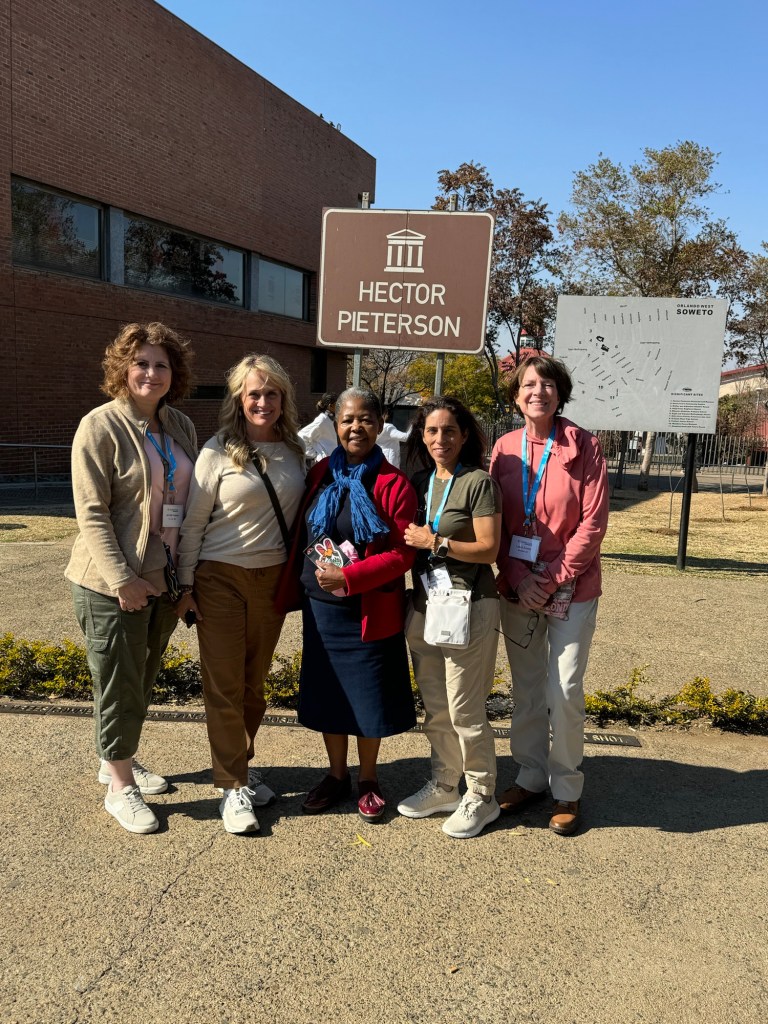
Where, when, and how it turned violent, nobody knows for certain. We listened to the first hand account of what happened that day in 1976. The story was told to us by Antoinette Sithole, seen here in the picture. Antoinette is Hector’s sister and the girl running beside Hector in the famous picture. Antoinette concluded her story with “forgiveness heals”.
The Soweto Uprising is remembered today in the museum, which had artifacts /and other first hand accounts from people that were there. The anniversary of Hector’s death is designated Youth Day in South Africa.

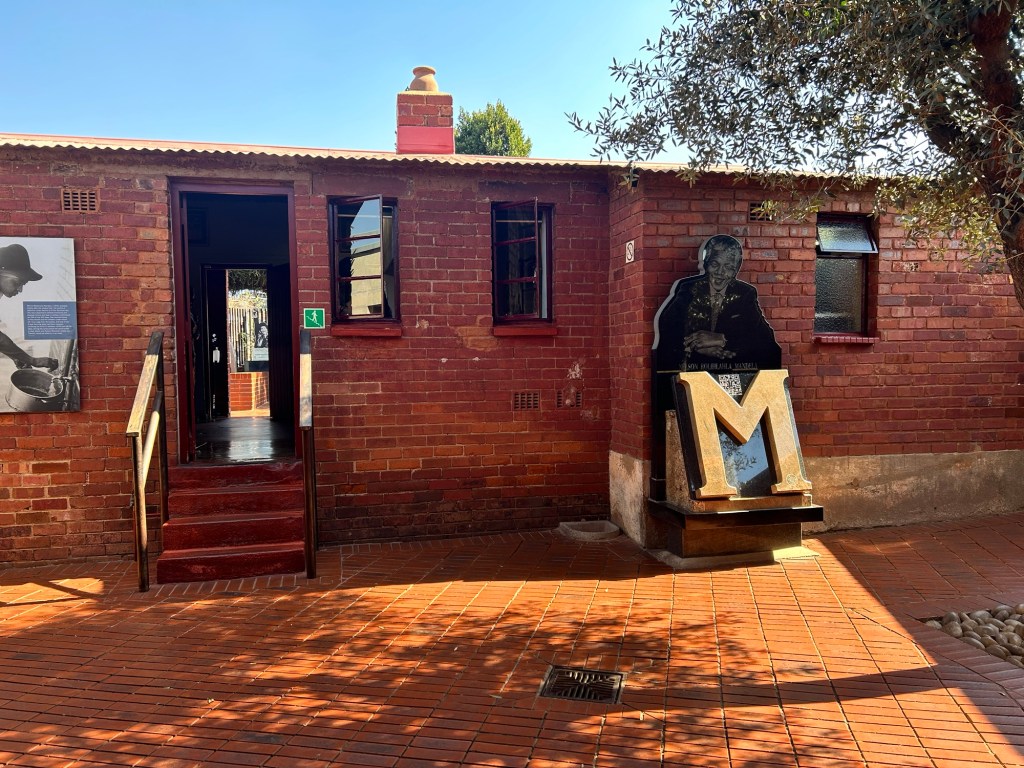
Nelson Mandela’s Home at 8115 Vilakazi Steet in Orlando West from 1945-1961, which is right down the road from Desmond Tutu’s home. I took lots and lots of pictures of all the awards, artifacts and furniture. We saw the tree where they buried their grandchildren’s umbilical cords per African tradition.

Last stop – we had traditional African food for lunch at a family- run hotel in the suburb of Orlando in Soweto. FYI—Orlando is the home of Trevor Noah.
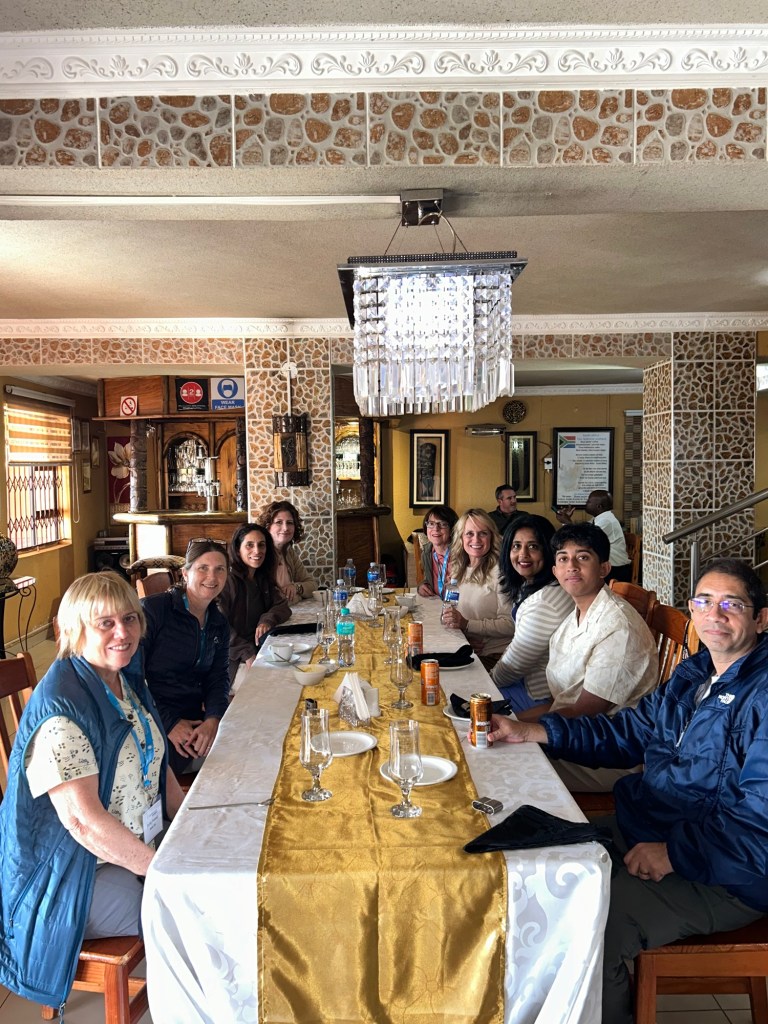


We finished the day’s tour with an informational session from our guides and had a welcome dinner. Tomorrow we head north by plane!
Notes –
*South Africans drive on the opposite side of the road than we do in the U.S. I keep wanting to enter the bus on the side I am used to!
*The important mini-bus taxi system is the main way South Africans get around in busy cities. It’s a bit complicated for visitors and requires hand signals! Don’t sit in the front row unless you want to be in charge of the fees for the 16 other passengers.
*We started taking our malaria pills today.
*The South African unemployment rate is 33% – essentially 1/3rd of the 62M population are unemployed.
*Johannesburg is the biggest man made forest.
 Christina’s Journey Journal