Tag: Southern Alps

  • Onward to Aoraki / Mount Cook, New Zealand 🇳🇿 – Day 11 (March 26, 2026)

    Onward to Aoraki / Mount Cook, New Zealand 🇳🇿 – Day 11 (March 26, 2026)

    We started the day with an incredible sunrise in Wānaka before hitting the road for the 2.5-hour drive to Aoraki/Mount Cook.
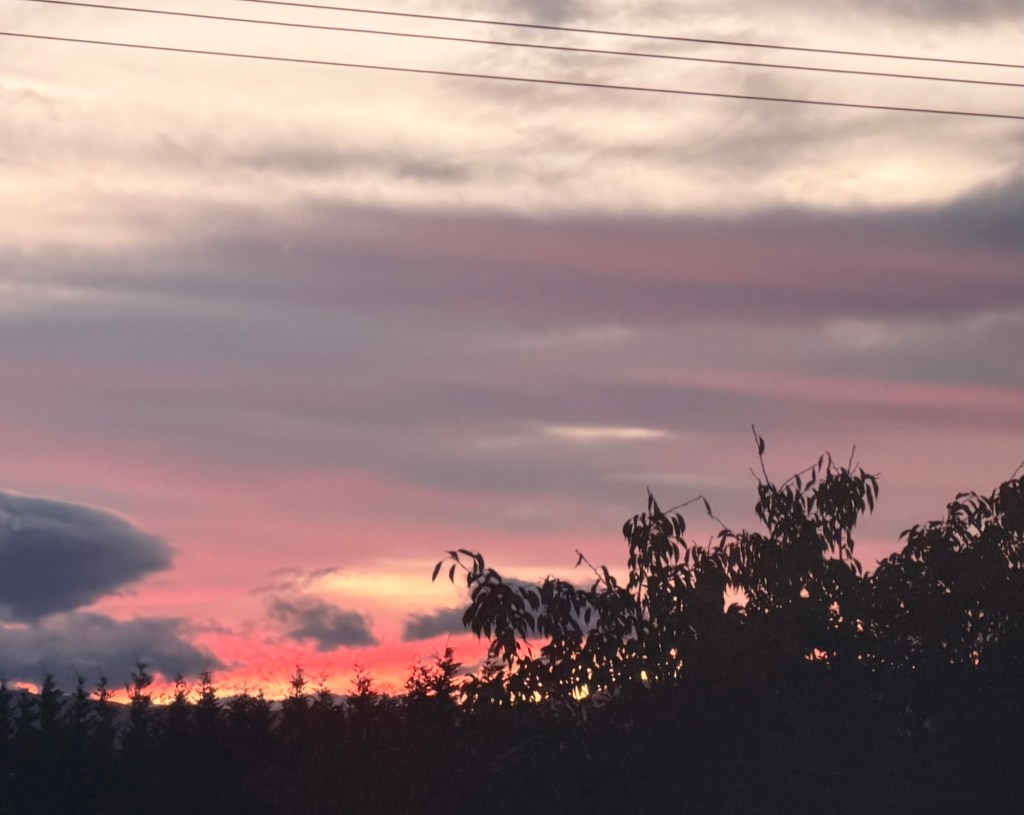
    Sunrise over Lake Wanaka.
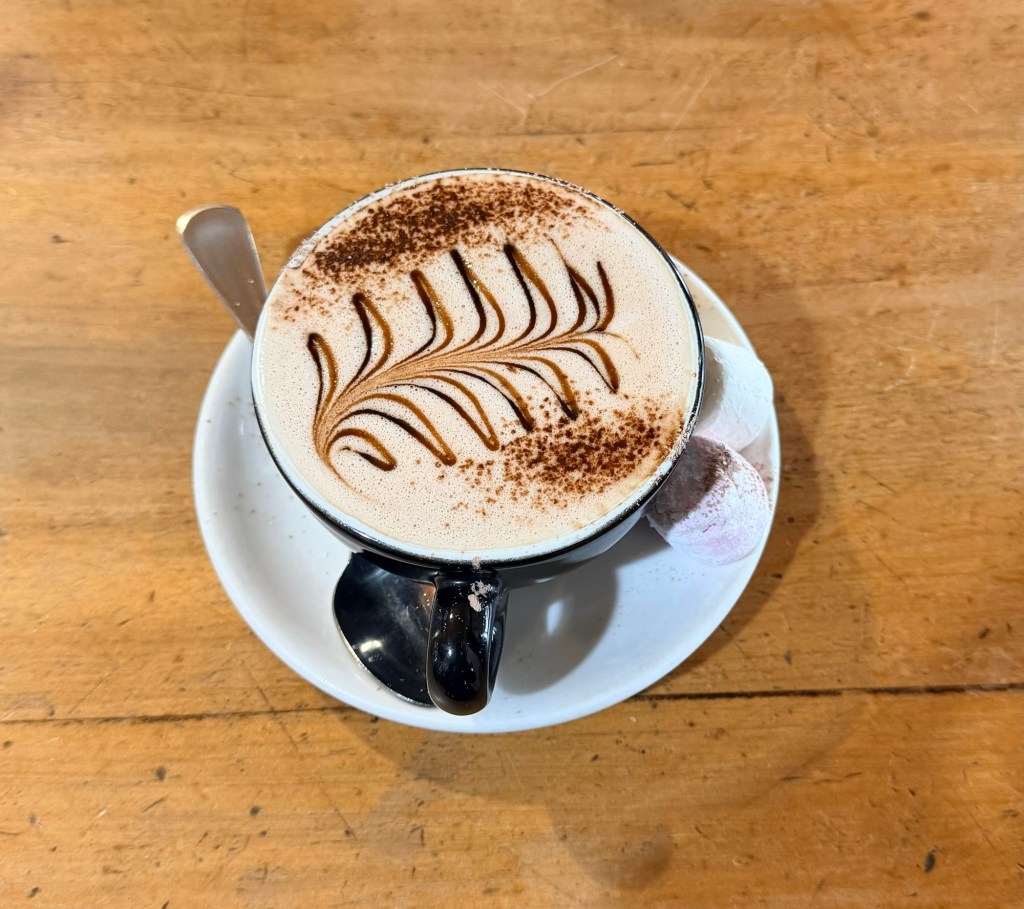
    We stopped at The Wrinkly Rams for breakfast. New Zealand does hot chocolate right!

    After a quick breakfast stop in Ōmarama, we continued toward the Southern Alps and Aoraki/Mount Cook National Park—home to 19 peaks over 3,000 meters.

    About 40% of the park is covered by glaciers, including the massive Tasman Glacier, which stretches 17 miles long, 2.5 miles wide, and reaches depths of nearly 2,000 feet of ice. Other notable glaciers here include the Hooker and Mueller.

    “Aoraki” means “cloud piercer” in Māori, and the story behind it is just as powerful as the landscape itself. In Ngāi Tahu tradition, Aoraki was a young boy traveling with his brothers when their canoe capsized. The canoe and boys turned to stone, forming the South Island and the highest peaks of the Southern Alps, with Aoraki the highest peak. Today, Aoraki/Mount Cook is the physical form of that ancestor, connecting the natural and supernatural worlds.

    Standing at 3,724 meters (12,218 feet), Aoraki/Mount Cook is the tallest mountain in New Zealand and the crown jewel of the Southern Alps.

    And…we couldn’t see it.

    This was our first cloudy, rainy day of the trip. The normally spectacular scenic drive in? Completely hidden behind a wall of clouds. Not exactly what you picture when you come to see New Zealand’s most iconic peak.

    We’re here for two days, and unfortunately our stargazing and the glacial boat tour were both cancelled due to the rain forecast. We did catch brief glimpses of the surrounding peaks before everything disappeared into cloud cover, but Mount Cook itself stayed completely hidden.
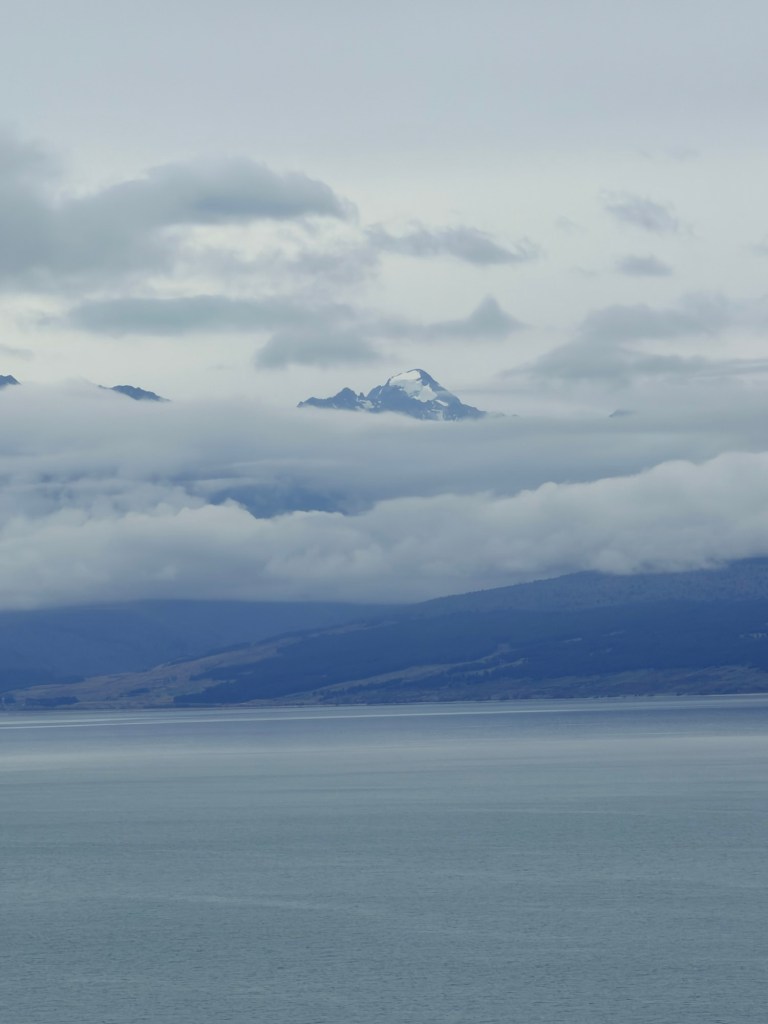
    We stopped at Tapataia Mahaka Peter’s Lookout and could see the top of one of the mountains of the Southern Alps, fronted by Lake Pukaki
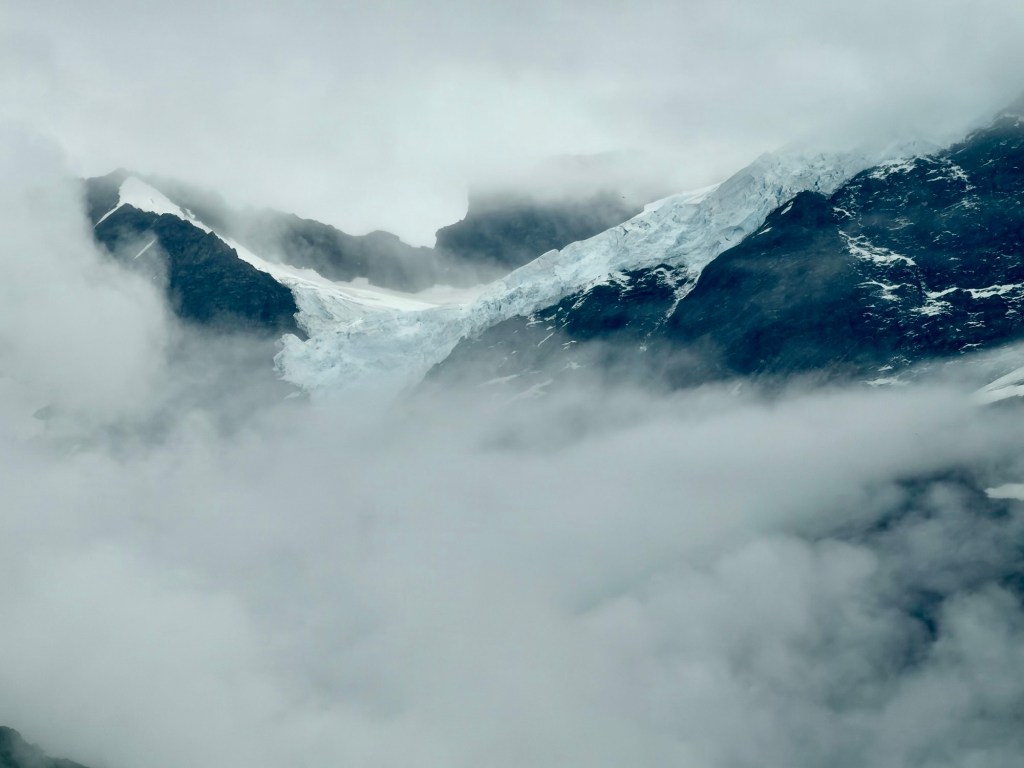
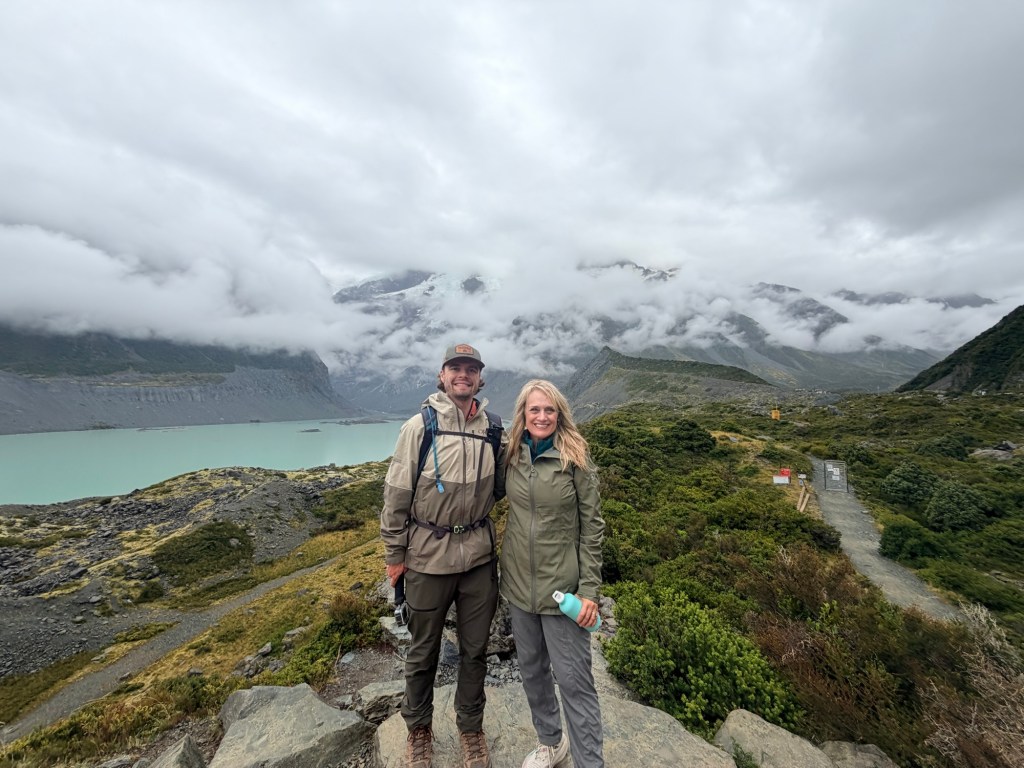
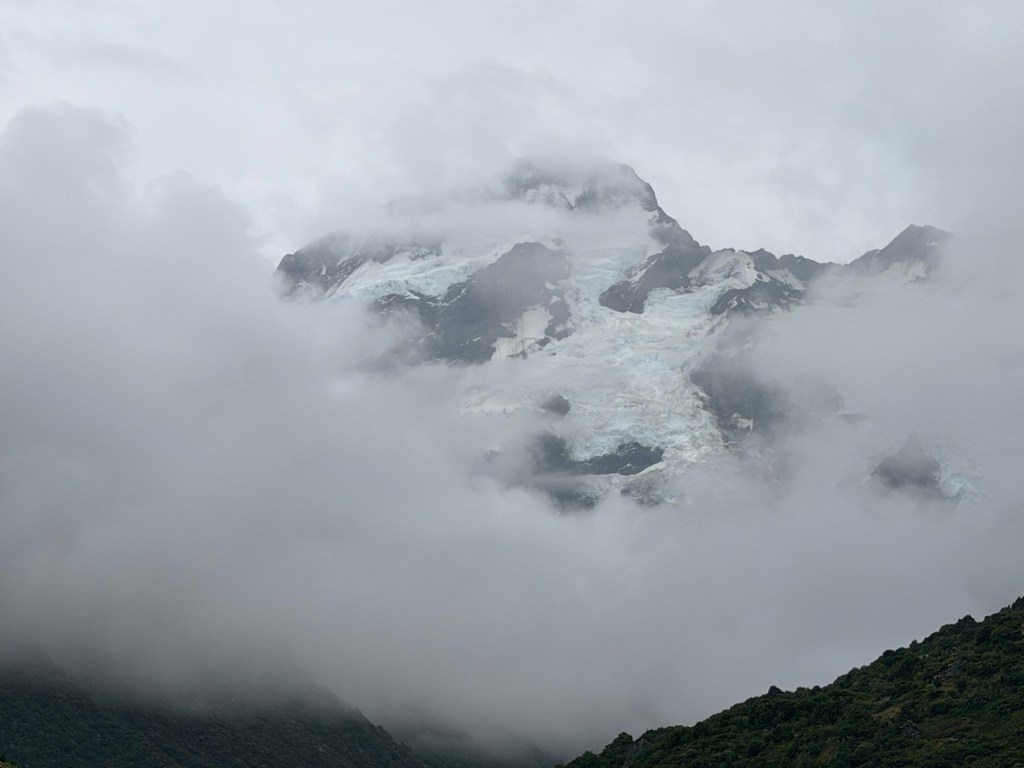
    As we started out on the Hooker Valley Track, the clouds parted just long enough for us to peak at another snow capped mountain!

    First rainy day hike = Hooker Valley Track

    We didn’t let the rain stop us.

    The Hooker Valley Track is one of the most popular hikes in the park for good reason. Even in the rain, it delivered. Think suspension bridges, rushing glacial rivers, and moody mountain backdrops that somehow feel even more dramatic with a little weather.

    We couldn’t complete the full hike since they’re rebuilding the second bridge, so the modified version came in at about 2.8 miles. Honestly, it still felt like we saw plenty.
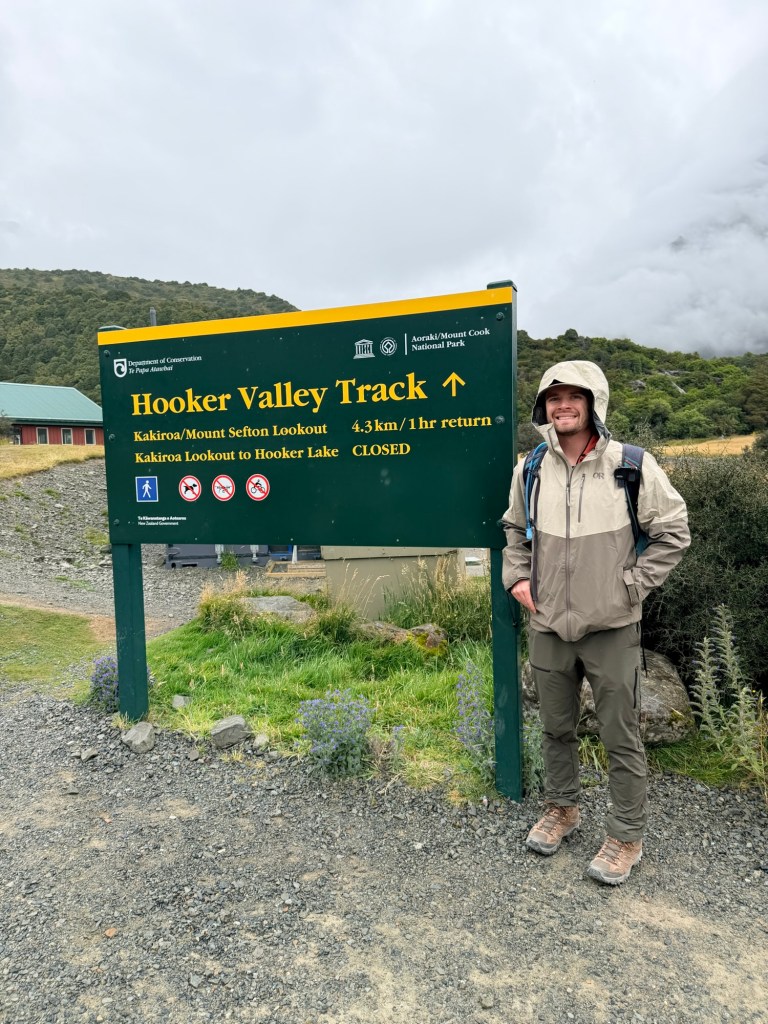
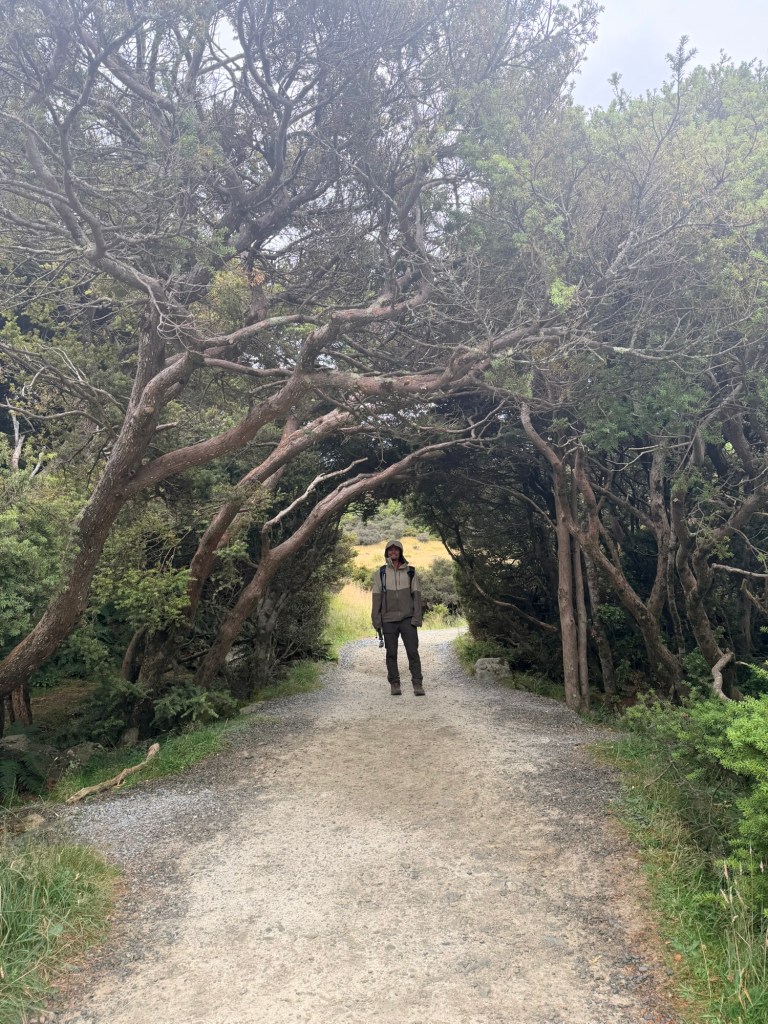
    Getting ready to enjoy the Hooker Valley hike. 🌧️
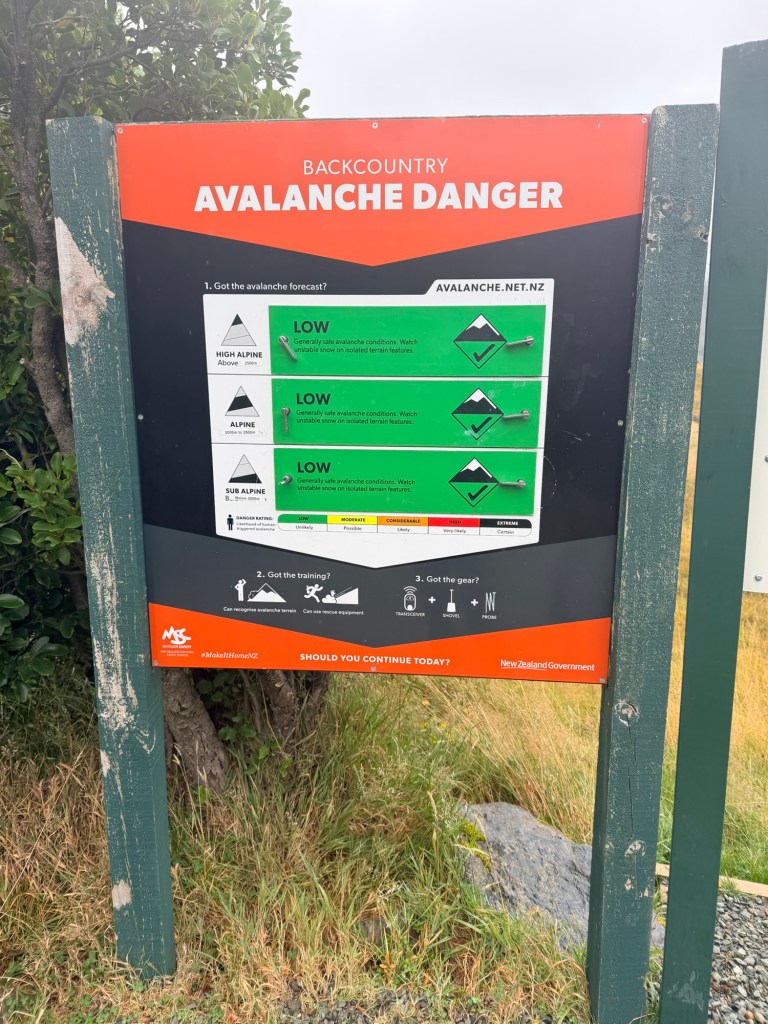
    Very good to know!
    Snow capped peaks and glaciers. 🗻
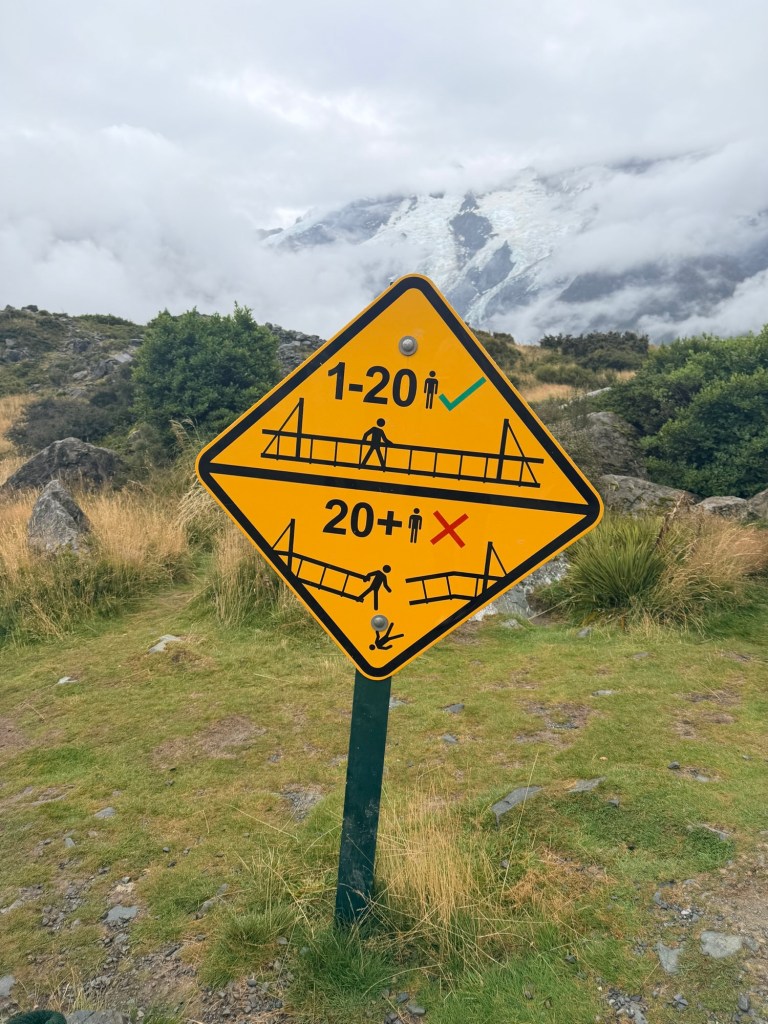
    Sign by the suspension bridge on the Hooker Valley hike, which can only support 20 people. 😨
    The first suspension bridge on the Hooker Valley Track. Below you’ll see the glacial fed Hooker River.
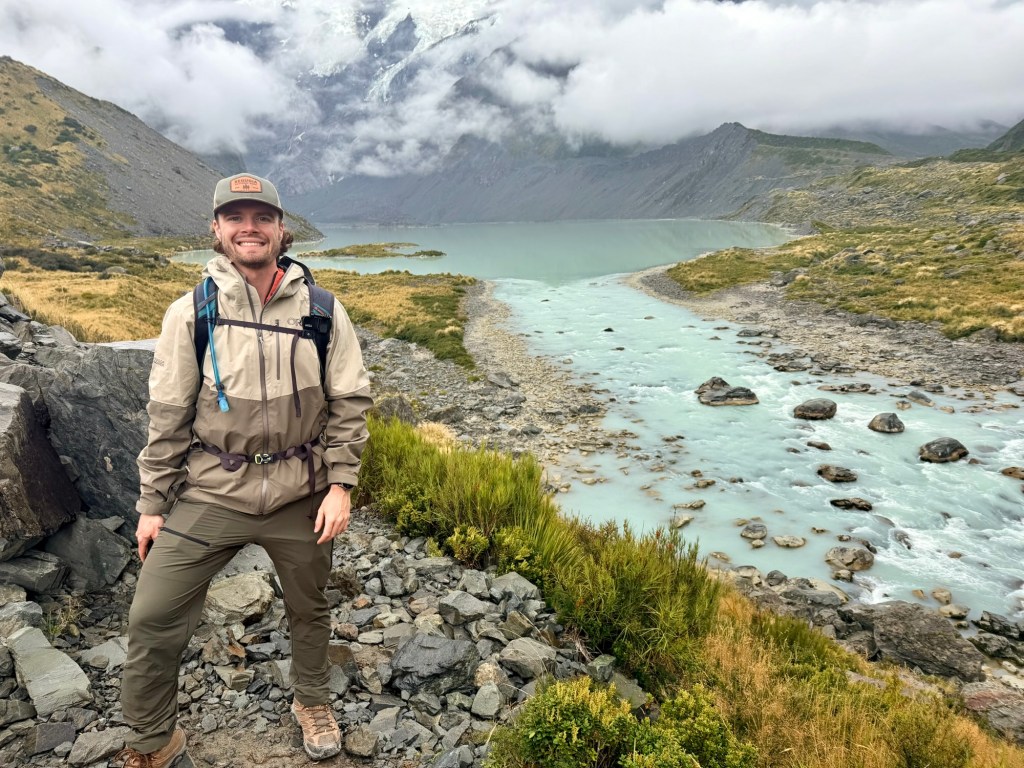
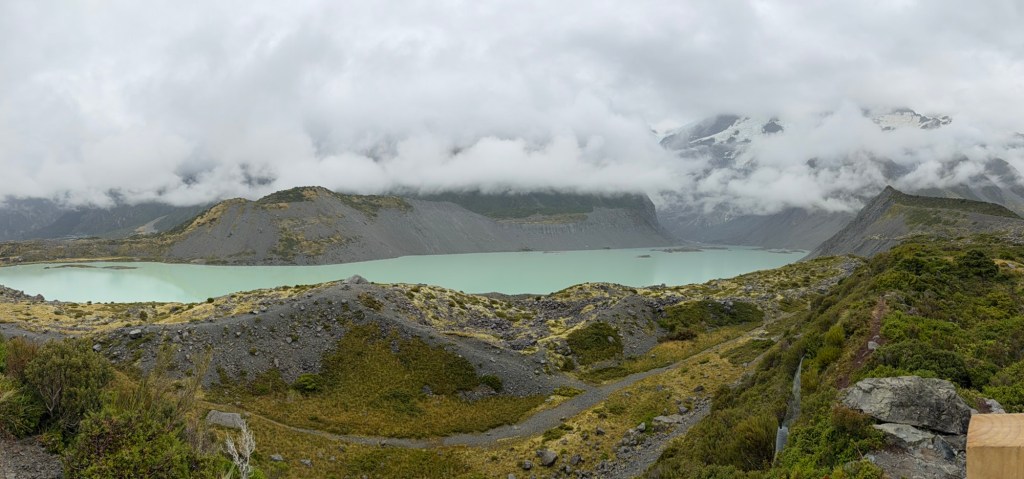
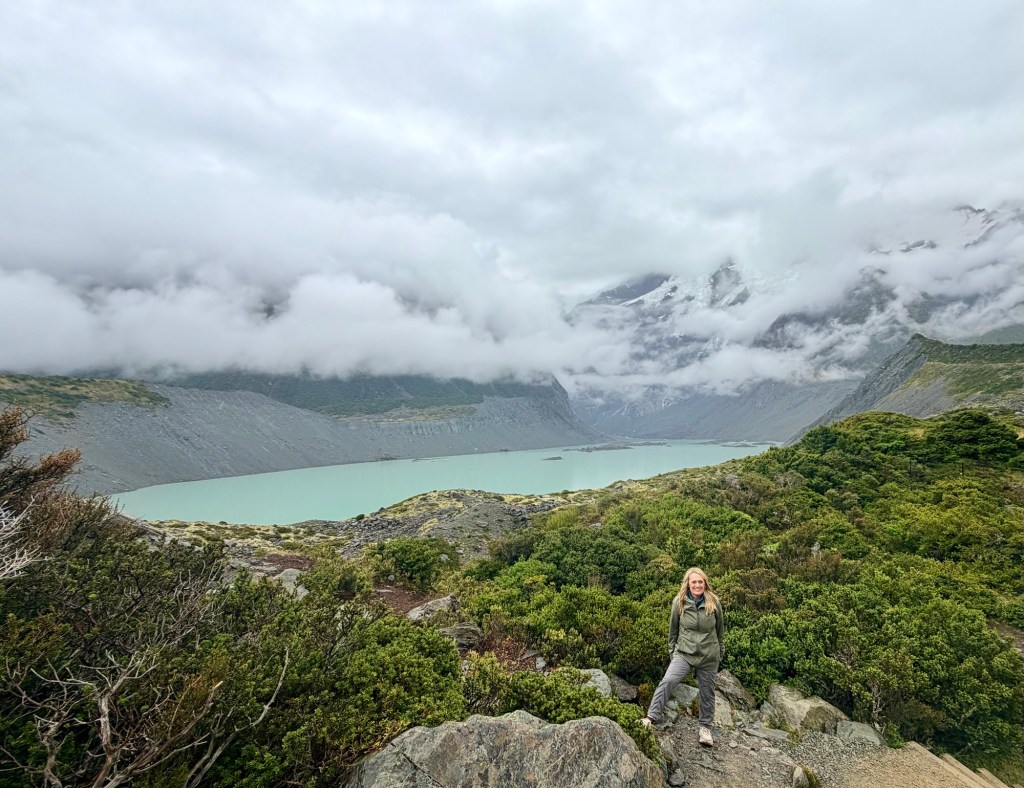
    Mueller Lake, which is fed primarily by the Mueller Glacier.
    Another view of Mueller Lake.

    Second rainy hike = Tasman Glacier View
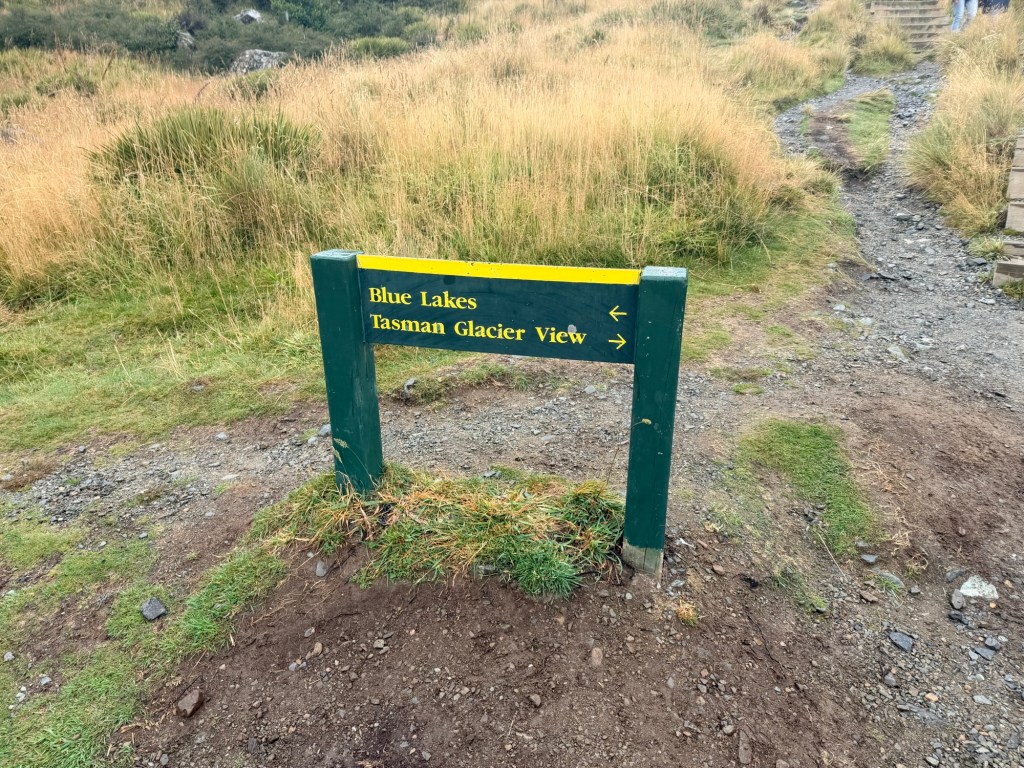
    Next we did a short but steep hike to the Tasman Glacier viewpoint.

    Not long, but uphill the entire way…and absolutely worth the view at the end.
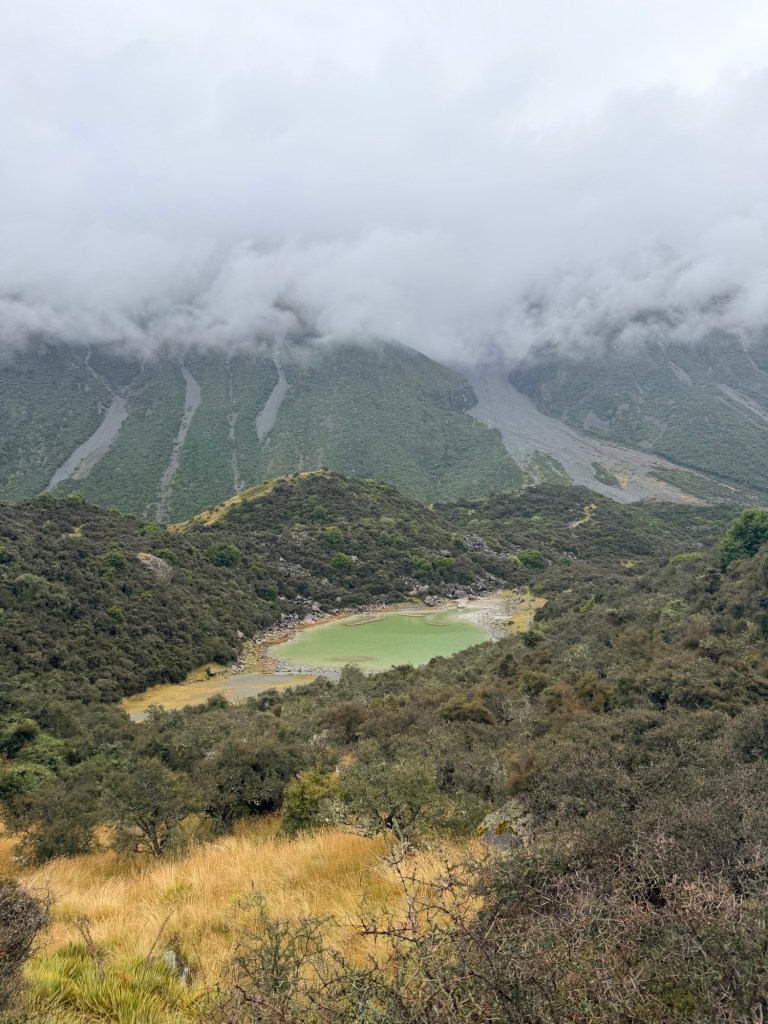
    Blue Lakes🩵
    These pools used to be blue when they were named in the mid-1800s as they were fed by the glacial meltwater from the Tasman Glacier. Since the Tasman Glacier has shrunk, it no longer flows into the lakes. The warmer rainwater now feeds the lakes and supports algae growth, turning it green.💚

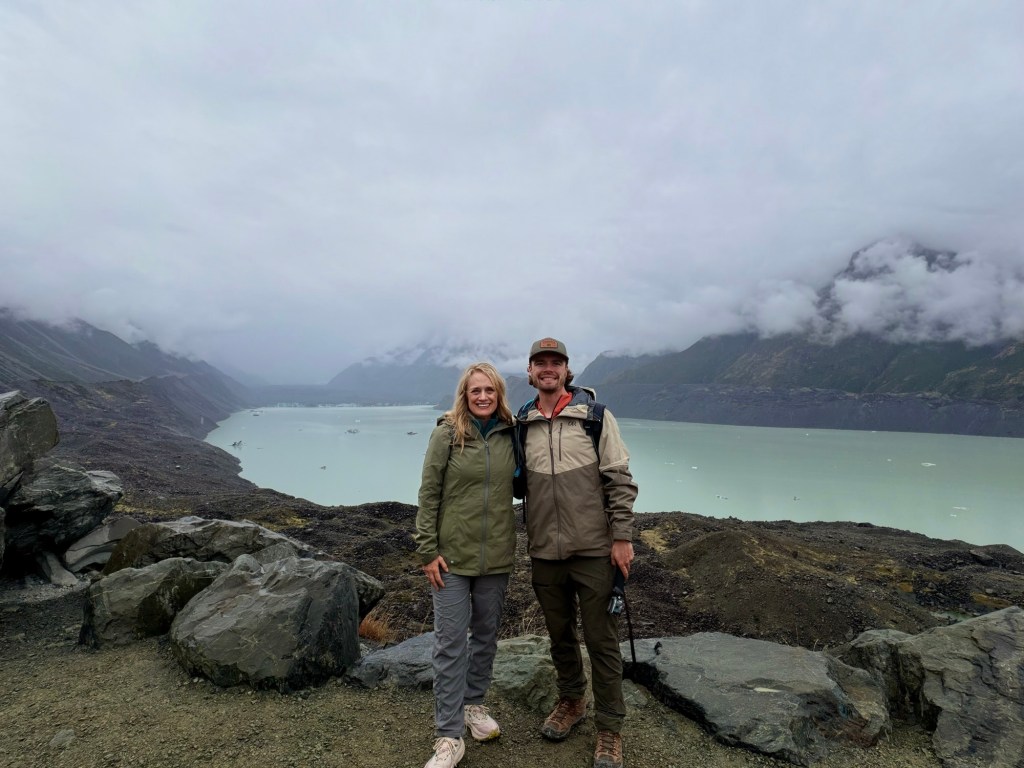
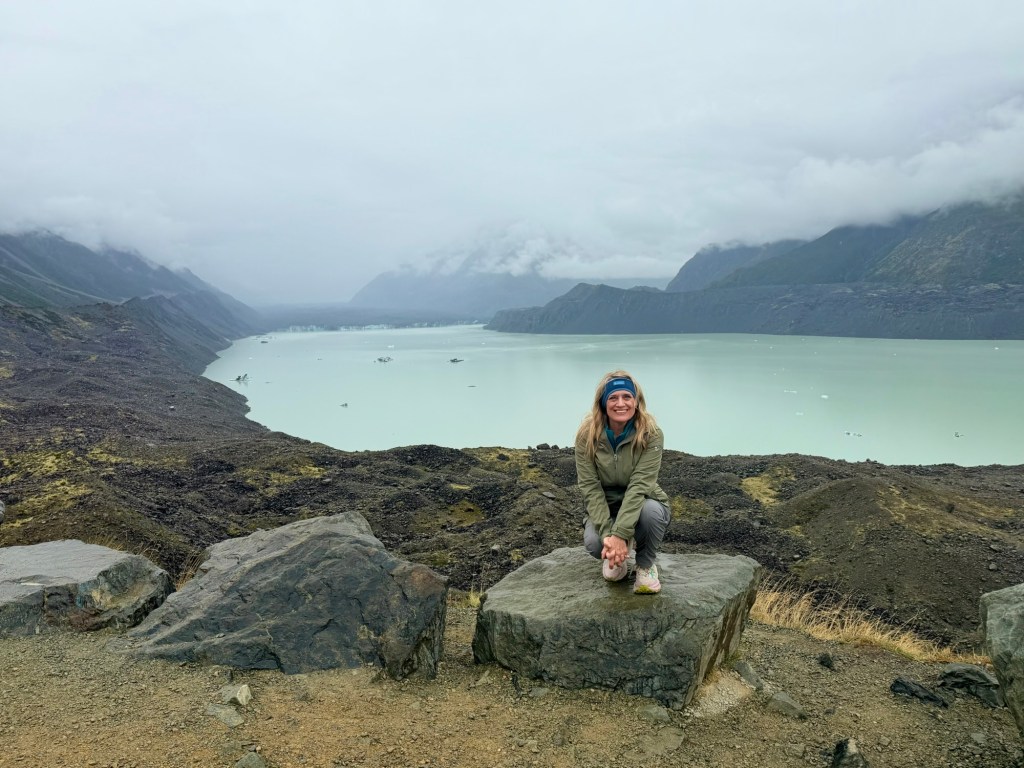
    From the top, you get a look out over the glacier lake, dotted with floating icebergs. It’s one of those views where you take a deep breathe, exhale, and tell yourself to always remember this moment.
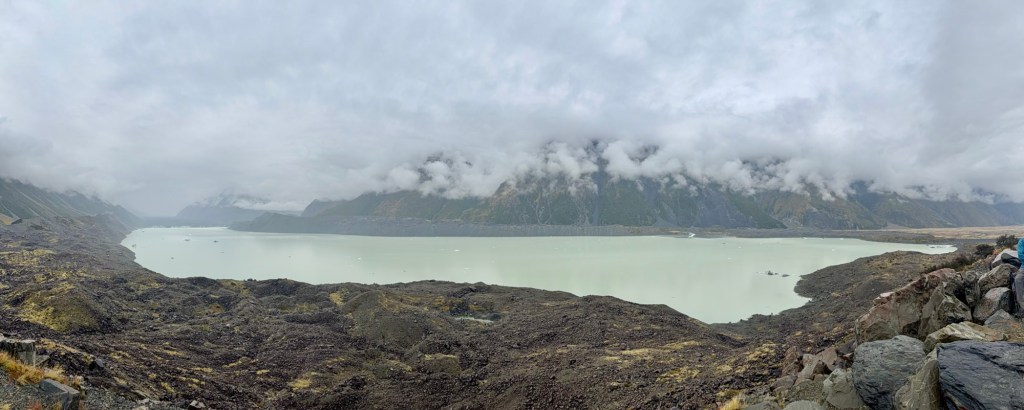
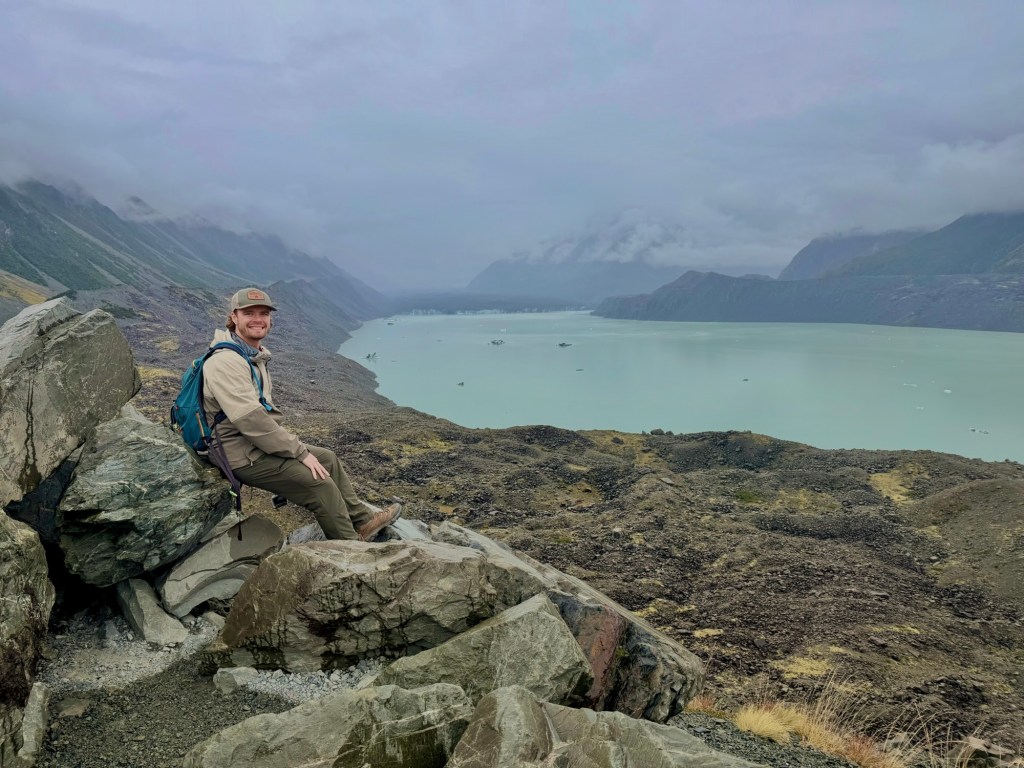
    Tasman Lake is a milky-blue lake that sits at the end of the Tasman Glacier (to the left).

    We wrapped the day at our hotel, The Hermitage, and it’s as iconic as the landscape surrounding it. Originally established in 1884 (with the current building dating to 1958), it’s more than just a place to stay…it’s part of the Mount Cook experience.
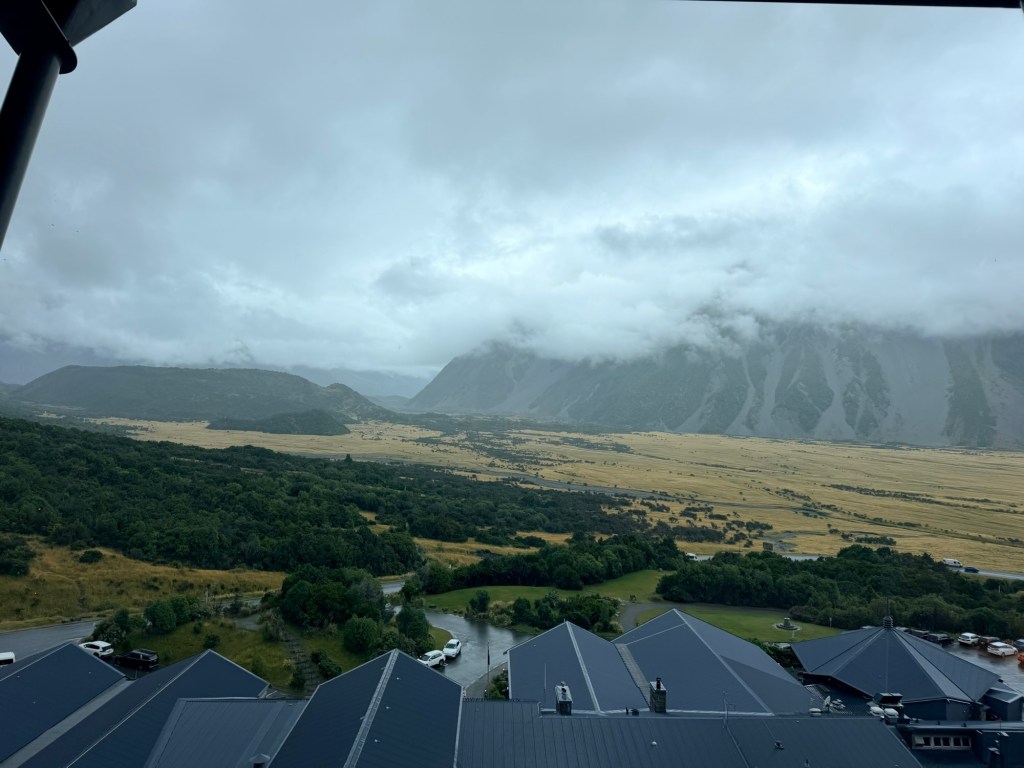
    The cloudy and incredible view from our room.

    Inside, there’s the Sir Edmund Hillary Alpine Centre and museum, a planetarium, and multiple dining options. We went with the buffet tonight. After a full day of hiking in the rain, it absolutely hit the spot.
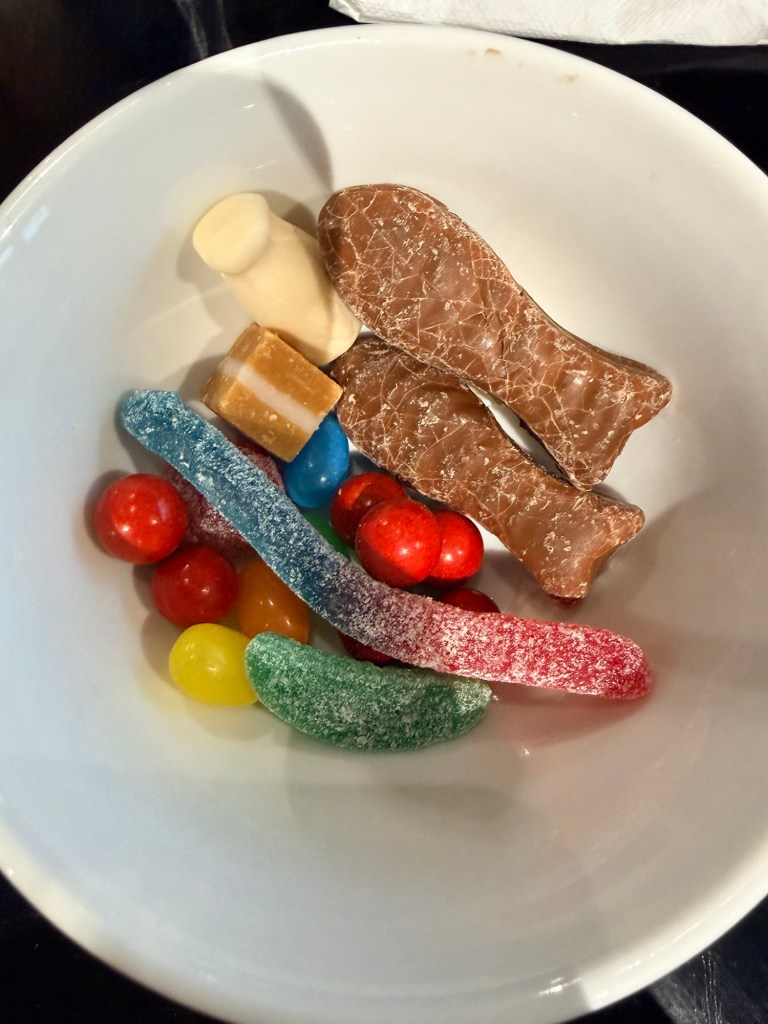
    Some of the “lollies” on the dessert buffet, including chocolate fish (with a marshmallow center), Milk Bottles, and Jaffas (maybe?).
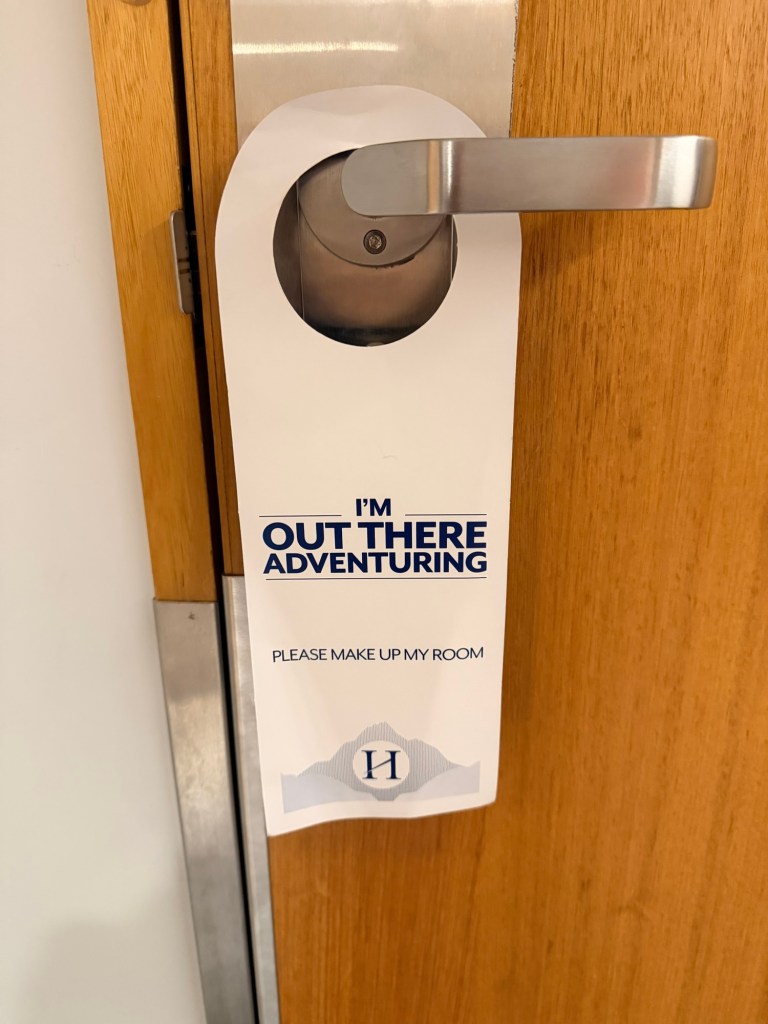
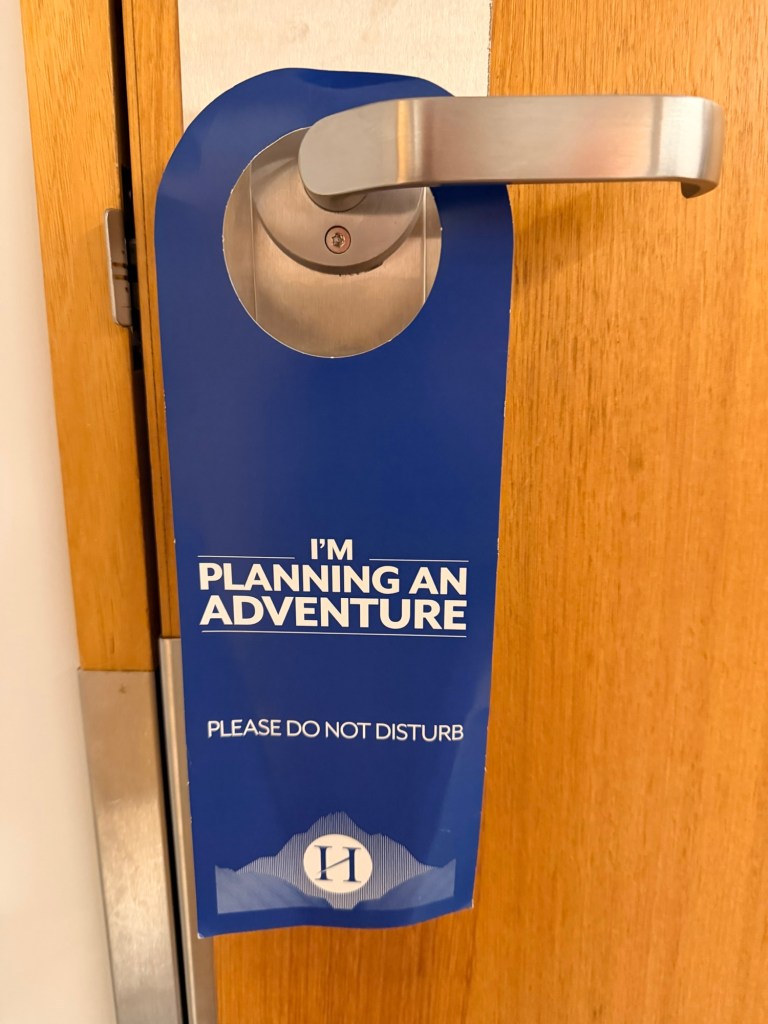
    Very creative “Do not disturb” for the door.
    And then the other side!

    Not the bluebird 💙 day we imagined, but it doesn’t matter…we won’t soon forget the incredible hikes!
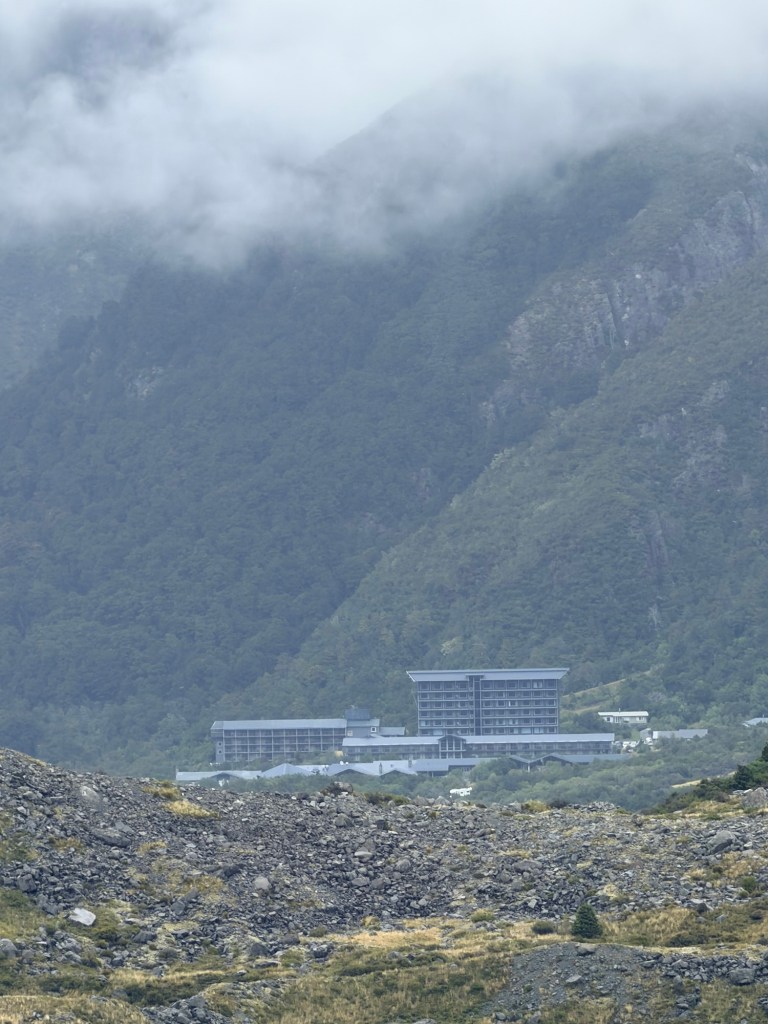
    A view of the iconic Hermitage Hotel. What started as an alpine lodge for 12 guests in 1884, is today a luxurious hotel with an amazing history. There is a museum in the hotel that tells the tale of its past.

    Note – Every outlet in NZ has a switch to turn on the power—flip the switch down to make sure the power is on!
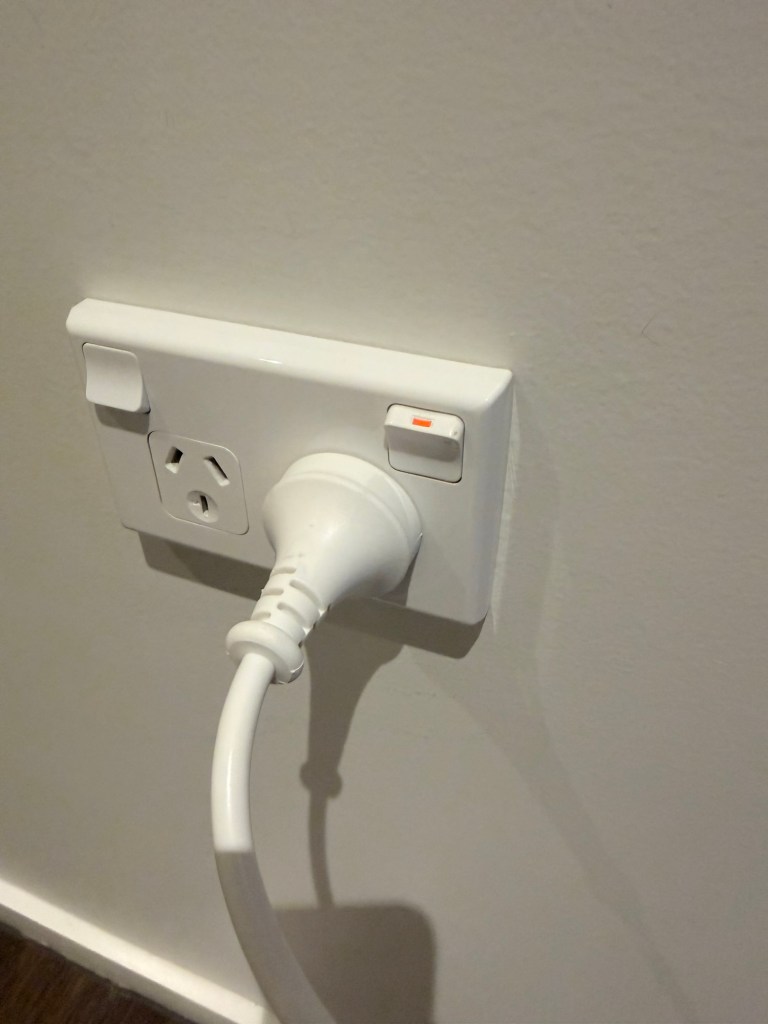
    NZ’s power outlets—flip the switch down to start the flow of electricity.⚡️

  • Kia Ora 🇳🇿! Off to the land of 🐑🥝🏔️🎬🏉🌿…

    Kia Ora 🇳🇿! Off to the land of 🐑🥝🏔️🎬🏉🌿…

    I feel like a kid on Christmas morning about this adventure!

    New Zealand🇳🇿

    Home to 25 million sheep, that’s 5 sheep per every person.

    Where “kiwi” is used to describe 3 things—a bird, fruit (always call it kiwi fruit), and people from New Zealand.

    Where the landscapes are diverse and spectacular like the Southern Alps, fjords like Milford Sound, volcanic landscapes, geothermal fields, glacier lakes, and dramatic coastlines.

    Where Middle-Earth was created (and filmed) for the Lord of the Rings movies and the Hobbiton really exists.

    Where you find the incredible Māori culture, and rugby is almost a national religion. In fact, the All Blacks is one of most recognized teams in the sport and the haka is mesmerizing.

    10 fun (and some surprising) facts from my research.

    1️⃣ It’s one of the last landmasses humans settled on Earth when the Polynesians arrived between AD 1200-1300 🗺️. While the country is an archipelago of some 600 islands located in the Pacific Ocean, there are 3 main islands —North and South, where 99% of the population lives, and Stewart Island, which is primarily a protected national park. In fact, 30% of New Zealand is protected land. We will be traveling from the North Island, starting in Auckland, to the South Island. The two islands are separated by the Cook Strait. While in Auckland, we will we will venture to Waiheke Island.

    2️⃣ In 1893 New Zealand became the first country where women could vote.🗳️ One of the dedicated women behind the movement, Kate Sheppard, appears on the $10 New Zealand banknote.

    3️⃣ There were no native land mammals when humans arrived (except bats). Birds then evolved to fill those roles and for this reason, the Kiwi bird is flightless and ground-dwelling.

    Let’s stay on the Kiwi bird for a minute because I find them fascinating and cannot wait to see one in the wild.

    Say what?? The Kiwi’s nostrils are at the tip of their beak. Every other bird in the world has nostrils near the base of their beak, close to the face, because birds rely on vision to find food, touch, or vibration.

    But Kiwis hunt by smell and evolved differently because…you guessed it, there were no land mammals. They are nocturnal forest foragers.

    A momma Kiwi bird lays an egg that is 20 times her body weight😮. To put that into perspective, it would be the equivalent of a 150 pound woman giving birth to a 30 pound baby! The papa bird sits on the egg for 70-85 days, which is one of the longest incubation periods of any bird.

    4️⃣ New Zealand is known as Aotearoa, the Māori name meaning “Land of the long white cloud”. There are 3 official languages: English, Māori, and New Zealand Sign Language (making it one of a few countries to designate sign language as an official national language).

    5️⃣ There are glowworm caves and we will go to Waitomo to see thousands of these glowing larvae light up the cave. Starlight underground.🌟

    6️⃣ Lollies! Which means candy. And when you have a sweet tooth like me, you get to know the various lollies you’ll encounter.😂 Get ready Pineapple Lumps🍍 and Jaffas🍊🍫…I am coming for you!

    7️⃣ 🍷New Zealand produces less than 1% of the world’s wine but what they do produce is well known and dominated by the Sauvignon Blanc grape. The Marlborough region holds over 70% of the country’s vineyard area.

    8️⃣ It’s a darned long flight! It is going to take ~12 hours from San Francisco. We cross the international date line and jump ahead to the future! For example, we’re leaving SFO on Saturday at 10:45 pm and arrive Monday morning at 8:00 am.

    9️⃣ Driving is on the left and the driver sits on the right. And the seasons are opposite since we’re in the Southern Hemisphere. We’re getting ready for spring in the USA, and fall in NZ. Can’t wait to gaze at that Southern sky!

    🔟 I learned a few new words and customs in anticipation of the trip:

    Sweet as = awesome, no problem

    Togs = swimsuit

    Jandals = flip flops (my favorite)

    Tramping = hiking (which we will do)

    The Hongi = Māori greeting where two people exchange the breath of life (ha) by pressing their foreheads and noses together. It means unity, equality, and the exchange of mana (spiritual power). How beautiful.❤️

    Now I sit back, relax, and fly✈️ to the home of world class wine, the flat white, commercial bungee jumping, Hokey Pokey ice cream (per capita, New Zealanders eat the most ice cream 🍨 in the world-my idols!), jet boating, Manuka honey, Whittaker’s chocolate, and pavlova (although disputed by Australia as to which country invented it). Oh, and New Zealand has no native snakes!