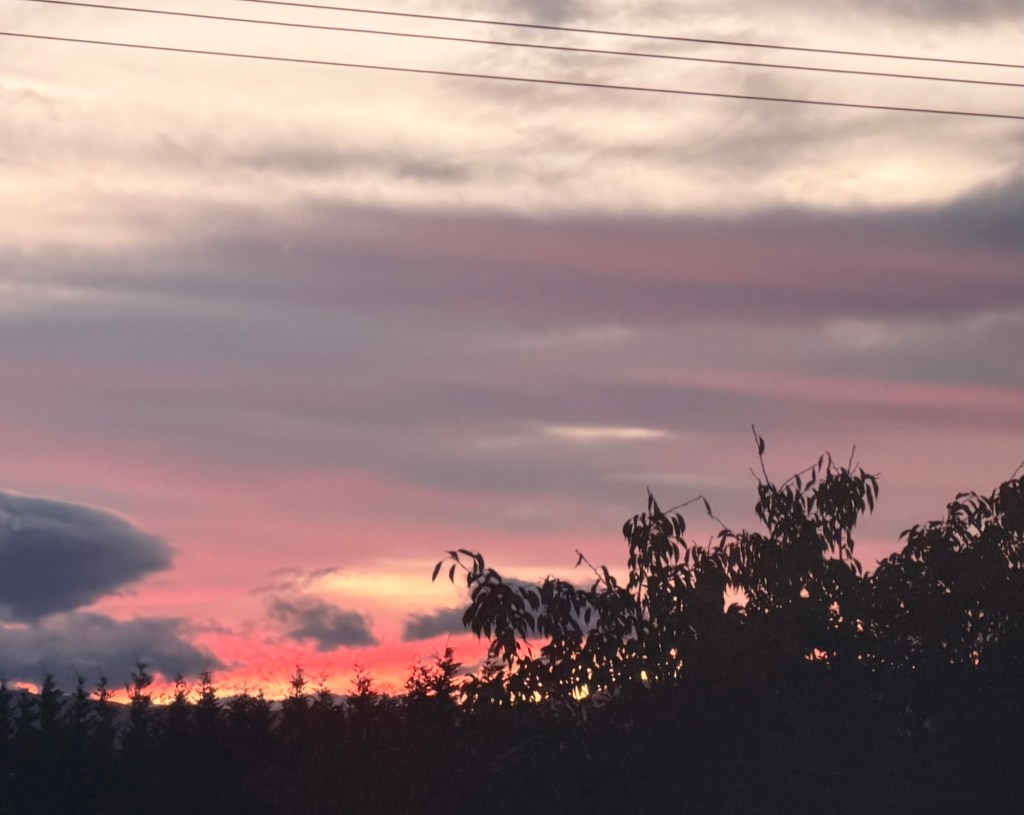
We started the day with an incredible sunrise in Wānaka before hitting the road for the 2.5-hour drive to Aoraki/Mount Cook.
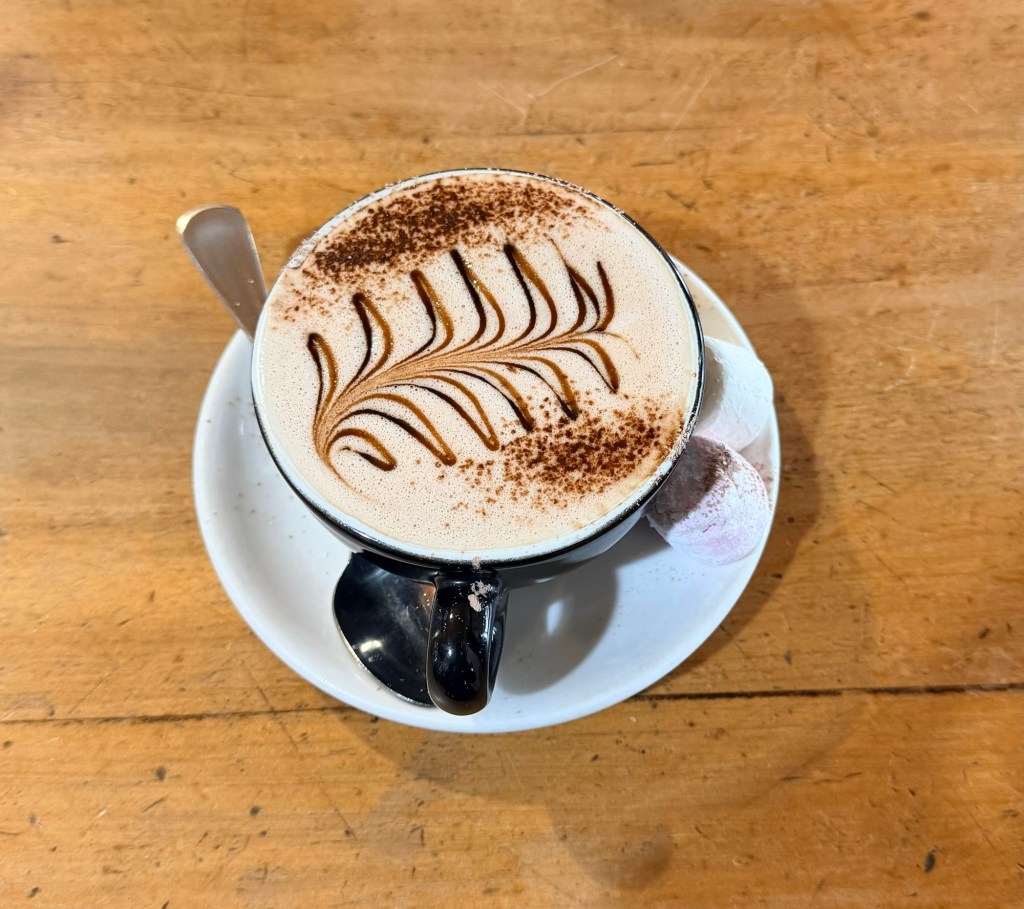
After a quick breakfast stop in Ōmarama, we continued toward the Southern Alps and Aoraki/Mount Cook National Park—home to 19 peaks over 3,000 meters.
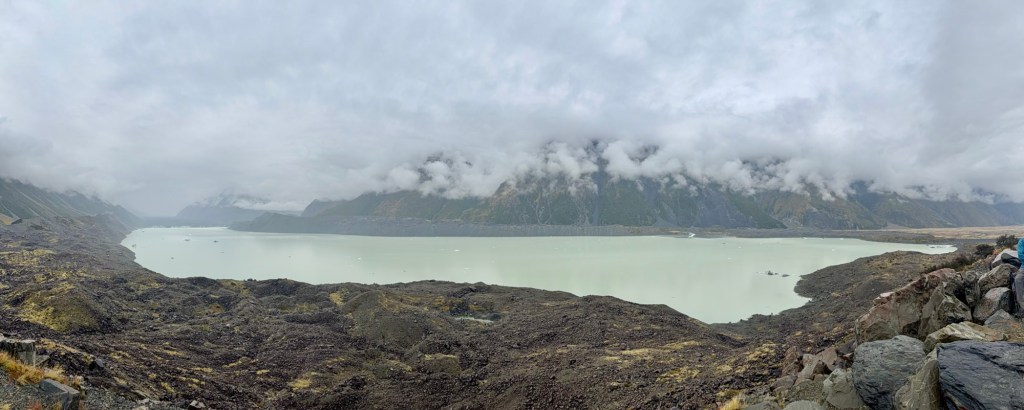
About 40% of the park is covered by glaciers, including the massive Tasman Glacier, which stretches 17 miles long, 2.5 miles wide, and reaches depths of nearly 2,000 feet of ice. Other notable glaciers here include the Hooker and Mueller.
“Aoraki” means “cloud piercer” in Māori, and the story behind it is just as powerful as the landscape itself. In Ngāi Tahu tradition, Aoraki was a young boy traveling with his brothers when their canoe capsized. The canoe and boys turned to stone, forming the South Island and the highest peaks of the Southern Alps, with Aoraki the highest peak. Today, Aoraki/Mount Cook is the physical form of that ancestor, connecting the natural and supernatural worlds.
Standing at 3,724 meters (12,218 feet), Aoraki/Mount Cook is the tallest mountain in New Zealand and the crown jewel of the Southern Alps.
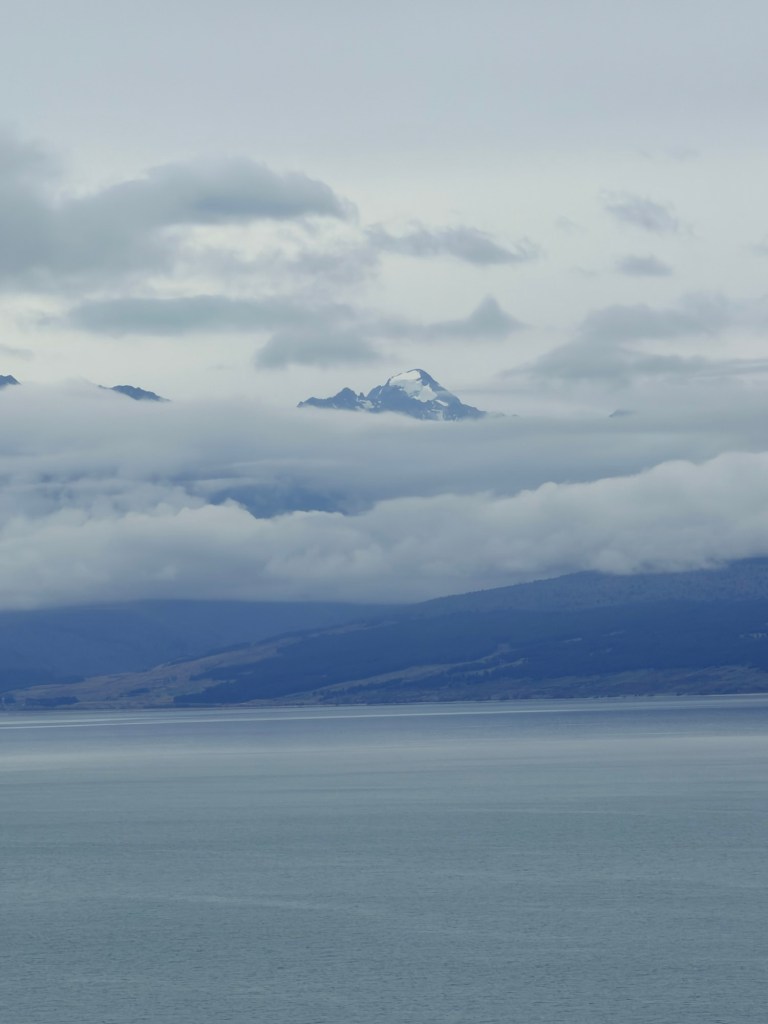
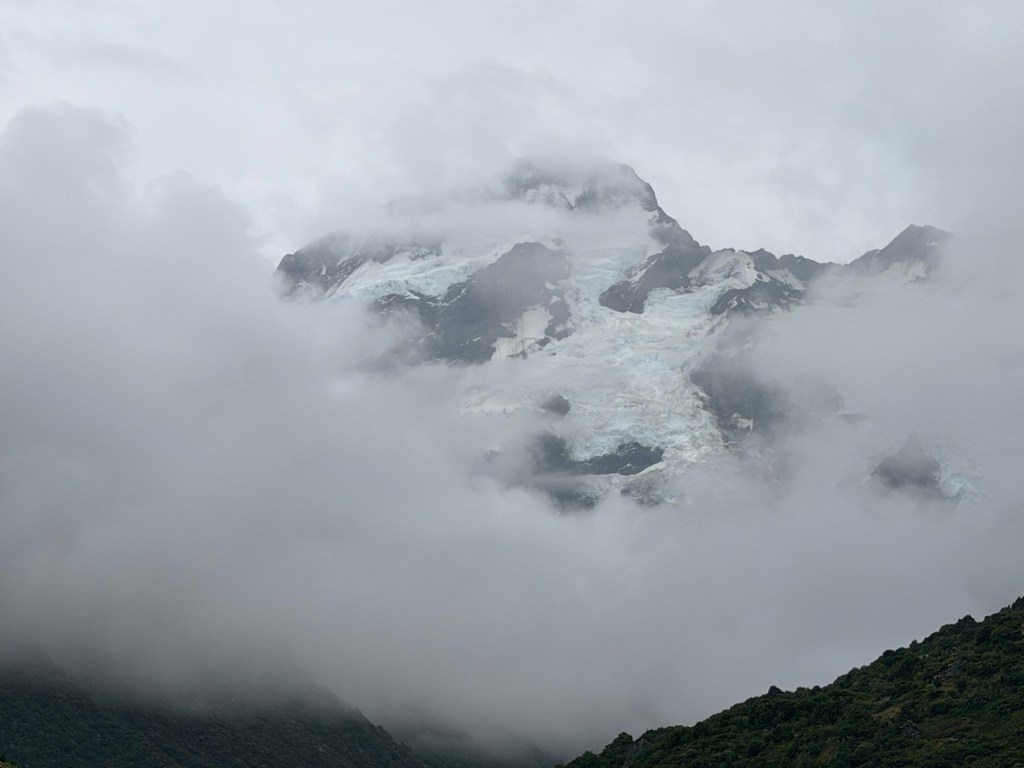
And…we couldn’t see it.
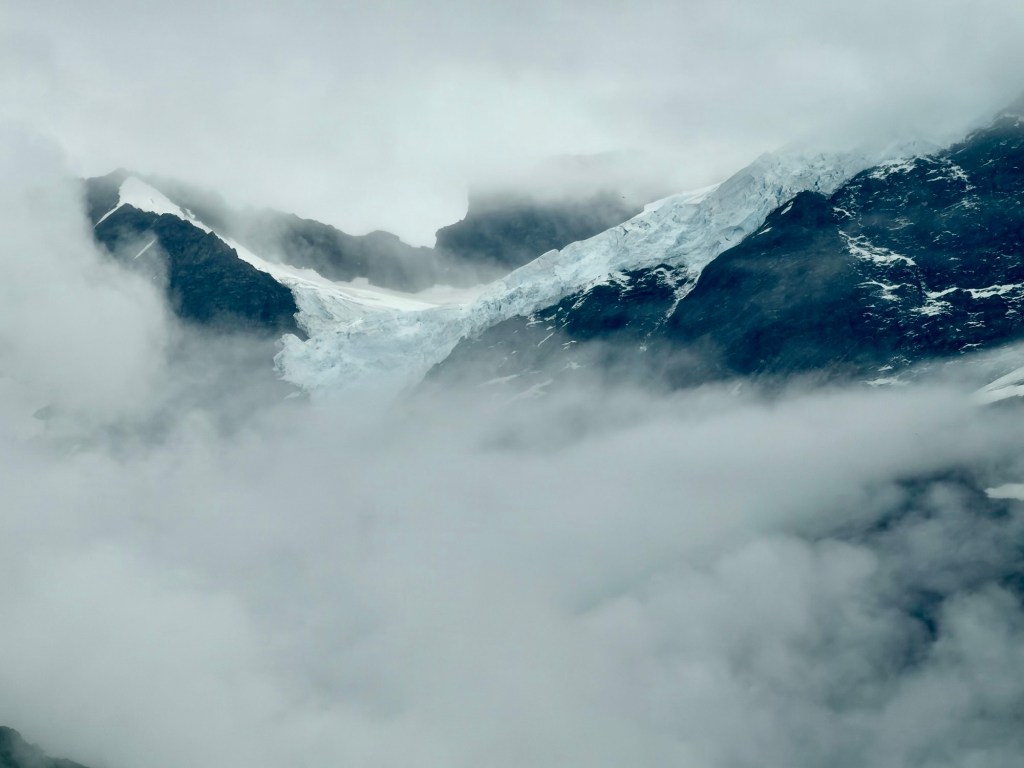
This was our first cloudy, rainy day of the trip. The normally spectacular scenic drive in? Completely hidden behind a wall of clouds. Not exactly what you picture when you come to see New Zealand’s most iconic peak.
We’re here for two days, and unfortunately our stargazing and the glacial boat tour were both cancelled due to the rain forecast. We did catch brief glimpses of the surrounding peaks before everything disappeared into cloud cover, but Mount Cook itself stayed completely hidden.
First rainy day hike = Hooker Valley Track
We didn’t let the rain stop us.
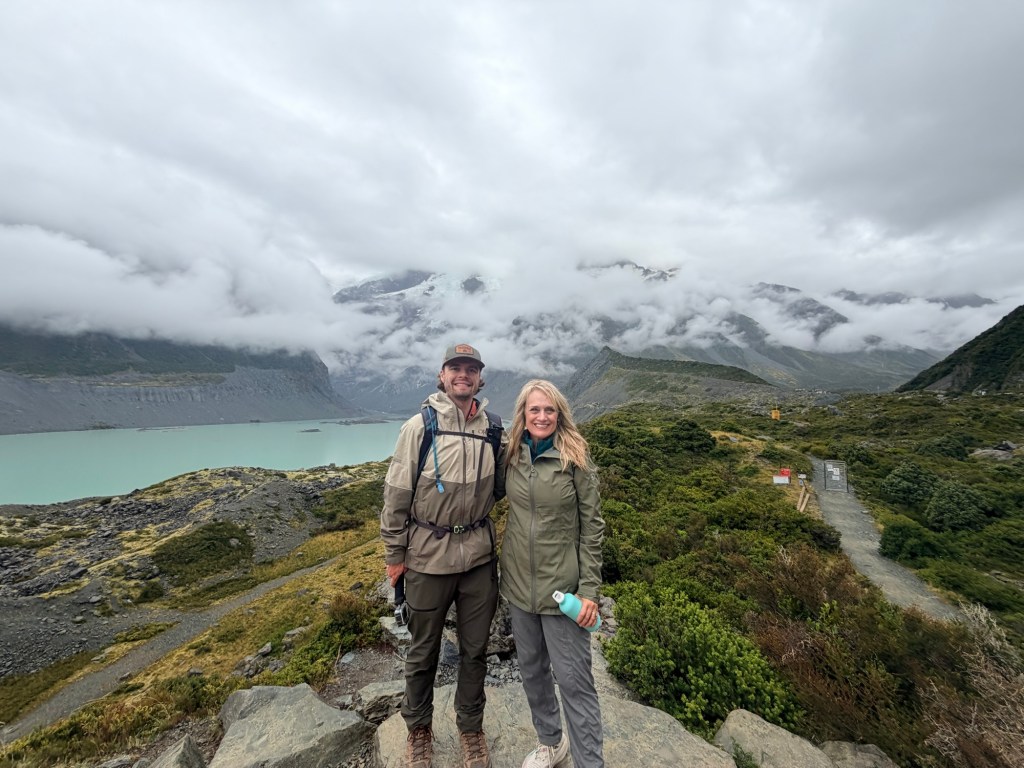
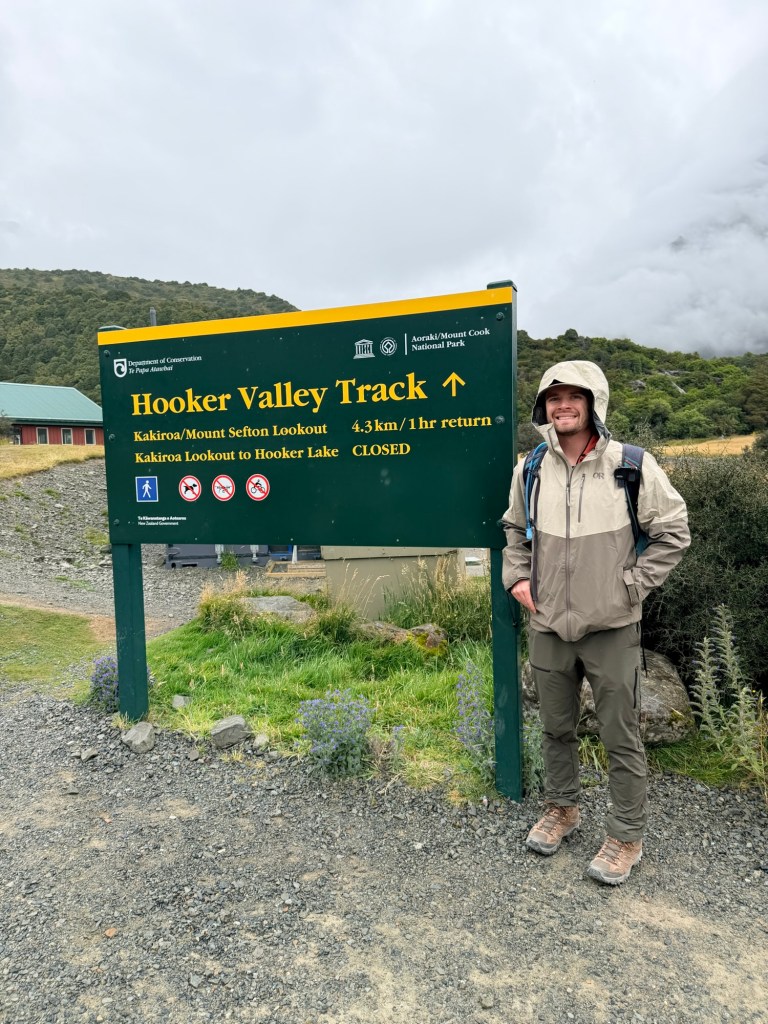
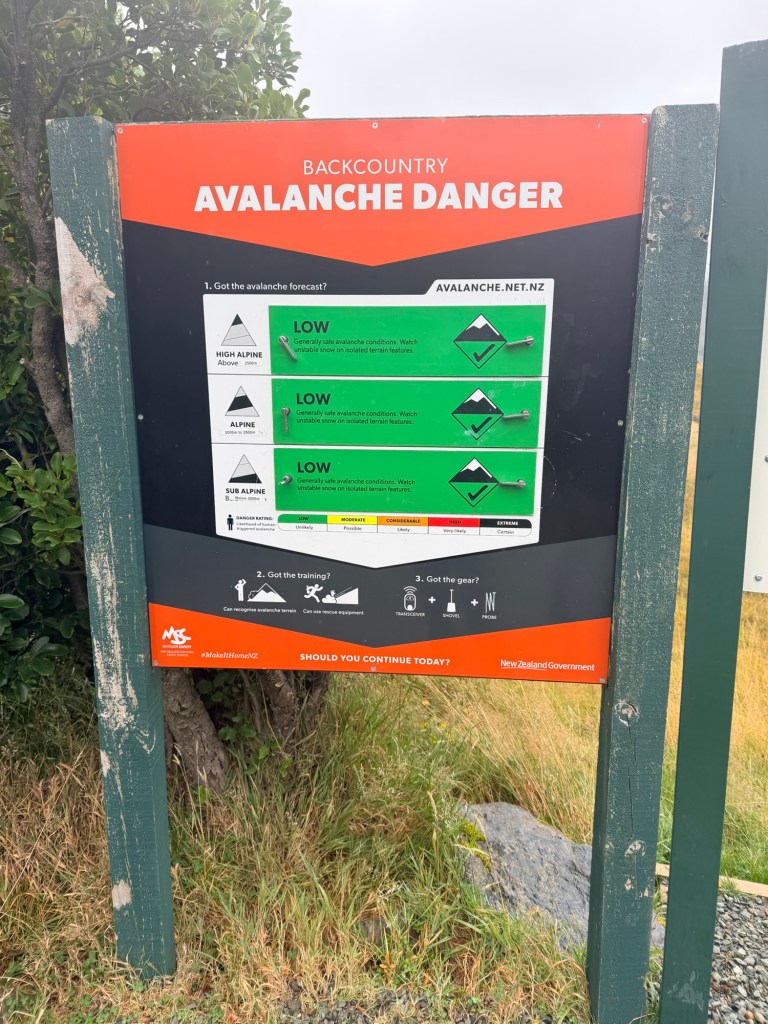
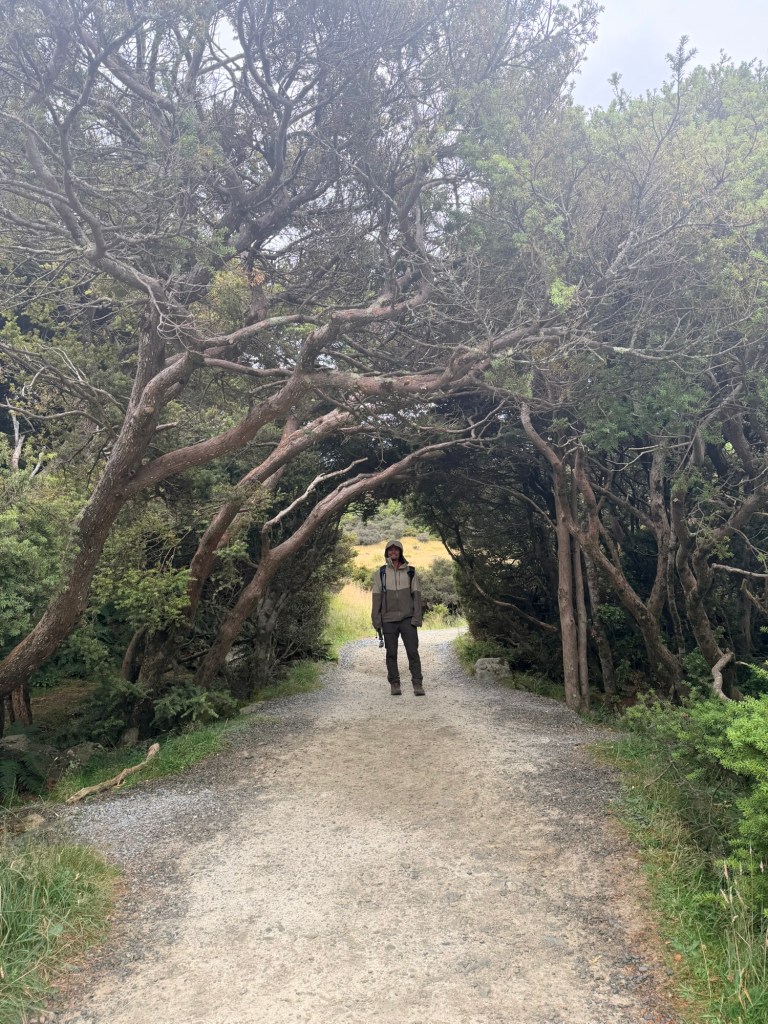
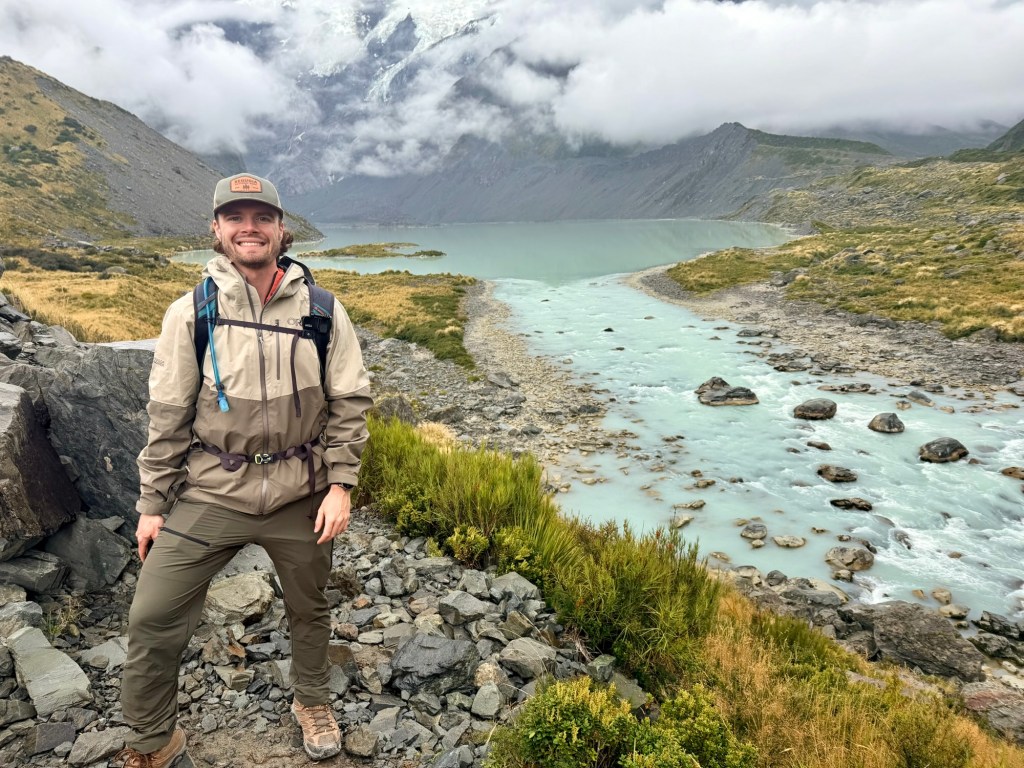
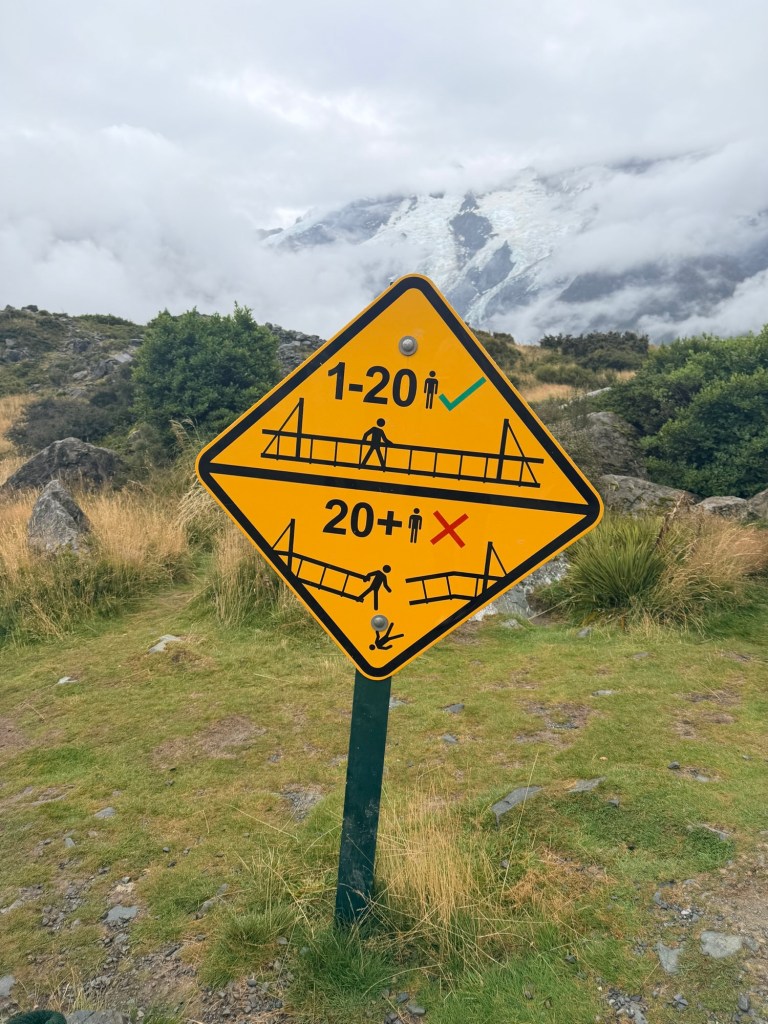
The Hooker Valley Track is one of the most popular hikes in the park for good reason. Even in the rain, it delivered. Think suspension bridges, rushing glacial rivers, and moody mountain backdrops that somehow feel even more dramatic with a little weather.
We couldn’t complete the full hike since they’re rebuilding the second bridge, so the modified version came in at about 2.8 miles. Honestly, it still felt like we saw plenty.
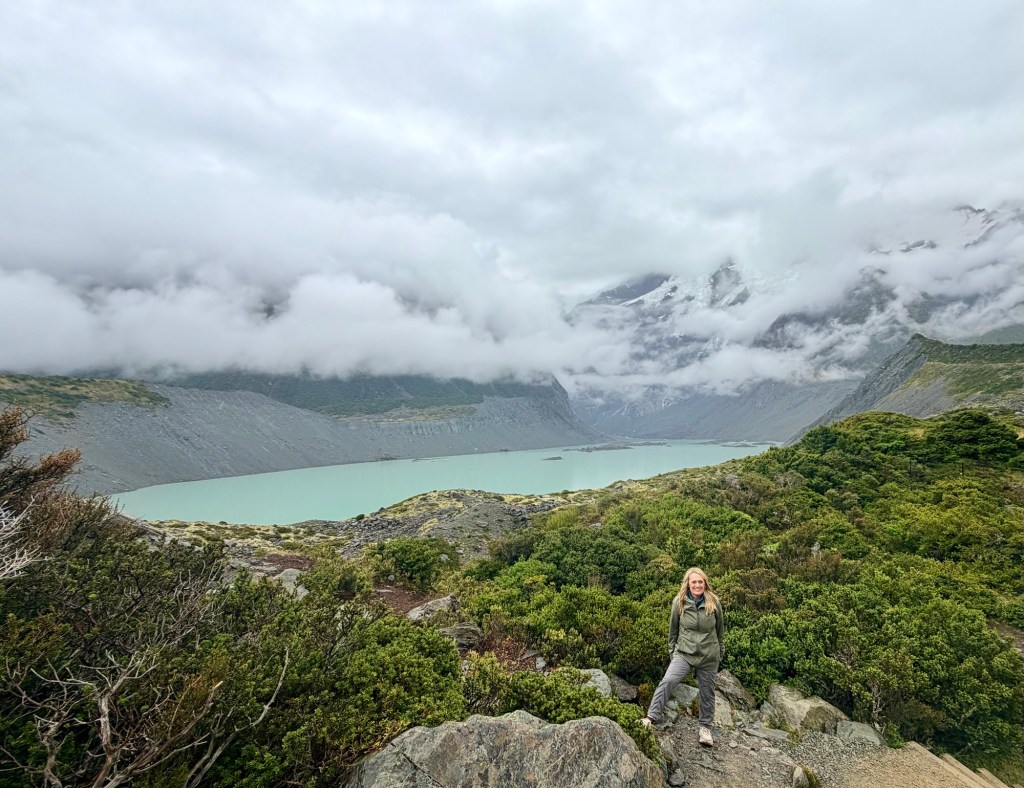
Second rainy hike = Tasman Glacier View
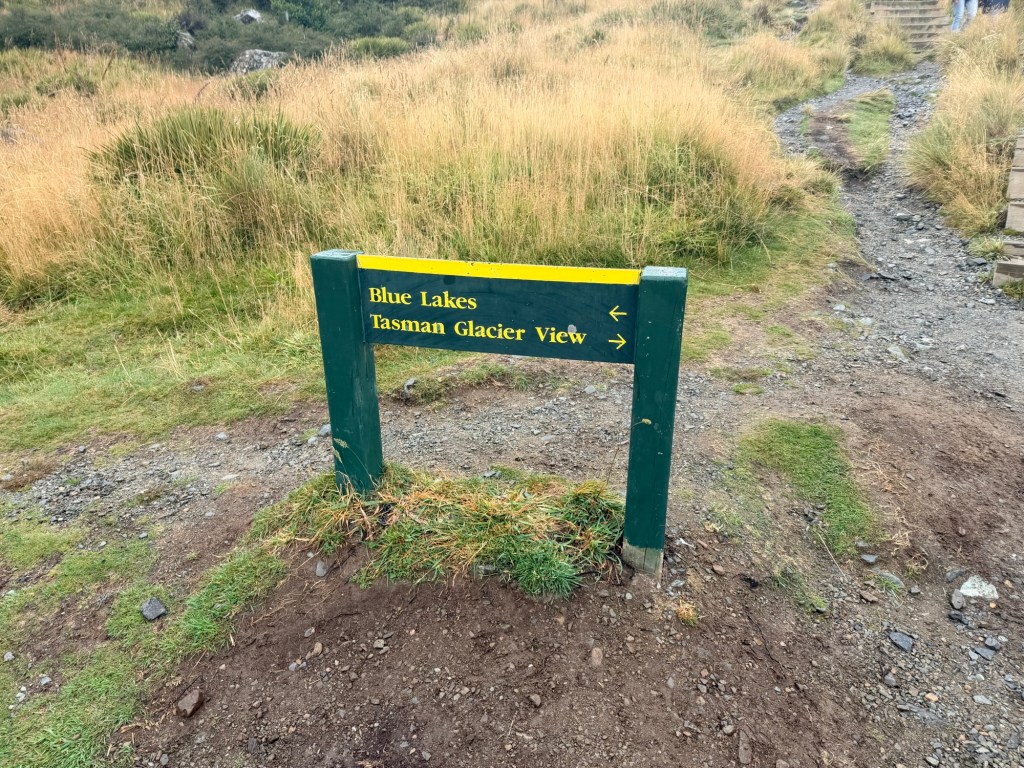
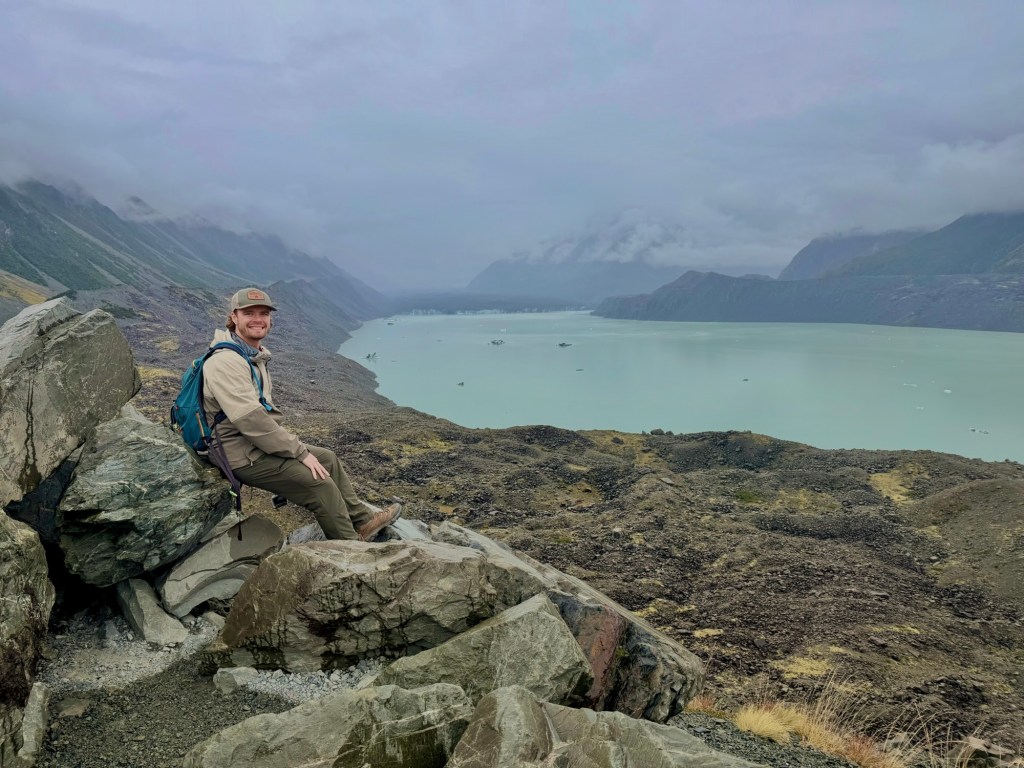
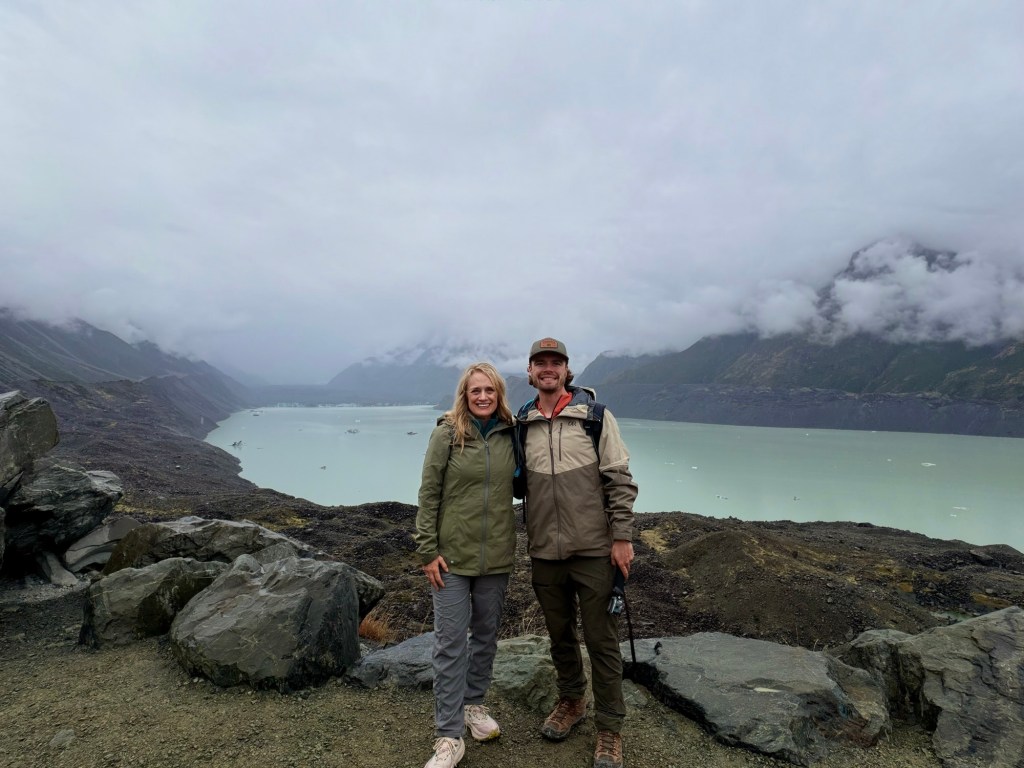
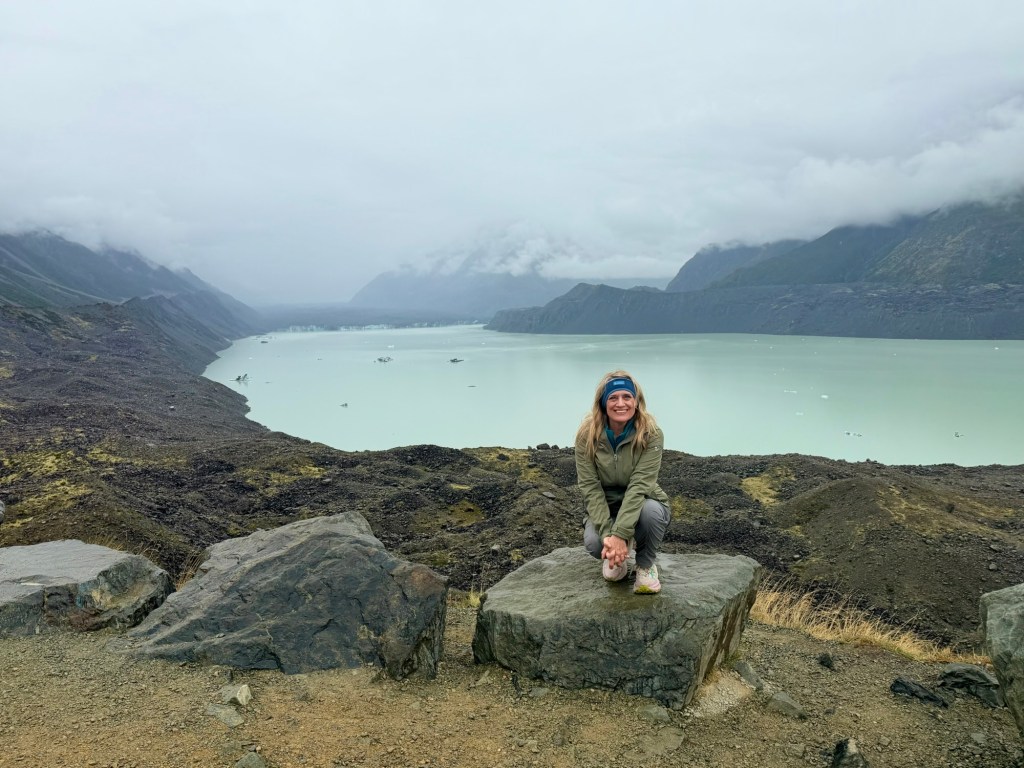
Next we did a short but steep hike to the Tasman Glacier viewpoint.
Not long, but uphill the entire way…and absolutely worth the view at the end.
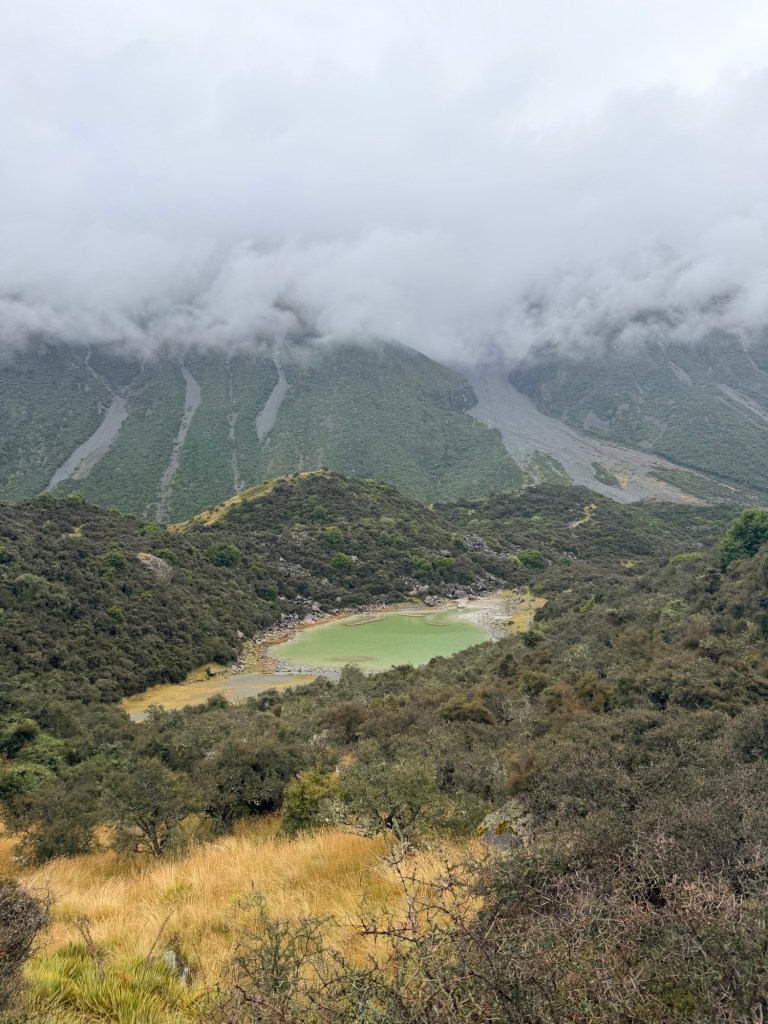
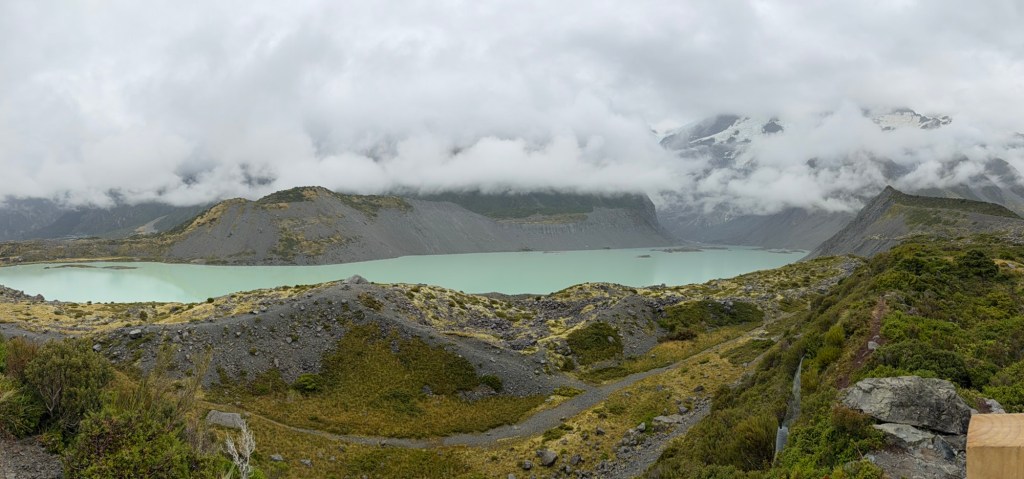
These pools used to be blue when they were named in the mid-1800s as they were fed by the glacial meltwater from the Tasman Glacier. Since the Tasman Glacier has shrunk, it no longer flows into the lakes. The warmer rainwater now feeds the lakes and supports algae growth, turning it green.💚
From the top, you get a look out over the glacier lake, dotted with floating icebergs. It’s one of those views where you take a deep breathe, exhale, and tell yourself to always remember this moment.
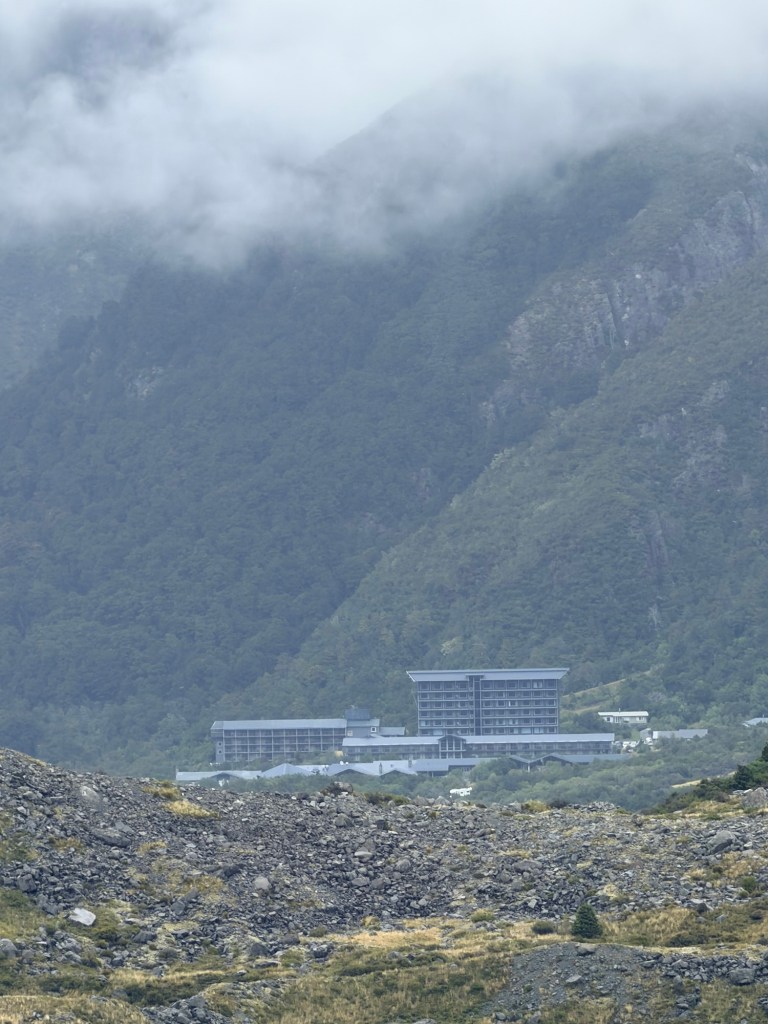
We wrapped the day at our hotel, The Hermitage, and it’s as iconic as the landscape surrounding it. Originally established in 1884 (with the current building dating to 1958), it’s more than just a place to stay…it’s part of the Mount Cook experience.
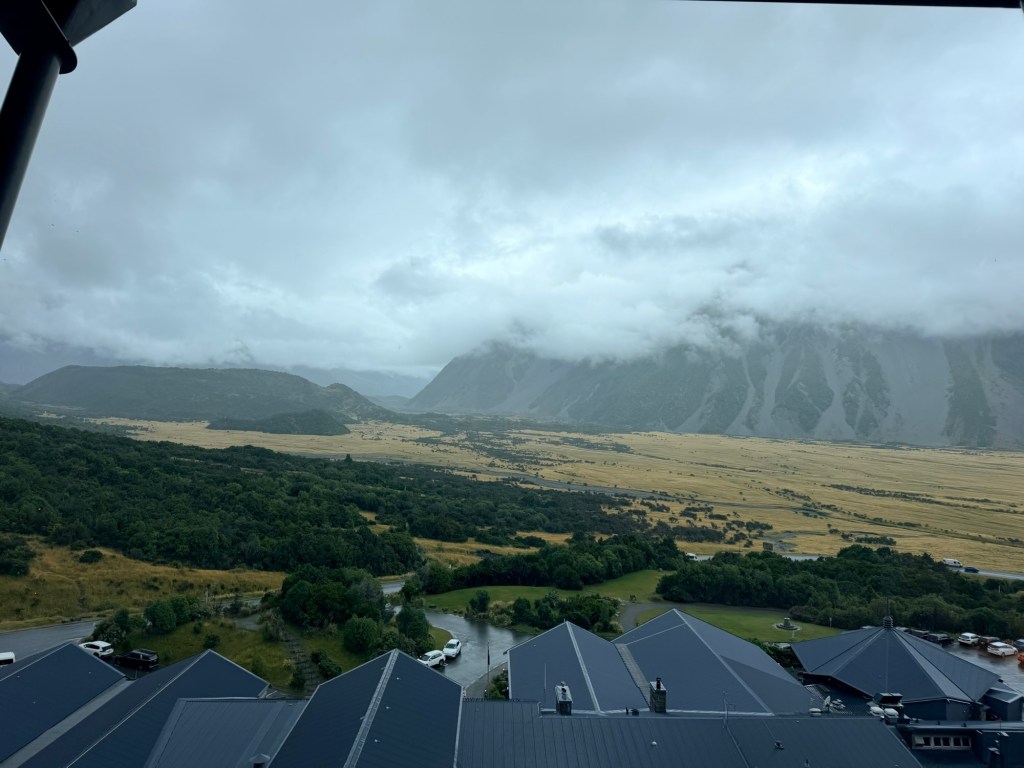
Inside, there’s the Sir Edmund Hillary Alpine Centre and museum, a planetarium, and multiple dining options. We went with the buffet tonight. After a full day of hiking in the rain, it absolutely hit the spot.
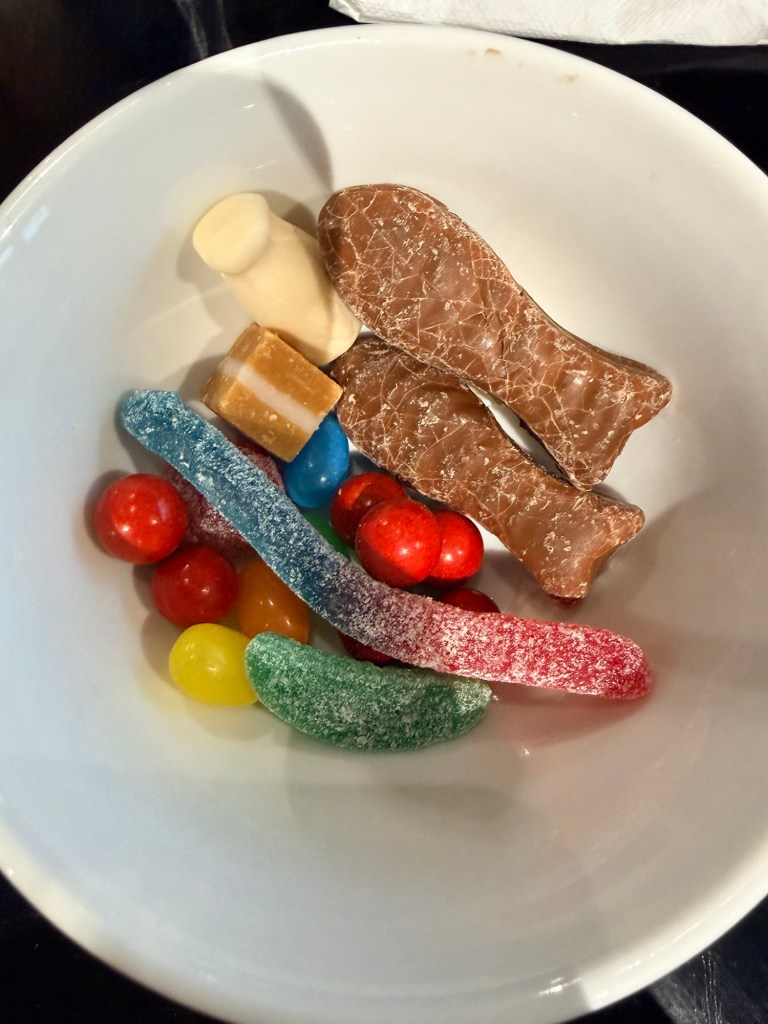
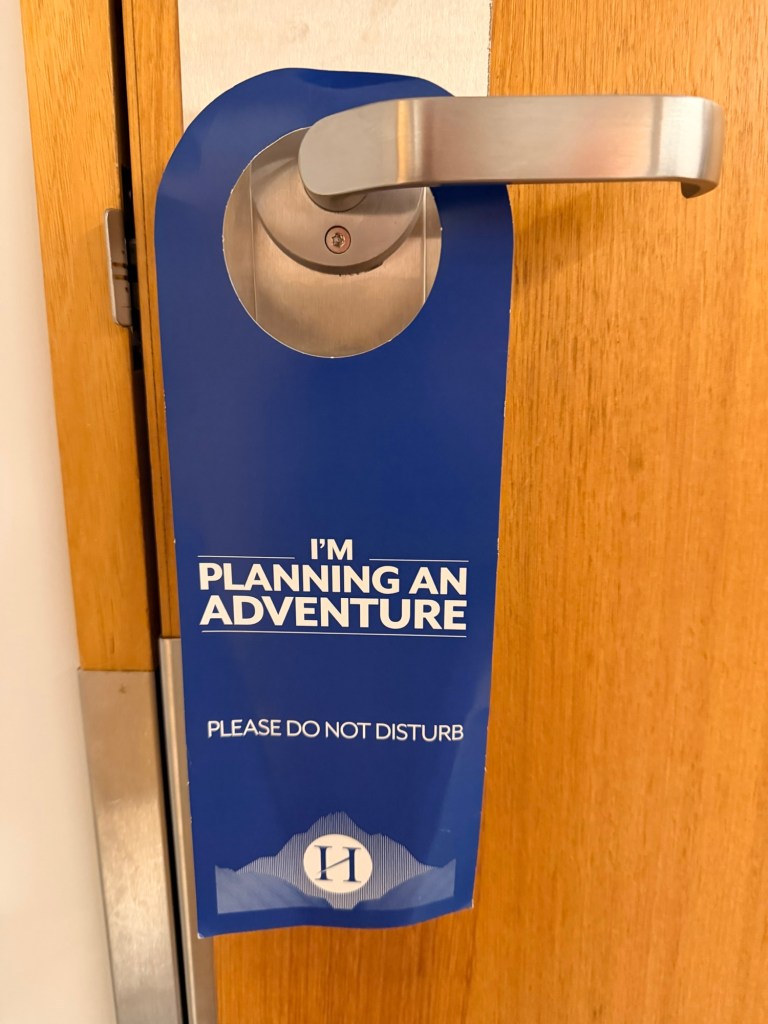
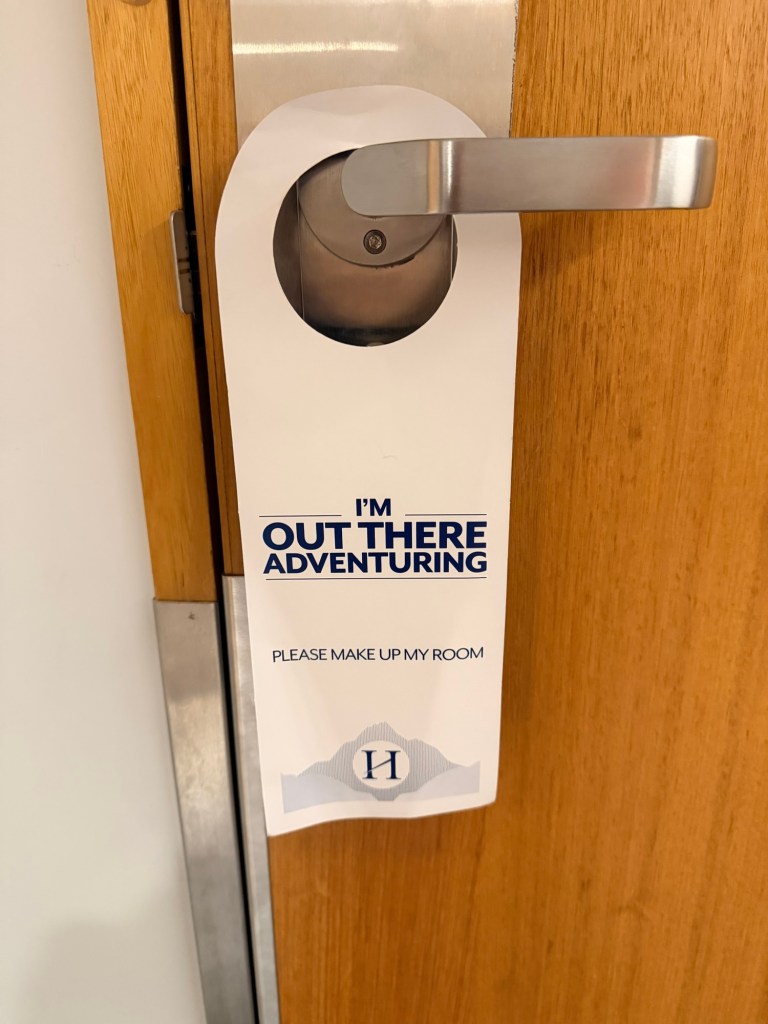
Not the bluebird 💙 day we imagined, but it doesn’t matter…we won’t soon forget the incredible hikes!
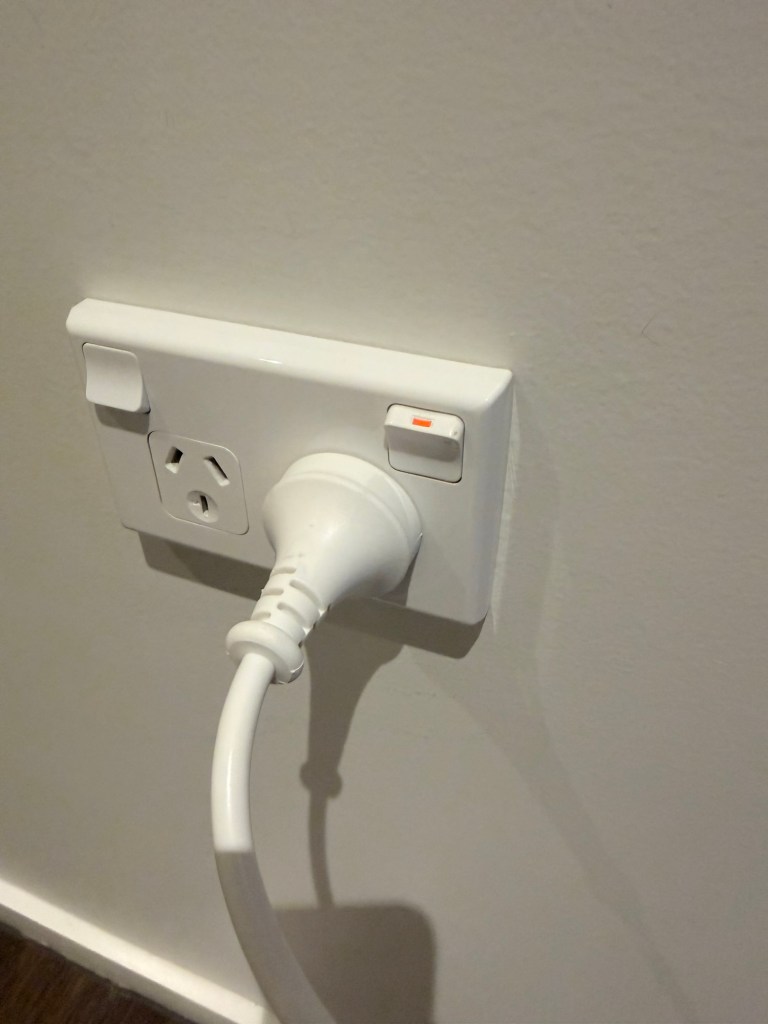
Note – Every outlet in NZ has a switch to turn on the power—flip the switch down to make sure the power is on!
 Christina’s Journey Journal