Today we really stepped out of our comfort zone and into 35 degree Fahrenheit glacial water!
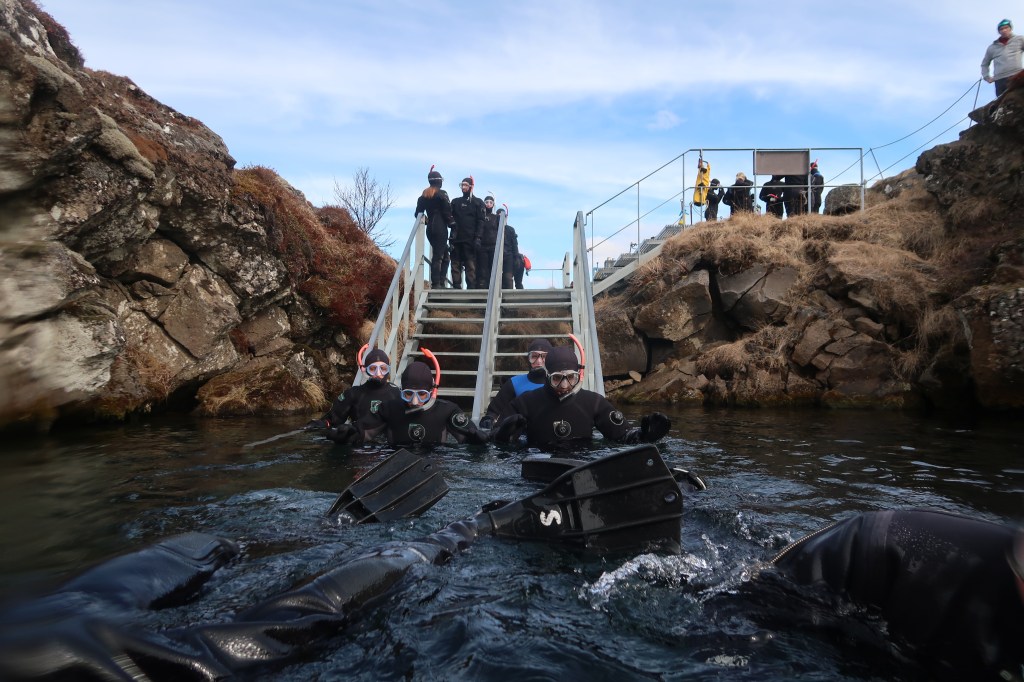
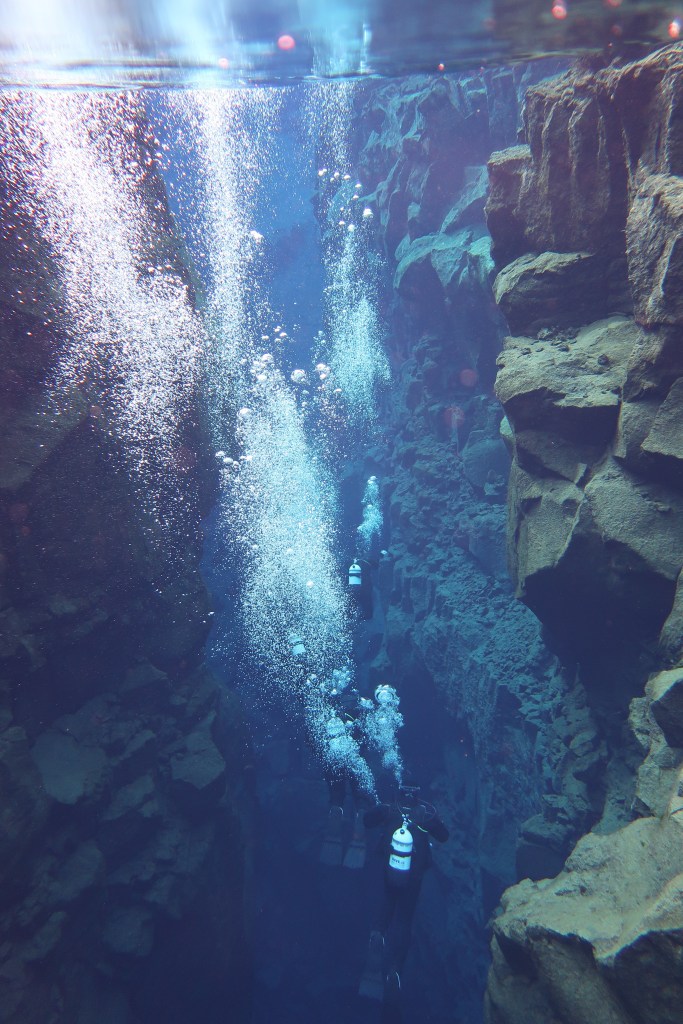
We snorkeled Iceland’s Silfa Fissure, located within Thingvellir National Park (Þingvellir) where the North American and Eurasian tectonic plates can be found. They have been moving apart about 2 centimeters per year.
How did Silfa happen? Earthquake! In 1789 Thingvellir experienced a major earthquake and this opened up several fissures. Silfa Fissure collected the glacial meltwater from the Langjokull glacier and thus the name, Silfa, which means silvery.
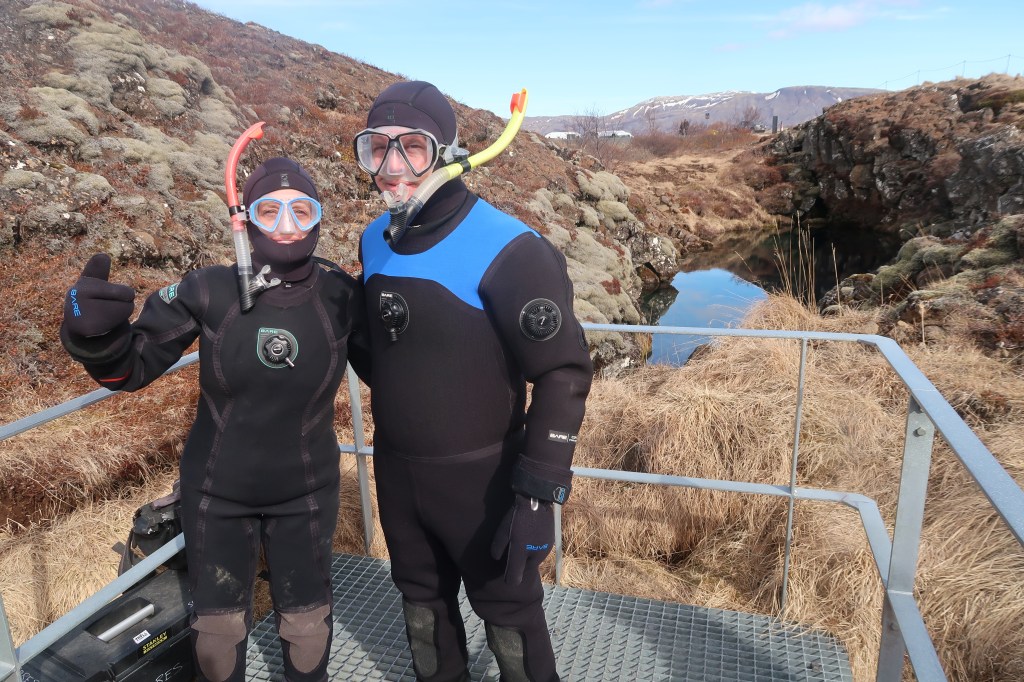
Mike and I doned our dry suits (not for the claustrophobic) and explored the amazing rock formations in the deep Silfa crack, Silfra Hall, Silfra Cathedral and Silfra Lagoon. Visibility was unbelievable (up to 300 feet) and parts were up to 60 meters deep.

Now you may ask, were we cold? The only exposed parts were the face that wasn’t covered by the mask and then when water seeped in the gloves and a bit around my face. For some people it may be a shock but I thought it was quite refreshing. And we were moving so it warmed up quickly. We were in the water, traveling the outlined path, for about 30-45 minutes. No hypothermia!

After a quick dinner at Rossopomodoro (with really delicious gluten free pizza for me), ice cream at Valdis, and some shopping in the city center, we’re off to chase the Northern Lights!💚💚💚

It’s north of Vik and over 4,900 feet tall.
It last erupted in 1918 and many believe it’s long overdue. It’s one of largest volcanic sources of carbon dioxide on our planet. 🌍
 Christina’s Journey Journal