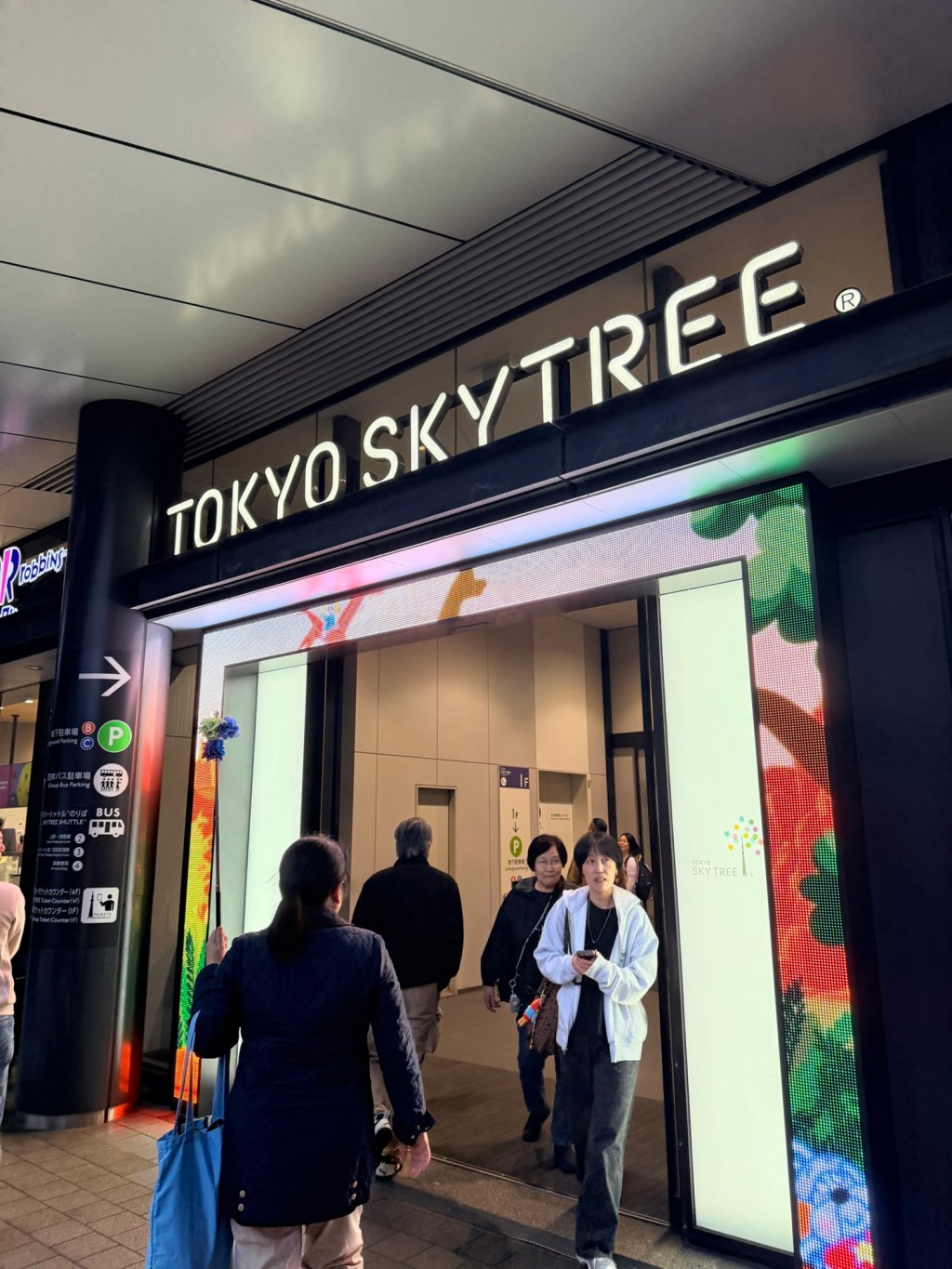
After visiting Sensō-ji we went to the Tokyo Skytree—a 2,080 ft tower that opened in 2012. It’s the tallest structure in Japan and serves both as a broadcasting and observation tower in Sumida, Tokyo (fyi Sumida is the name of the river running through the city). Fun fact—it’s also the 3rd tallest structure in the world after Merdeka 118 and the Burj Khalifa.
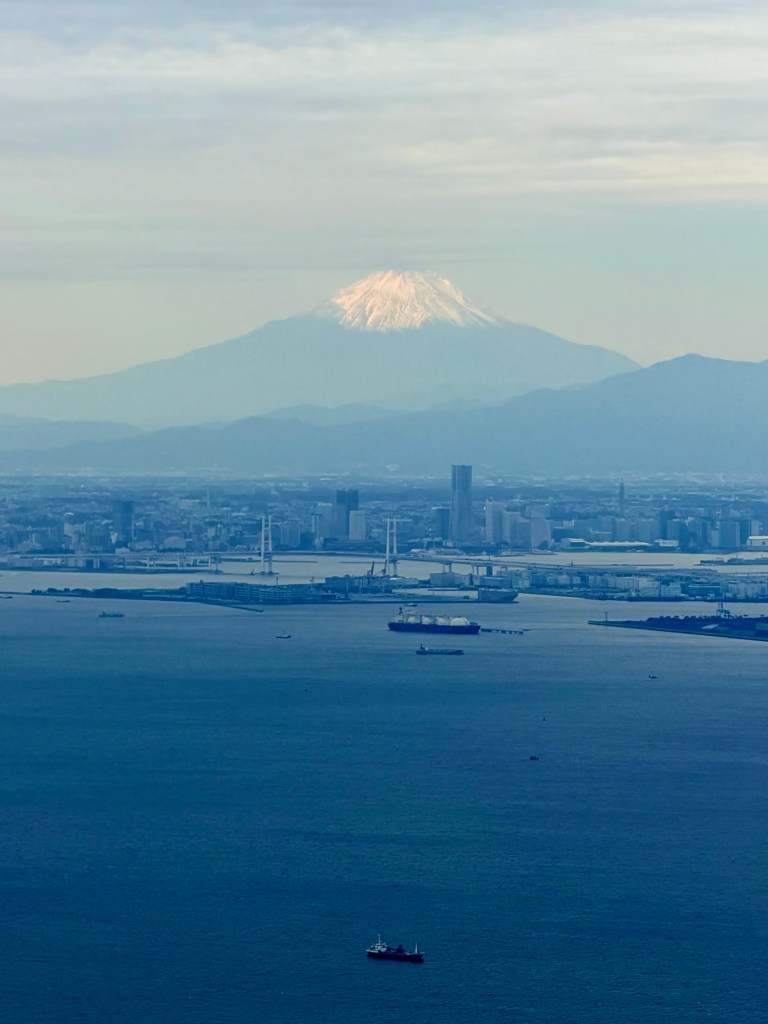
The tower is illuminated at night using LED lights that change colors.A view of Tokyo and the Sumida River that runs through central Tokyo. On a clear day you can see Mt. Fuji but unfortunately, we did not have a clear day.
We went back to Tokyo Station and shopped until our dinner reservations.
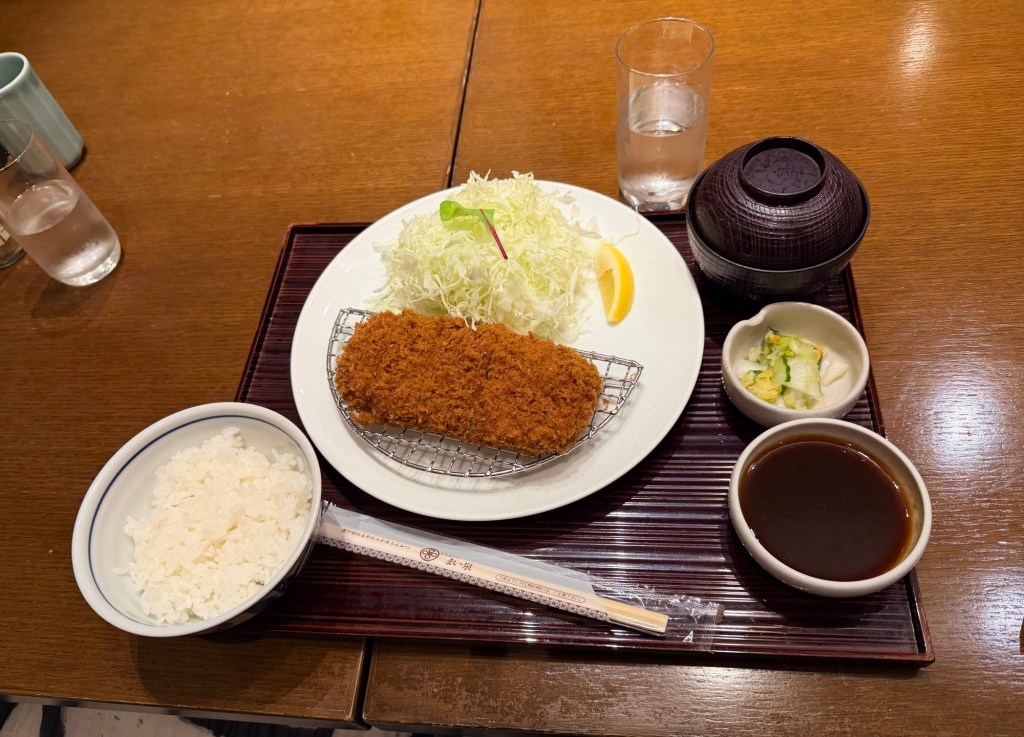
The Tokyo Station opened in 1914 and some say was patterned after the Amsterdam Centraal Station with its red brick facade.A rainy evening at the train station. The Tokaido Shinkansen was the world’s first dedicated high speed rail system and opened service from the station to Osaka in 1964.Dinner has never tasted so good after a full day of sightseeing. We ate at the top of a department store by Tokyo Station.In my opinion, the best pork in the world — Tonkatsu. It’s a Japanese cutlet made from pork loin or fillet, coasted with panko and then deep-fried in oil. It originated in the Meiji area and has its roots in French cuisine.Walking home with a view of the Tokyo Skytree from Kayoko’s home. What an amazing first full day in this beautiful city!🇯🇵
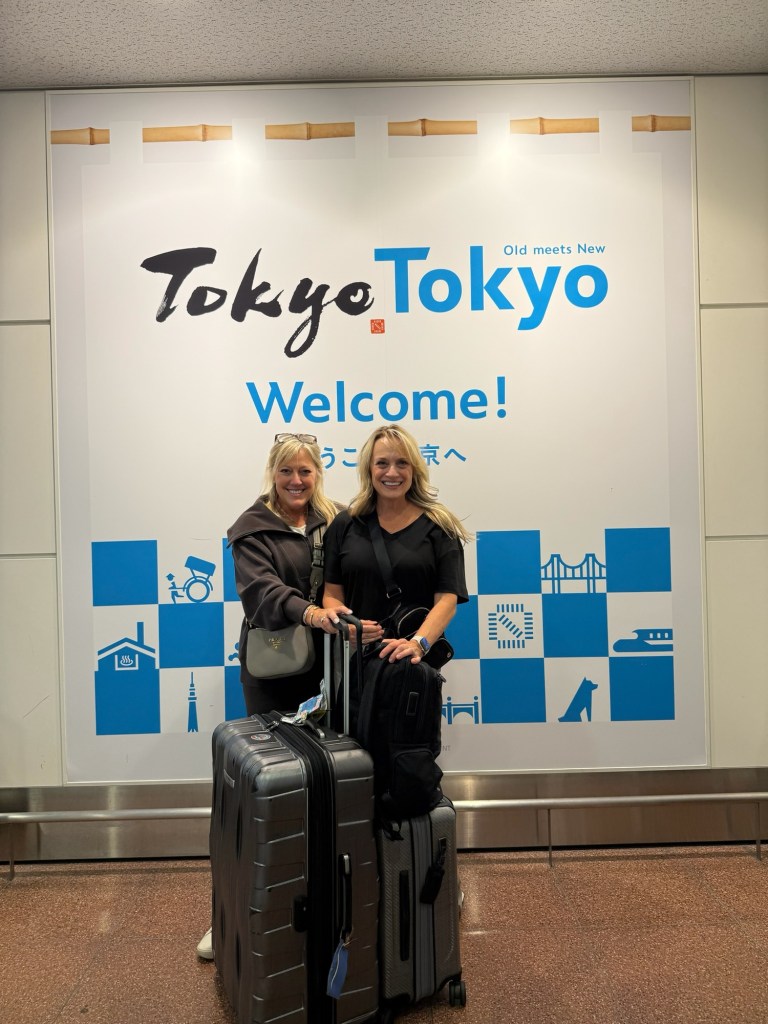
We arrived on Thursday afternoon, October 23, 2025, feeling both exhausted and exhilarated. This is my third visit to this wonderful country, and it never ceases to amaze me. There’s a unique blend of ancient traditions and modern life at every turn. From the first glimpse of Mt. Fuji as we landed at Haneda Airport to the tranquility of the Japanese gardens, this remarkable destination truly takes my breath away.
My sister and I land in Tokyo.
Without a doubt, the highlight of my experiences in Japan is the warmth and kindness of its people. Their emphasis on group harmony, politeness, respect, and cleanliness creates incredible interactions each time.
I have the privilege of being friends now for 44 years with my childhood penpal, Kayoko, and her family. We are staying with her while in Tokyo this time. I am grateful to have this immersive cultural experience.
After setting in, we went to a neighborhood yakitori grill, where we kicked off dinner with champagne (Kanpai!) and a 6 course meal of different part of the chicken on a skewer. Then it was off to bed after being up for over 24 hours.
Friday was a very full day on our Tokyo Panoramic Tour, one of the best ways to start to understand a city. From first thing in the morning until dinner, we learned about the history and culture while visiting the Meiji Jingu (Shrine), the Imperial Palace, Odaiba, Sensō-ji Temple in Asakusa, Tokyo Skytree. We capped off the evening with a delicious tonkatsu dinner by the Tokyo station.
Hey kitty kitty! Starting our bus tour watching this famous billboard.
I will break up this day with a few posts, below are more details about the Meiji Shrine.
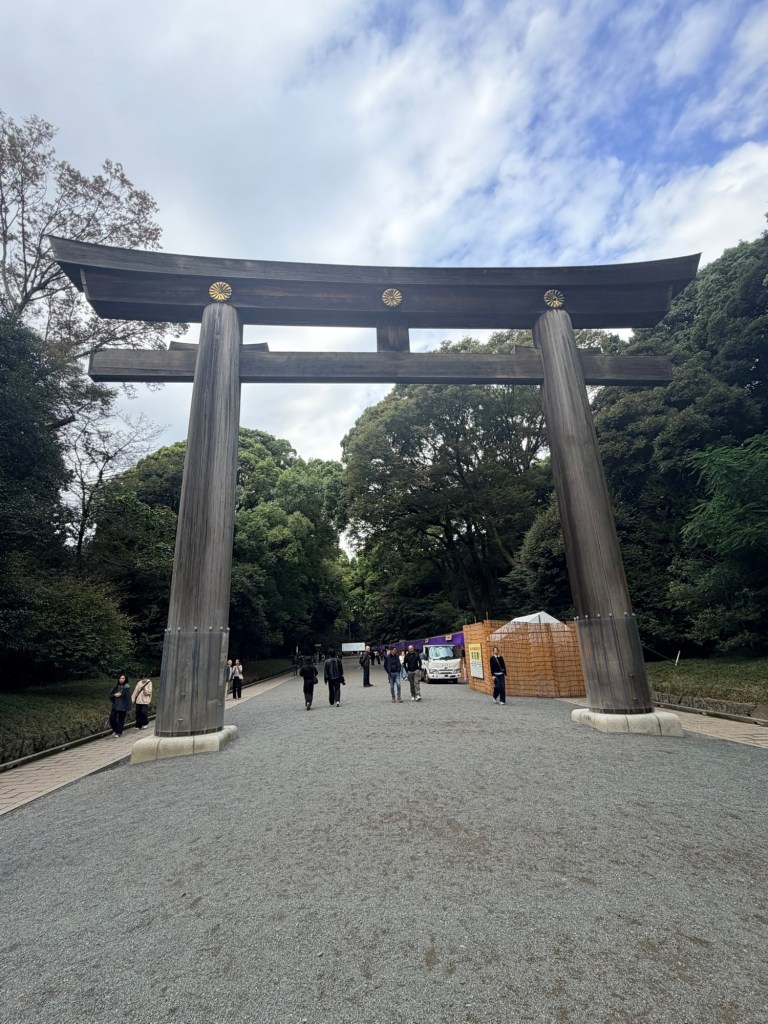
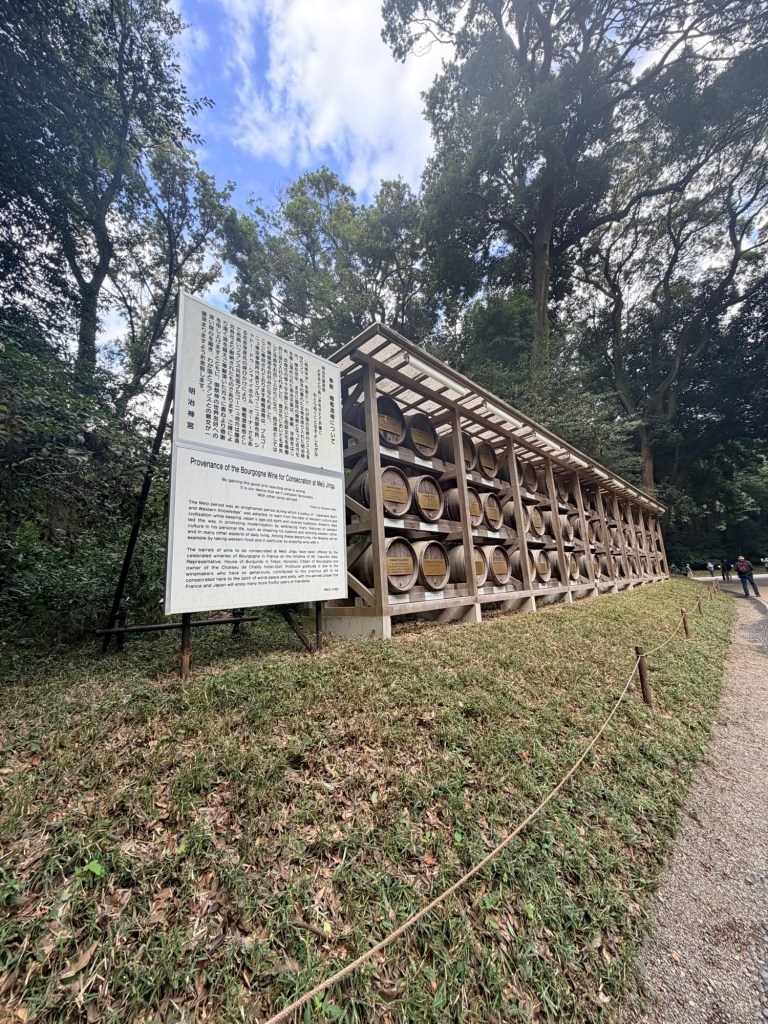
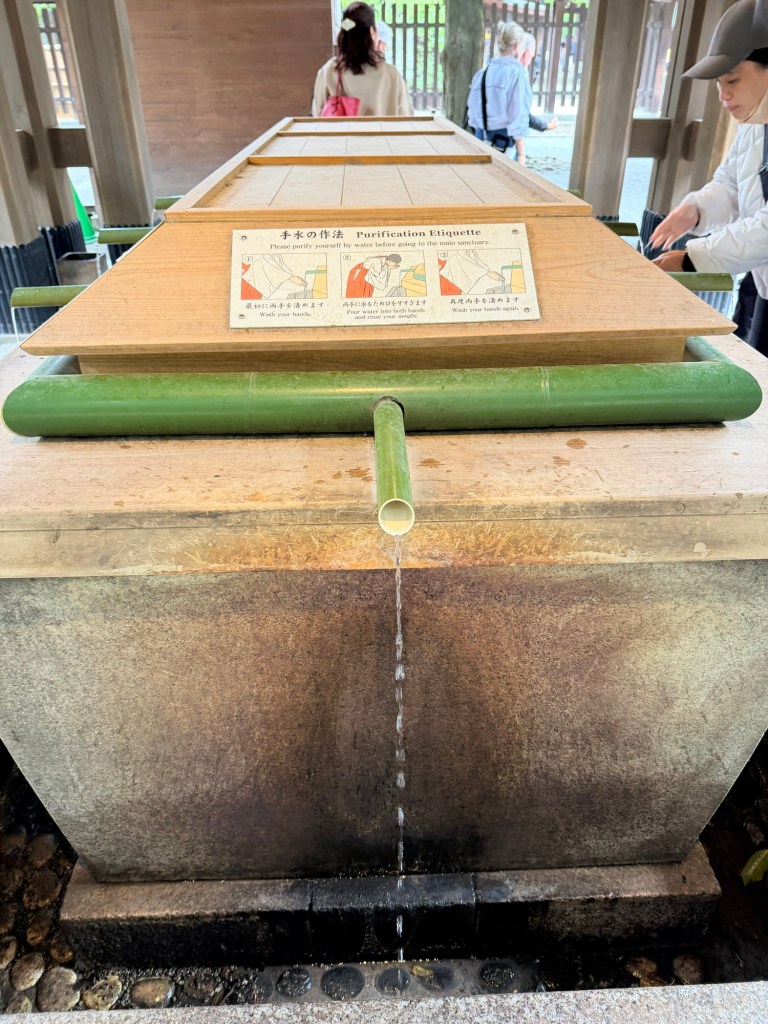
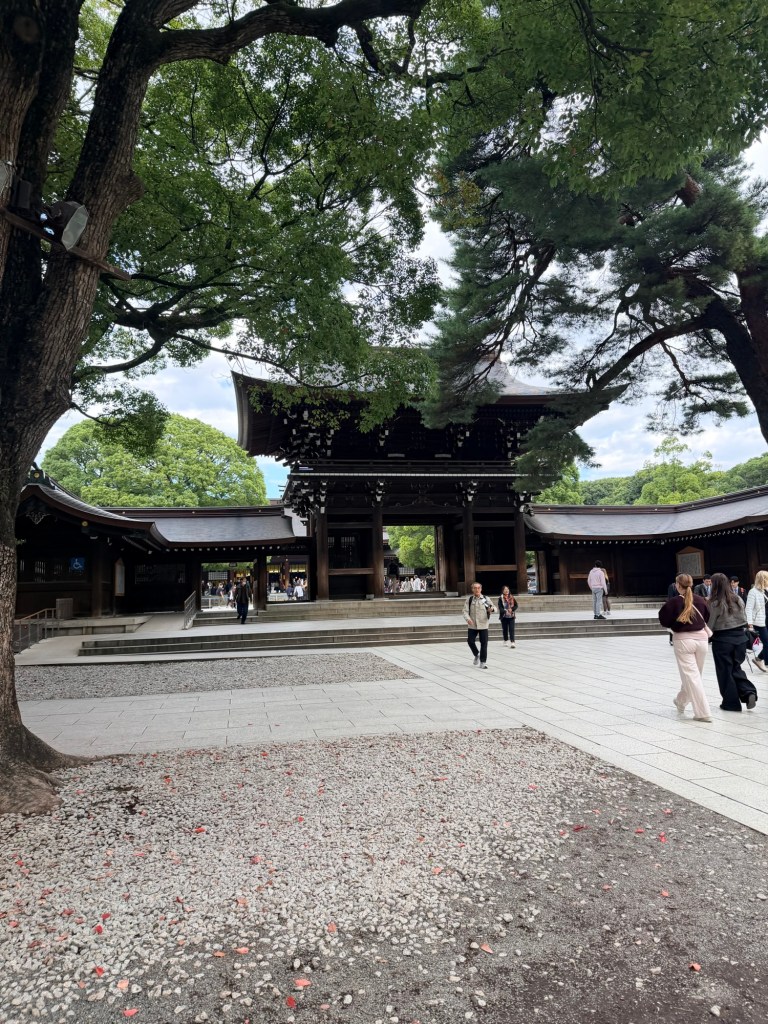
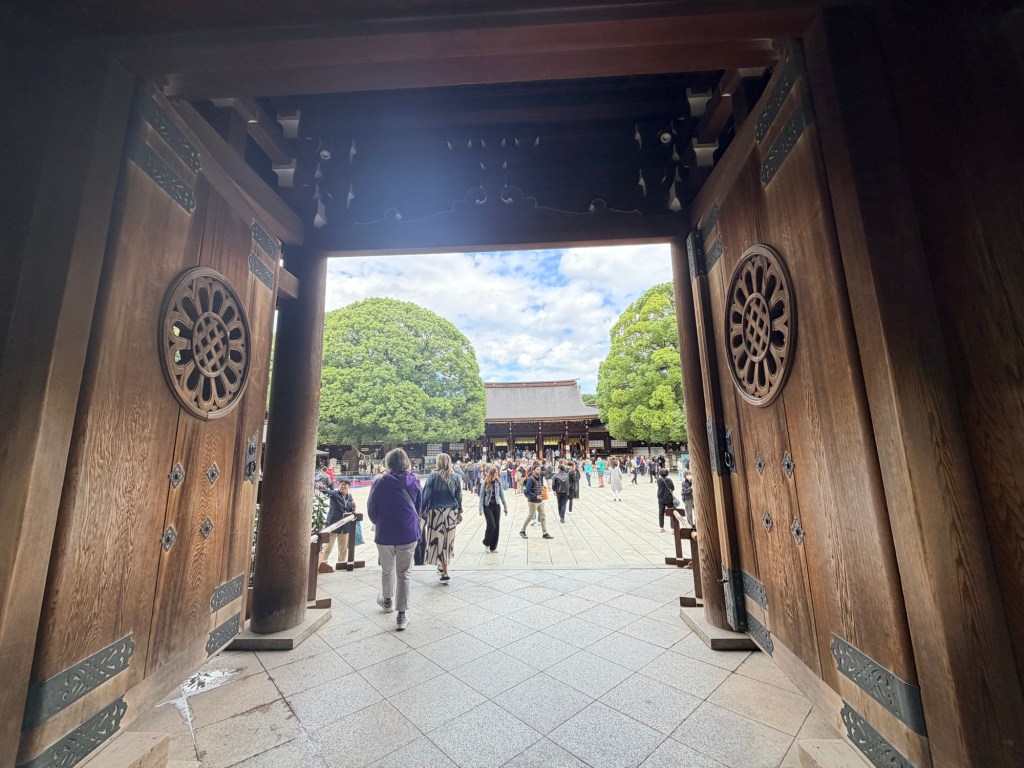
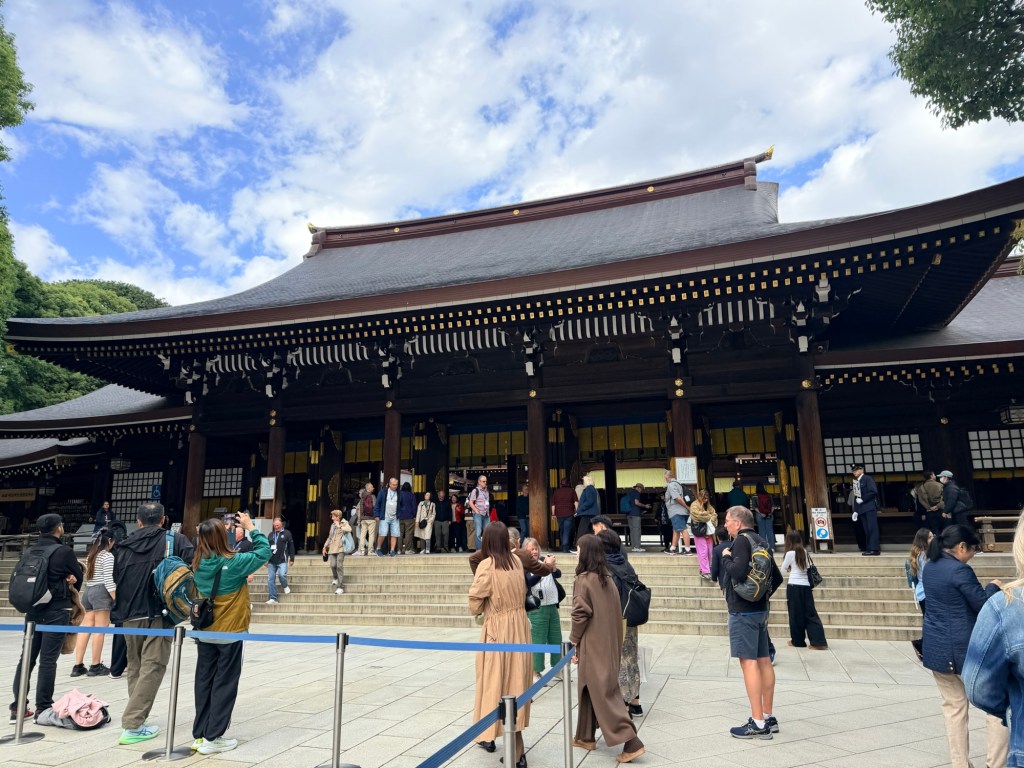
The largest Torii gate in Japan serves as the entrance to the Meiji Shrine. The Shinto shrine in Shibuya, Tokyo sits on a 170 acre forest with 120,000 trees of 365 different species. All of the trees were donated by the Japanese people. The shrine is dedicated to the deified spirits of the former Emperor Meiji and his wife, Empress Shoken. When you pass through the gate, it is customary to bow as you walk from the ordinary world to the sacred, and begin your path to the shrine. It was reconstructed in 1975.Barrels of Sake wrapped in straw that are offered each year to the memory of the emperor and his wife.And across from the sake barrels are wine barrels from the Burgundy region of Eastern France, offered as a remembrance of the emperor who brought Western culture and food to Japan, particularly wine.Preparing our bodies to enter the shrineMeiji Jingu – Construction began in 1915 using timbers from Kiso in Nagano and Alishan in Taiwan, once a Japanese territory. Materials were used from every Japanese prefecture (there are 47 today in Japan). It was dedicated in 1920, although the grounds were officially completed in 1926. The original building was destroyed during WWII and rebuilt in 1958. The cost of the construction was ¥5,219,00 in 1920 (which is roughly $26M today). This was actually about a quarter of the actual cost as much of the materials and labor were donated. Photography is not allowed once you ascend the stairs.





 Christina’s Journey Journal