Tag: Torii

  • Hiroshima – our amazing morning on Miyajima Island🍋 🦌

    Hiroshima – our amazing morning on Miyajima Island🍋 🦌

    From Himeji we made our way to Hiroshima via the bullet train and checked into the Grand Intelligence Hotel near the station. After a bite to eat at a popular restaurant called Caffe Ponte, and ice cream cones 🍦 that put all other ice cream cones to shame, we fell into bed!
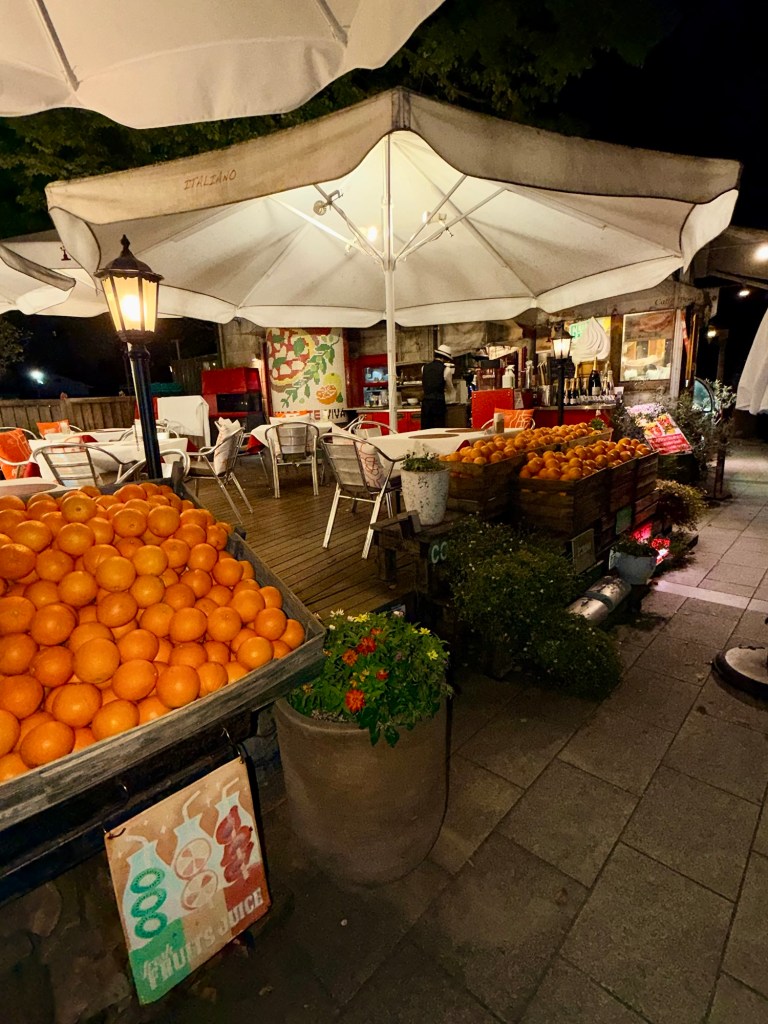
    Caffe Ponte in Hiroshima🍊🍋 where they have a gluten free menu!
    Yes, they were as good as they look!🍦 Chocolate ice cream and lemon sorbet.

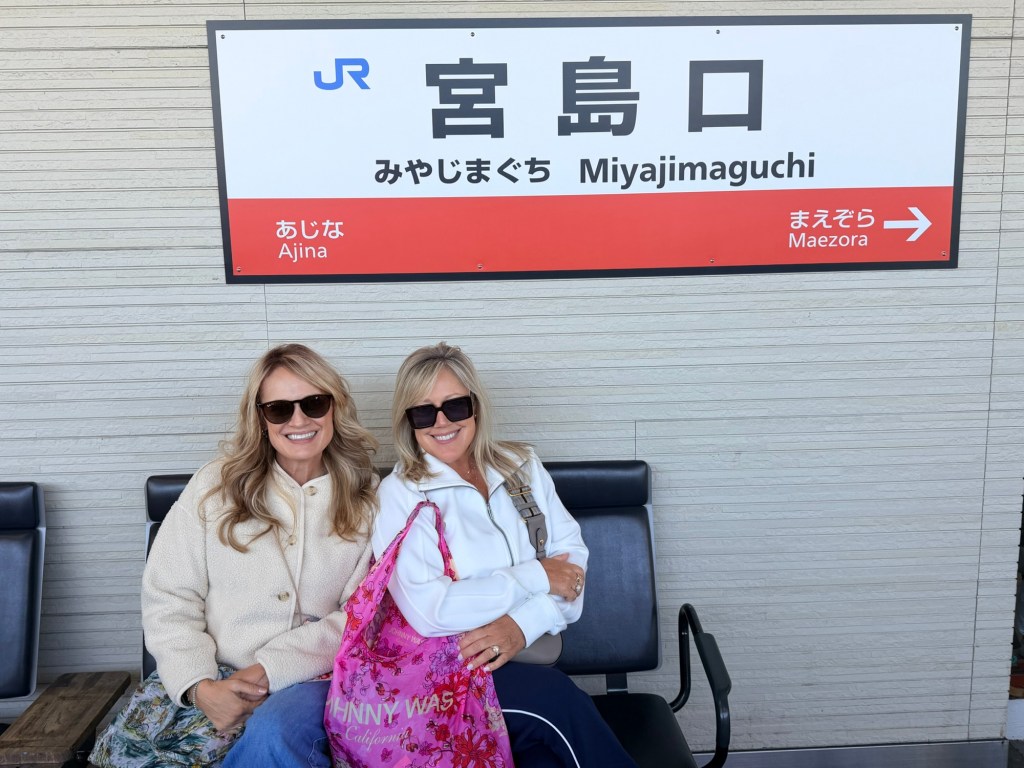
    We were ready to go by 8:00 am, taking the train to the ferry station for the short ride to Miyajima Island.
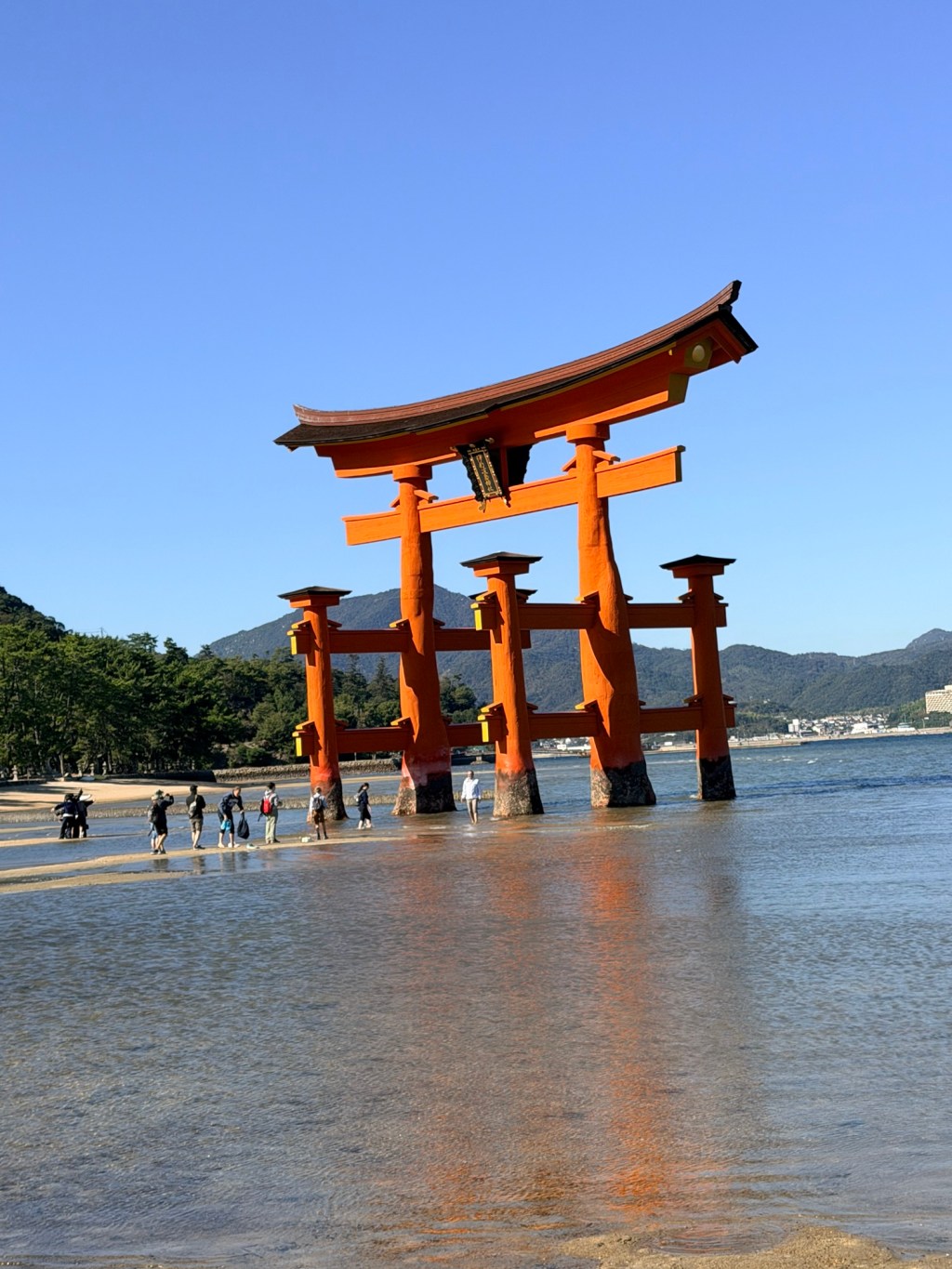
    I don’t know how this trip could get any better…but it just did. As we approached, the famous floating Torii Gate of Itsukushima Shrine came into view. During high tide it appears to float on the water, during low tide, roll up your pants and walk out to touch it (we did!)

    The floating torii gate of Miyajima is known as the Otorii. It’s approximately 16 meters tall (52 feet) and was originally built in 1168. Otorii represents the transition between the physical and spiritual worlds in Shinto belief. Mount Misen is the highest peak on Miyajima Island, standing at 1,755 feet, with a history of pilgrimage dating back centuries. The mountain is sacred in Shinto belief. ⛰️

    The deer greeted us upon arrival (don’t touch them!) and we hired rickshaw drivers to show us around.  Fun experience with our “drivers”, Keigo and Akimu.
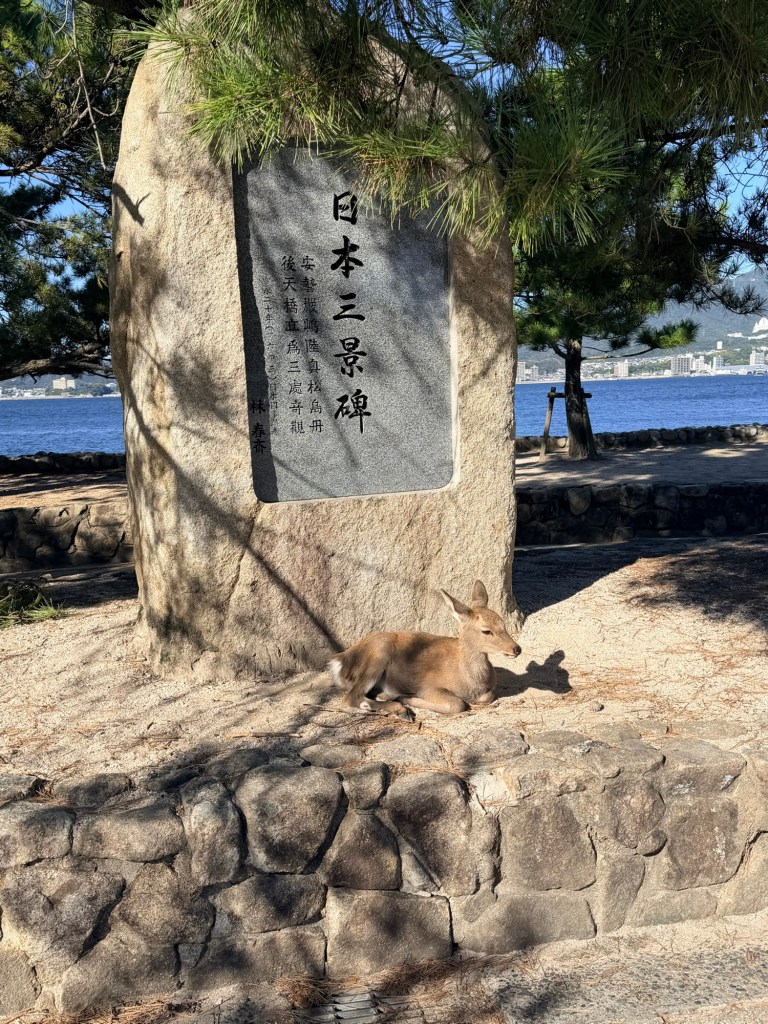
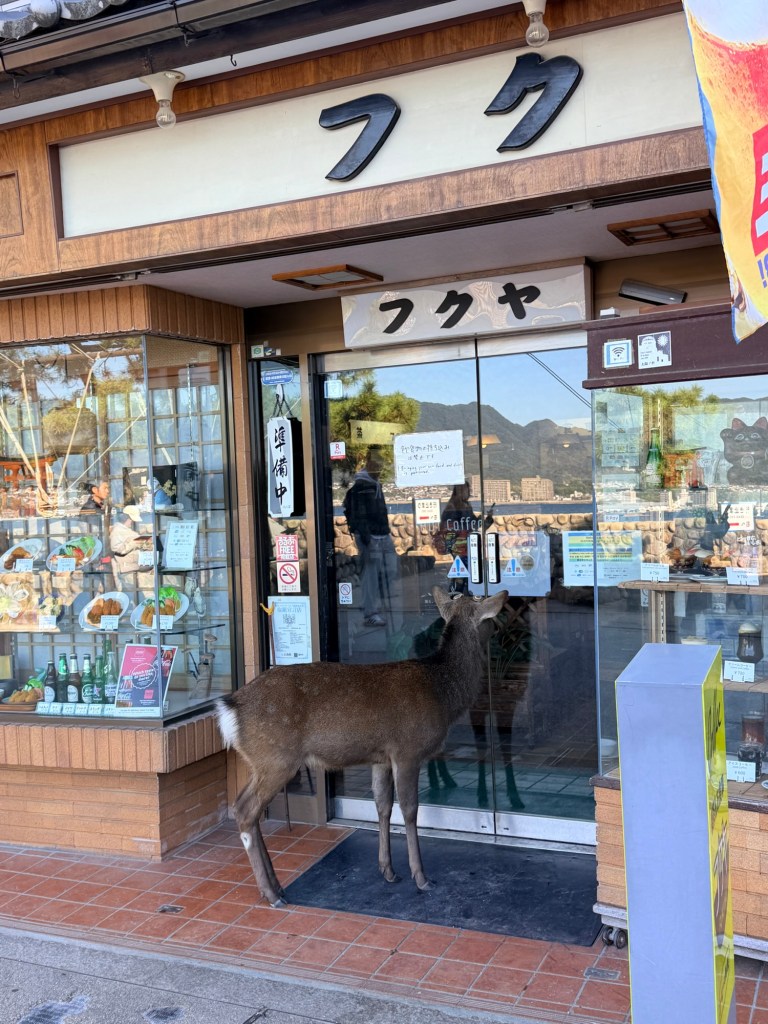
    The deer on Miyajima Island are a beloved and iconic feature of the landscape that roam freely around Itsukushima Shrine area. They’re friendly yet wild deer (in other words, don’t touch) that are considered sacred and believed to be messengers of the Shinto gods.
    Window shopping 🦌
    Ready for our rickshaw adventure!

    After wading out to touch the torii and take pictures, we high tailed it back to the beach as the tide was starting to rise. We then toured Itsukushima Shrine, a UNESCO World Heritage Site.
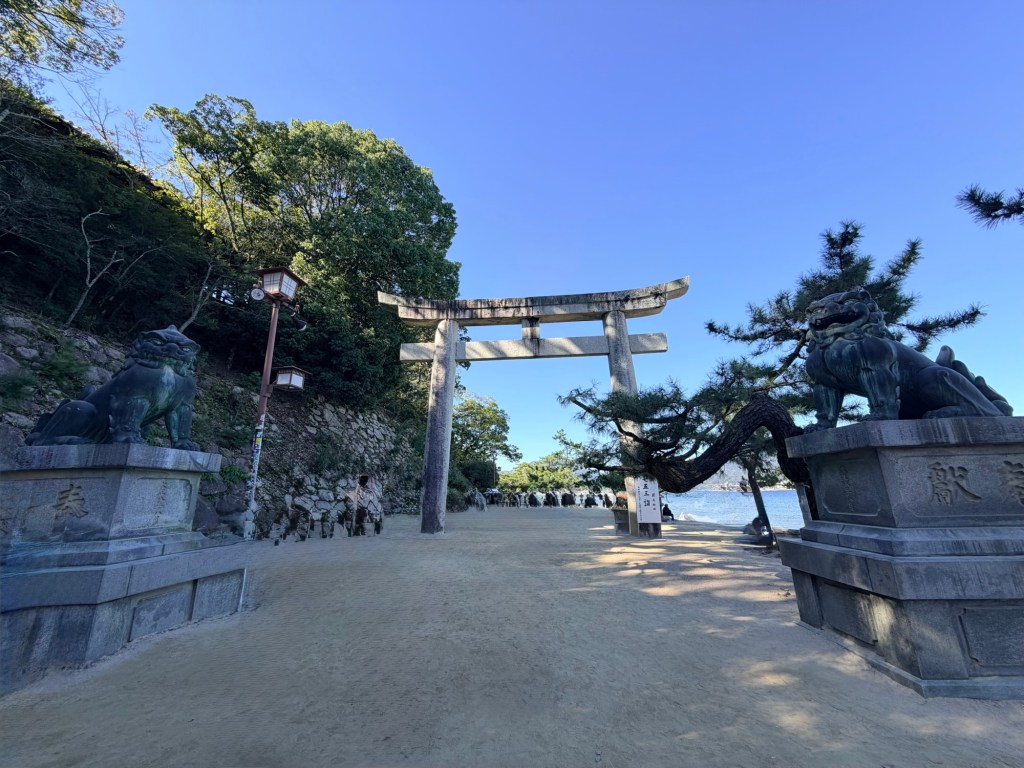
    Entering Itsukushima Shrine to go touch the floating torii.

    Tip: Arrive early during low tide to touch the torii! By the time we were touched it, we were the only ones left in the sea and the tide was rising quickly.

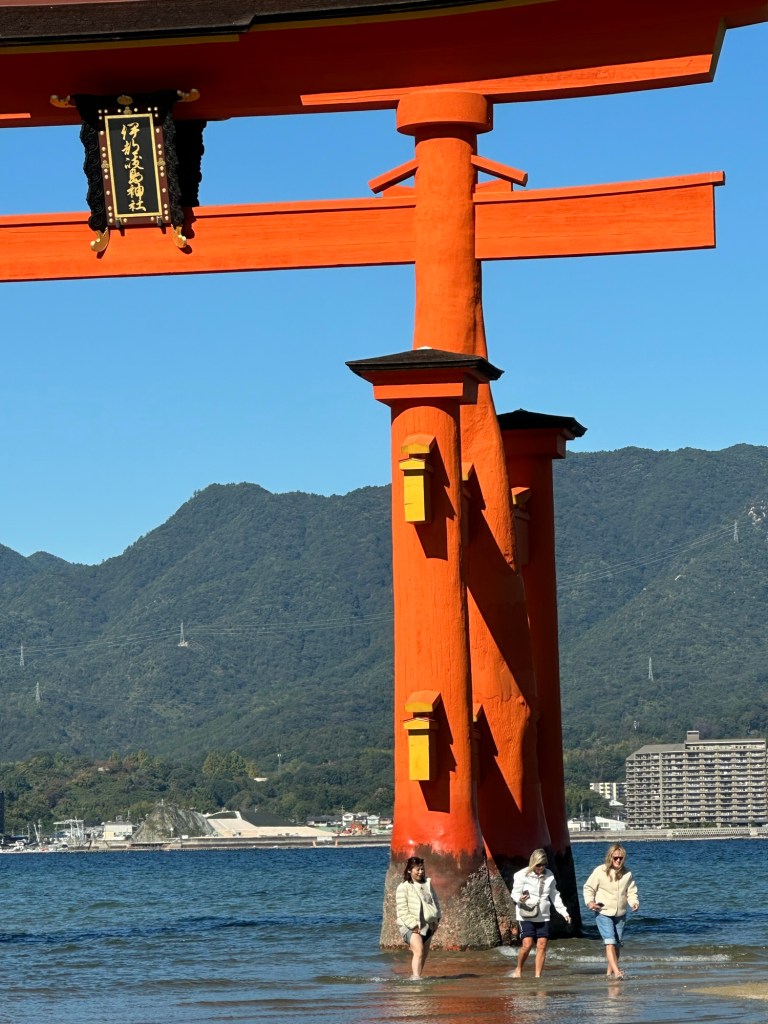
    The floating torii gate has been through several reconstructions over the centuries due to natural disasters like typhoons and earthquakes, as well as wood decay. The current version we saw dates back to 1875, and is maybe the 6th version of the gate
    While fairly shallow this early in the morning, the torii appears to hover above the water during high tide.
    Touching the torii in the Seto Inland Sea.

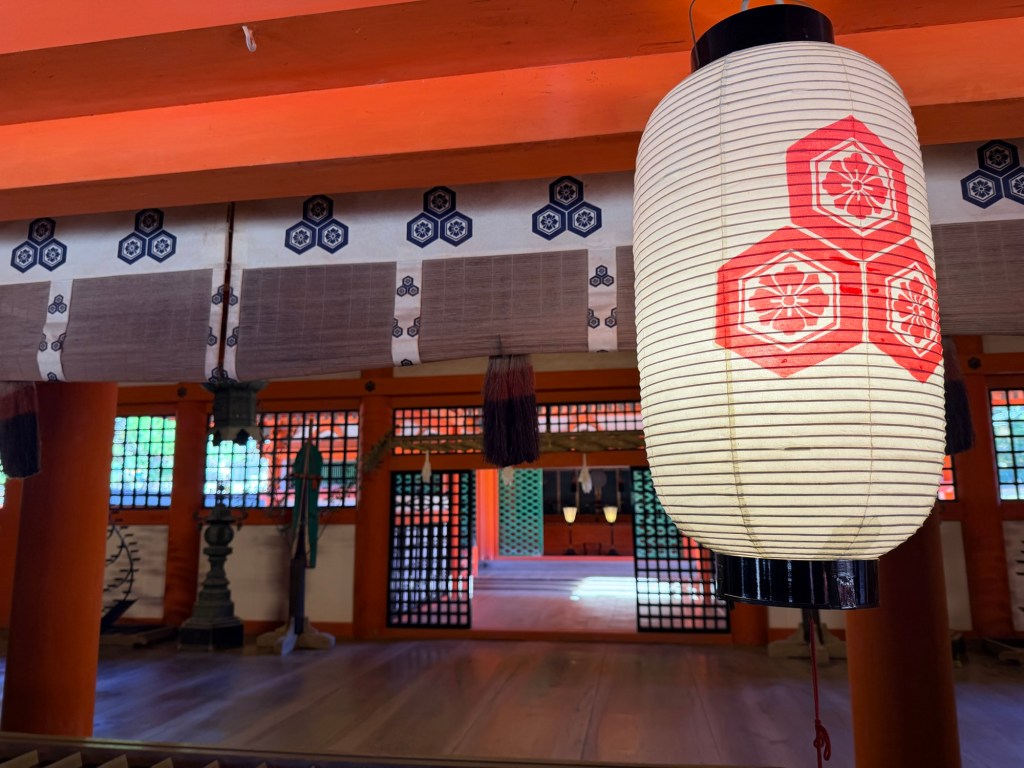
    Itsukushima Shrine is a UNESCO World Heritage Site. In addition to the iconic floating torii gate, the stunning shrine was originally built in the 6th century and dedicated to the goddess of seas and storms, Benzaiten. Surrounded by a traditional Japanese gardens and set against the backdrop of Mount Misen, Itsukushima Shrine is a unique blend of cultural heritage and natural beauty. The vibrant vermilion structures, exquisite craftsmanship, and picturesque setting made this one of my favorites (I have been saying that a lot!).

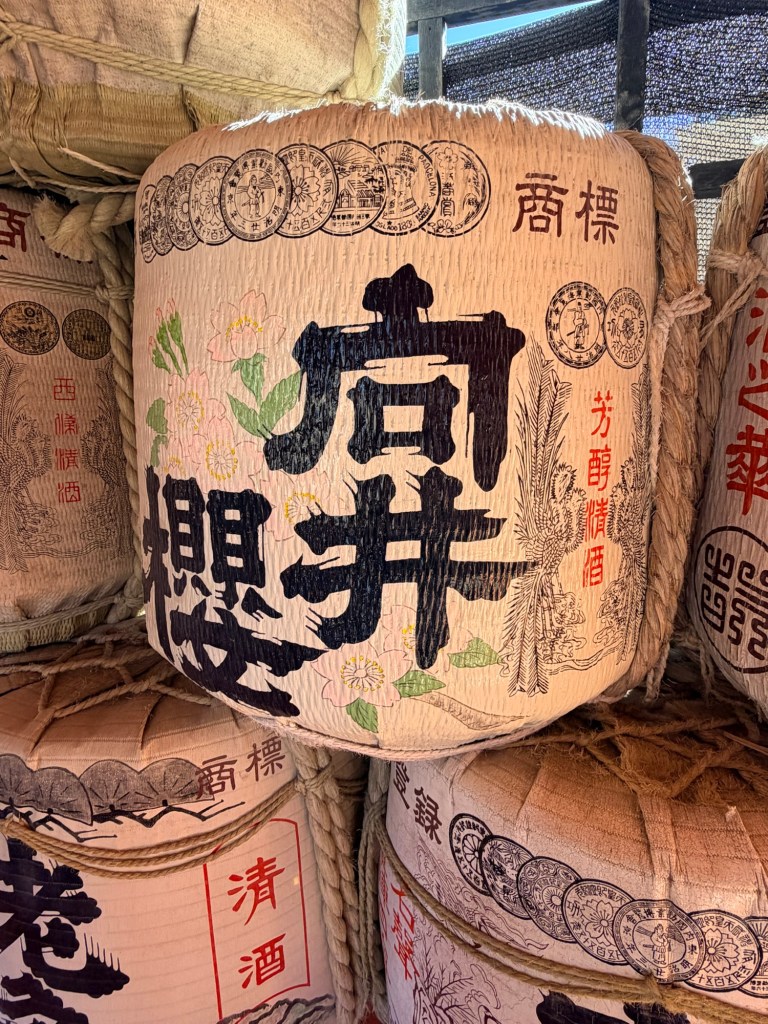
    Sake wrapped in straw—a sacred offering to the gods.

    Now, let’s talk about the food! Miyajima is famous for its delicious local specialties, particularly grilled oysters, everything lemon, and momiji manju—maple leaf-shaped cakes 🍁 filled with sweet red bean paste or custard. Strolling through the streets, we found charming vendors selling these treats, along with everything lemon.🍋
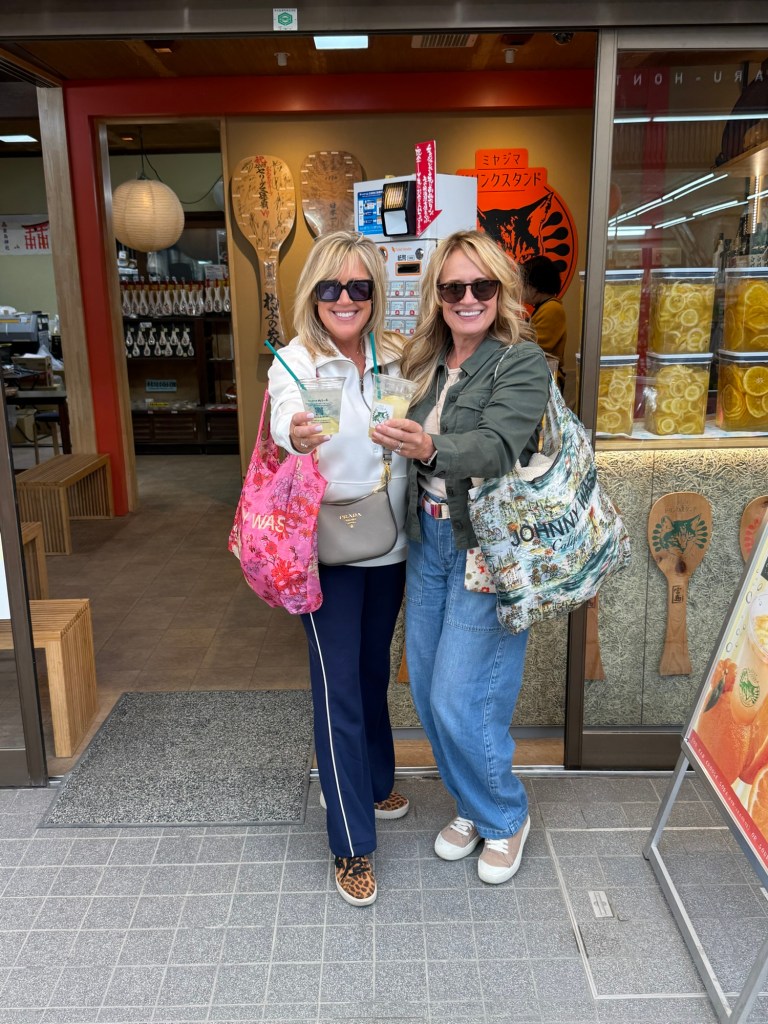
    A lemon probiotic drink for me and a lemon sake for Jen! I am already craving another one 🍋

    Part 2 in Hiroshima, and a much heavier topic, continues in the next post.

  • Japan 3.0 (my 3rd visit)

    Japan 3.0 (my 3rd visit)

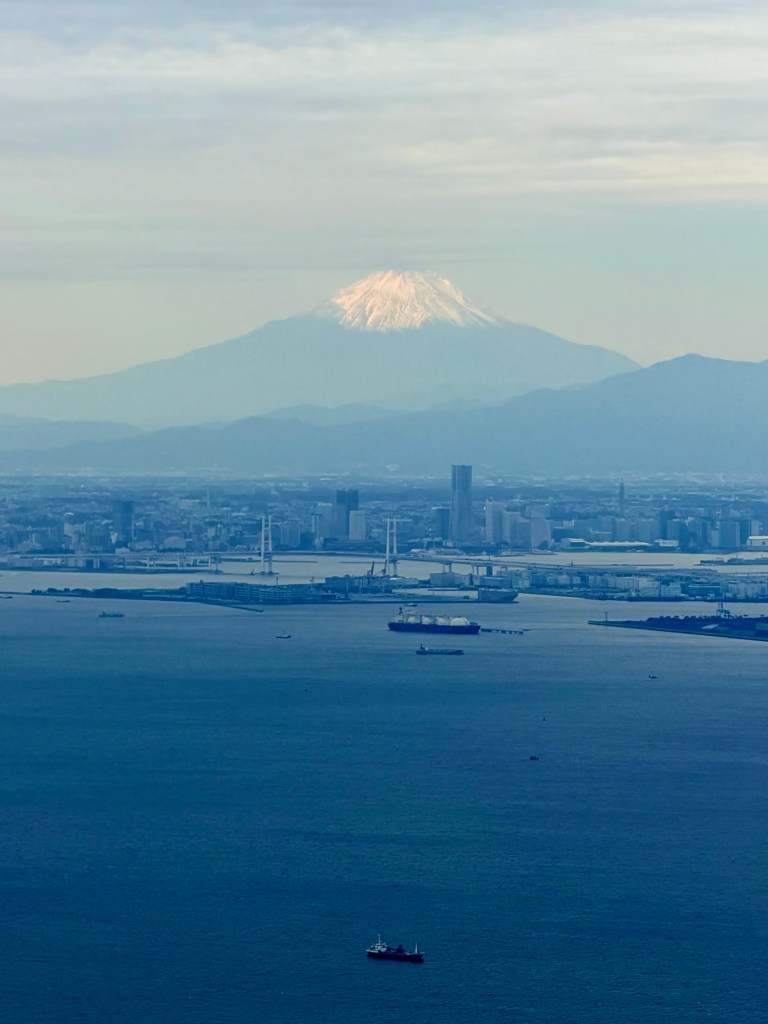
    We arrived on Thursday afternoon, October 23, 2025, feeling both exhausted and exhilarated. This is my third visit to this wonderful country, and it never ceases to amaze me. There’s a unique blend of ancient traditions and modern life at every turn. From the first glimpse of Mt. Fuji as we landed at Haneda Airport to the tranquility of the Japanese gardens, this remarkable destination truly takes my breath away.

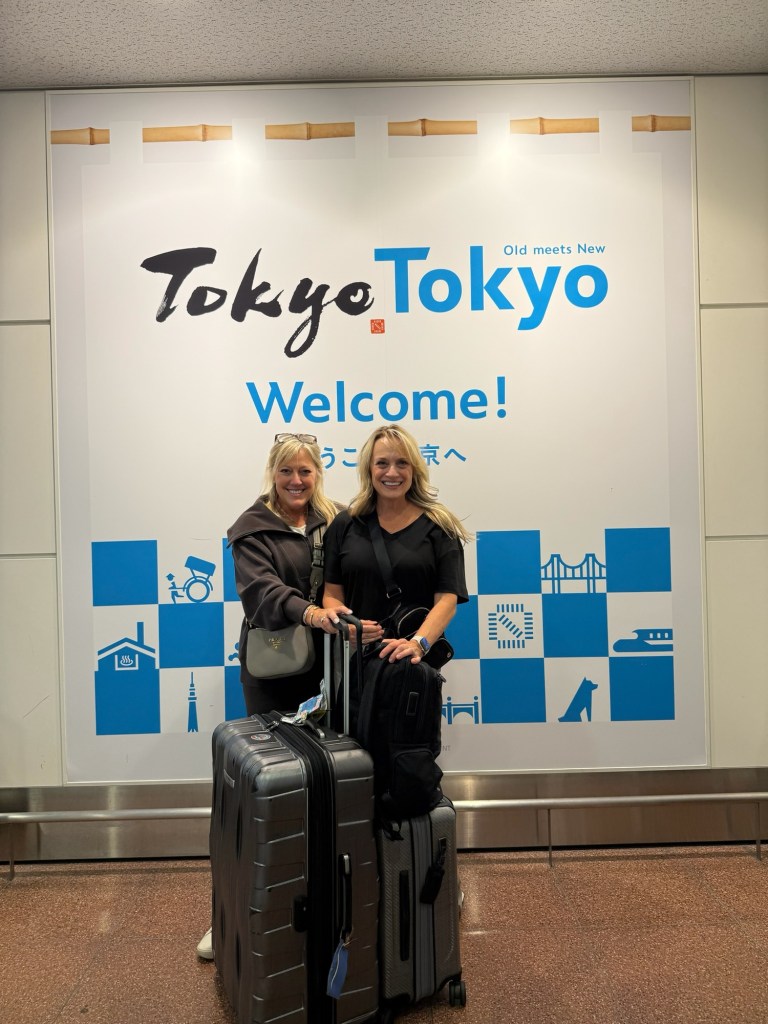
    My sister and I land in Tokyo.

    Without a doubt, the highlight of my experiences in Japan is the warmth and kindness of its people. Their emphasis on group harmony, politeness, respect, and cleanliness creates incredible interactions each time.

    I have the privilege of being friends now for 44 years with my childhood penpal, Kayoko, and her family. We are staying with her while in Tokyo this time. I am grateful to have this immersive cultural experience.

    After setting in, we went to a neighborhood yakitori grill, where we kicked off dinner with champagne (Kanpai!) and a 6 course meal of different part of the chicken on a skewer. Then it was off to bed after being up for over 24 hours.

    Friday was a very full day on our Tokyo Panoramic Tour, one of the best ways to start to understand a city. From first thing in the morning until dinner, we learned about the history and culture while visiting the Meiji Jingu (Shrine), the Imperial Palace, Odaiba, Sensō-ji Temple in Asakusa, Tokyo Skytree. We capped off the evening with a delicious tonkatsu dinner by the Tokyo station.

    Hey kitty kitty! Starting our bus tour watching this famous billboard.

    I will break up this day with a few posts, below are more details about the Meiji Shrine.

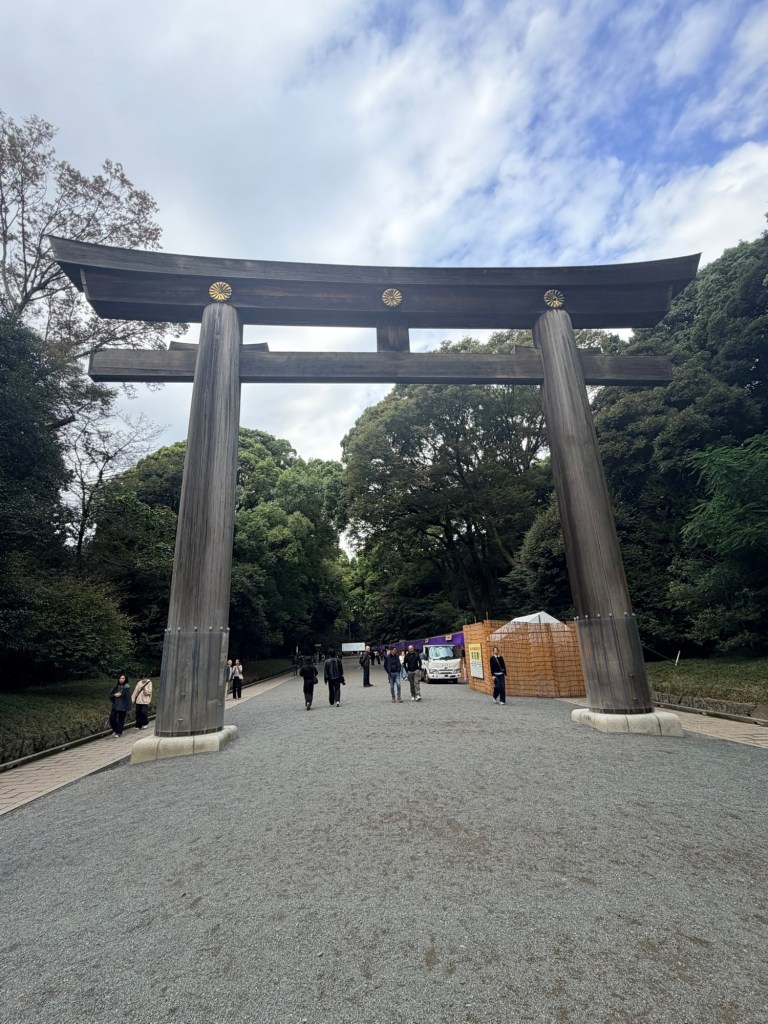
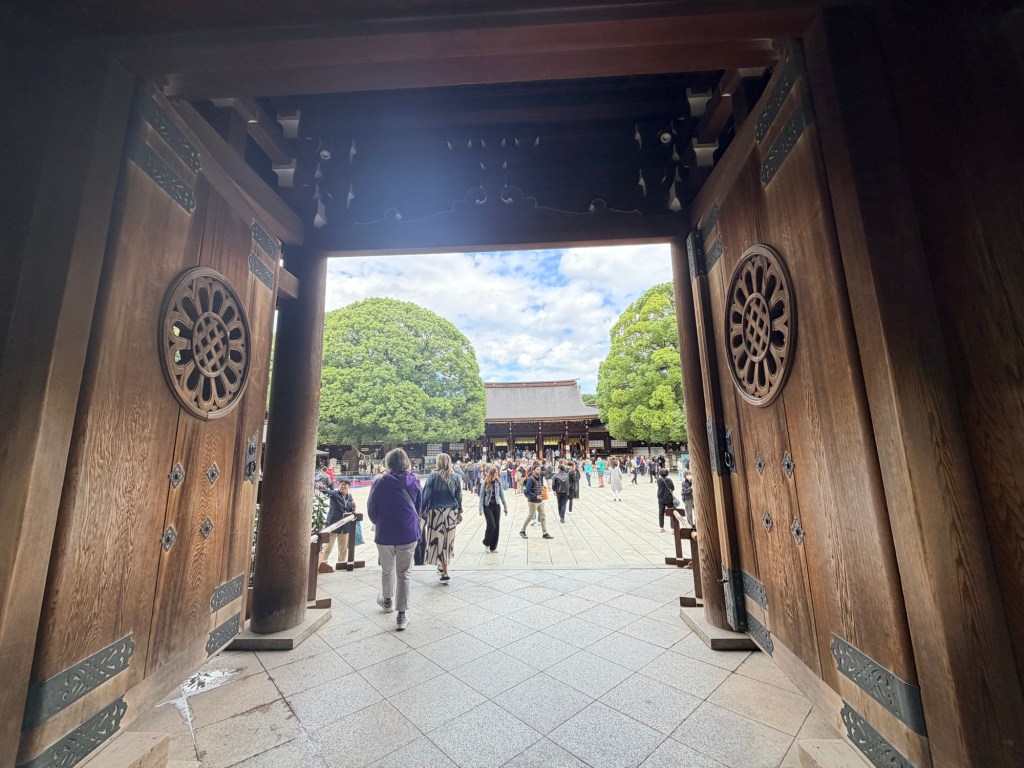
    The largest Torii gate in Japan serves as the entrance to the Meiji Shrine. The Shinto shrine in Shibuya, Tokyo sits on a 170 acre forest with
    120,000 trees of 365 different species. All of the trees were donated by the Japanese people. The shrine is dedicated to the deified spirits of the former Emperor Meiji and his wife, Empress Shoken. When you pass through the gate, it is customary to bow as you walk from the ordinary world to the sacred, and begin your path to the shrine. It was reconstructed in 1975.
    Barrels of Sake wrapped in straw that are offered each year to the memory of the emperor and his wife.
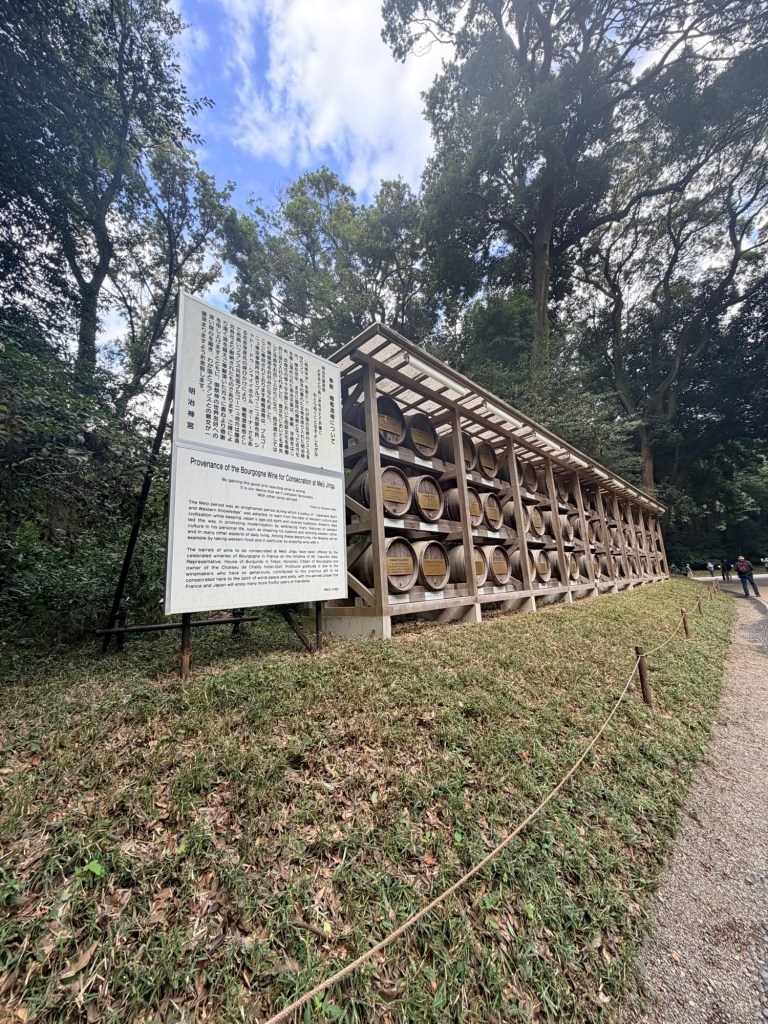
    And across from the sake barrels are wine barrels from the Burgundy region of Eastern France, offered as a remembrance of the emperor who brought Western culture and food to Japan, particularly wine.
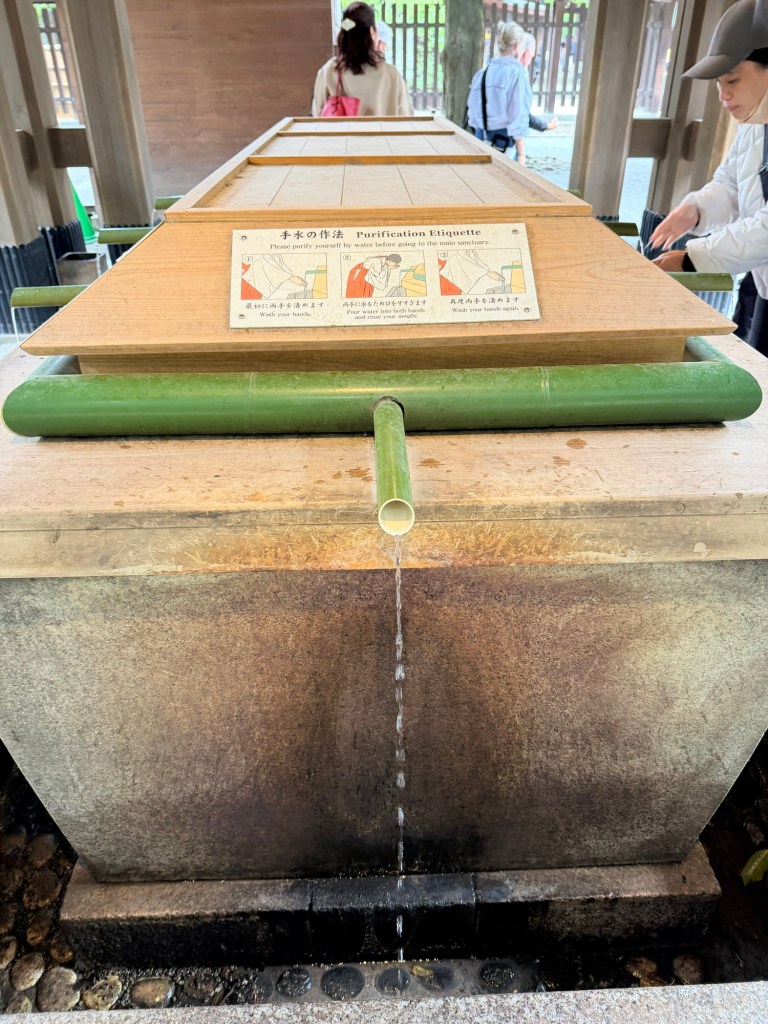
    Preparing our bodies to enter the shrine
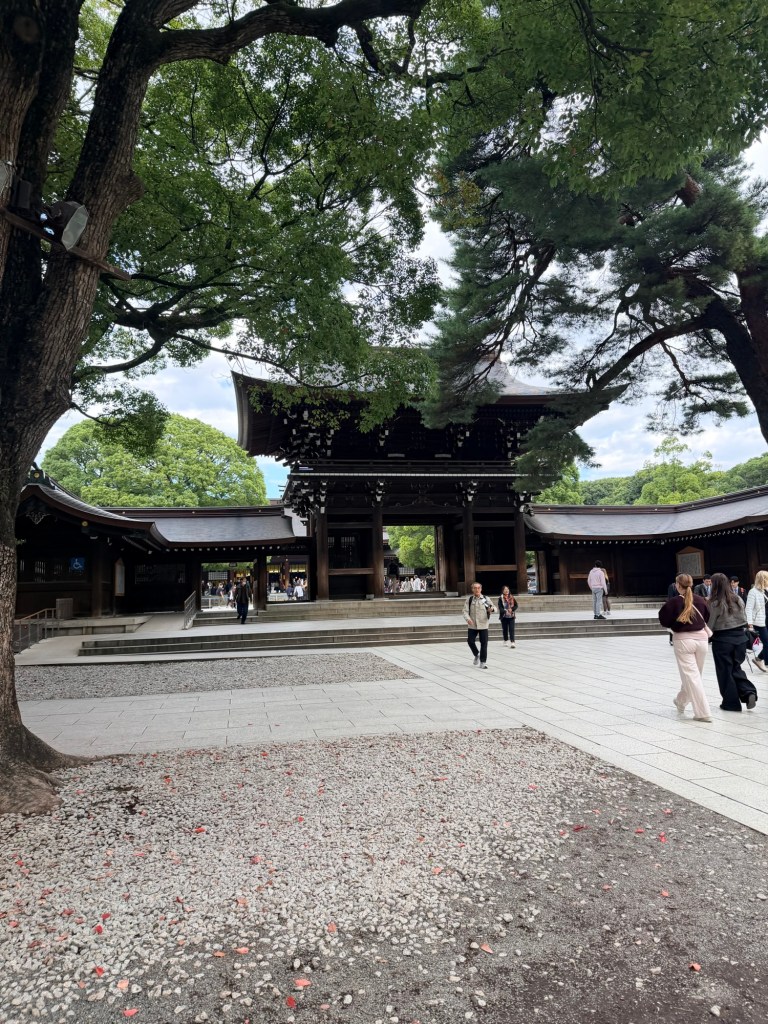
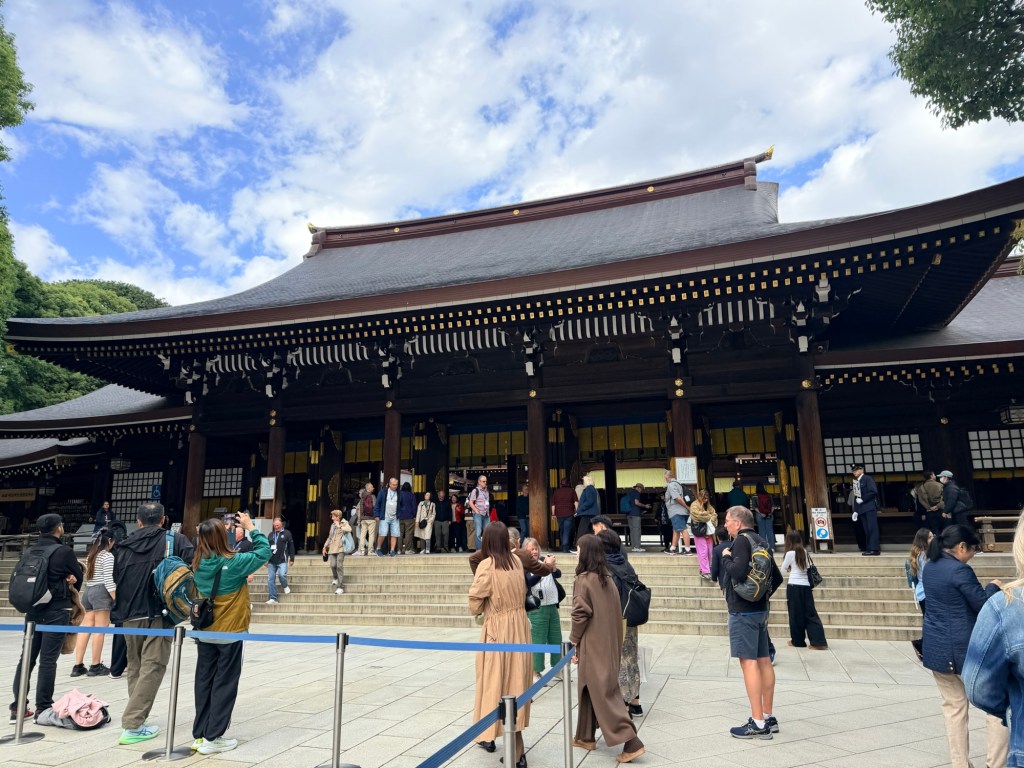
    Meiji Jingu – Construction began in 1915 using timbers from Kiso in Nagano and Alishan in Taiwan, once a Japanese territory. Materials were used from every Japanese prefecture (there are 47 today in Japan). It was dedicated in 1920, although the grounds were officially completed in 1926. The original building was destroyed during WWII and rebuilt in 1958.

    The cost of the construction was ¥5,219,00 in 1920 (which is roughly $26M today). This was actually about a quarter of the actual cost as much of the materials and labor were donated. Photography is not allowed once you ascend the stairs.