From Himeji we made our way to Hiroshima via the bullet train and checked into the Grand Intelligence Hotel near the station. After a bite to eat at a popular restaurant called Caffe Ponte, and ice cream cones 🍦 that put all other ice cream cones to shame, we fell into bed!

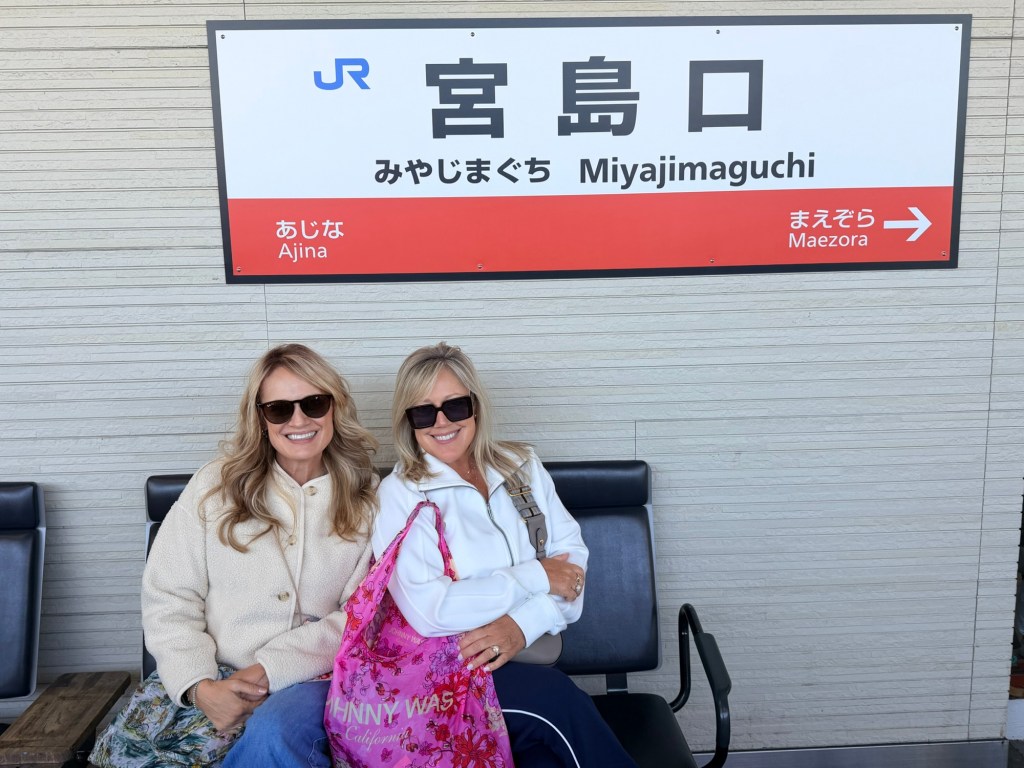
We were ready to go by 8:00 am, taking the train to the ferry station for the short ride to Miyajima Island.
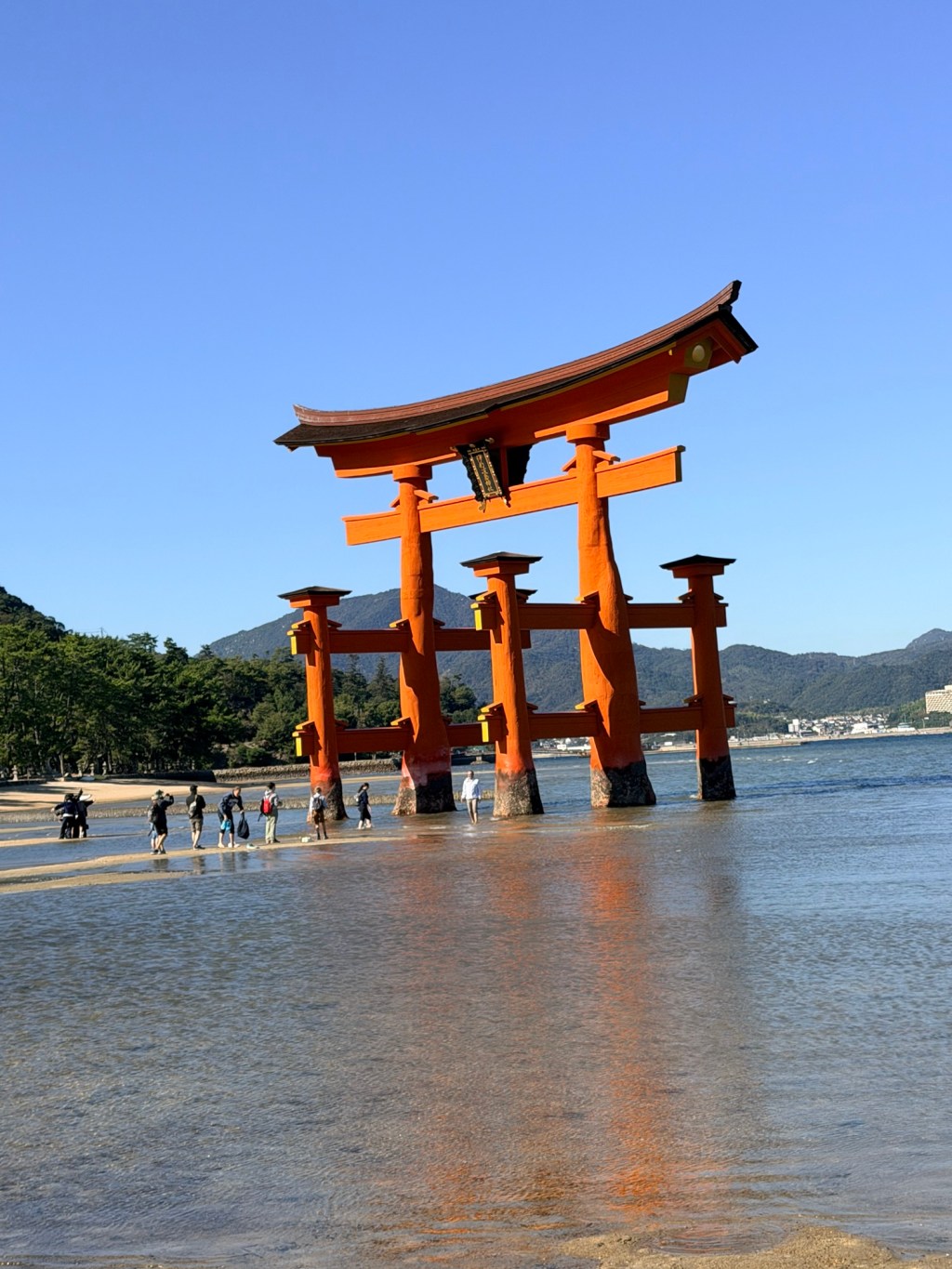
I don’t know how this trip could get any better…but it just did. As we approached, the famous floating Torii Gate of Itsukushima Shrine came into view. During high tide it appears to float on the water, during low tide, roll up your pants and walk out to touch it (we did!)

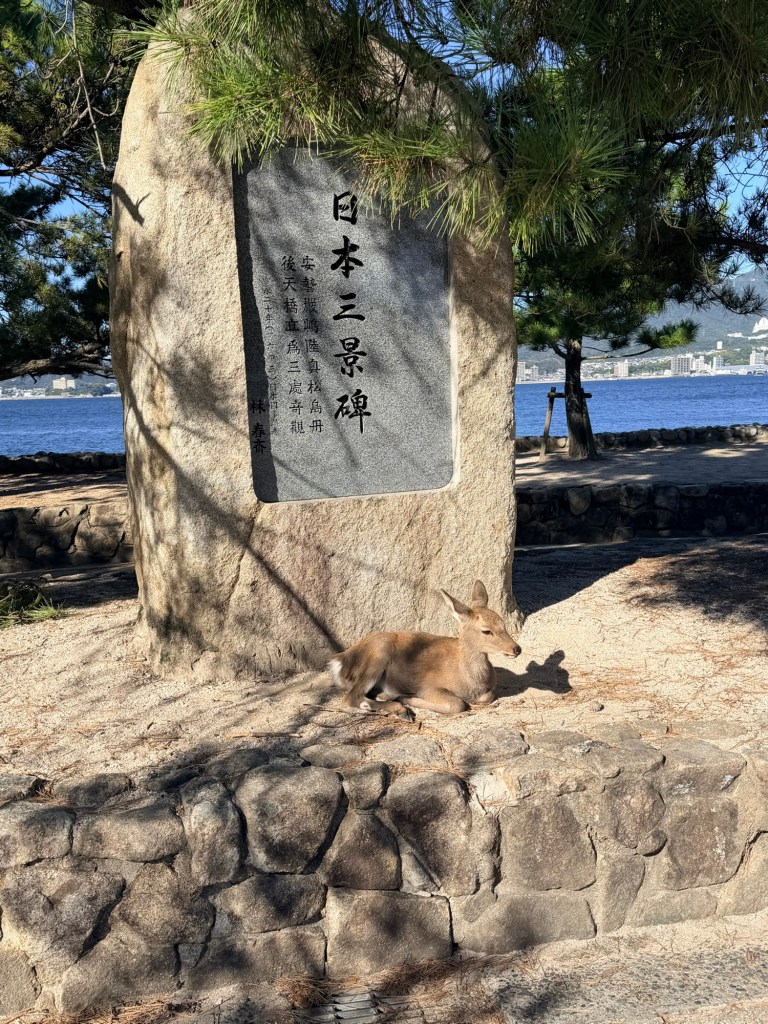
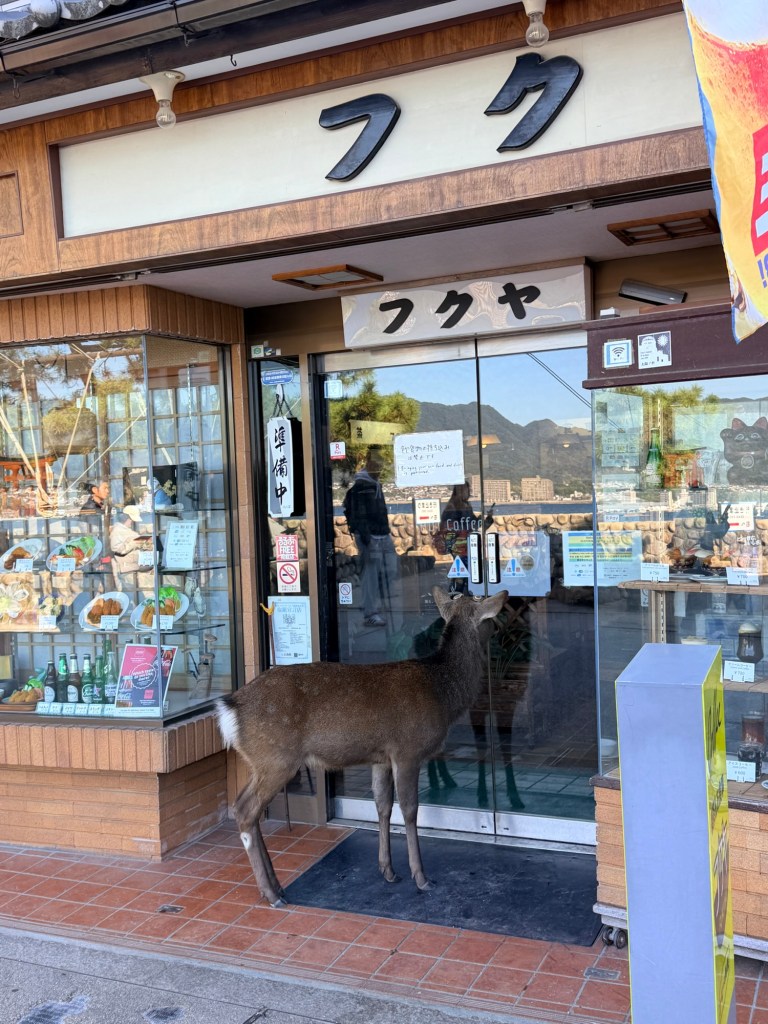
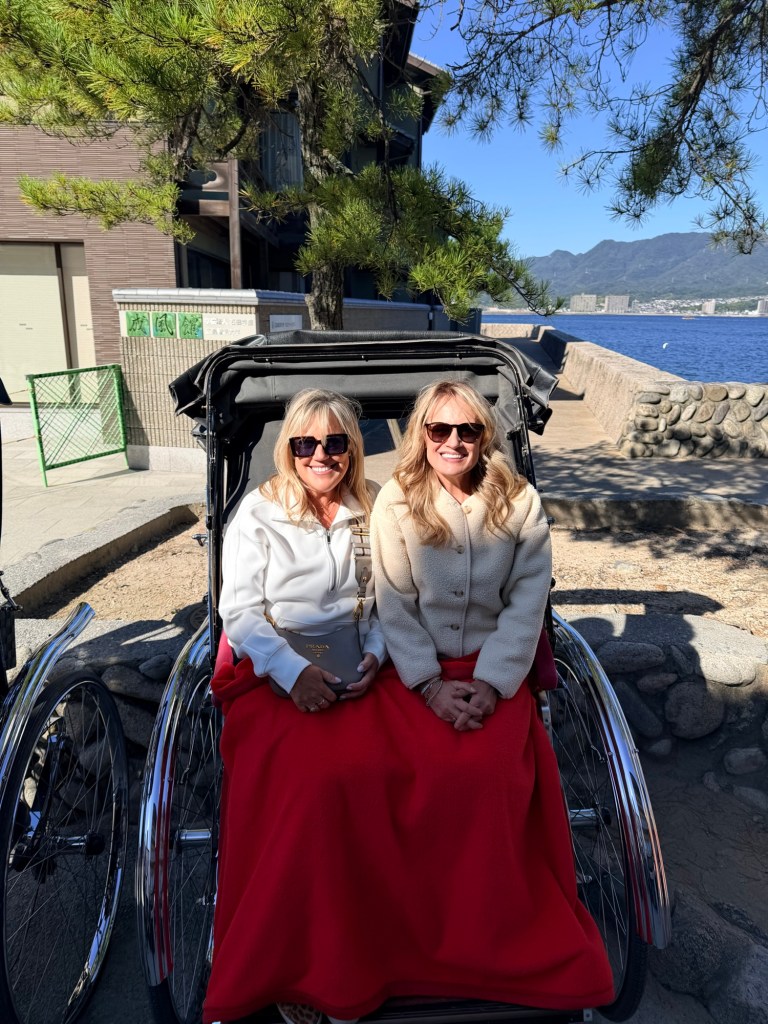
The deer greeted us upon arrival (don’t touch them!) and we hired rickshaw drivers to show us around. Fun experience with our “drivers”, Keigo and Akimu.
After wading out to touch the torii and take pictures, we high tailed it back to the beach as the tide was starting to rise. We then toured Itsukushima Shrine, a UNESCO World Heritage Site.
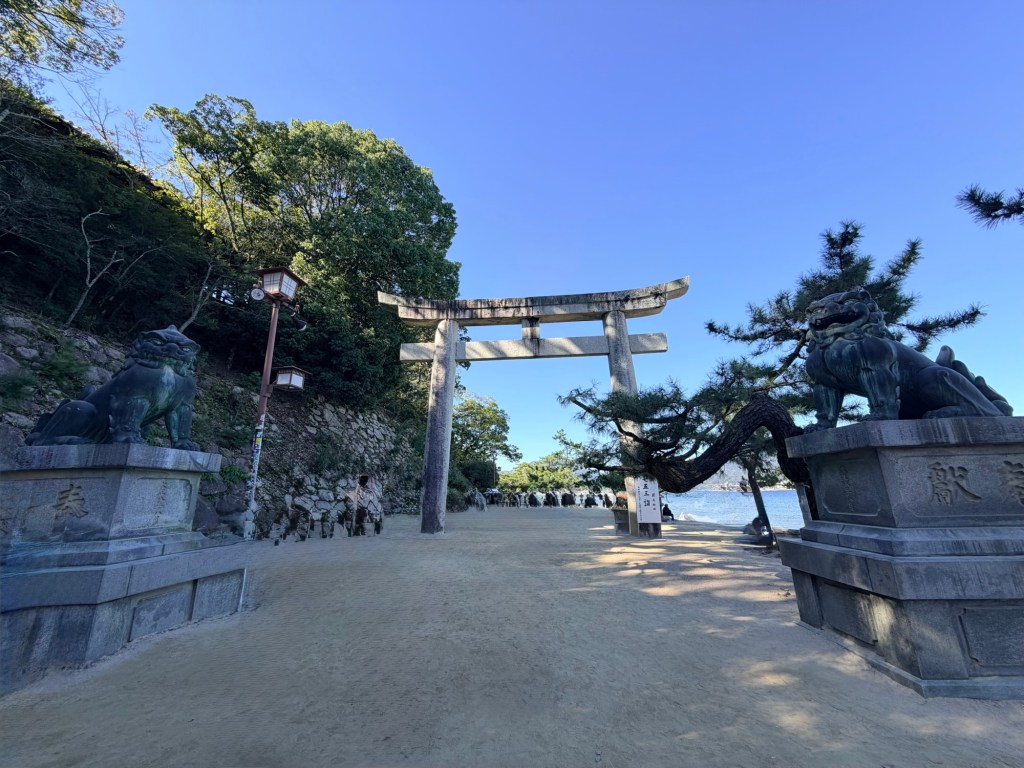
Tip: Arrive early during low tide to touch the torii! By the time we were touched it, we were the only ones left in the sea and the tide was rising quickly.

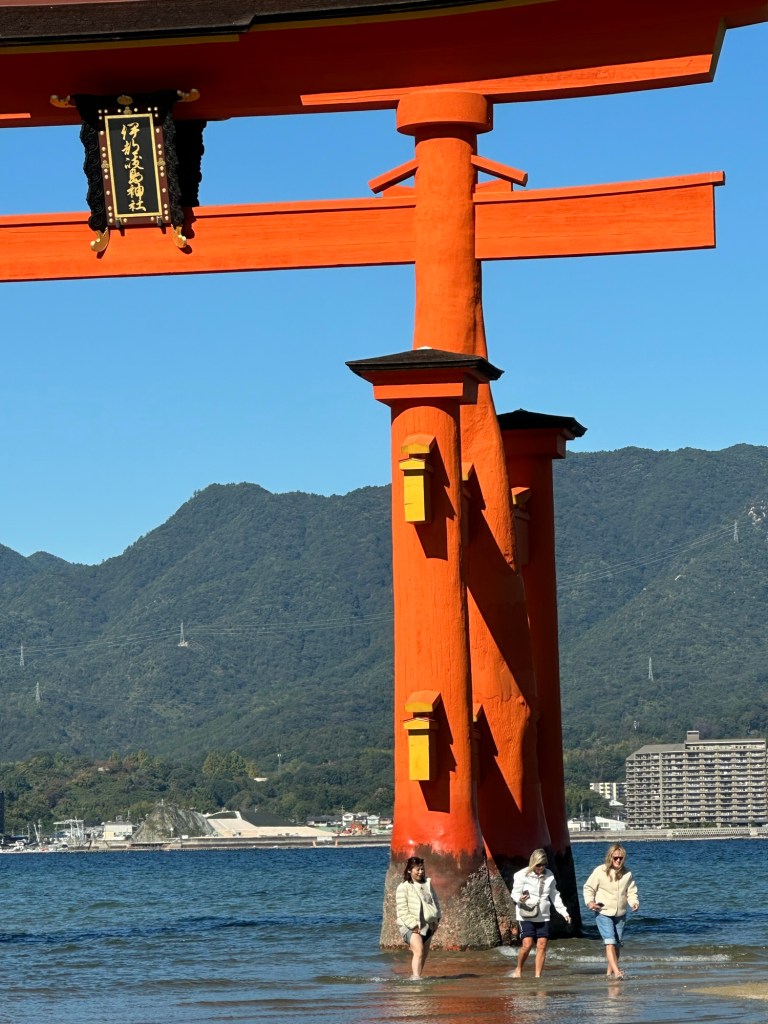

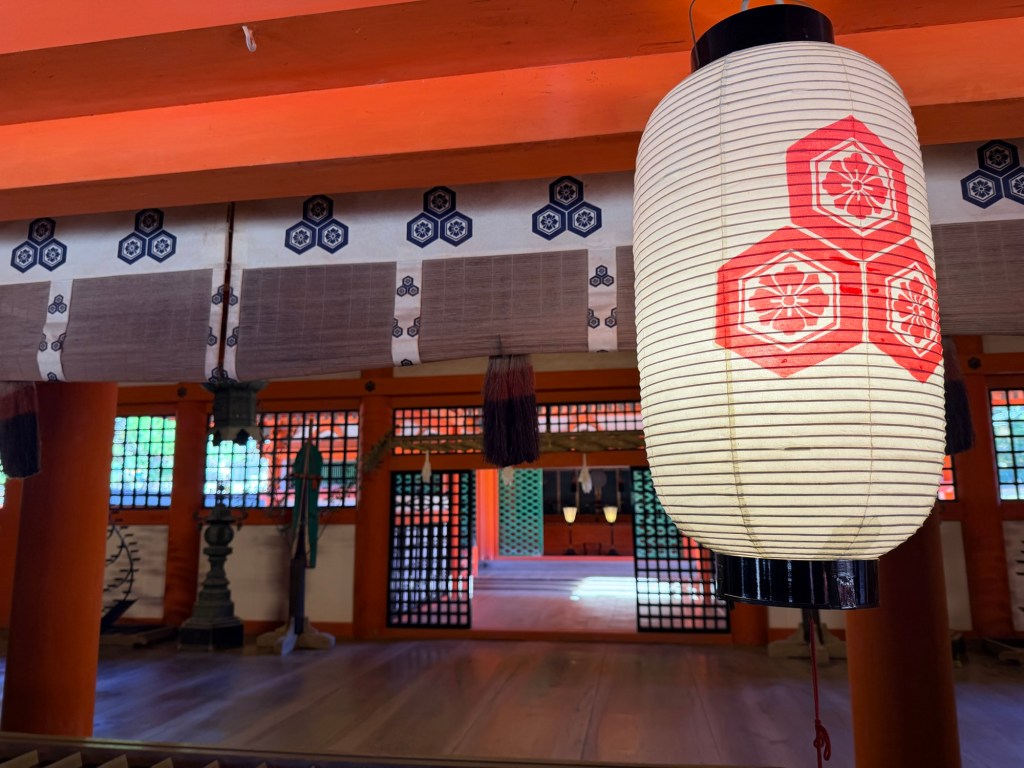
Itsukushima Shrine is a UNESCO World Heritage Site. In addition to the iconic floating torii gate, the stunning shrine was originally built in the 6th century and dedicated to the goddess of seas and storms, Benzaiten. Surrounded by a traditional Japanese gardens and set against the backdrop of Mount Misen, Itsukushima Shrine is a unique blend of cultural heritage and natural beauty. The vibrant vermilion structures, exquisite craftsmanship, and picturesque setting made this one of my favorites (I have been saying that a lot!).

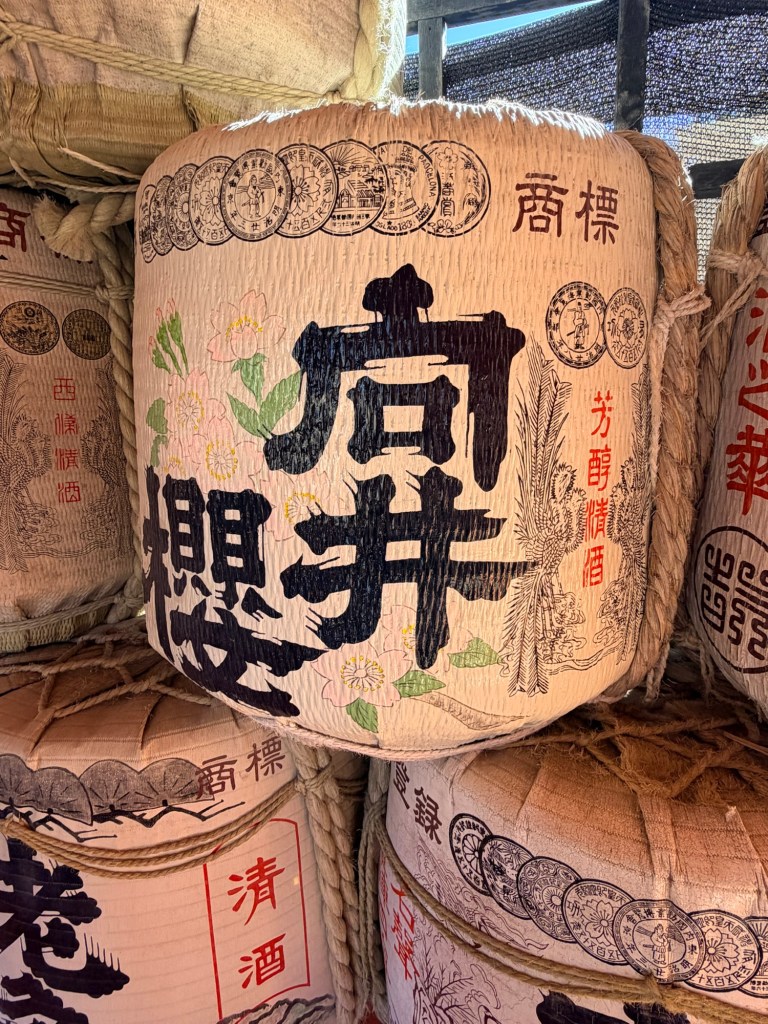
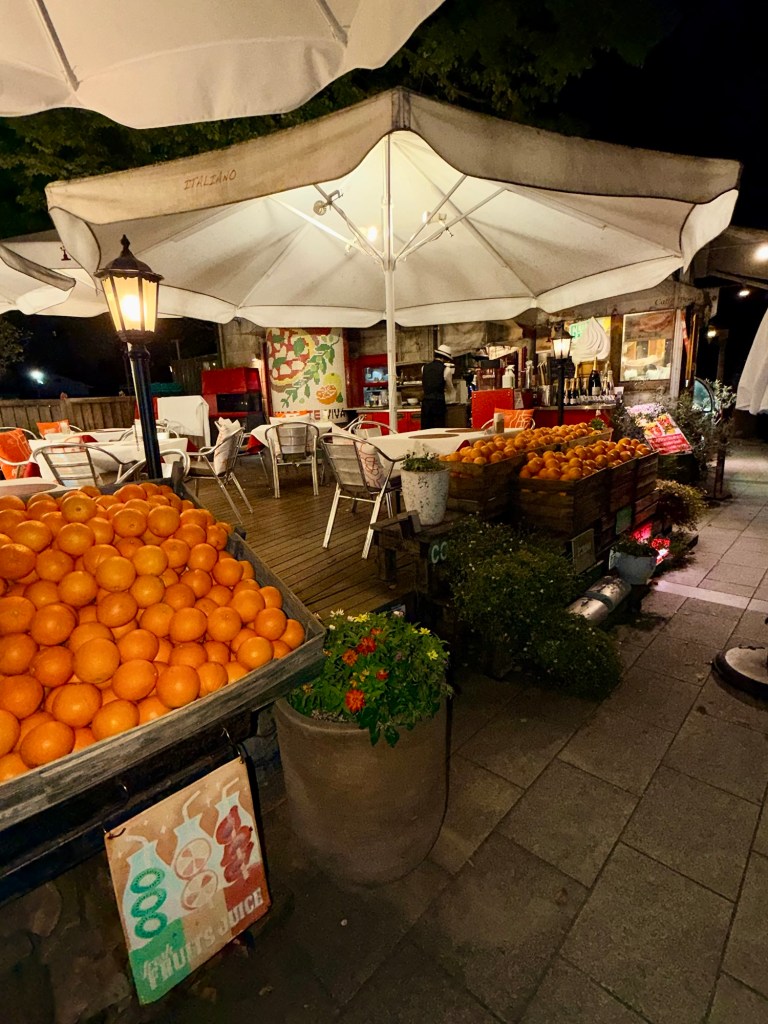
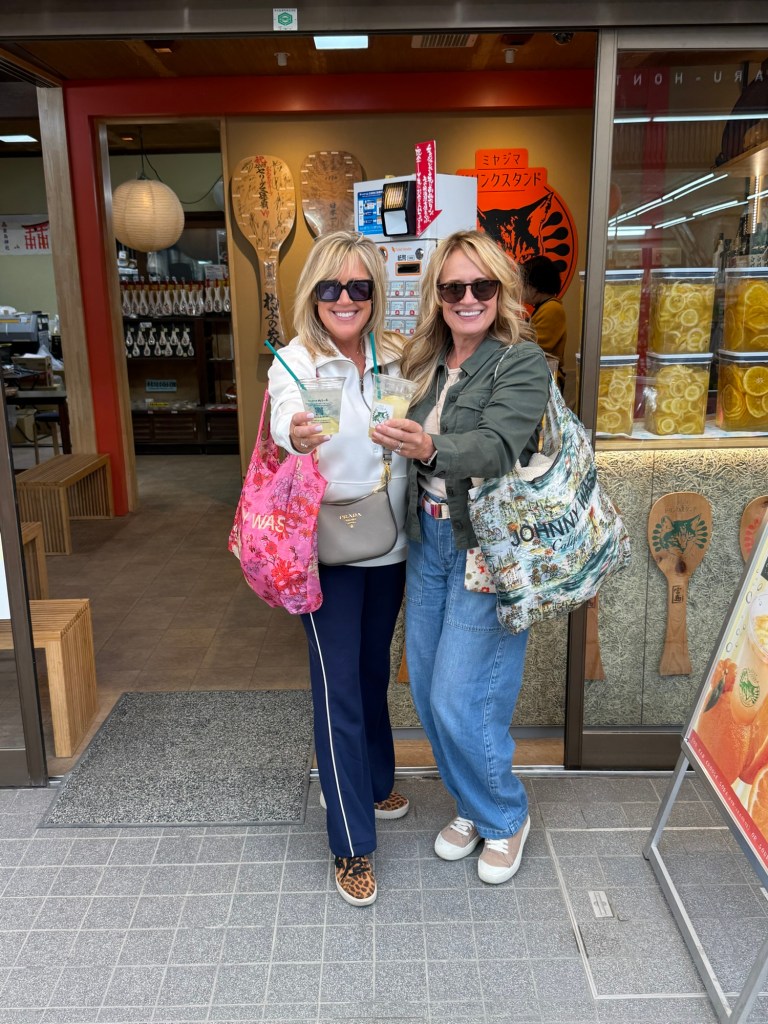
Now, let’s talk about the food! Miyajima is famous for its delicious local specialties, particularly grilled oysters, everything lemon, and momiji manju—maple leaf-shaped cakes 🍁 filled with sweet red bean paste or custard. Strolling through the streets, we found charming vendors selling these treats, along with everything lemon.🍋
Part 2 in Hiroshima, and a much heavier topic, continues in the next post.
 Christina’s Journey Journal