
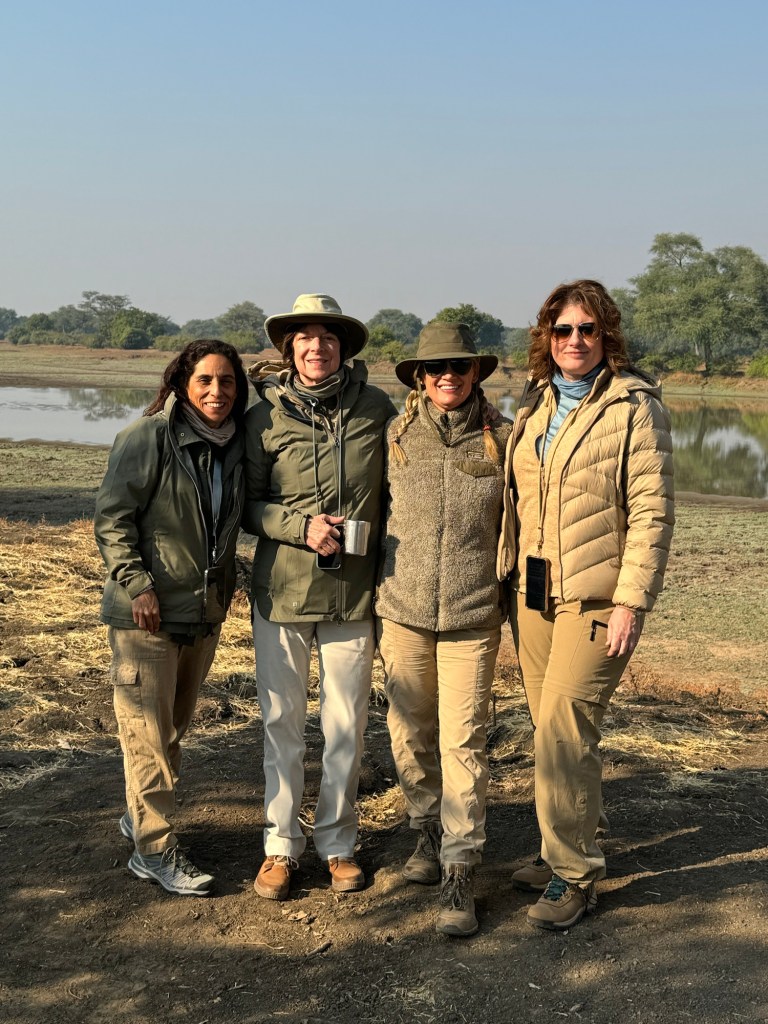
We call ourselves, The Safari Sisters. A group of 4 friends who decided that life is too short to not explore our world with abandon. We started to plan our African adventure about 16 months prior.
Let me back up — the idea for a safari came about when I was “thinking” about going to Antarctica. I asked my friend, Laura, if she’d like to join me. She said “Sure, if you come on a safari with me!”. That was an easy answer. When we returned from Antarctica, we started planning the next month.
After doing a lot of research (I was obsessed with planning the perfect trip!), we decided that trying to figure out an itinerary on our own was nearly impossible. Therefore, each of us talked about what we wanted to do while on the continent of Africa – Victoria Falls, game drives, a walking safari, a real safari “lodge”, lots of elephants, cultural and educational experiences. Then we started to explore travel companies who could give us all of the above! It wasn’t too long into our search that Smithsonian Journeys caught our eye, and in particular, the tour called African Safari: A Wildlife Adventure
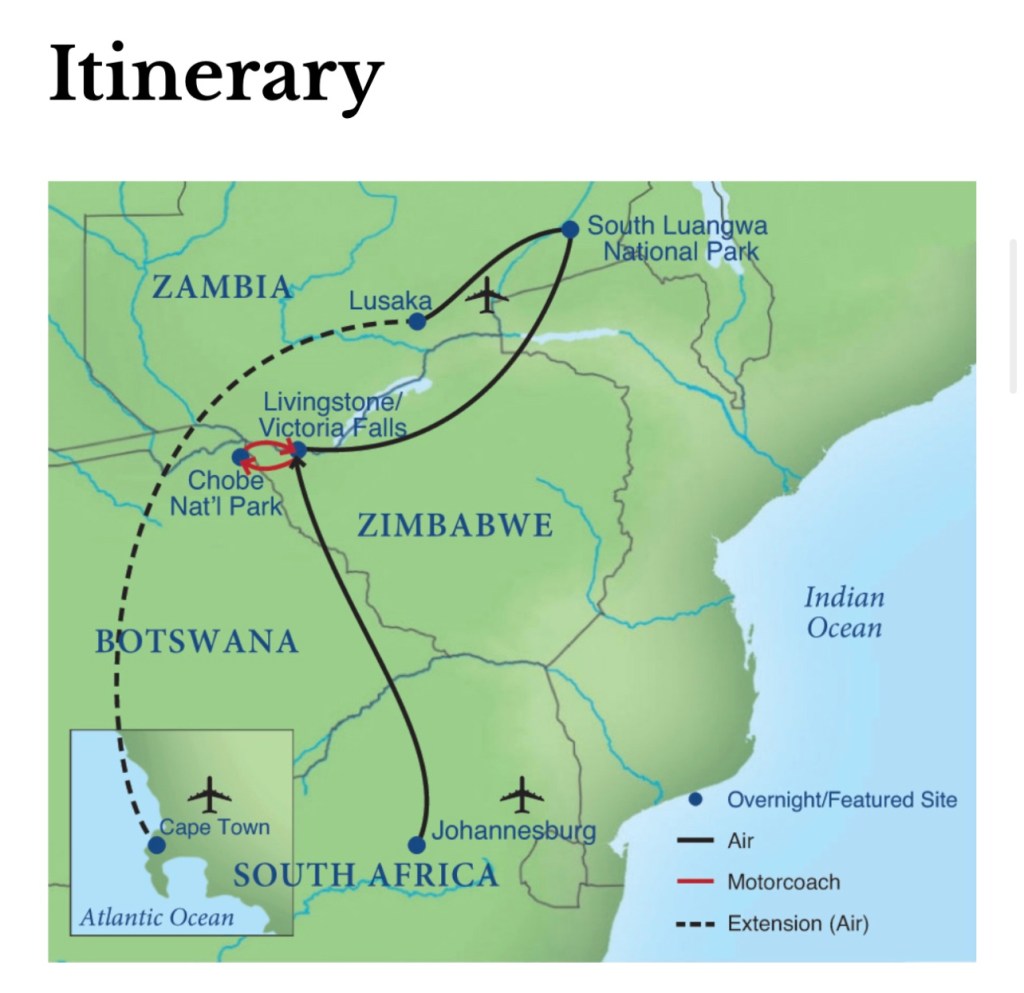
Here is the itinerary as described on their website. B = Breakfast included, etc. I can say now that we’re back we had the small group they promised (14 people + our tour director and our expert) and the itinerary below doesn’t do the trip justice. It was more than we expected. In fact, we pinched ourselves throughout the trip as it felt like we were living in a dream!
Day 1 — Depart the U.S. for Johannesburg, South Africa
Day 2 — Johannesburg
Arrive in Johannesburg and transfer to the leafy Rosebank suburb, where you’ll check in early to your hotel. If you arrive in the morning, breakfast will be available for you. The remainder of the day is unscheduled so that you can rest and relax and get to know some of the trendy neighborhoods within this diverse metropolis known as the “City of Gold.” (B)
Day 3 — Johannesburg and Soweto
Meet your fellow travelers this morning and embark on a full-day tour of Soweto, a historic Black township known for its student uprising against the apartheid government in 1976. See the home of Nobel laureate Archbishop Desmond Tutu, and tour the Mandela House, the Soweto home where Nelson Mandela lived during his rise as an anti-apartheid activist. At the moving Hector Pieterson Memorial and Museum, learn more about the struggle against apartheid and the Soweto uprising. Then hear stories from a Soweto resident who was present during the uprising. Tonight, enjoy a welcome dinner. (B,L,D)
Day 4 — Victoria Falls, Zimbabwe
Fly to Livingstone, Zambia, then cross into Zimbabwe and settle into your elegant lodge in the town of Victoria Falls. Set on the border of the two countries, the falls were first documented in 1855 by explorer David Livingstone, who promptly claimed them for Queen Victoria. Experience the power of this tremendous waterfall, created as the Zambezi River drops more than 350 feet into a narrow chasm. (B,D)
Day 5 — Victoria Falls Private Game Reserve
Set off on a morning wildlife drive in Victoria Falls Private Game Reserve, home to the “Big Five” and many other species. This former hunting concession is now known for its conservation programs. Learn about the successes of its black rhino breeding program—and the challenges of fighting poaching—as you search out these endangered and elusive animals. Late this afternoon, embark on a “sundowner” dinner cruise on the Zambezi River. (B,D)
Day 6 — Victoria Falls
Take in views of the waterfall on a guided tour of the Victoria Falls Bridge, a steel bridge opened in 1905. Walk the catwalks and learn about the construction and significance of the bridge, which was intended by Cecil Rhodes to be part of a larger Cape Town to Cairo railway line. The afternoon is yours to relax at the lodge and enjoy its pool and gardens. Tonight, gather for a lecture by a guest speaker on “The Story of David Livingstone.” (B,D)
Day 7 — Chobe National Park, Botswana
Journey by motorcoach to Botswana this morning, and head toward Chobe National Park, which boasts one of the largest concentrations of wildlife in all of Africa. After a leisurely lunch at your lodge, set sail on the Chobe River on a wildlife cruise, watching for elephants, hippos, crocodiles, some of the park’s 450 species of birds (including sacred ibis, carmine bee-eaters, fish eagles, and kingfishers). Enjoy the sunset on the river and return to the lodge for dinner tonight. (B,L,D)
Days 8-9 — Chobe National Park
Chobe National Park covers 7,270 square miles of diverse terrain that harbors an exceptional array of wildlife, including the world’s largest elephant population (some 120,000), as well as zebras, lions, giraffes, impalas, wildebeests, and buffalo. Spend two full days discovering the park and its biodiversity on early morning wildlife drives and afternoon boat safaris. During your downtime between wildlife outings, enjoy the amenities of the lodge. (B,L,D daily)
Day 10 — South Luangwa National Park, Zambia
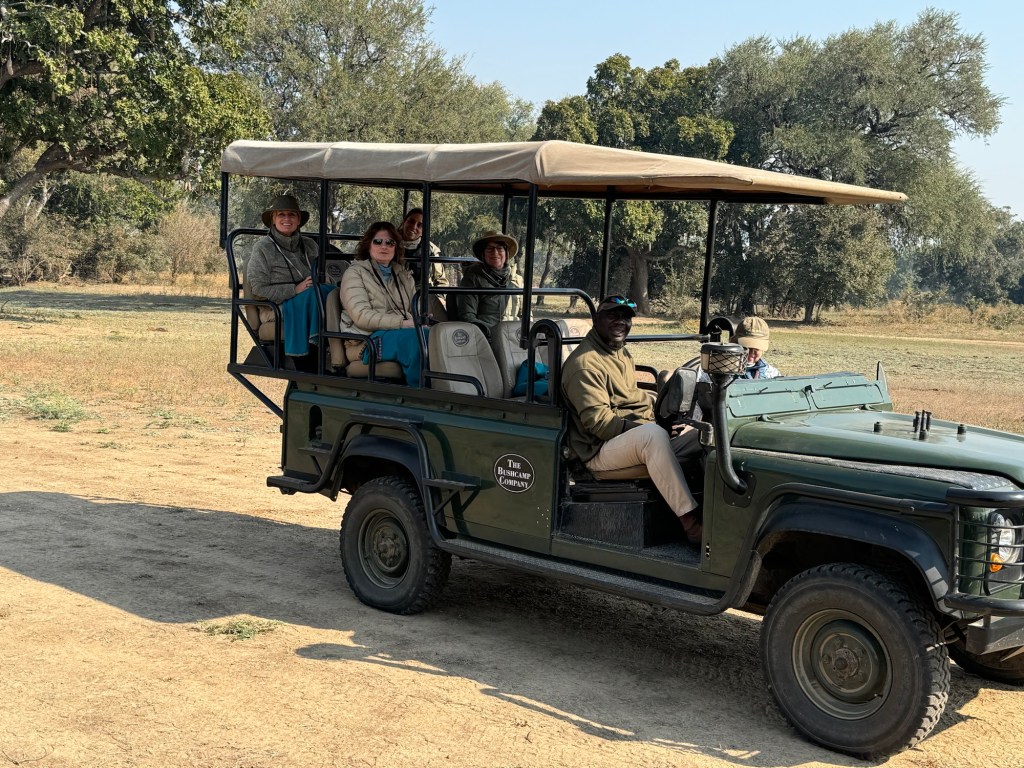
A morning flight brings you to Zambia’s South Luangwa National Park, a vast and unspoiled stretch of woodlands and plains along the Luangwa River. Settle into your stunning lodge, nestled amid mahogany and ebony trees within the park, and encounter the area’s abundant fauna on an afternoon open-vehicle wildlife drive or a walking safari—or from the lodge’s deck, which overlooks two lagoons that draw a steady stream of animals. (B,L,D)
Days 11-12 — South Luangwa National Park
Covering some 3,500 square miles, South Luangwa National Park was established in 1972 but long overlooked thanks to its remote location. Today it boasts one of Africa’s highest concentrations of wildlife, including unusual finds like Zambia’s endemic Crawshay’s zebra, the elusive bushbuck, and the spiral-horned kudu; as well as some 400 bird species, wild dogs, giraffes, lions, leopards and much more. Enjoy two full days to discover the park and its inhabitants on morning, daytime, and nocturnal safaris with seasoned rangers.
You’ll also have the opportunity to go on guided walking safaris—an intimate and exhilarating experience that spotlights lesser-known flora and fauna; meet children at a local school; and visit a borehole project that provides water for the community. On your final evening, gather for a festive farewell dinner at the lodge. (B,L,D, daily)
Days 13-14 — Lusaka/Depart for home
Travel by light aircraft today to Lusaka, Zambia’s capital, where you’ll have a day room to rest before your overnight flight back to the U.S. (B)

We did all of the above AND MORE. For example, in Victoria Falls we had the opportunity to visit an elephant sanctuary and feed these incredible rescues. We also took a helicopter tour over Victoria Falls to see a different perspective from the air. While at the Chobe Marina Lodge, we took a morning trip to Impalila Island on Namibia. And, the spa in Mfuwe Lodge sits at the end of a hippo pond! From the educational front, Robyn Keene-Young gave 4 different presentations about the wildlife. She’s one of the main reasons why we choose Smithsonian – we wanted to have an expert so that we can truly understand what we’re seeing, hearing, and experiencing.
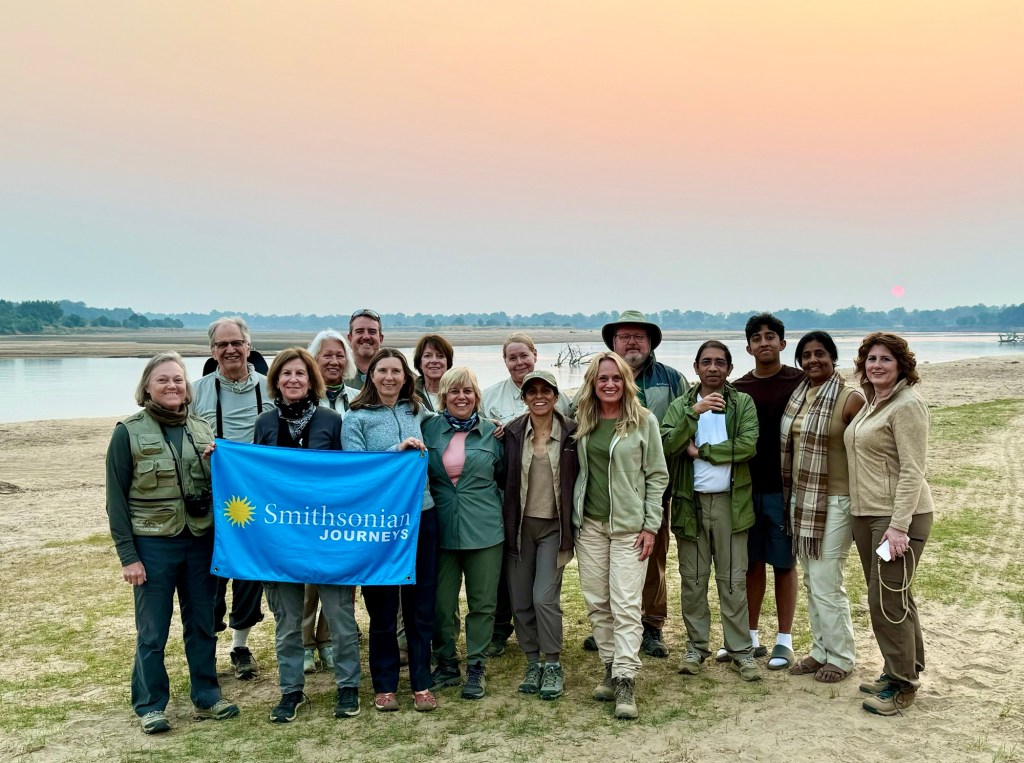
Thank you Smithsonian and Odysseys Unlimited – you made this trip magical!
 Christina’s Journey Journal